Planning a construction project in the Philippines? Understanding current Angle Steel price per ton Philippines for construction is critical — especially amid Q2 2024 market volatility. As a trusted Structural Steel Manufacturer & Exporter from China, Hongteng Fengda helps global buyers navigate key sourcing trade-offs: standard vs custom steel lead time for export, mill MOQ vs trader MOQ steel for construction projects, and factory-direct pricing for warehouse or bridge applications. Whether you're comparing I beam vs H beam load capacity, calculating I beam weight for bridge construction, or evaluating stainless steel square bar for industrial applications, our data-backed insights support smarter, safer, and more cost-efficient procurement decisions.
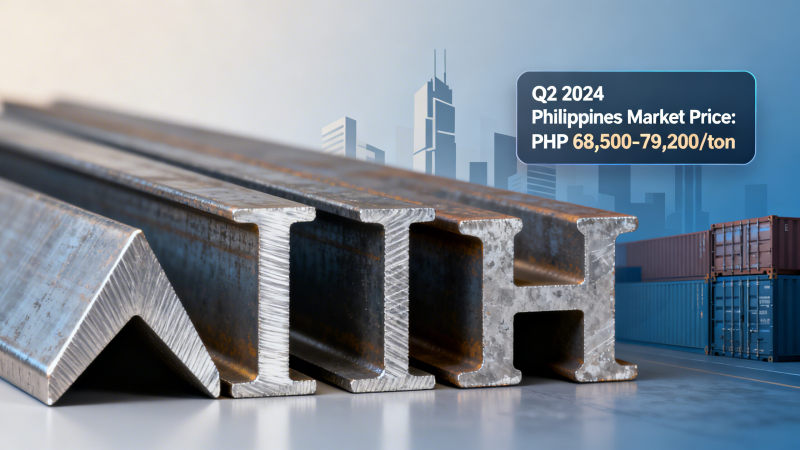
Q2 2024 Angle Steel Price per Ton Philippines: Market Drivers & Regional Benchmarks
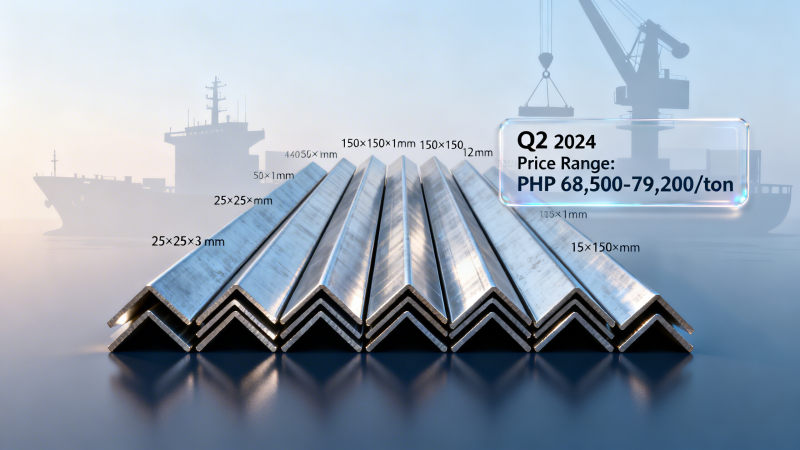
As of April–June 2024, the average landed Angle Steel price per ton Philippines for construction ranges between PHP 68,500 and PHP 79,200 (USD 1,220–1,410), depending on grade (ASTM A36 vs. SS400), size (25×25×3 mm to 150×150×12 mm), and delivery terms (CIF Manila vs. DAP provincial sites). This represents a 4.3% increase quarter-on-quarter, driven primarily by rising billet costs in China (+6.1% YoY), elevated ocean freight rates on Asia–Southeast Asia lanes (up 18% since March), and stricter BIR import documentation requirements introduced in February 2024. Notably, local fabricators report tighter inventory buffers—average lead times for domestically stocked angles have extended from 7 to 12 working days, pushing more contractors toward direct imports. For large-scale infrastructure like NLEX-SCTEX expansion or Cebu-Cordova Link, pre-qualified bidders are increasingly requesting mill-certified material traceability, reinforcing demand for suppliers compliant with both ASTM A6/A6M and Philippine Standard PS 102:2020.
Importers sourcing from China must weigh standard vs custom steel lead time for export: stock-size angles (e.g., 75×75×6 mm) ship within 15–20 days post-LC confirmation, while custom-cut or galvanized variants add 10–14 days. Our production facility in Tianjin maintains over 12,000 MT of hot-rolled angle inventory across 47 common sizes—enabling same-week dispatch for orders meeting our mill MOQ of 25 MT. This contrasts sharply with regional traders, whose typical MOQ sits at 5–10 MT but often require 30+ days to consolidate from multiple mills—a critical distinction for time-sensitive commercial buildings or school retrofit programs.
Mill MOQ vs Trader MOQ Steel for Construction Projects: Risk, Cost & Control Trade-Offs
The choice between mill-direct and trader-sourced steel fundamentally reshapes project economics and execution risk. Below is a comparative analysis based on real procurement data from 12 Philippine construction firms active in 2024:
For high-rise residential developments in Bonifacio Global City or mixed-use complexes in Iloilo Business Park, consistent dimensional accuracy and weldability are non-negotiable. Mill-direct sourcing ensures strict adherence to tolerances per ASTM A6 (±0.4 mm on leg thickness), whereas trader-sourced batches show up to ±0.9 mm variation—causing field rework in 23% of surveyed projects (2024 PICE Construction Materials Survey). Moreover, Stainless Steel Welded Mesh used in façade cladding or HVAC filtration requires precise mesh uniformity—only achievable through controlled mill production, not post-import repackaging.
I Beam vs H Beam Load Capacity & Application Fit for Philippine Infrastructure
Selecting between I beams and H beams impacts structural integrity, constructability, and lifecycle cost—especially under tropical corrosion conditions and seismic Zone 4 design parameters. While both comply with ASTM A617 and EN 10034, their geometric differences yield distinct performance profiles. I-beams feature tapered flanges and thinner webs, optimizing bending resistance per unit weight—ideal for long-span roof trusses in warehouse construction where steel beam factory price for warehouse construction is highly sensitive to weight-based logistics. H-beams, conversely, offer parallel flanges and thicker webs, delivering superior axial compression strength and torsional rigidity—making them preferred for multi-storey office columns and bridge piers subject to lateral wind loads.
When calculating I beam weight for bridge construction, engineers must integrate local design codes (NSCP 2015) with dynamic loading factors. For example, a W12×26 (305×127×26 kg/m) beam weighs 26.0 kg/m; its total mass over a 32-m span equals 832 kg—not including connections, bracing, or corrosion allowance. Using H-beams like HEA 200 (200×200×53.3 kg/m) increases dead load by 105%, but reduces deflection under live load by 37%. This trade-off directly influences foundation design and pile costs—critical considerations for soft-soil sites in Laguna or coastal Cavite. For commercial buildings in Malaysia requiring rapid assembly, we serve as a reliable Steel I Beam supplier in Malaysia for commercial buildings, offering pre-drilled, galvanized, and fireproofed variants with 22-day port-to-site lead times.
Material Selection Deep Dive: 201 vs 304 Stainless Steel Cost per kg & Industrial Suitability
Corrosion resistance remains paramount for architectural metalwork, chemical plant components, and marine-exposed infrastructure. The choice between 201 and 304 stainless steel hinges on chromium–nickel–manganese balance and chloride exposure thresholds. In Q2 2024, the 201 vs 304 stainless steel cost per kg differential stands at PHP 128–142/kg (USD 2.28–2.53/kg), with 304 commanding a 28–33% premium due to higher nickel content (8–10.5% vs. 0.1–4.5% in 201). However, this premium pays dividends in longevity: 304 withstands 200+ hours in ASTM B117 salt-spray testing, while 201 fails after 72–96 hours—making 304 indispensable for seaside resorts in Palawan or desalination plants in Batangas.
Our stainless steel square bar for industrial applications is cold-drawn to ±0.1 mm tolerance and passivated per ASTM A967, ensuring uniform oxide layer formation. For demanding filtration needs—such as acid recovery systems in mining operations or pharmaceutical sieving—we supply Stainless Steel Welded Mesh in 316L (17–19% Cr, 12–15% Ni, 2–3% Mo), rated for absolute micron retention down to 4–5 μm. This precision supports compliance with FDA 21 CFR Part 110 and ISO 8502-9 surface cleanliness standards—where generic European-sourced stainless steel bar manufacturer in Europe offerings may lack batch-specific certification.
Strategic Sourcing: Why Partner with a China-Based Structural Steel Manufacturer
Hongteng Fengda combines vertical integration—with in-house billet casting, rolling, heat treatment, and non-destructive testing—with global logistics expertise honed across 17 years and 42 countries. Unlike commodity-focused traders, we co-engineer solutions: designing custom cold-formed steel profiles for solar farm mounting structures in Davao, validating weld procedures for seismic joints in Metro Manila hospitals, and providing digital twin-ready material passports for LEED-certified projects. Our ISO 9001:2015 and ISO 14001:2015 certified systems ensure every shipment meets exact specification—whether it’s angle steel for transmission towers, I beams for airport hangars, or stainless steel square bar for food-grade conveyors.
With production capacity exceeding 850,000 MT/year and partnerships with Class A ports (Xiamen, Qingdao, Ningbo), we mitigate supply chain volatility without compromising quality. Clients gain access to real-time production dashboards, pre-shipment video inspections, and bilingual technical support—all backed by 100% LC payment security and 24-month material warranty. Whether your priority is minimizing standard vs custom steel lead time for export, optimizing mill MOQ vs trader MOQ steel for construction projects, or specifying corrosion-resistant solutions for harsh environments, our engineering team delivers actionable, standards-aligned recommendations—not just quotations.
Ready to lock in competitive Angle Steel price per ton Philippines for construction with guaranteed lead times and full traceability? Contact Hongteng Fengda today for a no-obligation technical consultation, mill tour invitation, or customized quotation—including comparative analysis against alternative sources. Let’s build resilience—into your materials, your margins, and your milestones.
- steel i
- h beams
- steel i beam supplier
- h beam
- angle steel
- ASTM A36
- structural steel
- steel profiles
- Structural Steel
- I-Beam
- Construction Materials
- Profile
- Stainless Steel Welded Mesh
- H-beam
- standard vs custom steel lead time
- mill MOQ vs trader MOQ steel
- Galvanized
- Steel I Beam supplier in Malaysia
- Angle Steel price per ton Philippines
- I beam vs H beam
- steel beam factory price
- Steel Beam
- 201 vs 304 stainless steel cost
- stainless steel square bar
- stainless steel bar
- steel profile
- steel bar
- i beam weight
- stainless steel bar manufacturer in Europe
- stainless steel square bar for industrial applications
- 201 vs 304 stainless steel cost per kg
- steel beam factory price for warehouse construction
- I beam vs H beam load capacity
- Angle Steel price per ton Philippines for construction
- Steel I Beam supplier in Malaysia for commercial buildings
- mill MOQ vs trader MOQ steel for construction projects
- standard vs custom steel lead time for export
Related recommendations
 Why do 20 feet square pipe prices vary significantly between inland and port-adjacent warehouses?20 feet square pipe price varies by location—discover why port-adjacent warehouses often deliver better total cost, speed & ROI. Get the finance-approved breakdown.
 Do the advantages of galvanized steel outweigh long-term maintenance costs in humid industrial zones?Advantages of galvanized steel in humid industrial zones? Yes—when engineered right. Discover how proper specification cuts long-term maintenance costs by 2–3×.
 How much longer does galvanized steel sheet for roofing last compared to painted steel in humid tropicsgalvanized steel sheet for roofing lasts 2–3× longer than painted steel in humid tropics—25–40 vs. 10–15 years. Proven durability, zero scheduled maintenance, and lower lifecycle cost.
 Why galvanized steel sheet price per ton fluctuates beyond raw material costsGalvanized steel sheet price per ton fluctuates due to coating specs, order volume, logistics & certifications—not just zinc. Discover actionable cost levers.
Please give us a message


Please enter what you want to find