Choosing the right Steel I Beam supplier in Malaysia for commercial buildings is critical—especially when balancing standard vs custom steel lead time for export, mill MOQ vs trader MOQ steel for construction projects, and structural integrity requirements. As a certified structural steel manufacturer & exporter from China, Hongteng Fengda delivers ASTM/EN-compliant I beams, angle steel, and customized solutions—ensuring reliability, competitive factory pricing, and on-time delivery across Southeast Asia. Learn how to evaluate suppliers beyond price—factoring in load capacity (I beam vs H beam), weight calculation accuracy, and material traceability.
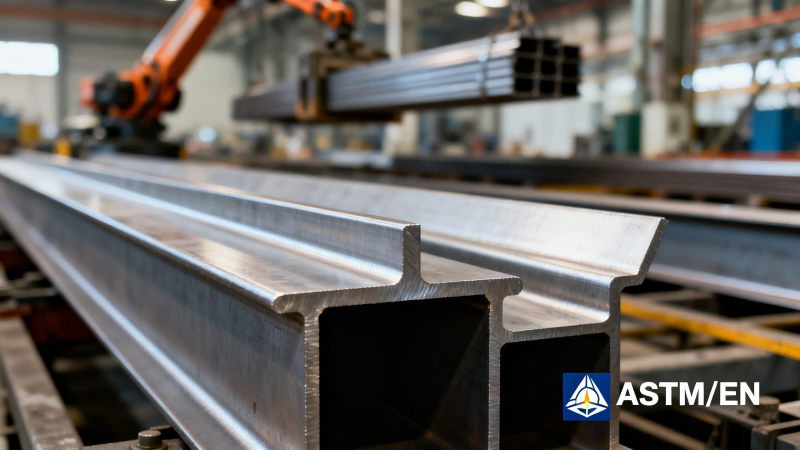
Why Structural Integrity Demands More Than Just Compliance
In Malaysia’s rapidly expanding commercial infrastructure—shopping malls, office towers, logistics hubs, and mixed-use developments—the performance of structural steel isn’t just about meeting minimum code thresholds. It’s about long-term resilience under tropical humidity, monsoon-driven corrosion risks, and seismic considerations in East Malaysia. A misjudged I beam vs H beam load capacity mismatch can compromise column-to-beam connections, while inaccurate how to calculate I beam weight for bridge construction assumptions may overload crane planning or foundation design. Hongteng Fengda’s engineering team collaborates directly with Malaysian consultants and contractors to validate section modulus, moment of inertia, and deflection limits per BS 5950 or Eurocode 3—ensuring every delivered beam carries full mill test reports, heat numbers, and third-party inspection certificates (SGS/BV).
Unlike local traders sourcing fragmented stock lots, our vertically integrated production allows full control over chemical composition (C, Mn, Si, S, P), hot-rolling temperature profiles, and post-rolling cooling rates—all verified through optical emission spectroscopy and ultrasonic testing. This level of process transparency supports rigorous material traceability, a non-negotiable for BIM-integrated projects where digital twin models require exact physical counterpart verification.
Decoding MOQ, Lead Time & Supply Chain Realities
Procurement teams often face a false dichotomy: low MOQ from regional traders versus long standard vs custom steel lead time for export. In reality, the optimal choice hinges on project phasing, storage capability, and risk appetite. Traders typically offer 5–10 ton MOQs but carry limited grade/size inventory—forcing multiple shipments, inconsistent surface finish, and uncertain mill origin. By contrast, mill-direct supply like Hongteng Fengda provides flexible mill MOQ vs trader MOQ steel for construction projects: as low as 20 tons for standard EN 10025-2 S275JR IPE beams, or full-container-load customization for bespoke flange thicknesses or galvanized coatings. Our average steel beam factory price for warehouse construction includes landed cost to Port Klang or Tanjung Pelepas—factoring in CIF terms, import duty advisory, and bonded warehouse options.
Export lead times are rigorously managed: 35–45 days for standard sections; 60–75 days for engineered solutions requiring finite element analysis (FEA) validation. This predictability stems from dual production lines—one dedicated to high-volume export orders, another reserved for OEM structural components. We also support JIT delivery windows aligned with Malaysian contractor schedules, reducing on-site stacking costs by up to 37% (based on 2023 KLCC retrofit case study).
Beyond I Beams: Integrated Material Strategy for Multi-Use Projects
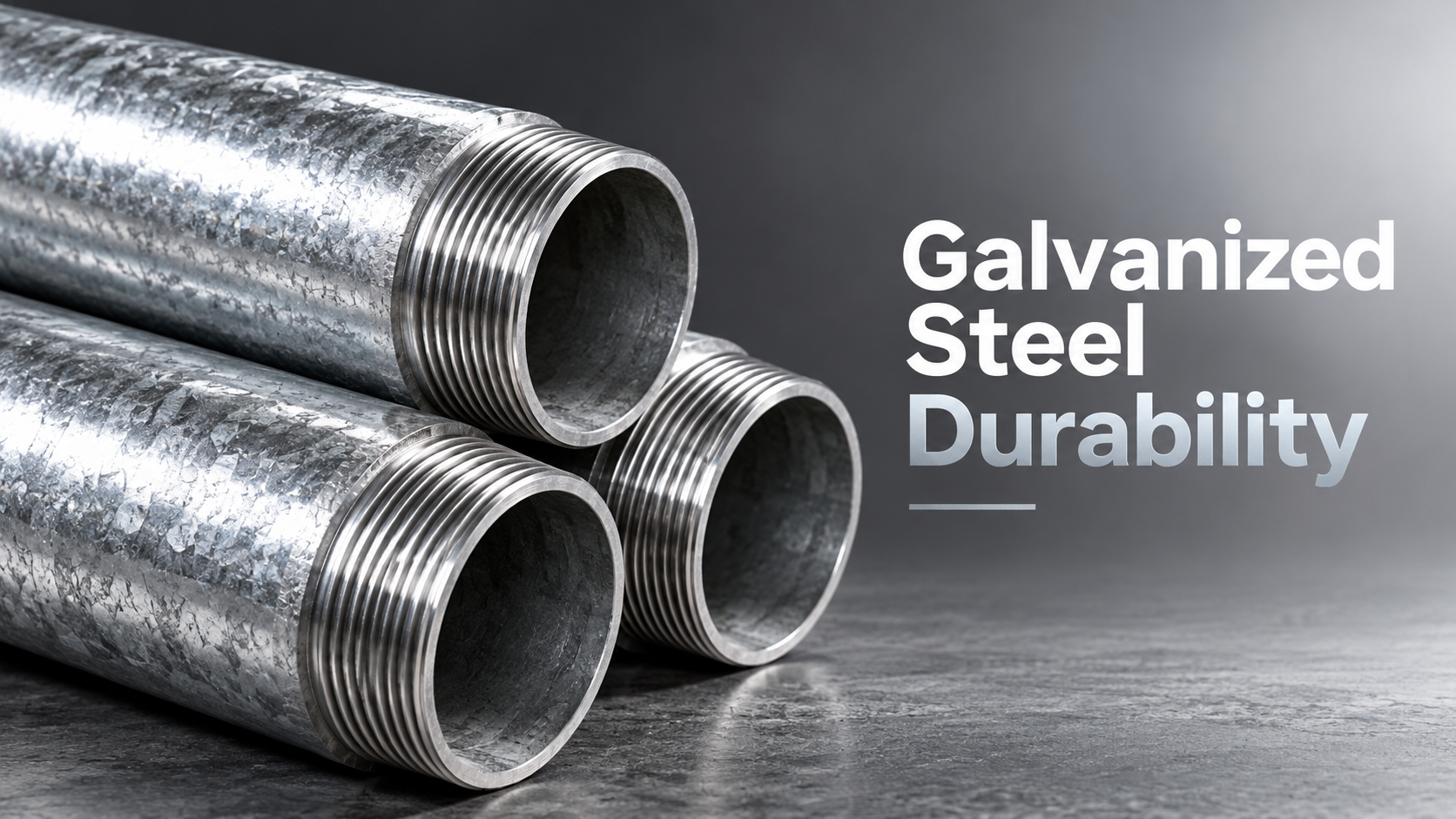
Modern commercial buildings integrate structural framing, façade support, MEP conduits, and lightning protection—each demanding distinct metallurgical properties. While I beams form primary skeletons, complementary products like Galvanized Round Steel serve critical secondary roles: grounding rods for substations, anchor bolts for curtain walls, or precision shafts in elevator guide rails. Our Galvanized Round Steel meets ASTM A123/A153 standards with uniform zinc coating (≥85 µm), tested via bend and quench adhesion protocols. With diameters from 16mm to 250mm and customizable lengths, it bridges gaps between structural and industrial applications—from highway barrier posts to optical fiber connector housings.
This cross-application versatility extends to stainless solutions. Though not the focus for main beams, 201 vs 304 stainless steel cost per kg becomes decisive for handrail systems, drainage channels, or kitchen exhaust ducts in F&B zones. Our ASEAN-certified stainless steel square bar for industrial applications undergoes pickling, passivation, and Ra ≤0.8µm polishing—ensuring corrosion resistance without compromising weldability. For clients evaluating stainless steel bar manufacturer in Europe alternatives, we provide comparative lifecycle cost analysis factoring in freight, customs, and local fabrication yield.
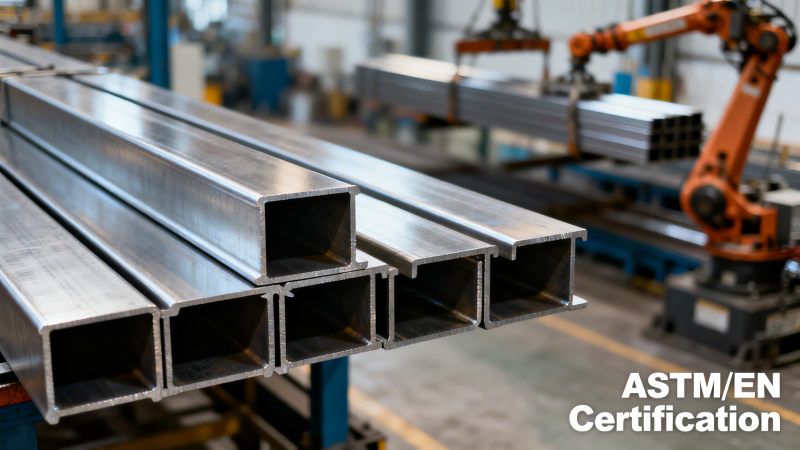
Technical Due Diligence: From Weight Calculations to Load Validation
Accurate how to calculate I beam weight for bridge construction starts with verified sectional data—not generic tables. Hongteng Fengda supplies downloadable DXF/DWG files with precise centroid coordinates, torsional constants, and warping stiffness values for every profile. For Malaysian engineers using STAAD.Pro or Tekla Structures, our BIM-ready libraries include parametric families with embedded ASTM/EN metadata. When validating I beam vs H beam load capacity, our technical team provides free comparative load charts showing bending moment resistance (Mpl,Rd) and shear capacity (Vpl,Rd) across identical mass-per-meter categories—proving that geometry, not just weight, governs real-world performance.
We also address regional procurement concerns like Angle Steel price per ton Philippines for construction by benchmarking against SEA market indices (S&P Global Platts, MEPS Asia). Our factory-direct model eliminates intermediary markups while maintaining EN 10025-2 compliance—so Malaysian buyers gain equivalent quality at 8–12% lower landed cost than Manila-sourced equivalents. All quotations include clear breakdowns of base metal, galvanizing premium, packaging, and documentation fees—no hidden charges.
Trusted Partnership, Not Just Transactional Supply
Selecting a Steel I Beam supplier in Malaysia for commercial buildings means choosing a partner who understands local tender processes, JKR specifications, and the urgency of fast-track developments. Hongteng Fengda maintains a Kuala Lumpur-based technical liaison office offering on-site support for mill inspections, sample approvals, and QA/QC audits. Our ISO 9001:2015 and ISO 14001:2015 certified systems ensure consistent steel beam factory price for warehouse construction across order cycles—no volume-based price erosion, no last-minute surcharges.
With over 12 years serving ASEAN markets—including landmark projects in Johor Bahru, Penang, and Sabah—we combine Chinese manufacturing scale with Southeast Asian responsiveness. Whether you’re weighing standard vs custom steel lead time for export or optimizing mill MOQ vs trader MOQ steel for construction projects, our goal is predictable, transparent, and technically grounded collaboration.
Ready to streamline your structural steel procurement? Contact Hongteng Fengda today for a tailored proposal—including technical consultation, MOQ optimization, and lead time confirmation for your next commercial building project in Malaysia.
- steel i
- steel i beam supplier
- h beam
- angle steel
- structural steel
- Structural Steel
- Profile
- standard vs custom steel lead time
- mill MOQ vs trader MOQ steel
- Galvanized
- Steel I Beam supplier in Malaysia
- Angle Steel price per ton Philippines
- how to calculate i beam weight
- I beam vs H beam
- steel beam factory price
- Steel Beam
- 201 vs 304 stainless steel cost
- stainless steel square bar
- stainless steel bar
- steel bar
- i beam weight
- stainless steel bar manufacturer in Europe
- stainless steel square bar for industrial applications
- 201 vs 304 stainless steel cost per kg
- steel beam factory price for warehouse construction
- I beam vs H beam load capacity
- how to calculate i beam weight for bridge construction
- Angle Steel price per ton Philippines for construction
- Steel I Beam supplier in Malaysia for commercial buildings
- mill MOQ vs trader MOQ steel for construction projects
- standard vs custom steel lead time for export
Related recommendations
 How to Select the Correct Steel Sheet Grade for Auto PartsSelect the ideal steel sheet for auto parts by balancing performance and cost. Discover expert sourcing strategies to avoid manufacturing traps and optimize procurement. Read our guide now!
 Choosing the Right Zinc Coating Weight for Galvanized SheetOptimize your galvanized sheet selection by choosing the right zinc coating weight. Discover expert strategies to balance corrosion resistance, formability, and project costs.
 How to Specify Wall Thickness for Structural Steel TubingMaster wall thickness specification for structural steel tubing. Balance engineering loads, global tolerances, and costs. Read our expert guide to optimize procurement and ensure project safety!
 Galvanized Pipe vs. Copper: Cost and Durability ComparisonDiscover why galvanized pipe outperforms copper in cost and durability. Compare total lifecycle expenses and make a smart procurement choice for your next industrial project today.
Please give us a message


Please enter what you want to find