Cutting fabrication costs by 20% in 2025 is achievable when manufacturers and project leads adopt proven cold formed angle best practices. This article distills practical steps—from optimizing steel angle bending and selecting the right angle steel plate to efficient handling of sheet steel angle, angle bars and 90 angle metal—to lower material waste, speed production and improve quality. Whether you're a plant operator, quality or safety manager, distributor or engineering decision-maker, you'll find actionable guidance on specifying sheet metal angle, structural angle iron and other 90 angle steel solutions to drive predictable savings and faster delivery. In the paragraphs that follow, we expand on the practical measures, procurement priorities, and on-the-floor improvements that reliably reduce fabrication cost without sacrificing compliance or performance. We will cover definitions so that decision-makers and operators share the same vocabulary around cold formed angle practices; provide market context that clarifies where savings opportunities lie; examine technical performance and common trade-offs when using sheet metal angle or steel metal angle in structural assemblies; and provide procurement and selection guidance that links material choices to downstream bending, welding, and finishing costs. The focus is hands-on: optimize steel angle bending sequences to reduce spring-back and rework; choose right angle steel plate sizes that minimize offcuts and allow nesting strategies; ensure correct handling and storage to avoid surface damage on 90 angle steel that would otherwise generate scrap; and implement simple QC checkpoints that stop defects early. Readers will gain a checklist for specifying cold formed angle parts that balance cost, lead time, and durability while conforming to international standards and typical project constraints. We'll also show how Shandong Hongteng Fengda Metal Materials Co.. Ltd.'s integrated production and logistics system provides predictable supply and consistent metallurgy across steel plates, coils and profiles, which matters when trying to lower total cost of ownership for angle components. By the end of this article, you should be able to prioritize the most impactful interventions on your shop floor and in your procurement pipeline so that a 20% fabrication cost reduction becomes a measurable outcome, not a goal alone.
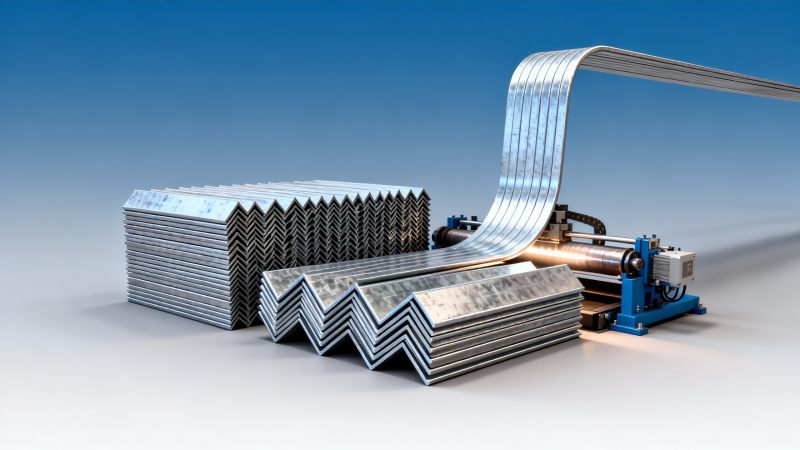
Definition & Overview: What We Mean by Cold Formed Angle and Key Terms
In practical terms, cold formed angle refers to angle sections—often L-shaped—produced by bending sheet or plate at ambient temperature rather than hot rolling. Cold forming changes the work-hardening, dimensional tolerances, and surface condition relative to hot-rolled angle bars and can be performed on sheet steel angle, sheet metal angle, or on pre-cut right angle steel plate blanks. Understanding terminology is essential: steel angle bending denotes the process and equipment choices that influence accuracy and waste; 90 angle steel and 90 angle metal describe parts with nominally orthogonal legs; structural angle iron refers to heavier, load-bearing angle sections used in frameworks; and angle bars is a common commercial name that spans both cold formed and hot-rolled profiles. For buyers and operators, distinguishing between sheet metal angle and steel metal angle affects procurement and fabrication. Cold formed parts typically offer tighter dimensional control and improved aesthetics, leading to reduced finishing costs, but they also introduce spring-back behavior that must be anticipated during tool design to avoid costly rework. From a supply perspective, lead times and batch consistency matter: suppliers with vertically integrated capability—from coking, sintering, steelmaking to rolling and processing—can provide repeatable chemistry and mechanical performance, lowering the risk of rejects. This is where a partner like Shandong Hongteng Fengda Metal Materials Co.. Ltd., which combines comprehensive production technology and logistics reach, becomes valuable: consistent material properties reduce variability in bending and welding operations and enable confident selection of thinner gauges or optimized leg lengths that reduce raw material usage. When teams adopt a shared vocabulary and understand the differences among sheet steel angle, right angle steel plate, and angle bars, they can design for manufacturability, specify appropriate tolerances, and select finishing methods that collectively drive cost reductions on the fabrication floor.
Market Overview & Procurement Guide: Where Savings Come From
Market dynamics shape where 20% savings are realistic. Raw material prices, freight volatility, and regional lead times create the largest levers for total fabrication cost. In many projects, material cost is 60–70% of fabrication spend for components dominated by angle sections; optimizing that spend reduces the biggest share. A procurement guide focused on cold formed angle should therefore cover: 1) right-sizing orders to match cut lists and reduce offcuts; 2) specifying common leg lengths and gauges to consolidate inventory; 3) choosing suppliers that offer consistent tolerances and surface quality to minimize inspection and rework time. Practical tactics include bulk buying common sizes of sheet steel angle or right angle steel plate to secure volume pricing, and negotiating staged deliveries to reduce on-site storage costs. When specifying materials, require mechanical property certificates and a defined tolerance band for bend radii and leg lengths to ensure repeatable cold forming results. Leverage supplier capabilities: because Shandong Hongteng Fengda Metal Materials Co.. Ltd. operates an integrated production chain and advanced Kaiping processing equipment, buyers can access a range of profiles with predictable metallurgical properties—this reduces overengineering and allows savings through thinner gauges or optimized shapes without compromising safety. For projects where corrosion resistance affects finishing cost, consider substitution or bundling with complementary products such as Galvanized Steel Wire for fastening or temporary bracing applications to simplify procurement and lower lifecycle costs. Finally, include acceptance criteria and sampling plans in contracts so that when sheet metal angle or angle bars are delivered, time spent on QA is minimized and non-conforming lots are quickly quarantined to avoid production delays that erode any material savings.
Technical Performance, Fabrication Best Practices & Cost Alternatives
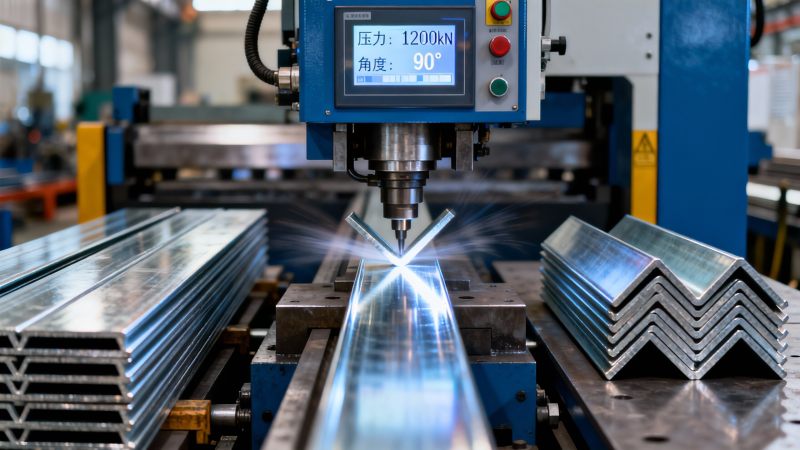
Technical performance drives real cost: bending behavior, residual stresses, weldability, and finishing needs all translate into labor hours and scrap. Best practices for cold formed angle bending begin with tool design—use progressive die strategies and compensate for spring-back in press brake programming rather than relying on corrective rework. For operators handling sheet steel angle, maintain tight control of clamp pressure, bending speed, and die radius; these inputs influence edge quality and reduce the need for grinding or touch-up that increases fabrication cost. Where welding is required, prefer fillet weld sizes and joint preparations that align with the thickness and grade of structural angle iron to avoid over-welding. When comparing alternatives, analyze lifecycle cost: angle bars from hot-rolled stock may require less bending setup but often cost more per kilogram and reduce nesting efficiency; cold formed sheet solutions typically allow better nesting on flat sheets, minimizing scrap. Consider hybrid approaches—use right angle steel plate in high-load nodes and sheet metal angle where secondary members can be lighter. Standardization across projects lowers engineering time: specify a limited set of leg lengths and thicknesses for 90 angle metal to enable repeatable programming and bulk tooling. For quality and safety managers, implement simple NDT or dimensional spot checks at defined frequencies to detect process drift before scrap is produced. Finally, quantify energy and throughput: reducing cycle time by even a few seconds per bend multiplies across batches and can yield double-digit percentage savings when combined with material-usage improvements.
Case Studies, Trends & Why Choose Us / Contact
Real-world cases show how integrated decisions deliver the 20% target. In one mid-size fabrication facility, combining optimized nesting of sheet steel angle, tighter bend compensation programming, and consolidated purchasing of angle bars reduced total fabrication spend by roughly 18–22% over six months. The success factors included supplier consistency, operator training on press-brake best practices, and updated acceptance criteria for 90 angle steel to avoid unnecessary rework. Industry trends point toward increased demand for just-in-time delivery, digital tooling libraries, and supplier-managed inventory—areas where companies with global sales networks and complete process chains excel. Shandong Hongteng Fengda Metal Materials Co.. Ltd.'s end-to-end production capability, from steelmaking to rolling and Kaiping processing, allows customers to lock in consistent grades and predictable lead times so that engineering teams can confidently reduce conservatism in specifications and purchase lighter gauges or closer tolerances that lower costs overall. For decision-makers and distributors, the takeaway is clear: prioritize supplier technical support, metallurgy consistency, and logistics reliability. If you want a partner able to support volume needs across North America, Europe, Middle East, South America, Southeast Asia, Africa and Australia, our track record of on-time delivery and emphasis on quality and low cost is directly relevant. Contact us to discuss how your project can adopt these cold formed angle best practices and achieve material, labor, and lifecycle savings. Why choose us? Because integrated production, advanced processing equipment and a strong logistics distribution system let you meet customer needs promptly while keeping promises on price and quality. Reach out to schedule a technical review and receive a tailored procurement and fabrication optimization plan that targets that 20% reduction in fabrication costs.
Anchor:what is angle steel
Related recommendations
 How long does acero prepintado retain gloss and color stability in direct desert sunlight?Acero prepintado gloss & color stability in desert sun? Discover real-world performance data, PVDF vs. polyester longevity, and spec-critical insights for GCC projects.
 Does acero pregalvanizado maintain coating integrity after cold bending to 90 degrees?Acero pregalvanizado maintains coating integrity after 90° cold bending — when engineered right. Discover how Hongteng Fengda guarantees real-world performance, adhesion & corrosion resistance.
 Do the advantages of galvanized steel include reduced fire risk compared to untreated carbon steel?Advantages of galvanized steel include measurable fire-risk reduction vs. untreated carbon steel—learn how zinc delays ignition, buys critical escape time, and enhances safety without false 'fireproof' claims.
 How much does 2 inch ss pipe price increase when upgrading from Schedule 40 to Schedule 80 for high-pressure systems?2 inch ss pipe price increases 18–35% when upgrading from Sch 40 to Sch 80—discover why, when it’s truly needed, and how to avoid overpaying.
Please give us a message


Please enter what you want to find