Choosing between galvanized pipe and black pipe affects more than material selection. It shapes service life, maintenance exposure, code compliance, and total installed cost across water, gas, and outdoor lines.
For steel buyers handling varied project demands, the comparison matters because the wrong pipe can create corrosion issues, pressure risk, or unnecessary replacement cycles. In practice, galvanized pipe and black pipe serve different jobs, even when they look similar at first glance.
Why the Difference Matters in Steel Supply
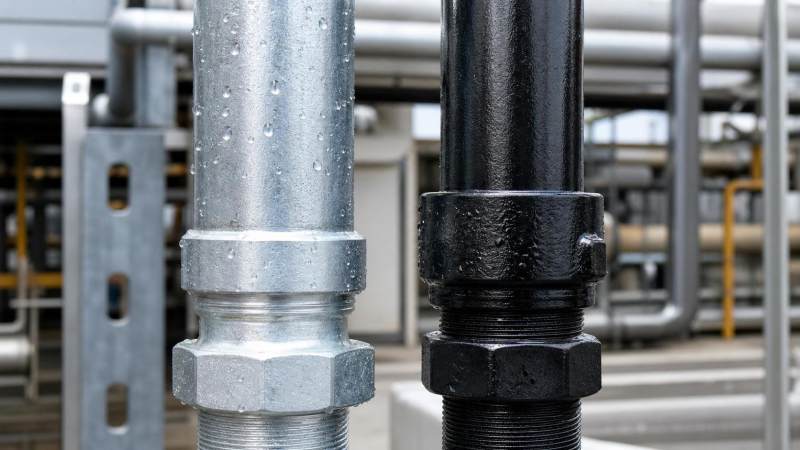
Pipe selection is often treated as a routine line item. It should not be. Water systems, gas distribution, fire protection, and exposed outdoor structures all place different demands on steel pipe.
A galvanized pipe has a zinc coating that protects the steel surface from rust. Black pipe, by contrast, is uncoated carbon steel with a dark mill scale finish.
That single difference changes how each product behaves in humid air, buried conditions, potable water service, and fuel gas lines. It also influences stocking strategy, customer guidance, and after-sales claims.
From a broader steel industry view, this is also a quality conversation. Suppliers with stable production, traceable specifications, and control under ASTM, EN, JIS, or GB frameworks reduce uncertainty for international buyers.
That is why experienced exporters such as Hongteng Fengda focus on consistent steel quality, dependable lead times, and specification matching across global construction and industrial projects.
What Galvanized Pipe and Black Pipe Really Are
Galvanized pipe is usually carbon steel pipe coated with zinc through hot-dip galvanizing or electro-galvanizing. The coating acts as a sacrificial barrier, slowing oxidation when the surface faces moisture and air.
Black pipe is standard steel pipe without zinc coating. It is widely used where corrosion exposure is limited or where the service medium and local codes favor uncoated steel.
Neither option is universally better. The right choice depends on the conveyed medium, the surrounding environment, expected service life, maintenance access, and regulatory acceptance.
Where Galvanized Pipe Fits Best
Galvanized pipe is commonly selected where moisture is a constant concern. Outdoor handrails, exposed support lines, agricultural systems, and certain water distribution uses are typical examples.
In these settings, the zinc coating helps delay rust formation. That can lower repainting frequency, reduce replacement pressure, and improve appearance over time.
For non-aggressive water service, galvanized pipe can still be a practical option, especially where local practice accepts it and buyers need a balance between structural strength and basic corrosion resistance.
Still, water chemistry matters. Hard water, acidic conditions, and older systems can shorten performance. Scale buildup may also become a concern in aging lines.
This is where sourcing decisions benefit from a wider view of steel accessories and related materials. For example, projects that combine fencing, mesh, tie elements, or protective assemblies may also use Mild Steel Wire Rod in Q195 or Q235 grades.
With wire diameters from 0.25 mm to 5.0 mm, zinc coating thickness of 8 to 25 g/m2, and tensile strength of 350 to 550 Mpa, it supports wire mesh, packaging, barrier isolation, and light industrial fabrication around pipe-based systems.
That kind of product integration matters when a buyer wants one supplier network for both pipe and supporting steel components, while keeping corrosion performance and cost under control.
Why Black Pipe Remains the Standard for Many Gas Lines
Black pipe is widely associated with natural gas and propane lines. The reason is practical rather than cosmetic.
It performs well in enclosed gas distribution when moisture exposure is limited and the system is designed for dry service. It is also familiar to installers, inspectors, and code frameworks in many markets.
Galvanized pipe can sometimes be permitted for gas, but acceptance varies by region and code edition. Some authorities restrict it because zinc flakes or internal reaction products may affect fittings or regulators under certain conditions.
That does not mean galvanized pipe is unsafe by default. It means gas applications need local code verification before any specification is finalized.
For supply decisions, this is one of the most important distinctions. A technically sound product can still be the wrong commercial choice if the destination market rejects it for gas service.
Outdoor Exposure Changes the Decision Fast
When pipe will sit outdoors, corrosion pressure rises immediately. Rain, temperature swings, coastal air, and industrial pollutants can all accelerate surface degradation.
In these cases, galvanized pipe usually has the advantage over black pipe. The zinc layer provides a protective buffer before the base steel begins to rust.
Black pipe can still work outdoors if it receives paint, wrapping, or another protective system. But that adds processing steps and future maintenance obligations.
The real comparison is not only pipe price. It is pipe price plus coating method, installation environment, service interval, and replacement risk.
- Use galvanized pipe where exposure is direct and long-term.
- Review salt spray, humidity, and pollutant levels for coastal or industrial areas.
- Check whether threaded cuts, welded zones, or damaged coating need touch-up protection.
- Compare life-cycle cost instead of unit price alone.
Key Questions Before Sourcing
A useful sourcing process starts with service conditions, not catalog names. Galvanized pipe may look like a simple upgrade, but that is only true in the right context.
Medium and environment
Ask what the pipe will carry and where it will operate. Water, gas, drainage, compressed air, and external exposure all change the selection logic.
Code and standard alignment
Confirm which standards apply in the destination market. ASTM, EN, JIS, and GB references should align with project documentation, inspection practice, and import expectations.
Coating quality and consistency
For galvanized pipe, coating uniformity matters. Poor zinc coverage can undermine the whole purpose of choosing it.
Supply reliability
For project-based orders, stable production capacity and dependable lead times are as important as mechanical properties. Missed delivery windows can erase any material cost advantage.
This is where an established structural steel exporter adds value. Hongteng Fengda supports buyers with standard sections, customized steel components, and quality control systems that help reduce sourcing risk across regions.
A Practical Way to Decide
If the line is mainly for gas, black pipe is often the default starting point, subject to local code. If the line faces outdoor exposure or moisture, galvanized pipe often deserves closer attention.
For water service, the decision needs more nuance. Review water chemistry, expected lifespan, internal scaling risk, and whether newer materials are competing in that specification.
The best decisions usually come from comparing four things together: medium, environment, standards, and total cost over time. That framework is more reliable than relying on habit or price alone.
Before placing the next order, map each project by end use, exposure level, and compliance requirement. That makes it easier to judge when galvanized pipe is the better fit, when black pipe is sufficient, and when additional protective measures should be specified.
Please give us a message


Please enter what you want to find