Why does a steel profile matter more than many people expect?
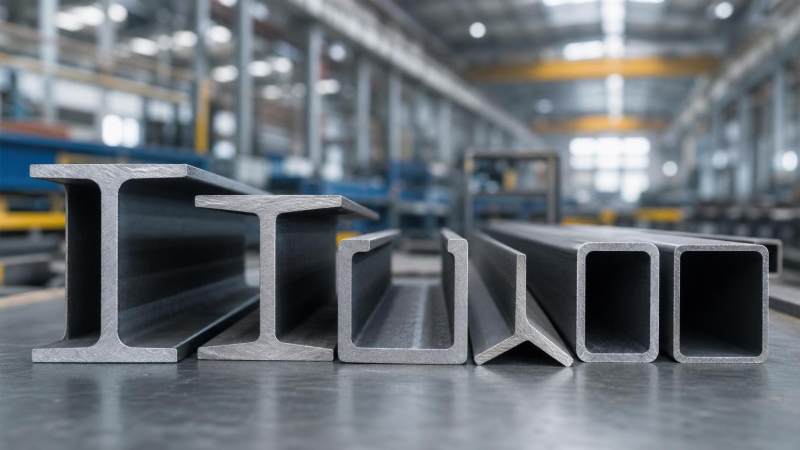
A steel profile is not just a shaped piece of metal.
Its section geometry affects load capacity, welding convenience, installation speed, and material waste.
That is why Profile selection often influences both engineering performance and project cost.
In practical terms, the right steel profile helps a structure stay efficient without becoming overdesigned.
The wrong one can create unnecessary weight, fabrication difficulty, or weak connection details.
This is especially relevant in construction, equipment frames, industrial supports, and customized steel components.
For that reason, profile knowledge is useful even at an early research stage.
It gives a clearer basis for comparing shapes, standards, and sourcing options.
So, what exactly is a steel profile?
A steel profile is a rolled, formed, or fabricated steel section with a defined cross-sectional shape.
Common examples include angle steel, channel steel, I-beams, H-beams, flat bars, and hollow sections.
Each Profile is designed to solve a different structural or fabrication need.
Some shapes resist bending better.
Some are easier to bolt to plates or concrete anchors.
Others reduce weight while keeping decent stiffness.
The manufacturing method also matters.
Hot rolled sections usually serve heavier structural duties.
Cold formed profiles are often chosen for lighter frames, purlins, supports, and precise custom applications.
When suppliers discuss profile options, they are usually talking about shape, size, grade, standard, and processing route together.
Which steel profile shapes are most common, and where are they used?
Search interest usually starts with shape comparison.
That makes sense, because shape is the fastest way to understand function.
In many projects, no single profile shape works everywhere.
A heavier beam may carry the main load, while angle or channel sections handle bracing and support details.
This mixed approach is common in exported structural steel packages.
Companies such as Hongteng Fengda often supply both standard and customized profiles for that reason.
How do you know which Profile is suitable for your application?
A useful selection process begins with the job the section must do.
Load comes first, but it is not the only factor.
A steel profile should also match fabrication method, installation sequence, and service environment.
- Check whether the member mainly resists bending, compression, torsion, or local support loads.
- Confirm section size limits from transport, site access, or equipment design.
- Review connection details early, especially bolt spacing, weld access, and end preparation.
- Match the steel grade and standard to project documents and local compliance needs.
- Consider corrosion exposure, coatings, and maintenance expectations before finalizing the Profile.
In some assemblies, a profile section is only one part of a broader material choice.
For example, structural frames may use carbon steel profiles, while nearby fluid or hygienic lines require stainless tubing.
That is where a product like 304L Stainless Steel Pipe fits naturally.
Its ultra-low-carbon composition, at ≤0.03%, helps reduce intergranular corrosion risk after welding.
It also keeps corrosion resistance, toughness, and machinability in demanding fabrication environments.
Available dimensions typically cover wall thickness from 0.5mm to 50mm and long length options up to 12000mm.
So, even when the main topic is Profile selection, adjacent components still deserve coordinated material review.
What mistakes are common when comparing steel profiles?
One frequent mistake is choosing by appearance alone.
Two sections may look similar, yet perform very differently under the same load.
Another mistake is treating price per ton as the only decision point.
A cheaper Profile can raise total cost if cutting, welding, or reinforcement becomes more complicated.
Standards confusion is also common in international sourcing.
ASTM, EN, JIS, and GB sections may look equivalent, but dimensional tolerances and grades can differ.
That is why experienced exporters put strong emphasis on traceability and specification review.
Hongteng Fengda, for example, works across several international standards because many projects need cross-market compatibility.
A final issue is underestimating lead time for customized sections.
Special punching, unusual lengths, or OEM fabrication can change production planning significantly.
A quick judgment table helps narrow the choice
Does sourcing method affect Profile quality and project risk?
Yes, often more than expected.
A reliable steel profile supply chain is not only about capacity.
It also depends on inspection discipline, dimensional consistency, documentation, and delivery control.
When profiles are exported for construction or industrial projects, repeatability becomes critical.
If flange thickness varies too much, or hole placement drifts, field assembly slows down immediately.
That is why many buyers prefer suppliers with modern production lines and experience across ASTM, EN, JIS, and GB requirements.
The practical benefit is lower sourcing uncertainty.
It becomes easier to control cost, predict lead time, and reduce rework after shipment.
For customized Profile orders, drawing review and sample confirmation are often worth the extra step.
What should you confirm before making a final steel profile decision?
A good final check is surprisingly simple.
Make sure the Profile works in design, fabrication, logistics, and service conditions at the same time.
- Section shape and size match the actual load case.
- Material grade aligns with project standard and certification needs.
- Connection details are buildable with available tools and site conditions.
- Surface treatment fits the environment and expected service life.
- Lead time, packing, and shipping details support the construction schedule.
A steel profile is a basic product, but the decision behind it is rarely basic.
The most effective approach is to compare shapes with real application conditions in mind.
If the project also includes pipes, supports, or customized assemblies, review those parts together rather than separately.
That usually leads to a cleaner specification, fewer sourcing gaps, and a more predictable result.
As a next step, organize the required standards, dimensions, environment notes, and fabrication details before comparing quotations.
That makes any Profile discussion far more accurate and useful.
Please give us a message


Please enter what you want to find