Before installation, project managers must verify right angle steel plate tolerances to avoid fit-up failures, safety risks, and costly rework. This 2025 checklist focuses on measurable checks—from steel angle bending and bend allowance to dimensional limits for 90 angle steel and sheet metal angle profiles—covering angle bars, cold formed angle, and structural angle iron. Learn how to inspect thickness, squareness, flatness, edge condition, and mill certifications so procurement, quality control, and on-site teams can ensure compliance, streamline installation, and protect project schedules and budgets. In practice, a single overlooked deviation in sheet steel angle or incorrect assumption about steel angle bending can cause cumulative misalignment across multiple connections and assemblies. Project managers, quality control staff, and installers should therefore treat tolerances as both a procurement requirement and a field acceptance criterion; they must coordinate the mill certificate review with dimensional verification at receipt and again at the erection stage. This paragraph begins the detailed, practical guidance you need: what to measure, how to measure it, what limits are realistic for cold formed angle products, when to reject a batch of 90 angle metal, and how to document non-conformances so corrective actions preserve schedule integrity and safety outcomes. It is often useful to create a pre-installation checklist that includes key items such as leg length, thickness, angle deviation from 90 degrees, straightness, and edge condition, and to require the supplier to provide mill test reports and heat numbers tied to each bundle. In borderline tolerance cases, on-site bending or minor rework may be acceptable, but only after risk analysis and sign-off from structural engineers and safety managers; otherwise, the right decision might be to return the material or source a replacement. This primer is written for decision-makers, purchasers, site supervisors, quality managers, installation crews, and after-sales teams who must make fast, defensible decisions about angle bars, sheet metal angle, and related profiles in the field.
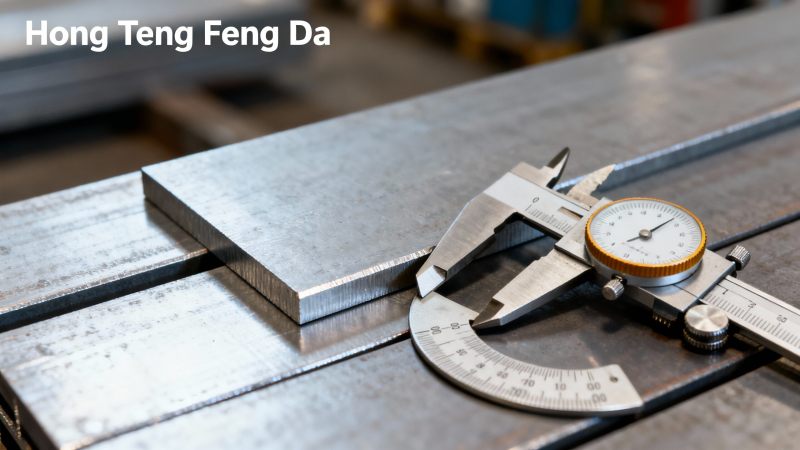
Definition and Market Overview: What Right Angle Steel Plate Tolerances Mean for Projects
Defining tolerance in the context of right angle steel plate work is straightforward but the implications are broad: tolerance describes the allowable deviation from nominal dimensions and geometric conditions such as perpendicularity, leg length, thickness, and bend radius. When people talk about 90 angle steel or sheet steel angle tolerances, they mean the permissible range within which material remains acceptable for the intended structural or architectural application. The market for angle bars and structural angle iron spans heavy structural fabrication, light building frames, brackets, racks, and specialty architectural trim. Demand patterns vary: construction projects emphasize weldability, consistent leg length, and predictable steel angle bending behavior; fabricators look for repeatable cold formed angle characteristics and accurate edge conditions that minimize downstream machining; distributors care about bundle integrity and traceability to mill certifications. A reliable supplier ecosystem reduces the frequency of field rejections, so many contractors now require pre-shipment inspection, mill test certificates, and clearly stated tolerance bands in purchase orders. Global trade flows mean that domestic producers with integrated steelmaking and rolling — combining coking, sintering, steelmaking, and rolling processes — have advantages in traceability and consistent metallurgical quality, which directly affects tolerance consistency. For procurement managers and distributors, the choice of material grade, processing route (hot rolled vs cold formed), and finishing treatments will alter expected tolerances; cold formed angle products often have tighter dimensional spread on leg length but may show localized springback after bending. From a market perspective, buyers prioritize quick delivery, competitive pricing, and proven quality systems. Shandong Hongteng Fengda Metal Materials Co.. Ltd. is well positioned in this landscape because it integrates modern iron and steel production processes, advanced Kaiping processing equipment, and a global sales network that supports stable supply to North America, Europe, the Middle East, Southeast Asia and other regions. That combination of scale, processing capability, and logistics makes it easier for projects to source consistent angle bars, 90 angle metal, and sheet metal angle profiles with documented tolerances and reliable lead times.
Technical Performance and Measurement Parameters
For engineers, inspectors, and installers, the technical dimension of right angle steel plate tolerances is where quality meets action. Key measurable parameters include leg length, thickness, angle deviation from 90°, squareness between legs, flatness along each leg, straightness along the centerline, bend radius and bend allowance, edge condition (sharp vs burr-free), and surface defects. Measuring these requires calibrated tools: calipers for thickness, tape and rulers for leg length, combination squares and angle gauges for angularity, straightedges and feeler gauges for flatness, and portable CMM or laser scanners for complex acceptance checks in high-precision projects. The following table summarizes typical industry-accepted tolerance bands for common structural and cold-formed angle products; treat them as starting points and always reference contract documents and applicable standards for final acceptance.
Standards such as ISO and ASTM provide the framework for measuring many of these attributes—for example, ASTM A36 and various GB standards cover compositional and mechanical requirements, while dimensional tolerance guides exist in both national and industry-specific references. For cold formed angle, the manufacturing route can influence residual stresses and therefore springback; this affects steel angle bending outcomes and the accuracy of the final 90 angle steel shape. Non-destructive testing and sample destructive tests (tensile, hardness) should be used to confirm that the delivered materials meet mechanical property expectations stated in the contract. Documenting all measurements with photos, calibrated instrument logs, and traceable mill test certificates improves defensibility in dispute resolution and supports quality teams in approving or rejecting shipments.
Procurement Guide and On-Site Acceptance Checklist
Procurement teams and site buyers must embed tolerance criteria into purchase orders and inspection plans. A good procurement guide includes steps for specifying tolerances, requesting mill test certificates (MTCs) with heat numbers, sample pre-shipment photos, and a clear non-conformance acceptance protocol. When receiving bundles of angle bars or sheet metal angle profiles, practical checks include verifying bundle labels against the packing list, spot-checking dimensions on random pieces, and confirming traceability to MTCs. It is recommended to set aside a small inspection area at the yard with calibrated tools and a documented receipt inspection form that records leg length, thickness, angle check, straightness, and surface condition for a statistically representative sample size. For many projects, early-stage inspections uncover issues that can be corrected before the product is moved to the staging area or prepped for welding. Project managers should also plan for environmental influences: temperature and humidity can affect dimensional checks on long lengths, and handling can introduce dents or edge damage that alter apparent flatness. Shandong Hongteng Fengda Metal Materials Co.. Ltd. offers robust logistics and processing capacity, which helps reduce transit-related damage and supports rapid re-supply if defective material is detected. The company’s integrated steelmaking and rolling processes, plus advanced Kaiping processing equipment, allow customers to request tighter tolerances and gain better predictability in steel angle bending behavior. For projects that integrate specialized products, you can also source related items such as Steel Sheet Piles from the same reliable supply chain to reduce vendor management effort and increase traceability across material families. Use short lead times to your advantage: confirm availability and shipping options so site schedules are not compromised when a rejected batch requires replacement. Finally, include a clause for third-party inspection when risk is high or when product specifications are unusually tight.
Case Studies, Common Misconceptions and Practical Tips
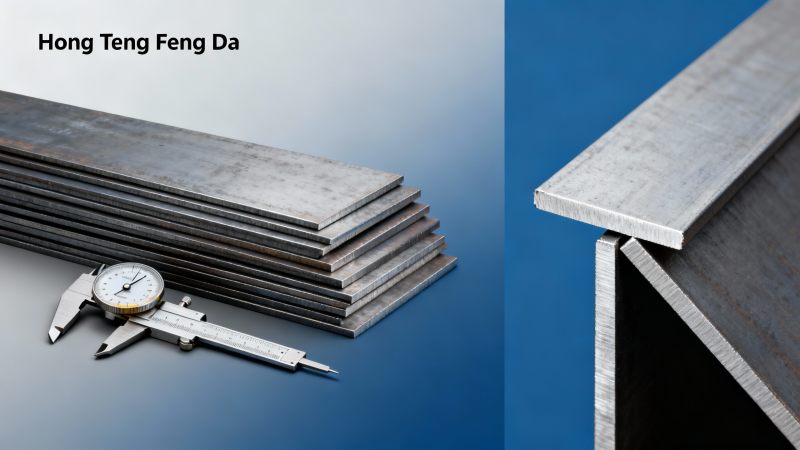
Multiple real-world projects illustrate how early attention to tolerances prevents costly outcomes. In one medium-rise building project, a contractor accepted a shipment of cold formed angle with nominal leg lengths that varied by 4 mm beyond the specified tolerance. The deviation was discovered only at the pre-assembly stage, requiring partial disassembly of fabricated frames and welding rework that delayed the facade installation by three weeks. Contrast that with a manufacturing plant expansion where the procurement manager required MTCs, pre-shipment photos, and a 5% random dimensional check at arrival; any anomalies were quarantined and dealt with within 48 hours by the supplier, keeping the erection timeline intact. A few misconceptions persist among stakeholders: (1) "All angle profiles from the same mill are identical" is false; production run and rolling parameters cause batch-to-batch variation. (2) "Minor angle deviation is always tolerable" is risky because cumulative deviations across multiple connections can create non-fit conditions. (3) "Cold formed angle never needs additional machining" is untrue for precision installations. To mitigate those risks, enforce documentation, use sample destructive testing where mechanical properties are critical, and build a communication channel with your supplier for rapid corrective action. For distributors and agents, offering value-added inspection services on arrival builds trust with end-customers. In summary, practical tips include: establish acceptance criteria in the PO, perform documented receipt checks, retain samples for future reference, and insist on traceability to MTCs and heat numbers so any metallurgical concerns can be traced back to specific production runs. These actions save money and avoid schedule slippage.
FAQ, Why Choose Us and Contact
FAQ: What is the single most important pre-installation check? Many specialists answer: confirm leg length and angle deviation from 90° against the drawing tolerances and verify with the mill certificate. How often should on-site checks be performed? At minimum, perform acceptance checks on each incoming shipment and additional checks after any handling that could damage profiles. Can small deviations be corrected on site? Sometimes yes, with controlled bending or localized machining, but only after engineering approval. Why choose a partner like Shandong Hongteng Fengda Metal Materials Co.. Ltd.? The company combines full-process capabilities—from coking, sintering, steelmaking, to rolling—with modern processing equipment and a strong logistics network, enabling consistent tolerance control, wide product specifications, competitive pricing, and fast delivery. Its exports reach North America, Europe, the Middle East, South America, Southeast Asia, Africa, and Australia, and many projects recognize the value of having a supplier that can provide both commodity angle bars and more specialized items with traceable mill certifications. For project managers, quality personnel, and procurement teams, this integrated approach reduces vendor count and simplifies quality assurance protocols. Contact: for inquiries on tolerance specifications, pre-shipment inspection options, or to request certificates and sample reports, reach out through the normal sales channels or contact our local distributor. Why wait until an installation issue becomes a critical path delay? Choose a supplier that commits to quality, on-time delivery, and technical support. Our teams are prepared to advise on tolerance selection, recommend inspection frequency based on risk, and provide fast replacement solutions when deviations occur. Make tolerance checks a contractual requirement and protect your schedule and budget today.
Related recommendations
 How to Select a Steel Profile Based on Load, Span, and Fabrication NeedsProfile selection starts with load, span, and fabrication needs. Learn how to compare steel sections for strength, cost, workability, and sourcing efficiency.
 What Is a Steel Profile? Common Shapes, Uses, and Selection BasicsProfile selection starts with shape, but performance depends on load, fabrication, and standards. Learn common steel profile types, uses, and smart selection basics.
 Galvanized Pipe vs Black Pipe: Which One Fits Water, Gas, or Outdoor Lines?Galvanized pipe or black pipe? Compare the best choice for water, gas, and outdoor lines, with key insights on corrosion, codes, cost, and long-term performance.
 How to Choose Steel Roofing for Warehouses, Farms, and Residential BuildingsSteel Roofing selection depends on building type. Learn how warehouses, farms, and homes differ in corrosion, insulation, drainage, and cost for smarter roofing decisions.
Please give us a message


Please enter what you want to find