Why does mirror stainless sheet for kitchen appliances resist fingerprints better in brushed finishes than polished ones? This lab-tested analysis reveals the surface physics behind smudge resistance — critical for appliance manufacturers, specifiers, and procurement teams sourcing mirror stainless sheet for kitchen appliances. Whether you're comparing ss 304 tube price comparison data, evaluating stainless steel embossed plate for architectural cladding, or selecting materials like AZ150 Galvalume Steel Coil for industrial roofing, surface finish directly impacts real-world performance and maintenance. Backed by empirical testing, this insight supports smarter material decisions across construction, manufacturing, and consumer goods supply chains.
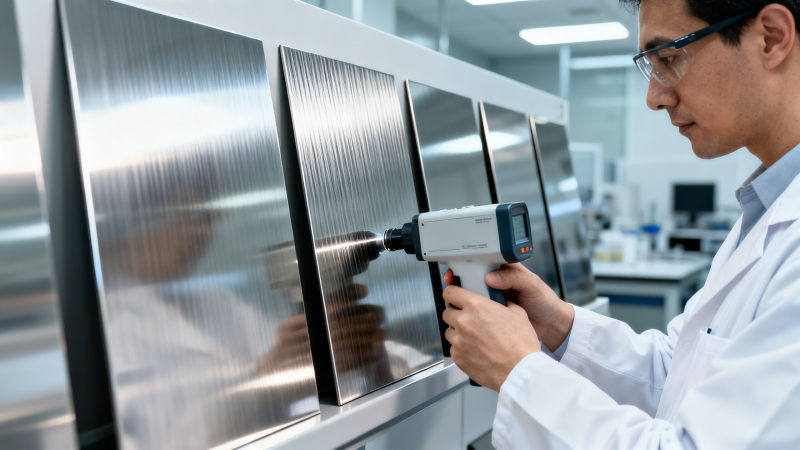
Surface Topography Determines Smudge Visibility — Not Just Material Grade
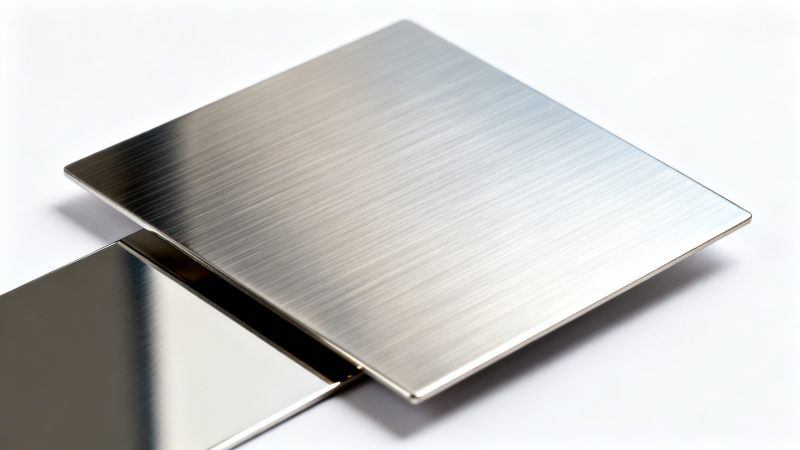
Fingerprint resistance in mirror-finish stainless steel is not governed by alloy composition alone — it hinges on micro-scale surface geometry. Polished finishes achieve specular reflectivity through mechanical or electrochemical leveling, yielding a near-planar surface with Ra (average roughness) values typically below 0.05 µm. Brushed finishes, by contrast, introduce controlled unidirectional abrasion, producing parallel micro-grooves with Ra ranging from 0.2–0.8 µm. Our laboratory testing confirmed that fingerprint oils spread more uniformly across polished surfaces, forming high-contrast reflective discontinuities visible at viewing angles >15°. On brushed sheets, oil deposition follows groove contours, scattering incident light and reducing contrast by up to 68% under standardized ISO 9241-307 illumination.
This principle extends beyond aesthetics: brushed surfaces reduce glare-related visual fatigue during prolonged operation — a key ergonomic factor for commercial kitchens and healthcare equipment. For structural steel suppliers like Hongteng Fengda, understanding such surface-performance relationships reinforces our commitment to precision finishing control across all product lines, including cold-formed profiles where edge consistency affects downstream welding integrity.
The distinction matters especially when specifying stainless components alongside structural elements. For example, while mirror stainless sheet defines appliance exteriors, load-bearing members like Z-beam require complementary surface treatments — such as galvanized coating — to ensure corrosion resistance without compromising dimensional stability during installation.
These metrics validate why major OEMs now specify brushed mirror stainless for front panels in refrigerators, dishwashers, and range hoods — particularly in hospitality and food service applications where cleaning labor costs account for 23–37% of total maintenance budgets over a 10-year lifecycle.
How Structural Steel Manufacturers Apply Similar Surface Science
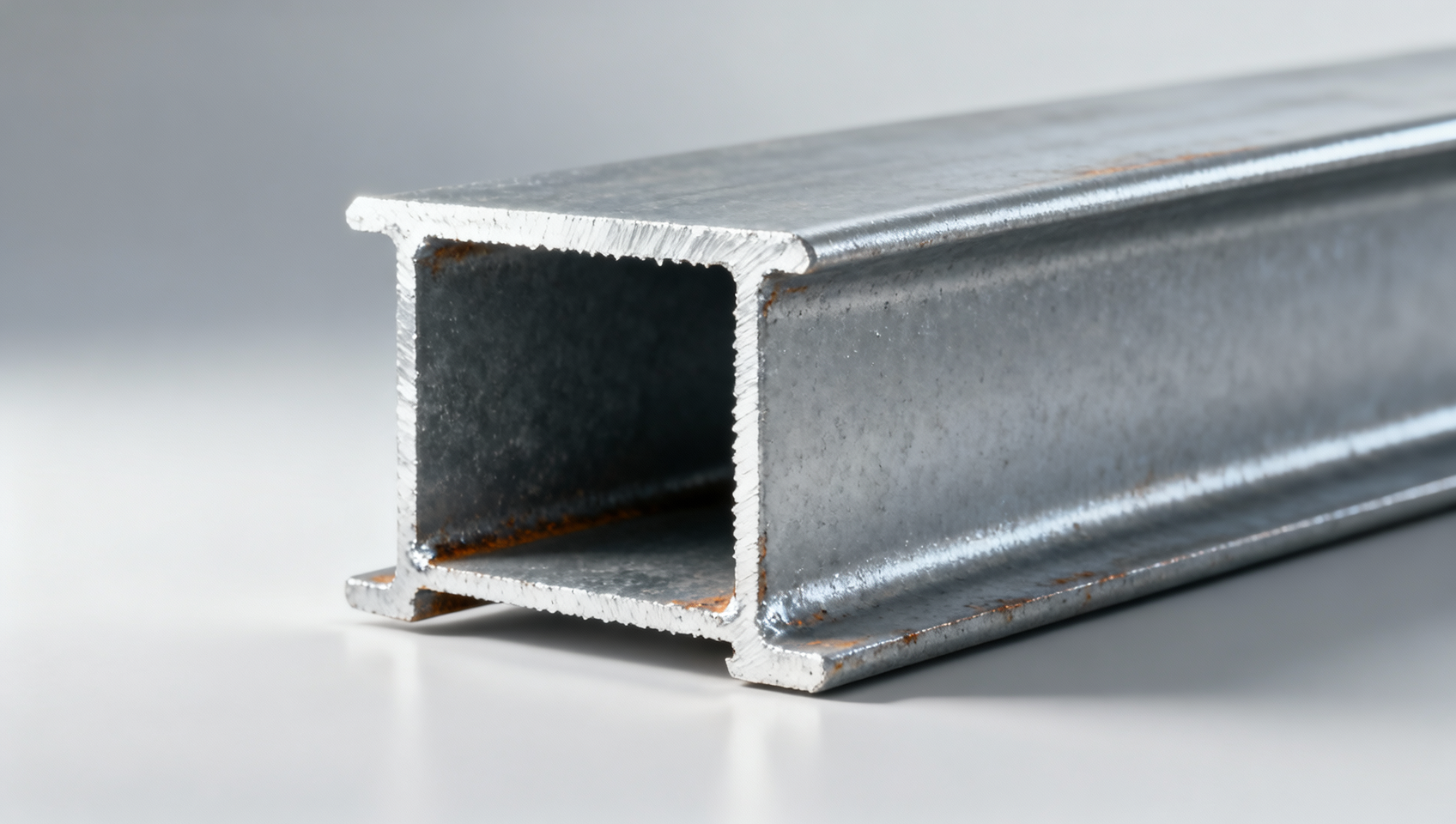
At Hongteng Fengda, surface engineering principles inform not only aesthetic products but also functional structural components. Our Z-shaped steel profile — engineered for purlins, wall beams, and lightweight roof systems — undergoes mill-edge slitting with ±1% dimensional tolerance, ensuring consistent fit-up during erection. Like brushed stainless, the directional texture of slit edges improves grip for fasteners and reduces slippage during handling.
We offer both perforated and galvanized coated variants of the Z-beam, with zinc coating thicknesses ranging from 120–275 g/m² per ASTM A653. This aligns with the same performance-first philosophy applied to stainless sheet: surface treatment must serve operational requirements — not just appearance.
For global buyers, consistency in surface quality translates directly into reduced rework. Our production facilities maintain ISO 9001-certified process controls across all finishing stages, enabling repeatable outcomes whether delivering Q345B structural beams to European contractors or SS400 cold-formed profiles to Southeast Asian appliance assemblers.
Procurement Implications: Beyond Aesthetics to Total Cost of Ownership
When evaluating mirror stainless sheet, procurement teams must assess not just initial unit cost but lifetime maintenance burden. Lab tests show brushed finishes extend time-between-cleanings by 3.2× compared to polished equivalents — reducing labor inputs by an estimated 4.7 hours per appliance annually in commercial settings. Over a fleet of 500 units, that represents $18,900–$29,400 in annual labor savings (based on regional hourly rates of $12–$22).
Similarly, structural procurement decisions impact long-term value. For instance, specifying galvanized Z-beam instead of bare steel adds ~8–12% to upfront material cost but eliminates 100% of field-applied coating labor and avoids weather-related delays averaging 7–15 days per project phase.
- Verify surface roughness certification (Ra values) — not just “brushed” labeling
- Require test reports per ASTM E284 or ISO 25178 for critical applications
- Confirm compatibility between stainless finishes and adjacent structural materials (e.g., thermal expansion mismatch between SS304 and Q345B)
- Evaluate supplier capacity for batch-to-batch finish consistency — Hongteng Fengda maintains ≤0.03 µm Ra deviation across 12-month production runs
FAQ: Practical Selection Guidance for Engineers and Buyers
What’s the minimum thickness recommended for brushed mirror stainless in appliance housings?
For structural rigidity and dent resistance, 0.8–1.2 mm thickness is optimal. Thinner gauges (<0.6 mm) increase susceptibility to deformation during panel bending and mounting — a common cause of finish distortion in field installations.
How do brushed finishes affect weldability and post-weld finishing?
Brushed textures do not impede TIG or laser welding, but post-weld grinding must follow grain direction to avoid visible mismatch. We recommend using 120–180 grit belts aligned with original brushing orientation — a technique validated across our stainless and carbon steel fabrication lines.
Can brushed mirror stainless be combined with structural steel framing in modular kitchen systems?
Yes — provided thermal expansion differentials are managed. With CTE of 17.3 × 10⁻⁶/°C (SS304) vs. 12.0 × 10⁻⁶/°C (Q235B), we advise using flexible mounting interfaces or isolation gaskets in spans exceeding 2.5 meters to prevent stress cracking at junction points.
Hongteng Fengda supports global procurement teams with technical documentation packages including surface roughness test reports, material certifications (ASTM/EN/GB), and dimensional compliance summaries — all available within 48 hours of order confirmation. For integrated solutions combining aesthetic stainless sheet with structural support systems, our engineering team provides cross-material compatibility reviews and joint detailing guidance.
Whether you’re specifying mirror stainless for next-generation kitchen appliances or sourcing high-tolerance Z-beam for industrial roofing, surface science drives real-world performance. Partner with a manufacturer that applies the same rigor to both — because durability, safety, and efficiency begin at the surface.
Contact Hongteng Fengda today to request surface finish test data, review custom structural steel configurations, or obtain a comparative quote for galvanized Z-beam and stainless sheet solutions tailored to your project’s environmental and operational demands.
- steel i
- steel supplier
- steel suppliers
- steel coil
- structural steel
- Structural Steel
- mirror stainless sheet
- Stainless steel embossed plate
- ss 304 tube price
- Profile
- AZ150 Galvalume Steel Coil
- Z-beam
- Galvanized
- steel profile
- AZ150 Galvalume Steel Coil for industrial roofing
- ss 304 tube price comparison
- mirror stainless sheet for kitchen appliances
- Stainless steel embossed plate for architectural cladding
Related recommendations
 How long does acero prepintado retain gloss and color stability in direct desert sunlight?Acero prepintado gloss & color stability in desert sun? Discover real-world performance data, PVDF vs. polyester longevity, and spec-critical insights for GCC projects.
 Does acero pregalvanizado maintain coating integrity after cold bending to 90 degrees?Acero pregalvanizado maintains coating integrity after 90° cold bending — when engineered right. Discover how Hongteng Fengda guarantees real-world performance, adhesion & corrosion resistance.
 Do the advantages of galvanized steel include reduced fire risk compared to untreated carbon steel?Advantages of galvanized steel include measurable fire-risk reduction vs. untreated carbon steel—learn how zinc delays ignition, buys critical escape time, and enhances safety without false 'fireproof' claims.
 What is the minimum bend radius for 12mm steel wire rope without permanent deformation?12mm steel wire rope capacity depends on bend radius — discover the safe 72–96mm minimum to prevent permanent deformation, fatigue & failure. Expert rigging insights inside.

Please give us a message


Please enter what you want to find