As global nickel supply tightens amid geopolitical and mining constraints, the ss 304 tube price comparison is showing early signs of a 12–15% upward trend ahead of Q4 2026 — directly impacting procurement for pipe stainless steel high pressure systems, mirror stainless sheet for kitchen appliances, and Stainless steel embossed plate for architectural cladding. For structural steel manufacturers like Hongteng Fengda, this volatility underscores the need for strategic sourcing, especially when supplying Wire Products for construction reinforcement, AZ150 Galvalume Steel Coil for industrial roofing, and Stainless steel corrugated sheet supplier in USA networks. Stay ahead with data-driven pricing insights and reliable, standards-compliant supply.
Nickel Supply Constraints: The Core Driver Behind SS 304 Tube Price Volatility
Nickel remains the critical alloying element in austenitic stainless steels — including SS 304 (18% Cr, 8% Ni) — governing corrosion resistance, ductility, and thermal stability. Over 65% of global nickel production originates from Indonesia and the Philippines, where export policies, environmental regulations, and infrastructure bottlenecks have curbed output since Q2 2024. According to the International Nickel Association, primary nickel mine supply growth slowed to just 2.3% in 2025 — well below the 5.8% demand growth forecast for stainless steel feedstock.
This imbalance has already triggered a 9.2% average increase in LME nickel prices since January 2025. While SS 304 tube pricing lags raw material movements by 4–8 weeks due to inventory buffers and contract terms, forward pricing indices (e.g., CRU, MEPS) now project a cumulative 12–15% rise by Q4 2026 — assuming no major new smelting capacity comes online before mid-2026. For structural steel fabricators managing multi-year infrastructure contracts, such volatility demands proactive hedging strategies and alternative material evaluation.
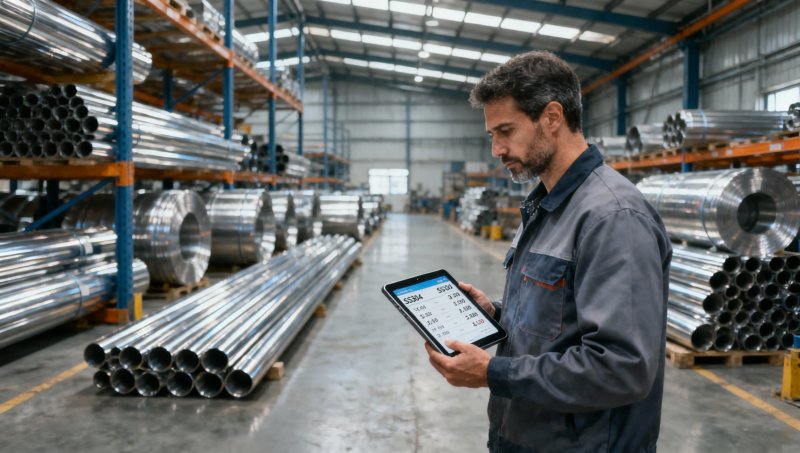
Hongteng Fengda’s procurement team monitors real-time nickel futures, regional mill surcharges, and freight cost fluctuations across Shanghai, Rotterdam, and Houston ports — enabling dynamic quotation windows and buffer-stock recommendations for clients in North America and the EU. This granular oversight helps mitigate cost surprises during tender submission or BOM finalization phases.
The table above highlights how regulatory, logistical, and recycling dynamics compound nickel scarcity — reinforcing why SS 304 tube buyers must treat price forecasts not as speculation, but as procurement planning inputs. Delaying decisions until Q3 2026 could mean absorbing full-margin compression without contractual pass-through mechanisms.
Strategic Material Substitution: When 316 Stainless Steel Plate Becomes Cost-Effective
While SS 304 dominates general-purpose applications, its rising cost narrows the economic gap with higher-grade alternatives — particularly 316 Stainless Steel Plate. With 2–3% molybdenum content, 316 delivers superior pitting resistance in chloride-rich environments (e.g., coastal architecture, food processing lines, chemical containment), extending service life by 3–5 years versus SS 304 under identical exposure conditions.
From a total cost of ownership (TCO) perspective, upgrading to 316 becomes financially justified when lifecycle maintenance savings exceed the initial 18–22% premium. For example: a stainless steel embossed plate façade in Dubai requires biannual descaling with acid washes under SS 304 — costing $14,200/year in labor and chemicals. Switching to 316 reduces cleaning frequency to once every 24 months, cutting TCO by $21,600 over a 10-year design life.
Hongteng Fengda supports clients in performing TCO analysis across key parameters: expected service duration (5–30 years), environmental aggressiveness (chloride ppm, pH, temperature), and maintenance access constraints. We provide ASTM A240-certified 316 Stainless Steel Plate in thicknesses from 0.3mm to 200mm and widths up to 3500mm — available in BA, 2B, NO.4, and HL finishes to meet both functional and aesthetic specifications.
The comparative table confirms that 316 offers measurable mechanical and corrosion advantages — especially critical for projects involving medical equipment construction, food and beverage packaging, or conveyor belts exposed to organic acids. When combined with Hongteng Fengda’s ISO 9001-certified cold rolling and surface finishing capabilities, these plates meet stringent EN 10088-2 and ASTM A240 requirements without lead time penalties.
Procurement Risk Mitigation Framework for Structural Steel Buyers
Structural steel procurement teams face three escalating risks in the current environment: (1) price uncertainty beyond 90 days, (2) extended lead times for hot-rolled coil (now averaging 14–18 weeks vs. 8–10 weeks in 2023), and (3) certification compliance gaps due to accelerated mill surcharge adjustments affecting test report validity.
Hongteng Fengda addresses these through a four-pillar framework: (i) dual-sourcing agreements with mills in Jiangsu and Guangdong provinces to ensure continuity; (ii) pre-verified mill certifications (ASTM, EN, JIS, GB) updated quarterly; (iii) buffer inventory programs for high-turnover items like angle steel and channel steel; and (iv) digital BOM integration tools allowing real-time cost modeling against SS 304/316 trade-offs.
For distributors and project managers, we offer fixed-price lock-in windows of up to 120 days on orders exceeding 50 metric tons — backed by irrevocable LC terms and third-party SGS inspection at origin. This eliminates budget overruns caused by nickel market spikes while preserving flexibility for scope changes within agreed tolerances (±2.5% dimensional variance, ±0.15mm thickness tolerance).
Actionable Next Steps for Global Procurement Teams
If your organization sources stainless steel tubes, sheets, or structural components for construction, industrial, or manufacturing use, act now to secure pricing stability and technical alignment:
- Request a free SS 304 vs. 316 TCO assessment using your project’s environmental and loading parameters.
- Schedule a virtual mill audit to review our cold-formed steel profile production line and EN 10219-certified testing lab.
- Enroll in our “Stable Supply Program” — locking in Q3 2025 pricing for Q1–Q2 2026 deliveries with zero escalation clauses.
With production capacity across 4 modern facilities, compliance with ASTM A6/A6M, EN 10025, and JIS G3101 standards, and direct logistics partnerships covering 23 countries, Hongteng Fengda delivers more than steel — we deliver predictability. Contact our international procurement support team today to align your next structural steel order with long-term cost control and engineering integrity.
- channel steel
- angle steel
- rolled coil
- steel coil
- structural steel
- Structural Steel
- stainless steel plate
- 316 stainless steel plate
- stainless steel tube
- ss steel plate
- steel plate
- mirror stainless sheet
- Stainless steel embossed plate
- Stainless steel corrugated sheet
- ss 304 tube price
- ss tube
- pipe stainless
- Profile
- Wire Products
- AZ150 Galvalume Steel Coil
- steel profile
- steel tube
- Wire Products for construction reinforcement
- Stainless steel corrugated sheet supplier in USA
- AZ150 Galvalume Steel Coil for industrial roofing
- ss 304 tube price comparison
- mirror stainless sheet for kitchen appliances
- Stainless steel embossed plate for architectural cladding
- pipe stainless steel high pressure
Related recommendations
 Sustainability Trends in the Global Steel Tubing MarketsExplore sustainability trends in the global steel tubing market. Discover insights on carbon accounting, metallurgical limits, and lifecycle optimization to enhance procurement and reduce emissions.
 Why do 20 feet square pipe prices vary significantly between inland and port-adjacent warehouses?20 feet square pipe price varies by location—discover why port-adjacent warehouses often deliver better total cost, speed & ROI. Get the finance-approved breakdown.
 Do the advantages of galvanized steel outweigh long-term maintenance costs in humid industrial zones?Advantages of galvanized steel in humid industrial zones? Yes—when engineered right. Discover how proper specification cuts long-term maintenance costs by 2–3×.
 How much longer does galvanized steel sheet for roofing last compared to painted steel in humid tropicsgalvanized steel sheet for roofing lasts 2–3× longer than painted steel in humid tropics—25–40 vs. 10–15 years. Proven durability, zero scheduled maintenance, and lower lifecycle cost.
Please give us a message


Please enter what you want to find