Understanding ASTM Steel Profile Specifications for Transmission Tower Projects
Understanding ASTM steel profile specifications is essential for ensuring the strength, safety, and durability of transmission tower projects. As a leading Structural Steel Manufacturer & Exporter from China, Hongteng Fengda provides high-quality ASTM steel beam for industrial shelving, C section steel for trailer manufacturing, and steel profiles for automotive industry. From hot rolled I beam for structural support to structural steel purlin for commercial buildings, our expertise helps global partners achieve reliable performance and compliance in every project.
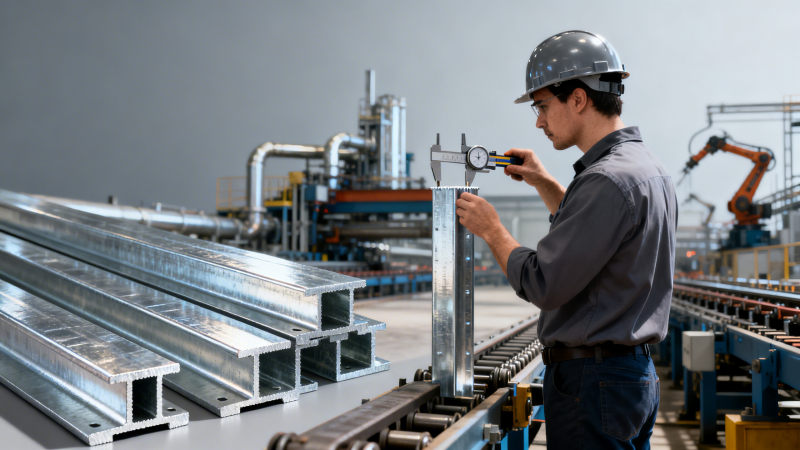
Why ASTM Specifications Matter in Transmission Tower Projects
ASTM (American Society for Testing and Materials) standards set the foundation for quality, durability, and safety in the global steel industry. In transmission tower projects, where wind resistance and load-bearing capacity fluctuate between 50 kN and 500 kN, the precision of material specifications is non-negotiable. Structural failures can lead to costly downtime, safety hazards, and long-term integrity issues. Using steel profiles built to ASTM A36, A992, or A572 standards ensures chemical composition control, tensile strength above 450 MPa, and flexibility required for high-altitude installations.
For procurement specialists, ASTM ensures comparability across suppliers, predictable performance, and transparency in steel grade selection. Project managers benefit from reduced inspection time—by up to 20%—since certified profiles come with pre-verified compliance documents. Quality control inspectors also gain standardized evaluation criteria, aligned with ISO 9001 workflows.
Transmission towers often operate for over 30 years and must withstand temperature ranges of −40 °C to +60 °C. Specifying ASTM-compliant steel with controlled carbon content (typically below 0.25%) enhances weldability and corrosion resistance, two factors critical for high-humidity or coastal regions. Precision-driven ASTM classifications help companies avoid over-specification, saving up to 8% in raw material costs without compromising safety margins.
Choosing vendors experienced with ASTM certification, such as Hongteng Fengda, minimizes inspection rework. By integrating test reports, mill certificates, and third-party inspection protocols, project compliance is streamlined. This structured documentation facilitates delivery approval within 7–10 days, accelerating project mobilization phases.
The table highlights the key mechanical differences between popular ASTM grades. Selecting the right grade affects not only load capacity but also the fabrication cost per tonne. For example, A992 typically offers 15% higher yield strength compared with A36, leading to optimized weight design and reduced tower mass.
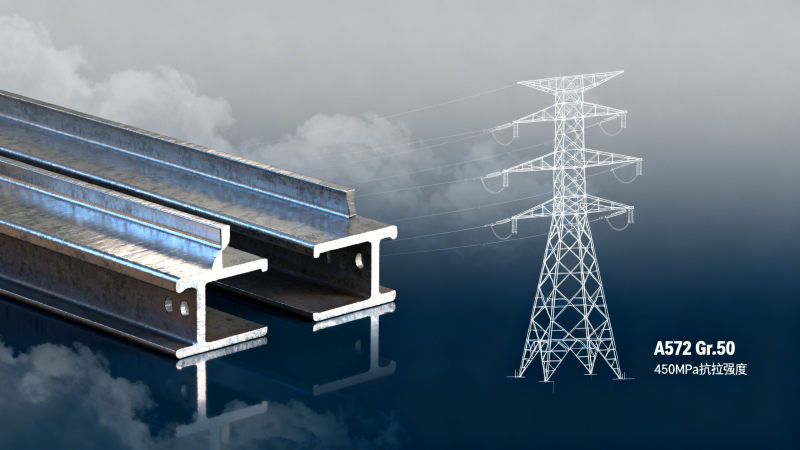
Key ASTM Steel Profile Parameters for Project Designers
Design engineers should focus on both mechanical and geometric parameters when working with ASTM profiles. Critical dimensions—such as flange thickness, web depth, and cross-section area—affect stress distribution, deflection behavior, and vibration resistance. The standard tolerance for profile straightness is ±2 mm per meter, while cross-sectional deviations should remain below 1.5%. Maintaining such precision helps prevent misalignment during erection, saving up to 25% of onsite adjustment time.
Surface treatments such as passivation, oiling, or galvanized coatings further protect structural integrity. For projects in corrosive atmospheres with chloride levels exceeding 75 mg/m³, hot-dip galvanization (minimum 85 µm coating) is advisable. Manufacturers like Hongteng Fengda use pre-treatment lines with automated phosphating and color painting to ensure service life exceeding 25 years in harsh conditions.
Product integration matters as well. Items such as the A36 Carbon Steel Round Bar demonstrate how specific ASTM-specified materials support tower anchor systems, bracing, and hardware fabrication. With tensile strength ≥ 520 MPa and customizable diameters from 5 mm to 2500 mm, they fit a wide range of load-carrying components while maintaining compliance with AISI, ASTM, DIN, and JIS standards.
When selecting profiles for tower legs, the following dimensional goals are practical benchmarks:
- Leg angle steel: 50×50×5 mm to 200×200×20 mm range, depending on tower height (30–150 m).
- Channel steel bracings: web depth 100–300 mm; thickness tolerance ±0.3 mm.
- I-beam cross arms: 150–450 mm flange width, yield ratio around 0.85 for ductility.
Matching mechanical ratings to these ranges ensures uniform stress distribution and reduces structural fatigue that can otherwise occur within the first 5 years of operation.
Procurement Standards and Quality Assurance Process
From a procurement standpoint, verifying ASTM steel profiles involves multi-stage inspection covering chemical analysis, mechanical testing, and dimensional control. Reliable suppliers follow at least 5 verification stages—raw material inspection, in-process dimensional checks, ultrasonics on weld zones, final packaging audit, and shipping documentation review. Each phase reduces the likelihood of rejected batches, with acceptance rates typically above 98% for compliant producers.
Hongteng Fengda integrates traceability systems that log furnace numbers and batch IDs for every lot. Delivery cycles generally range from 15 to 25 days depending on order volume (between 50 and 500 tons). With continuous production in A36, A572 Gr.50, and S355JR series, lead times stay consistent even during peak demand seasons.
Buyers should examine key certificate types prior to shipping. Materials compliant with EN 10204 3.1 documents are preferable, certifying chemical and physical test conformance from mill laboratories. Third-party verification from SGS or BV further supports compliance in international tenders requiring documented traceability.
Maintaining low defect tolerance helps extend the expected fatigue life of steel members by 20–30%. End users gain confidence knowing that tower structures will perform reliably over decades of service under varied loading conditions.
Real-World Applications and Integration Examples
ASTM-compliant profiles serve beyond tower legs—they also form lattice frameworks, equipment platforms, and maintenance access ways. For example, an A572 Gr.50 channel of 250 mm depth supports cross-beams for 132 kV transmission lines, carrying combined cable and insulator loads over 2 tons. ASTM A36 plates, when used for joint gussets, provide excellent ductility under cyclical stressing, with elongation up to 20%.
Manufacturers tailor profiles between 2 and 12 m length to suit modular fabrication lines. Hongteng Fengda’s workshop automation allows tolerance control within ±1 mm for each 6 m segment. Products such as the A36 Carbon Steel Round Bar also fit in peripheral components including ladders, guardrails, and decorative structural enclosures, showing versatility across both functional and aesthetic domains.
Cross-industry use cases demonstrate that adherence to ASTM standards reduces post-installation maintenance frequency by roughly 30%. In regions with high wind speeds exceeding 120 km/h, engineers revalidate anchor bolt embedment depth using A36-grade rods to sustain secure tower foundations.
Integration of sustainable coating processes—like low-VOC painting and anti-rust oil sealing—aligns with environmental compliance policies in Europe and North America. These improvements can extend repainting intervals from 5 years to 12 years, lowering lifecycle costs by up to 40% while maintaining corrosion resistance according to ASTM B117 salt spray testing.
Common Pitfalls and Selection Mistakes in Steel Profile Procurement
Despite clear ASTM guidelines, incorrect specification interpretation remains a major risk. One frequent error lies in assuming that all A36-rated steel has uniform yield strength regardless of supplier. In reality, batch variations up to ±15 MPa can occur if process controls are insufficient. Shallow attention to heat treatment quality often results in premature microcrack formation during bending operations.
Another oversight is underestimating galvanic corrosion potential when mixing dissimilar metals. Combining carbon steel profiles with aluminum fittings without protective insulation may accelerate pitting corrosion, especially under relative humidity levels above 70%. Quality assurance teams should schedule inspection intervals every 6–12 months to track early corrosion signs.
Procurement professionals should implement at least four evaluation metrics when assessing suppliers:
- Compliance Rate: ≥ 98% of shipments accompanied by valid ASTM certification.
- Dimensional Accuracy: deviation ≤ ±1.5 mm across sections up to 600 mm.
- Surface Quality: visual defect rate below 0.3% after galvanization.
- Delivery Reliability: average on-time rate ≥ 95% over 12-month period.
Establishing these numeric thresholds during contract negotiation helps ensure consistent quality outcomes and cost control across multi-year supply programs.
FAQs About ASTM Steel Profiles for Transmission Towers
How do I determine the right ASTM grade for my tower design?
Select grades according to load class, environmental exposure, and fabrication method. A36 is suitable for general-purpose towers below 60 m, while A572 Gr.50 suits heavy-duty designs up to 150 m. For seismic zones, A992 offers improved notch toughness (≥ 40 J at −20 °C).
What is the typical delivery time for ASTM steel profiles?
Most orders between 100 and 300 tons are completed within 20 days. Custom-rolled or coated components may require additional 5–7 days for surface finishing and export packaging.
Can ASTM-compliant profiles be customized for non-standard tower geometries?
Yes. Hongteng Fengda supports OEM fabrication according to client drawings, offering flange modifications, perforations with tolerance ±0.2 mm, and pre-weld assembly, enhancing installation efficiency by up to 30%.
What documentation accompanies ASTM shipments?
Each lot includes mill test reports, dimensional inspection data, and origin certification under EN 10204 standards, ensuring traceability from raw billet to final shipment.
Conclusion and Partnership Opportunities
Transmission tower projects demand precision-engineered materials that adhere to stringent international standards. Understanding ASTM steel profile specifications allows engineers and procurement teams to align safety factors, cost efficiency, and long-term reliability. Manufacturers equipped with certified production lines, like Hongteng Fengda, provide assured mechanical integrity and timely delivery across diverse project scales.
Whether you require hot rolled I-beams, cold formed C sections, or round bars for anchoring and reinforcement, choosing ASTM-certified solutions ensures compliance and peace of mind throughout your project lifecycle. Contact Hongteng Fengda today to discuss specifications, receive technical consultation, or request a customized structural steel quotation tailored to your transmission tower requirements.
- channel steel
- steel i
- angle steel
- ASTM standards
- ASTM standard
- Hot Rolled I Beam
- ASTM A36
- structural steel
- C section steel
- steel profiles
- ASTM steel beam
- Structural steel purlin
- ASTM steel profile
- Structural Steel
- I-Beam
- Hot Rolled I-Beam
- Profile
- A36 Carbon Steel Round Bar
- S355JR
- Galvanized
- Steel Beam
- carbon steel
- steel profile
- steel round bar
- Structural steel purlin for commercial buildings
- ASTM steel beam for industrial shelving
- Steel profiles for automotive industry
- C section steel for trailer manufacturing
- Hot Rolled I Beam for structural support
Related recommendations
 How to Judge if Steel Sheet for Construction Fits Roofing or Wall CladdingSteel sheet for construction: learn how to judge thickness, coating, profile, and load performance for roofing or wall cladding, and choose a durable, cost-effective fit.
 How to Choose SS Pipe for Water Supply in Corrosion-Prone BuildingsSS pipe for water supply selection guide for corrosion-prone buildings. Compare 304 vs 316 grades, water chemistry, specs, and lifecycle cost to choose a safer, longer-lasting system.
 Steel Wire Rope Manufacturer Standards That Matter in Lifting ApplicationsSteel wire rope manufacturer standards for lifting: learn how to assess traceability, testing, compliance, and real quality control before choosing a safer, more reliable supplier.
 When a Steel Channel Supplier Should Provide Mill Test CertificatesSteel Channel supplier guide on when mill test certificates should be provided for quality control, compliance, and safer procurement.
Please give us a message


Please enter what you want to find