Selecting the Right Structural Steel Purlin Type for Commercial Building Roofs
Selecting the right structural steel purlin for commercial buildings is key to ensuring roof durability, load optimization, and overall project efficiency. From C section steel for trailer manufacturing to ASTM steel beams for industrial shelving, the right choice influences both performance and cost control. As a trusted structural steel manufacturer and exporter from China, Hongteng Fengda provides reliable steel profiles for automotive industry use, Z150 steel sheet for military applications, and customized solutions that meet global construction standards.
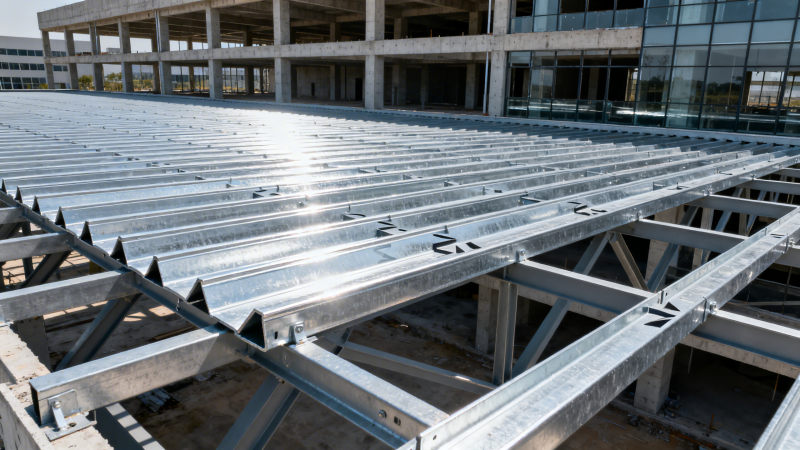
Understanding the Role of Steel Purlins in Commercial Roof Design
Purlins are secondary structural members used in steel building frameworks to support roof sheeting and wall cladding. In commercial buildings, they play a critical role in transferring loads from the sheet to the primary framing structure such as rafters or columns. Proper purlin design helps distribute wind and snow loads effectively across spans ranging from 4 to 12 meters, depending on building type and regional conditions.
By selecting the appropriate purlin type, builders can reduce material usage by up to 15%, improve ease of installation, and ensure compliance with safety standards like GB50017-2017, ASTM A36, or EN 1090. Purlins also contribute to thermal efficiency and roof stability, especially in long-span commercial warehouses or multi-storey factories.
Hongteng Fengda, with decades of structural steel manufacturing experience, offers a range of cold-formed and hot-rolled purlins optimized through precision roll-forming. Each batch undergoes mechanical testing to guarantee yield strength above 345 MPa and dimensional accuracy within ±0.5 mm tolerance.
Common Types of Structural Steel Purlins
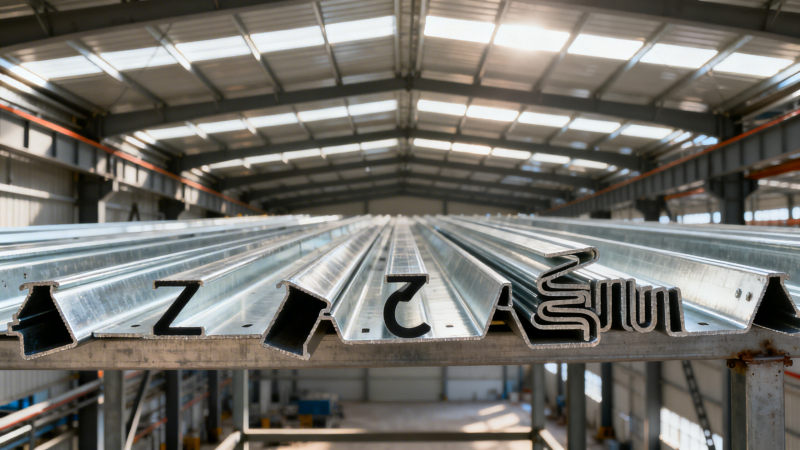
The three main purlin profiles commonly used in commercial projects include C section, Z section, and Sigma (Σ) section designs. Each profile offers unique benefits depending on span length, load pattern, and the overall geometry of the roof.
Among these, Z-sections are preferred for complex or large-span commercial buildings because they provide continuity and superior performance under high live loads, especially when spaced at 1.5–2.0 meters.
Key Selection Criteria for Structural Steel Purlins
When selecting a purlin type, engineers and procurement managers must balance factors such as load-bearing capacity, weight efficiency, corrosion resistance, and ease of assembly. A well-optimized design can reduce installation time by up to 20% and extend roof system lifespan by 10–15 years.
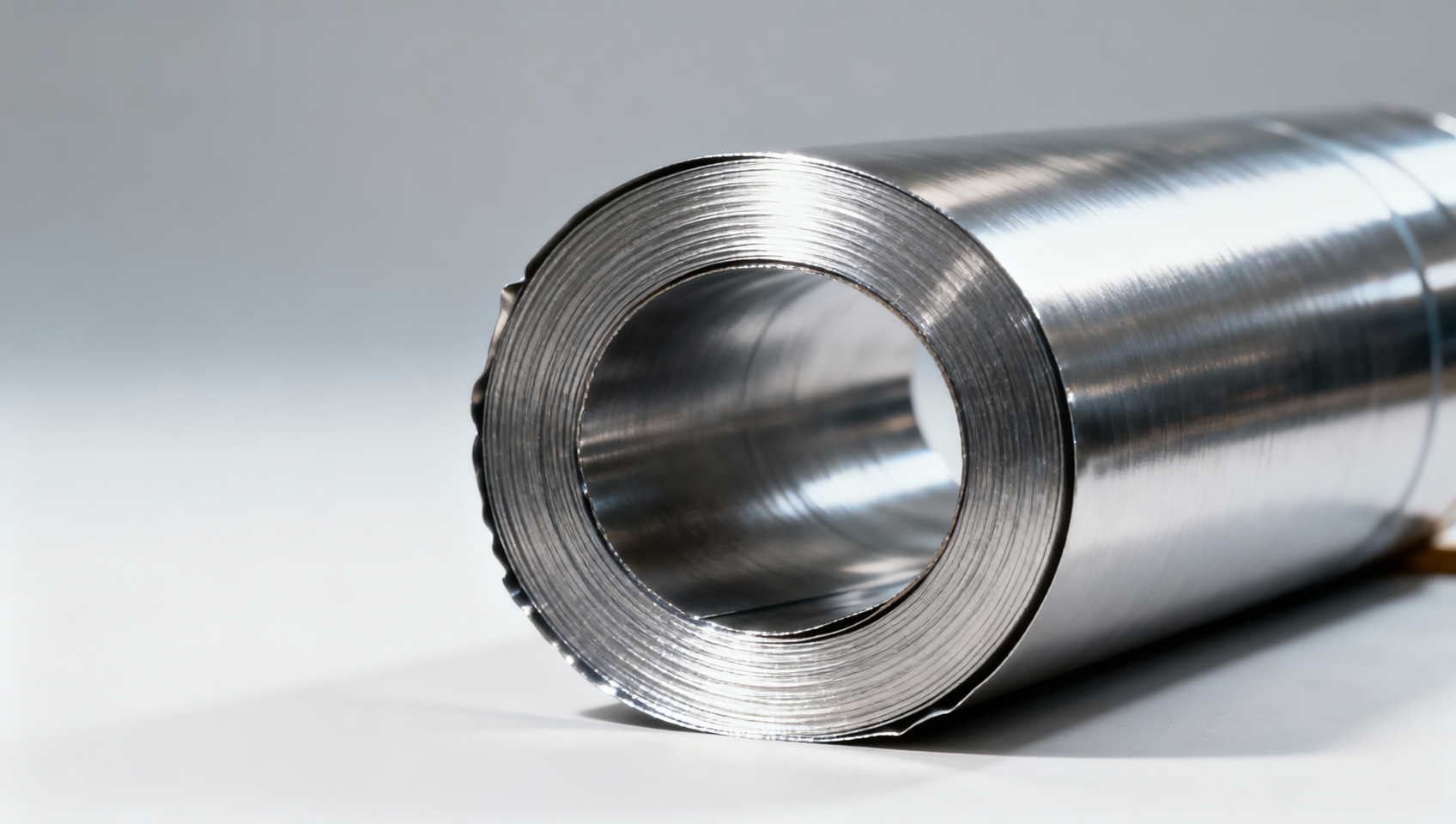
For climates with humidity exceeding 80% or salt-laden coastal air, galvanized or stainless steel materials are recommended. In some cases, using materials with higher ductility, like the 202 Stainless Steel Coil, can further enhance corrosion resistance and maintain toughness between -40°C and +600°C, fulfilling standards for high-strength roofing frameworks.
Evaluation Parameters
To ensure rational selection, the following parameters are generally evaluated:
- Yield Strength (σ0.2): typically ranges from 275 MPa to 550 MPa.
- Deflection Limits: span/180 for light roofs; span/240 for industrial warehouses.
- Corrosion Protection: minimum zinc coating 180 g/m² for outdoor exposure.
- Fire Resistance: minimum 30 minutes under ISO 834 temperature curve.
- Installation Efficiency: labor time per square meter should be below 0.6 hours.
Adhering to these parameters not only ensures compliance but also optimizes structural stability throughout the building’s lifecycle, typically designed for 25–40 years of service.
Application and Integration of Modern Steel Materials
Advancements in material engineering have introduced high-performance alloys used alongside carbon steel purlins. For instance, stainless steel coils like the 202 Stainless Steel Coil demonstrate tensile strength ≥ 520 MPa and hardness ≤ 183HB, offering superior oxidation resistance in temperatures reaching 800°C. Such materials enhance roof assemblies exposed to varying thermal or chemical conditions, such as in chemical plants or food processing facilities.
This stainless grade’s austenitic structure, stabilized by nickel and manganese, helps prevent phase transformation that could otherwise weaken conventional carbon steels under extended stress. With elongation values ≥ 55%, it can absorb deformation during wind uplift without cracking, a valuable feature for long-span logistics centers or airports.
Integrating such advanced materials allows engineers to design lighter yet stronger purlin systems — achieving up to 10% reduction in total roof dead load compared to traditional steel members of equal thickness.
Procurement Guidelines and Quality Assurance
For procurement officers and decision-makers, supplier reliability and product quality are as critical as mechanical properties. Working with a certified steel manufacturer ensures every stage — from raw material inspection to final delivery — meets ISO and SGS standards, minimizing structural risk and warranty claims.
Hongteng Fengda operates advanced rolling mills capable of producing 20,000 tons per month, adhering to ASTM, EN, JIS, and GB benchmarks. Standard delivery times range from 15 to 30 days depending on specification and volume, allowing efficient planning in multi-phase construction projects.
Beyond quality assurance, the company provides technical documentation, CAD model support, and on-site loading verification — all essential for project managers overseeing complex installations exceeding 10,000 m² roof area.
Supplier Evaluation Checklist
- Check compliance with ISO or BV certifications.
- Verify production dimensional tolerance within ±0.2 mm.
- Inspect batch mechanical certificates covering yield and tensile strength.
- Confirm anti-corrosion coating meets environment class C3-C4 as per ISO 12944.
- Ensure consistent after-sales service and replacement support within 12 months.
Adopting structured supplier evaluation can lower long-term maintenance costs by up to 8% annually, especially in high-cycle projects where replacement logistics are complex.
Implementation Tips and Maintenance Considerations
Even the highest-quality steel purlins require proper installation and periodic inspection to maintain performance. Common recommendations include torque checking for bolted joints every 12–18 months and periodic coating integrity tests after five years of exposure. Using non-destructive inspection tools like ultrasonic probes can help detect early-stage fatigue cracks before visible deformation occurs.
In corrosive environments, it's advisable to apply a topcoat layer (epoxy or polyurethane) with a thickness of 60–100 μm to prevent oxidation. For projects located in zones with wind speeds above 120 km/h, additional bracing between purlin rows should be considered, following local building codes or EN1993 guidelines.
Integrating preventive maintenance schedules as part of the facility management plan ensures the roof system remains functional and maintenance costs stay within 1–2% of the annual operating budget.
Conclusion: Selecting Smart, Building Strong
Choosing the right structural steel purlin type is more than a technical decision — it’s a strategic step toward project longevity, safety, and cost-effectiveness. With reliable supply, global certifications, and tailored engineering solutions, Hongteng Fengda enables builders, contractors, and distributors worldwide to achieve precise structural alignment and exceptional durability.
Whether your commercial roof design calls for lightweight Z sections or heavy-duty Sigma profiles, partnering with a global structural steel expert ensures consistency from design to execution. To discuss technical specifications or request customized quotations, contact Hongteng Fengda today and experience dependable quality built on expertise.
- steel coil
- Z150 steel sheet
- ASTM A36
- structural steel
- steel beams
- C section steel
- steel profiles
- ASTM steel beam
- Structural steel purlin
- Structural Steel
- Steel Beams
- 202 stainless steel coil
- stainless steel coil
- Profile
- Galvanized
- Steel Beam
- carbon steel
- steel sheet
- steel profile
- Structural steel purlin for commercial buildings
- Steel profiles for automotive industry
- C section steel for trailer manufacturing
- Z150 steel sheet for military applications
Related recommendations
 How much does 2 inch ss pipe price increase when upgrading from Schedule 40 to Schedule 80 for high-pressure systems?2 inch ss pipe price increases 18–35% when upgrading from Sch 40 to Sch 80—discover why, when it’s truly needed, and how to avoid overpaying.
 Which 304 stainless steel coil suppliers meet ISO 9001 and EN 10088-2 for food-grade fabrication?Discover verified 304 stainless steel coil suppliers meeting ISO 9001 & EN 10088-2 for food-grade fabrication—traceable, audited, and ready for regulatory validation.
 How does 2 inch ss pipe price compare between 304 and 316 grades for marine environments?2 inch ss pipe price varies significantly between 304 and 316 — but in marine environments, choosing 304 risks costly failures. Discover why 316 is the true value choice.
 Is 20 feet square pipe price affected more by raw material volatility or regional logistics costs?20 feet square pipe price is driven primarily by raw material volatility—not logistics. Discover why billet costs dominate pricing & how to forecast smarter with Hongteng Fengda.
Please give us a message


Please enter what you want to find