Choosing the right ss pipe for water supply is critical in corrosion-prone buildings, where long-term reliability, water quality, and maintenance costs directly affect project performance. For project managers and engineering leaders, the ideal pipe must balance corrosion resistance, code compliance, installation efficiency, and lifecycle value. This guide helps you evaluate key material factors, application risks, and sourcing considerations so you can select a solution that supports safer, more durable, and cost-effective water supply systems.
What Is the Real Search Intent Behind Choosing SS Pipe for Water Supply?
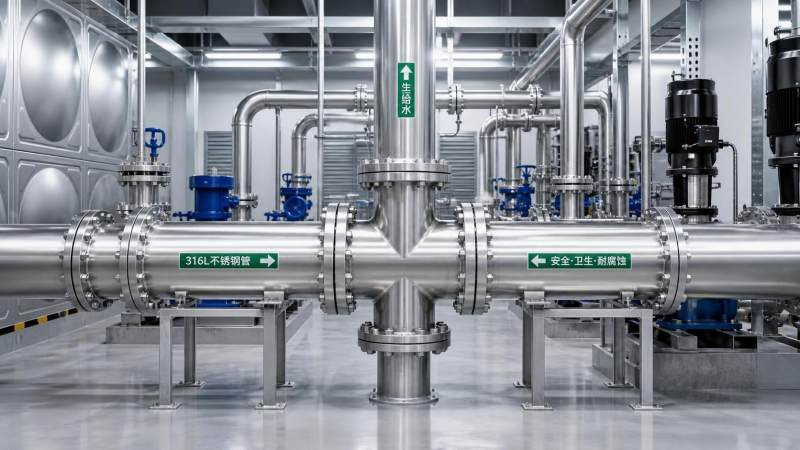
The core search intent behind ss pipe for water supply is not simply understanding what stainless steel pipe is. Project managers usually want to know which grade, specification, and installation approach will reduce corrosion risk in demanding buildings.
In corrosion-prone environments, the wrong pipe choice creates more than maintenance trouble. It can lead to water contamination concerns, hidden leakage, higher shutdown costs, and repeated replacement cycles that damage both budgets and project timelines.
That is why the most useful answer is practical rather than theoretical. Decision-makers need a framework for comparing stainless steel options based on building conditions, water chemistry, expected service life, regulatory requirements, and total ownership cost.
In most cases, stainless steel is a strong choice for aggressive water supply environments, but not every stainless steel pipe performs equally well. The right selection depends on chloride exposure, welding quality, operating pressure, and whether the system serves domestic, commercial, or industrial use.
Why Corrosion-Prone Buildings Need a Higher Standard for Pipe Selection
Buildings near coastlines, chemical zones, humid industrial districts, or areas with unstable water quality face a much higher corrosion burden. In these settings, standard material assumptions often fail earlier than expected under real operating conditions.
Corrosion in water supply systems is rarely caused by one factor alone. It is usually the result of combined exposure to chlorides, dissolved oxygen, temperature fluctuation, stagnant water, poor joint treatment, and contact with incompatible materials.
For project leaders, this means pipe selection should begin with exposure mapping. You need to identify whether corrosion risk comes mainly from external atmosphere, internal water quality, buried installation conditions, or mixed-material system design.
When risk is high, material upgrades are often cheaper than future disruption. Spending more upfront for the correct ss pipe for water supply can lower emergency repairs, tenant complaints, insurance exposure, and long-term operating instability.
Which Stainless Steel Grade Is Usually Best for Water Supply Systems?
The first technical decision is grade selection. In many buildings, 304 stainless steel is acceptable for general indoor water supply where chloride levels are low and environmental exposure is moderate.
However, in corrosion-prone buildings, 316 or 316L stainless steel is often the safer choice. The added molybdenum improves resistance to pitting and crevice corrosion, especially where chloride-bearing water or coastal air is present.
For welded systems, low-carbon variants such as 304L or 316L are commonly preferred because they reduce the risk of sensitization around weld zones. This matters when long pipe runs and numerous joints are part of the installation plan.
Project teams should avoid choosing grade based only on initial unit price. A lower-cost material can become more expensive if it performs poorly in aggressive service conditions or requires earlier replacement than the design life intended.
How Should Project Managers Evaluate Water Chemistry and Building Exposure?
Material selection becomes much more accurate when it is linked to real service conditions. Water chemistry data should be reviewed early, especially chloride content, pH range, hardness, disinfectant type, and temperature profile.
High chloride concentration is one of the biggest warning signs for stainless steel performance. Even a quality ss pipe for water supply can suffer localized attack if chloride exposure is beyond what the selected grade can reliably tolerate.
External exposure also matters. In plant rooms, basements, rooftops, coastal developments, and high-humidity shafts, airborne contaminants and condensation can accelerate external corrosion if insulation, drainage, and support design are weak.
Another important factor is flow regime. Systems with frequent stagnation, low turnover, or dead legs increase the chance of microbiologically influenced corrosion and deposit buildup, which can compromise internal pipe surfaces over time.
What Specifications Matter Beyond Stainless Steel Grade?
Grade is only part of the decision. Wall thickness, pressure rating, surface finish, dimensional tolerance, and manufacturing method all affect whether the pipe will perform reliably in a real construction project.
Seamless and welded stainless steel pipes can both be suitable, depending on system demands and applicable standards. The key is to confirm production quality, weld integrity, testing records, and compliance with the project specification.
Surface finish is often overlooked. A smoother internal surface can improve flow efficiency and reduce deposit accumulation, while proper finishing and passivation help strengthen corrosion resistance after fabrication and welding.
Buyers should also verify the governing standards for the project market. Depending on destination and application, relevant references may include ASTM, EN, JIS, or other local plumbing and construction codes that define acceptance criteria.
How Do Installation Practices Affect the Performance of SS Pipe for Water Supply?
Even a well-selected material can fail if installation control is poor. Stainless steel systems are highly sensitive to contamination from carbon steel tools, improper welding practice, and careless storage on mixed-material job sites.
Cross-contamination is a common but preventable issue. Iron particles transferred from grinding tools, racks, or adjacent fabrication work can initiate surface rust and create the false impression that stainless steel itself is defective.
Welding procedures should be qualified for the selected grade and wall thickness. Post-weld cleaning, pickling, and passivation may be necessary to restore corrosion resistance, especially in demanding water supply applications.
Support spacing, thermal movement control, and proper isolation from dissimilar metals also matter. Galvanic corrosion can develop at connection points if stainless steel interfaces directly with less noble metals without suitable separation measures.
How Can You Compare Lifecycle Cost Instead of Only Purchase Price?
For project managers, the best purchasing decision is rarely the cheapest quote. The better question is how the piping system will perform over ten, twenty, or thirty years under real operating conditions.
Lifecycle cost includes procurement, fabrication, transport, installation labor, inspection, downtime risk, maintenance frequency, leakage consequences, and future replacement complexity. This is where higher-grade stainless steel often proves economically justified.
If a low-cost pipe grade saves a small amount at procurement but increases the probability of corrosion repairs in occupied buildings, the total project cost can quickly exceed the initial savings. This is especially true in hotels, hospitals, towers, and industrial facilities.
Decision-makers should ask suppliers for data that supports lifecycle evaluation, not just pricing. Material certificates, test reports, corrosion-resistance guidance, and delivery reliability often have more financial value than a marginal discount on tonnage.
What Should You Ask a Supplier Before Approving the Order?
Supplier evaluation is part of risk control. A credible manufacturer should provide clear documentation on grade, heat number traceability, dimensional consistency, production standards, and quality inspection procedures.
You should also confirm whether the supplier can support custom lengths, end preparation, project packaging, and export coordination. For international projects, dependable lead times and document accuracy directly affect site scheduling and customs clearance.
Hongteng Fengda, as a structural steel manufacturer and exporter from China, supports global buyers with stable production capacity, quality control aligned with major international standards, and customized supply solutions for project-based procurement.
Although your main concern may be stainless steel piping, many projects also require complementary metal products for enclosures, roofing, equipment housings, or utility-related structures. In such cases, Galvanized Steel Sheet may be relevant for surrounding construction needs.
For example, this product is available in models such as DX51D, SGCC, DX52D, and S350GD, with thickness from 0.12mm to 6.00mm, width from 600mm to 1500mm, and support for customization under ASTM, EN, JIS, GB, and other standards.
Its zinc-aluminum-copper-magnesium alloy design supports atmospheric corrosion resistance, while maintaining good processing and welding performance. For broader construction packages, that kind of specification consistency can simplify sourcing coordination across multiple steel categories.
When Is Stainless Steel the Right Choice, and When Should You Reassess?
Stainless steel is usually the right choice when water quality control, long service life, hygiene, and corrosion resistance are top priorities. It is especially effective in premium buildings, coastal assets, industrial facilities, and technically demanding utility systems.
However, it should not be selected blindly. If the water chemistry is extremely aggressive, if chloride levels are unusually high, or if budget constraints force low installation quality, the system design may need deeper review before final approval.
In some projects, hybrid material strategies make sense. Certain segments may use stainless steel for critical water lines, while other building components use coated or galvanized products where exposure conditions and performance expectations differ.
The best decision comes from matching material to service environment, installation capability, and project risk tolerance. That is a more reliable approach than following default specifications or choosing based on upfront price alone.
A Practical Decision Framework for Project Managers
If you are responsible for final material approval, start by reviewing water chemistry, building location, service temperature, pressure conditions, and code requirements. These factors define whether baseline stainless grades are sufficient or whether upgraded resistance is needed.
Next, compare candidate suppliers on documentation quality, manufacturing control, customization capacity, and export reliability. A strong supplier reduces hidden execution risk, which is often more important than a slightly lower material quote.
Then assess installation readiness. Confirm that contractors understand stainless handling, welding, passivation, and mixed-metal isolation. Material quality alone cannot deliver design life if site practice is uncontrolled.
Finally, evaluate the decision through lifecycle economics. The best ss pipe for water supply is the one that keeps water systems reliable, compliant, and low-maintenance throughout the building’s operating life, not just during procurement.
Conclusion
Choosing ss pipe for water supply in corrosion-prone buildings is a risk-management decision as much as a material decision. For project managers and engineering leaders, the priority should be long-term reliability, water quality protection, and controllable lifecycle cost.
In most demanding building environments, stainless steel is a sound option, especially when grade selection, fabrication quality, and installation discipline are aligned with actual exposure conditions. Among common choices, 316 or 316L often provides stronger protection where chloride risk is significant.
The most effective procurement strategy is to combine technical evaluation with supplier due diligence. When you verify grade suitability, standards compliance, and delivery capability together, you reduce sourcing risk and improve project outcomes.
Ultimately, the right choice is not the cheapest pipe on paper. It is the solution that performs consistently in service, protects the building over time, and supports the commercial success of the project from handover through long-term operation.
Please give us a message


Please enter what you want to find