Choosing the right steel sheet for construction is essential for ensuring long-term performance in roofing or wall cladding applications. The right material must balance strength, corrosion resistance, thickness, coating, and load requirements to match the project environment. For operators and project teams, understanding these factors helps prevent installation issues, reduce maintenance costs, and improve building durability. This guide explains how to judge whether a steel sheet is better suited for roofing or wall cladding, so you can make a more reliable and efficient selection.
What Is the Real Search Intent Behind This Question?
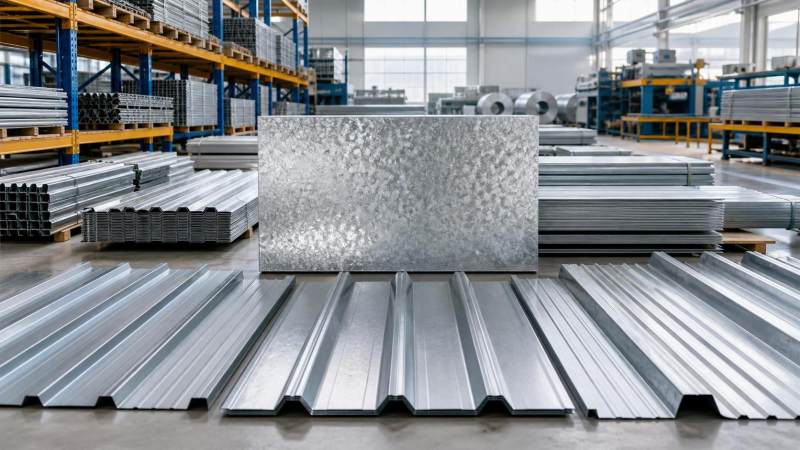
Most users searching for this topic are not looking for theory alone. They want a practical way to decide whether one steel sheet can perform safely on a roof or work better as wall cladding.
For operators and site teams, the main concern is usually simple. They need to avoid wrong material selection that causes leakage, deformation, corrosion, installation trouble, or early replacement after the building is completed.
That means the best judgment method is not based on one factor only. A steel sheet for construction must be checked against load, weather exposure, coating level, sheet thickness, profile shape, and service life expectations.
In short, roofing sheets normally face stricter demands than wall cladding sheets. If a sheet can meet roofing requirements, it may also work for walls, but the reverse is not always true.
What Do Operators and Project Teams Care About Most?
The target reader usually cares about field performance rather than product descriptions. They want to know whether the sheet is strong enough, easy to install, resistant to rust, and suitable for local weather conditions.
They also care about practical purchasing questions. These include how thick the sheet should be, what zinc coating is enough, whether the profile will carry wind or rain, and how to avoid buying material that looks acceptable but fails early.
Another common concern is cost control. A cheaper sheet may reduce initial spending, but if it is too thin or poorly coated, repair, replacement, and downtime can quickly cost much more.
Because of this, a useful evaluation should connect specification data with actual site conditions. That helps readers judge value, not just compare prices or memorize material grades.
Start With the Main Difference Between Roofing and Wall Cladding
Roofing and wall cladding do not carry the same risks. A roof must resist rainwater, wind uplift, thermal movement, foot traffic during installation, and sometimes snow or maintenance loads.
Wall cladding usually faces less standing water and lower live load. However, it still needs enough stiffness, corrosion resistance, and dimensional stability to avoid oil canning, looseness, and poor appearance over time.
This difference matters when selecting steel sheet for construction. Roofing applications usually require tighter control of thickness, coating quality, rib design, overlap performance, and fastening method than wall systems do.
If the project is in a coastal, industrial, or high-humidity environment, both roof and wall sheets need stronger corrosion protection. Still, the roof remains the more demanding position in most building envelopes.
Check Thickness First Because It Affects Strength and Stability
Thickness is one of the quickest ways to judge suitability. Thicker sheets generally provide better load resistance, improved fastening performance, and less deformation during handling or installation.
For roofing, very thin sheets may bend under workers’ weight, wind pressure, or unsupported spans. They can also create waviness around screws, which increases the chance of leakage and long-term fatigue.
For wall cladding, thinner material may sometimes be acceptable if span, wind load, and profile design are properly matched. Even then, it should not be selected only because it lowers unit cost.
A reliable decision always compares thickness with span distance, support spacing, and profile geometry. Material data alone is not enough unless it is tied to the actual structural condition on site.
When reviewing supply options, pay attention to actual base metal thickness rather than nominal claims only. In low-quality supply chains, the stated number may not match the real delivered sheet.
Evaluate the Zinc Coating and Corrosion Resistance Carefully
Corrosion protection is often the deciding factor in service life. Even a strong sheet can fail early if the zinc coating is too light for the surrounding environment.
Roofing surfaces are directly exposed to sun, rain, condensation, and airborne contaminants. That is why roof sheets often need higher coating protection than wall panels used in less aggressive conditions.
For galvanized material, zinc coating weight such as Z120, Z180, or Z275 gives a useful reference point. In general, the harsher the environment, the more important a heavier protective coating becomes.
Coastal projects, chemical plants, agricultural buildings, and humid industrial areas should not rely on minimal coating levels. Operators should also inspect cut edges, scratches, and storage conditions, because these often become the first corrosion points.
Mid-project buyers looking for practical options often choose products such as Galv Sheeting when they need double-sided galvanized carbon steel sheet for construction applications with defined coating ranges and broad compliance standards.
In product selection, coating type matters as much as coating weight. Continuous hot-dip galvanized sheet is widely used because it provides stable protection and is suitable for many roofing and wall cladding applications.
Look at Profile Shape, Drainage Performance, and Joint Design
A steel sheet for construction is not judged by flat material properties alone. Its formed profile has a major effect on stiffness, water drainage, overlap reliability, and resistance to wind uplift.
For roofing, deeper ribs and effective overlap geometry usually perform better because they improve rigidity and help water move away quickly. Poor profile design increases the risk of ponding and leakage.
For wall cladding, profile shape still matters, but the focus may shift more toward appearance, alignment, and resistance to flutter under wind load. A wall sheet does not need the same drainage performance as a roof sheet.
Operators should also review where fasteners sit in the profile, how side laps seal, and whether the installation method matches the manufacturer’s recommendations. Good sheet material can still fail in a weak joint design.
Consider Load Conditions Instead of Using One Specification for Every Project
There is no universal sheet that fits every building. A warehouse roof, a livestock shed, a factory wall, and a transport terminal may all require different performance priorities.
Roofing selection should consider dead load, live load during installation, wind uplift, possible snow accumulation, and support spacing. In some regions, thermal expansion and heavy rainfall are also critical design factors.
Wall cladding selection should focus on wind pressure, panel span, impact risk, aesthetic flatness, and corrosion exposure. On tall buildings, wind behavior may become severe enough that wall sheets need upgraded strength.
This is why operators should ask for load tables, recommended spans, and application guidance from the supplier. Choosing by grade name alone is not a dependable method.
For example, galvanized steel options produced in grades such as DX51D+Z, SGCC, or S350GD+Z may serve different purposes depending on forming needs, strength demand, and project environment rather than simple naming hierarchy.
Check Formability and Installation Practicality on Site
Some sheets look suitable on paper but create problems during fabrication or installation. Operators should consider bendability, cut quality, handling resistance, and fastening behavior before approving material for use.
Roof sheets often require clean forming and stable geometry so overlaps sit correctly and water paths remain reliable. If the sheet cracks at bends or deforms too easily, installation quality will suffer.
Wall cladding also benefits from good formability, especially when long panels, corners, trims, and openings are involved. Poorly controlled material can create misalignment, edge damage, or visible surface defects.
It is also important to confirm whether the sheet dimensions match the project plan. Width, length, and customization options affect waste rate, installation speed, and the number of joints on the building envelope.
For projects needing flexible dimensions, some suppliers offer galvanized sheets from 0.12mm to 6.00mm thick, 600mm to 1500mm wide, and lengths from 1m to 12m, which can help reduce unnecessary cutting and joint complexity.
How to Judge Whether a Sheet Is Better for Roofing or for Wall Cladding
A simple judgment method is to ask five questions. Can it carry the expected load, resist the environment, drain or shield properly, install reliably, and meet the intended service life?
If the answer is weak on load and drainage, the sheet is unlikely to be a good roofing option. It may still be suitable for wall cladding if wind, span, and corrosion exposure remain within acceptable limits.
If the answer is strong on thickness, coating, rib stiffness, overlap design, and fastening reliability, then the sheet has a better chance of performing well as roofing material.
Do not assume that a sheet approved for indoor partitions, light enclosures, or decorative wall use can automatically move to roof application. Roofing failure carries a much higher operational risk.
On the other hand, using a roofing-grade sheet for wall cladding may improve durability, but it can also raise project cost beyond what is necessary. The goal is fitness for purpose, not maximum specification in every case.
How Product Standards and Supplier Capability Affect the Decision
Material quality is not only about the sheet itself. It also depends on process control, consistency between batches, packaging, and whether the supplier can deliver according to recognized standards.
For international projects, compliance with ASTM, EN, JIS, or GB standards helps buyers compare materials more confidently and reduce sourcing risk. This is especially important when replacing local supply with imported material.
Supplier capability also matters when projects require customized dimensions, repeat orders, or OEM production. Inconsistent lead time or uncontrolled quality variation can disrupt site schedules and create costly installation problems.
For this reason, buyers often prefer manufacturers with established export experience, modern production lines, and stable quality systems rather than trading only on the lowest quotation.
Common Mistakes That Lead to Wrong Selection
One common mistake is choosing only by price per ton or per sheet. This ignores coating life, structural suitability, and installation waste, all of which directly affect total project cost.
Another mistake is relying on generic terms like galvanized sheet without checking thickness tolerance, coating mass, grade, and intended application. Those details determine whether the material fits roofing or wall cladding use.
Some teams also overlook the service environment. A sheet that performs well in a dry inland area may deteriorate much faster in marine, agricultural, or chemical conditions.
Finally, many failures come from treating installation as separate from material choice. In reality, sheet profile, screw placement, seal quality, and support spacing must work together for the material to perform as intended.
Practical Buying Checklist for Operators and Site Teams
Before placing an order, confirm the application first. State clearly whether the sheet is for roofing, wall cladding, or both, because that changes the performance requirements.
Next, verify base metal thickness, profile type, coating weight, grade, panel dimensions, and the expected support span. Ask for technical data instead of relying on catalog images or short quotations.
Then review the environment. Check for humidity, salt exposure, chemicals, animal waste, heat, and rain intensity. These conditions strongly influence the needed corrosion protection level.
Also ask for standard compliance, inspection records, and delivery consistency. When possible, inspect sample panels for coating condition, flatness, edge quality, and forming accuracy before bulk purchase.
This kind of checklist gives teams a much better chance of selecting the right steel sheet for construction without overbuying or creating avoidable future repairs.
Conclusion
To judge whether a steel sheet fits roofing or wall cladding, start with the real performance demands of the application. Roofing usually requires higher standards for thickness, coating, profile strength, drainage, and joint reliability.
Wall cladding still needs strength and corrosion resistance, but its priorities are often less severe unless the building faces strong wind or aggressive environmental exposure. That is why one sheet should never be approved without application-based review.
For operators and project teams, the best decision comes from combining technical specifications with site conditions, installation needs, and expected service life. When these factors are checked together, material selection becomes more accurate, cost-effective, and durable.
A good steel sheet is not simply the cheapest or the heaviest option. It is the one that matches the real job, performs reliably, and supports the building through years of use with fewer problems.
Please give us a message


Please enter what you want to find