Selecting the right steel tube for industrial applications is vital to ensure reliable performance under varying loads. As a leading structural steel manufacturer and exporter in China, Hongteng Fengda provides comprehensive insights into material grades, strength, and durability comparisons. Whether you're evaluating angle vs channel steel comparison, seeking an ASTM certified steel square rod, or sourcing a high strength steel round bar supplier, this guide helps project engineers, buyers, and distributors make informed decisions for construction and industrial needs. The selection of steel components determines the long-term stability and safety of mechanical systems, bridges, pipelines, or structural frames. When project managers and QA teams understand the correlation between material grade, tensile performance, and load behavior, they can efficiently minimize production risks and maintenance costs while ensuring compliance with ASTM and EN standards.
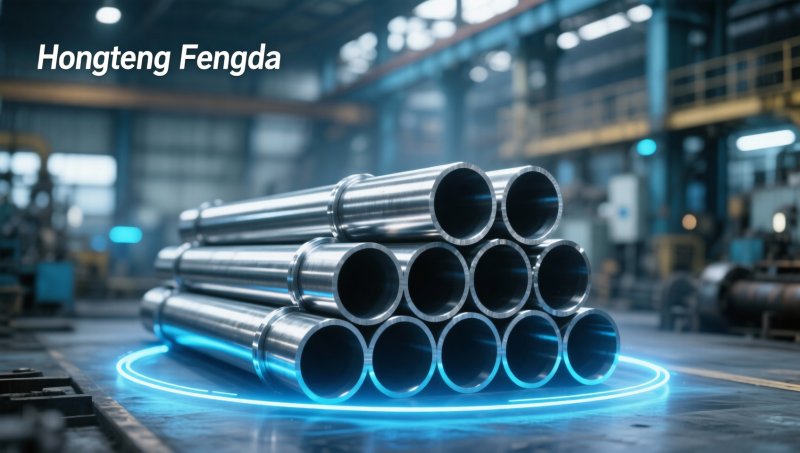
Definition and Material Overview
Industrial steel tubes refer to hollow cylindrical profiles specifically designed to withstand internal or external pressure, axial load, and structural bending forces. They are primarily categorized by manufacturing process (seamless or welded) and chemical composition. A typical steel tube used in industrial applications combines excellent mechanical strength with corrosion resistance, allowing use in process industries, oil and gas facilities, and heavy construction projects. The classification into grades such as S275, S355, and ASTM A106 corresponds to yield strength range and tolerance under high temperature or chemical exposure. In addition, structural forms including steel conduit for electrical wiring or steel girder for bridge construction share overlapping properties that must be analyzed according to engineering performance criteria. Hongteng Fengda offers customized steel tubes complying with ASTM, EN, JIS, and GB standards, providing reliable uniformity for global buyers. These tubes are often used alongside angle steel or channel steel components to create high-load frameworks, illustrating how angle vs channel steel comparison affects the choice of reinforcing members in industrial assemblies.
Market Overview and Industry Dynamics
The global demand for steel tubes is growing steadily due to industrial modernization, renewable energy expansion, and infrastructure upgrades. China remains the largest manufacturing hub for steel products, and companies like Hongteng Fengda have established worldwide supply networks that shorten lead time and guarantee quality consistency. Buyers in North America and Europe look for ASTM-certified products, including ASTM certified steel square rods and steel tube for industrial applications, to ensure compliance with rigorous structural codes. In energy and manufacturing sectors, steel conduit for electrical wiring and pressure-bearing tubes represent crucial elements in automation processes, ensuring reliable electricity transmission and fluid transportation. Market analysis shows a rising interest in high strength steel round bar supplier options as industries aim for lighter yet more durable materials. Meanwhile, cost-sensitive projects explore hybrid frameworks integrating both angle steel and cold-formed channel profiles. This interaction between strength performance and cost optimization defines the competitive landscape for structural steel exporters. Quality control, logistical reliability, and technical documentation—like Mill Test Certificates and EN10204 compliance—are key factors influencing procurement decisions today.
Technical Performance and Load Behavior
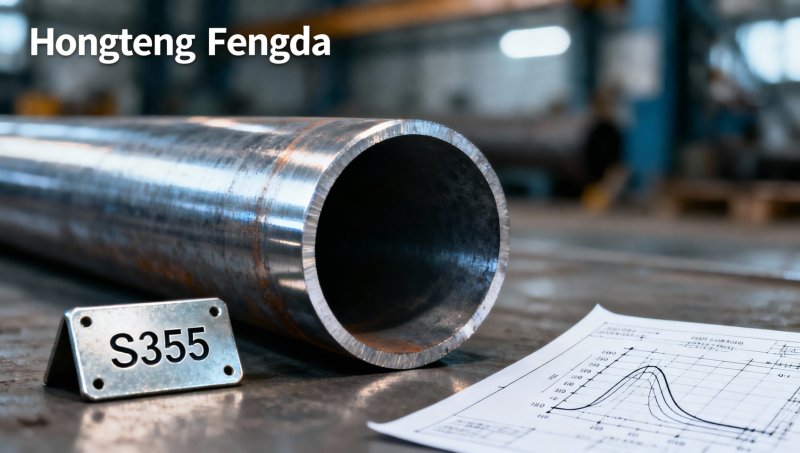
The performance of industrial steel tubes under load depends on yield strength, tensile strength, elongation, and microstructure homogeneity. Grades like S355 or ASTM A53 exhibit consistent yield stress, enabling superior resilience when installed in mechanical support systems. Engineers must analyze how cross-sectional area and wall thickness affect deflection limits and safety factors under compression or torsion. When compared with solid bars, hollow steel tubes deliver a favorable strength-to-weight ratio and simplified installation. Furthermore, welding quality, surface finishing, and non-destructive testing (such as ultrasonic or magnetic particle inspection) determine the lifetime fatigue resistance. Hongteng Fengda employs advanced rolling and cold forming technology to produce tubes capable of sustaining heavy axial loads without deformation. Safety management personnel and project supervisors benefit from consistent geometric tolerance and surface flatness that reduce post-fabrication adjustment costs. Analysis under various stress scenarios reveals that properly selected steel tube ensures stability even under dynamic loading or seismic impact, making them indispensable for bridge decks, offshore platforms, and industrial machinery skeletons.
Comparison Analysis of Material Grades
Choosing the correct material grade involves comparing steel behavior under mechanical, environmental, and temperature stress. For instance, angle vs channel steel comparison indicates differences in moment of inertia and bending stiffness, while for tubes, comparisons focus on grade composition such as S275 versus S355. The S275 grade is suitable for general construction with moderate load conditions; S355 provides higher yield strength ideal for heavy civil or offshore usage. When the project demands chemical resistance or marine endurance, ASTM A690 and SY390 show excellent anti-corrosive capability. The use of advanced coatings or galvanization further extends service life, particularly for pipelines exposed to moisture or saltwater. Evaluating steel roof sheet price per square meter also gives insight into market value trends linked to material grade choice, as higher specifications correspond to better performance and longer durability. Project engineers often perform simulation testing to calculate critical buckling points. Hongteng Fengda’s laboratory ensures each steel tube for industrial applications meets or surpasses global benchmark data, giving customers confidence that every shipment satisfies structural integrity under defined loads and temperatures.
Application Scenarios and Practical Cases
Industrial steel tubes are widely used in construction, mechanical equipment, and infrastructure sectors. In bridge construction, a steel girder for bridge construction combined with high-strength tubular elements allows optimal load distribution across spans. In electrical systems, steel conduit for electrical wiring protects cables from mechanical damage and electromagnetic interference. Process plants often use tubes to circulate steam, compressed air, or chemicals under defined pressure levels. Offshore installations and foundations rely on thick-walled grades such as S390 or SY390 for reliable submersion resistance. Additionally, Hongteng Fengda offers complementary products like Steel Sheet Piles that are extensively used in cofferdams and construction in deep water. Their interlock types and high strength make them ideal for reusable modular barriers. Projects involving temporary enclosures or marine civil works often integrate both steel tubes and sheet piles for cohesive structural support. Quality assurance teams appreciate that Hongteng Fengda products maintain consistent CE FPC and ISO9001 certification, ensuring cross-country conformity and traceability in large-scale deployments. Each case exemplifies how precise material selection contributes directly to safe, efficient, and cost-effective construction solutions.
Procurement Guide for Buyers and Project Managers
When sourcing steel tube for industrial applications, procurement officers and project managers should evaluate multiple criteria—mechanical grade, tolerance, cost, and certification record. Domestic and international project developers value long-term supply stability and technical documentation for quality validation. Hongteng Fengda’s integrated steel manufacturing process and export logistics provide predictable delivery scheduling and flexible customization. Buyers comparing steel rail manufacturer in China options must weigh shipping logistics, testing reports, and technical consultation availability. For projects demanding rapid execution, pre-cut or pre-galvanized tubes simplify assembly and lower field welding costs. Common specifications align with EN10248 and JIS G3444 standards to maintain global interoperability. Understanding procurement risks such as inconsistent thickness or substandard welded joints is critical. Implementing supplier audits and using verified batch tracking ensures reliability, particularly when safety regulators or third-party inspectors are involved. Decision-makers can also coordinate framework contracts to lock favorable steel roof sheet price per square meter, countering market volatility while maintaining inventory flexibility. Careful planning ensures high ROI and minimized project downtime.
Standards, Certification, and Compliance Considerations
For international projects, compliance with ASTM, EN, and ISO frameworks is essential. Hongteng Fengda adheres to multiple global certifications including ISO9001, ISO14001, and ISO18001, covering quality management, environmental responsibility, and occupational safety. When selecting tubular materials for critical infrastructure, compliance with CE marking or other regulatory documentation reassures clients of consistent production oversight. Each steel product batch undergoes mill testing to confirm compliance with mechanical and chemical tolerance. For example, ASTM certified steel square rod and structural pipe manufacturing follow traceable procedures documented under EN10204 Type 3.1 certificates. The application of international standards not only ensures uniform quality but also promotes trust between supplier and contractor. Combined product packages—such as tube systems integrated with Steel Sheet Piles—help clients simplify documentation and certification workflows. Quality inspectors appreciate that Hongteng Fengda’s in-house laboratory bridges R&D testing and production control, ensuring every shipment aligns with engineering specifications and project tender requirements worldwide.
Cost Analysis and Alternative Solutions
While performance remains the top priority, cost remains a pivotal factor. Market pricing for steel roof sheet per square meter, angle bars, and channel profiles influences overall steel framework budgeting. Sourcing locally may reduce freight costs but could compromise quality or certification assurance, whereas international suppliers with integrated logistics help maintain timely project sequences. Evaluating total cost of ownership involves not only initial material cost but also service life, maintenance intervals, and recyclability. Alternative materials like composite tubing or aluminum might offer weight advantages but fall short in heavy-duty structural endurance. Hence, steel tubes continue to lead industrial applications due to superior load performance and sustainability through reusability. Hongteng Fengda’s OEM capability allows customers to balance cost and performance with tailored production—such as varying wall thickness, custom length, or corrosion-resistant coatings. For projects in harsh climates, selecting variant grades like ASTM A690 could minimize long-term maintenance, delivering optimal lifecycle economics even when upfront pricing appears higher. Such comprehensive cost evaluation ensures informed decision-making throughout procurement planning and execution phases.
Trends and Future Outlook
The future of industrial steel tube manufacturing aligns with modernization and smart manufacturing. Increasing digital integration in production monitoring and predictive maintenance will enhance consistency and traceability. An emerging trend lies in lightweight yet ultra-high-strength materials that maintain rigidity under extreme conditions. Demand for green steel, fabricated with reduced carbon emissions, is also rising as sustainability becomes imperative across industries. Hongteng Fengda invests in automated forming lines and advanced coatings to extend life cycles while minimizing environmental impact. The evolution of new grades similar to S430 and SY390 demonstrates how metallurgical research targets higher yield ratios without sacrificing ductility. Additionally, the integration of high strength steel round bar supplier technology in hybrid assemblies will provide broader engineering flexibility. Global construction markets forecast continuing growth driven by infrastructure renewal and energy transition projects, ensuring stable demand for steel tube for industrial applications. Decision-makers can anticipate increased collaboration between manufacturers and developers to design optimized cross-sectional geometries tailored to unique load patterns in transportation, energy, and manufacturing sectors.
Why Choose Hongteng Fengda
Choosing Hongteng Fengda as your structural steel manufacturer and exporter from China means partnering with a supplier focused on quality, reliability, and customer success. Our portfolio encompasses angle steel, channel steel, beams, and custom-designed tubular profiles that meet ASTM, EN, JIS, and GB standards. We emphasize transparent communication and technical support for engineers, procurement officers, and quality inspectors throughout every project phase. With extensive international experience serving North America, the Middle East, and Southeast Asia, we guarantee stable production and flexible logistics. Our modern facilities ensure precision, consistent output, and on-time delivery. Whether you’re comparing angle vs channel steel comparison data, sourcing a steel girder for bridge construction, or exploring a reliable high strength steel round bar supplier, Hongteng Fengda delivers solutions that strengthen your business foundation. Contact our professional team today to learn how we can customize your steel tube for industrial applications to achieve superior performance under load, long-term durability, and cost-effective project outcomes.
- channel steel
- angle steel
- angle bars
- Industrial Steel
- structural steel
- Structural Steel
- Profile
- Galvanized
- Steel Sheet Pile
- steel sheet
- steel conduit
- steel roof sheet
- steel tube
- steel rail
- steel girder
- steel round bar
- steel square rod
- angle vs channel
- high strength steel round bar supplier
- steel tube for industrial applications
- ASTM certified steel square rod
- steel roof sheet price per square meter
- steel girder for bridge construction
- steel conduit for electrical wiring
- steel rail manufacturer in China
- angle vs channel steel comparison
Related recommendations
 What is an H-Beam and How Does it Differ from an I-Beam?Discover what an H-beam is and how it differs from an I-beam. Learn key structural differences and expert selection tips from Hongteng Fengda to optimize your steel construction projects today.
 Hot Rolled vs. Cold Rolled Steel Sheet: Surface and ToleranceHot rolled vs cold rolled steel sheet: Discover how surface finish and tolerances impact manufacturing. Optimize material selection, reduce costs, and ensure quality. Read our expert guide today!
 Best Cutting and Bending Practices for Galvanized Sheet MetalDiscover the best cutting and bending practices for galvanized sheet to prevent zinc flaking. Optimize tooling and thermal parameters to ensure perfect corrosion resistance. Read the full guide!
 What is Galvanized Sheet and How Does the Zinc Coating Work?Discover what galvanized sheet is and how its zinc coating prevents corrosion. Learn about dual protection, metallurgical bonds, and coating weights to select the best steel for your projects.
Please give us a message


Please enter what you want to find