Introduction
The 2024 steel roof sheet price per square meter reflects key global market trends that every buyer—whether a project manager, distributor, or procurement specialist—should closely follow. As a trusted structural steel manufacturer and exporter from China, Hongteng Fengda provides insights into pricing factors, quality standards, and sourcing strategies. From angle vs channel steel comparison to selecting the right steel girder for bridge construction, understanding these dynamics helps ensure cost efficiency, compliance, and long-term performance in construction and industrial projects.
Market Overview: Global Trends Driving the 2024 Steel Roof Sheet Price
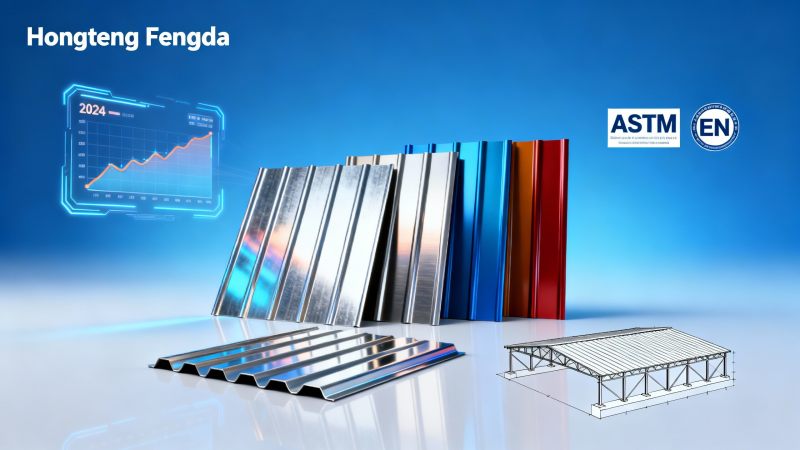
The steel industry in 2024 continues to evolve under the combined influence of global economic recovery, green manufacturing initiatives, and changing construction requirements. Steel roof sheet price per square meter is determined by a mix of factors, including raw material costs, international freight, exchange rate fluctuations, and government policies related to carbon emissions. As of mid-2024, prices for galvanized and galvalume sheets have seen moderate growth of 3%–5% compared with the same period last year, largely attributed to higher zinc and aluminum input costs. Buyers in North America and Europe face increased import tariffs that influence landed costs, while Asia-Pacific markets remain competitively priced due to China's strong production capacity. For procurement teams, understanding this regional imbalance is key to making informed purchasing decisions and negotiating better contract terms. Hongteng Fengda focuses on providing consistent quality and competitive pricing amid these shifting dynamics. With advanced production lines, precise thickness control, and efficient logistics, the company ensures that buyers receive reliable products that align with international specifications such as ASTM, EN, and GB. For large infrastructure projects, stable supply and predictable pricing become crucial to meeting project timelines and budgeting requirements. Additionally, the increasing demand for sustainable materials has also influenced buyer preferences. Eco-friendly coatings and recyclable steel roof sheets are now more in demand than ever, adding a new layer of consideration to sourcing and cost structures.
Technical Performance and Material Insights
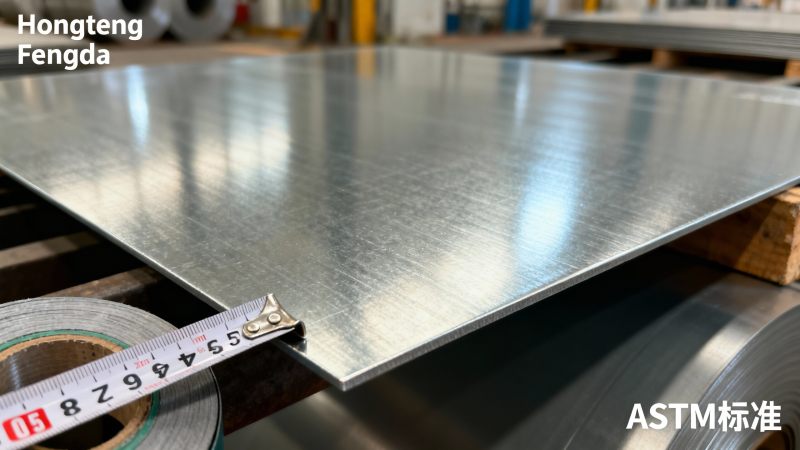
Steel roof sheets play a critical role in construction resilience, particularly in roofing systems requiring high tensile strength, corrosion resistance, and weather durability. The material composition—whether aluminum-zinc alloy, color-coated, or cold-rolled galvanized—determines long-term performance. Standard thicknesses range from 0.3 to 0.8 mm, while coating layers vary between 60 g/m² and 275 g/m². Technical parameters also differ across applications: for example, residential roof structures often use color-painted sheets for improved aesthetics, while industrial warehouses favor galvanized designs for cost-efficiency. The engineering teams at Hongteng Fengda employ modern testing standards and tight quality control to ensure uniformity in yield strength, elongation ratio, surface coating thickness, and dimensional tolerance. As buyers evaluate steel tube for industrial applications, ASTM certified steel square rod, or steel angle for construction projects, they should also assess mechanical and structural integrity under local environmental conditions. A steel girder for bridge construction, for instance, must comply with tougher fatigue and load-bearing tests than a steel conduit for electrical wiring, which focuses primarily on protection and conductivity. In addition to roof sheets, specialty products such as Stainless Steel Welded Mesh have become popular for architectural and filtration uses. With grades like SS 304, 316, and 430, it features resistance to corrosion, acid, alkali, and heat, offering mesh sizes from 2 to 635 mesh and cloth thickness between 0.23 mm and 1.21 mm. Such diversity makes it adaptable for applications in chemical plants or residential architecture, where both strength and aesthetic precision are valued.
Comparison Analysis: Angle vs Channel Steel and Structural Selection
While the steel roof sheet price per square meter remains a primary concern, many project engineers and procurement specialists also perform an angle vs channel steel comparison to optimize structural design. Angle steel, characterized by its L-shaped cross section, provides excellent resistance in bracing and framing applications. It is best applied in corners and edges where multidirectional stress occurs. Channel steel, on the other hand, has a C-shape design ideal for beam-like structures requiring directional strength and easier attachment points. The decision between the two depends on the load distribution, installation method, and structural priority. Hongteng Fengda’s manufacturing process ensures both types meet performance standards specified in ASTM and EN codes, allowing flexibility in customization and OEM solutions. Many clients in the Middle East and Southeast Asia combine these profiles with heavy steel beams or cold-formed steel profiles for composite systems. When designing bridge decks, distributors often request steel girder for bridge construction that maintains ASTM A992 or A572 standards, ensuring high strength-to-weight ratios and compliance with safety codes. In contrast, for smaller fabrication or electrical systems, steel conduit for electrical wiring remains essential. The focus here is precise diameter tolerance, uniform coating, and resistance to corrosion in damp environments. By leveraging diverse structural types—channels, angles, beams, and tubes—buyers can construct hybrid solutions that reduce material waste and optimize cost-performance ratios. This multifaceted approach demonstrates why evaluating beyond the basic roof sheet price gives better strategic control over project economy.
Procurement Guide: How to Source Steel Roof Sheets Efficiently in 2024
For global buyers navigating volatile markets, developing a clear procurement strategy is vital. When assessing suppliers, procurement managers should examine three core elements: price transparency, compliance verification, and lead time reliability. The steel roof sheet price per square meter is often quoted as FOB or CIF; buyers must clarify whether it includes coating thickness, color coating, surface treatment, packaging, and delivery costs. Annual contract negotiation remains one of the best tools to achieve cost stability. Next, compliance is critical. Structural steel used in industrial or construction projects must meet applicable standards—ASTM for the U.S., EN for Europe, and GB or JIS for Asia. Hongteng Fengda executes strict testing protocols to ensure conformity with these standards, supporting procurement with batch test certificates and mill inspection reports. Finally, lead time and logistics cannot be ignored. A supplier’s ability to maintain stable production even during raw material shortages defines project success. Hongteng Fengda provides steady export capacity and logistics partnerships across continents, supporting just-in-time delivery models and helping reduce storage costs. The company’s flexibility also benefits distributors and agents handling multiple product lines, such as high strength steel round bar supplier or steel tube for industrial applications. In doing so, they minimize the risk of supply interruption—a key concern for safety and quality control departments alike.
Standards and Certification: Guaranteeing Consistency and Safety
Compliance with recognized standards guarantees safety, performance, and durability, especially in projects with public-use or heavy-load implications. Hongteng Fengda ensures all structural products—angle steel, channel steel, steel beams, and roof sheets—are certified under ASTM, EN, JIS, and GB frameworks. Testing covers tensile strength, elongation, coating adhesion, corrosion resistance, and dimensional tolerance. Factory certification also includes ISO 9001 for quality management and CE marking for conformity with European construction directives. For buyers comparing suppliers, verifying these certifications is non-negotiable. ASTM certified steel square rod or high strength steel round bar supplier credentials reflect technical credibility. Moreover, sustainability standards now form an additional layer of compliance. Environmental product declarations (EPDs) and life-cycle assessments (LCAs) are increasingly used in large projects, ensuring that steel used throughout the supply chain meets eco-responsibility benchmarks. Integrating these certifications across products—including accessories like Stainless Steel Welded Mesh—demonstrates a supplier’s commitment to reliability and environmental accountability. Buyers benefit from lower inspection costs, reduced risk of rejection, and simplified logistics documentation, particularly when exporting to high-regulation regions such as the EU or Canada.
Trend & Insights: Future Outlook for Steel Roof Sheet Pricing
Looking ahead to late 2024 and 2025, analysts forecast a stable to slightly upward price trajectory for steel roof sheets due to increased demand in infrastructure projects, renewable energy installations, and residential refurbishments. As green building regulations tighten, lightweight high-strength steel and coated materials will become more desirable. Technological advancements, including AI-assisted production control and digital inventory tracking, are expected to enhance efficiency and cost predictability across supply chains. Emerging economies are set to drive demand recovery, particularly in Southeast Asia, where urbanization continues to accelerate. For these regions, Hongteng Fengda's export-ready portfolio provides an ideal balance between affordability and compliance assurance. The company’s development in green coating technology and expanded capacity for OEM customization position it as a dependable partner for future construction needs. Meanwhile, energy-efficient production methods and decarbonization initiatives will gradually influence market equilibrium, potentially lowering long-term volatility. For decision-makers, tracking these shifts allows proactive planning: locking in supply agreements before seasonal demand spikes, diversifying supplier networks, and integrating digital procurement systems. This forward-looking approach transforms steel sourcing from a short-term price play into a strategic investment in project certainty and sustainability.
Why Choose Hongteng Fengda
Hongteng Fengda stands out as a professional structural steel manufacturer and exporter from China with proven expertise and long-term commitment to reliability. The company supplies diverse steel profiles—angle, channel, beam, tube, and customized components—all tailored for different applications. Its modern manufacturing facilities deliver consistent quality that meets ASTM, EN, JIS, and GB standards. Global clients across North America, Europe, the Middle East, and Southeast Asia benefit from stable production capacity, dependable lead times, and responsive service. Beyond hardware, Hongteng Fengda offers engineering consultation, technical drawings support, and quality assurance to minimize sourcing risks. Every partnership is built on transparency, from raw material inspection to final shipment. Whether you aim to compare angle vs channel steel, evaluate steel roof sheet price per square meter, or select specialized materials like high strength steel for bridge projects, Hongteng Fengda provides a one-stop integrated solution. Buyers seeking consistent, compliant, and competitively priced steel can connect directly with the export team through dedicated channels for inquiry and quotation support. Reliable material, expert guidance, and professional service—these form the cornerstone of Hongteng Fengda’s promise as your trusted structural steel partner for the future.
- channel steel
- steel i
- l angle
- angle steel
- structural steel
- steel beams
- steel profiles
- Structural Steel
- Steel Beams
- Profile
- Stainless Steel Welded Mesh
- Galvanized
- Steel Beam
- steel profile
- steel conduit
- steel roof sheet
- steel tube
- steel girder
- steel angle
- steel round bar
- steel square rod
- angle vs channel
- steel angle for construction projects
- high strength steel round bar supplier
- steel tube for industrial applications
- ASTM certified steel square rod
- steel roof sheet price per square meter
- steel girder for bridge construction
- steel conduit for electrical wiring
- angle vs channel steel comparison
Related recommendations
 How to Select the Correct Steel Sheet Grade for Auto PartsSelect the ideal steel sheet for auto parts by balancing performance and cost. Discover expert sourcing strategies to avoid manufacturing traps and optimize procurement. Read our guide now!
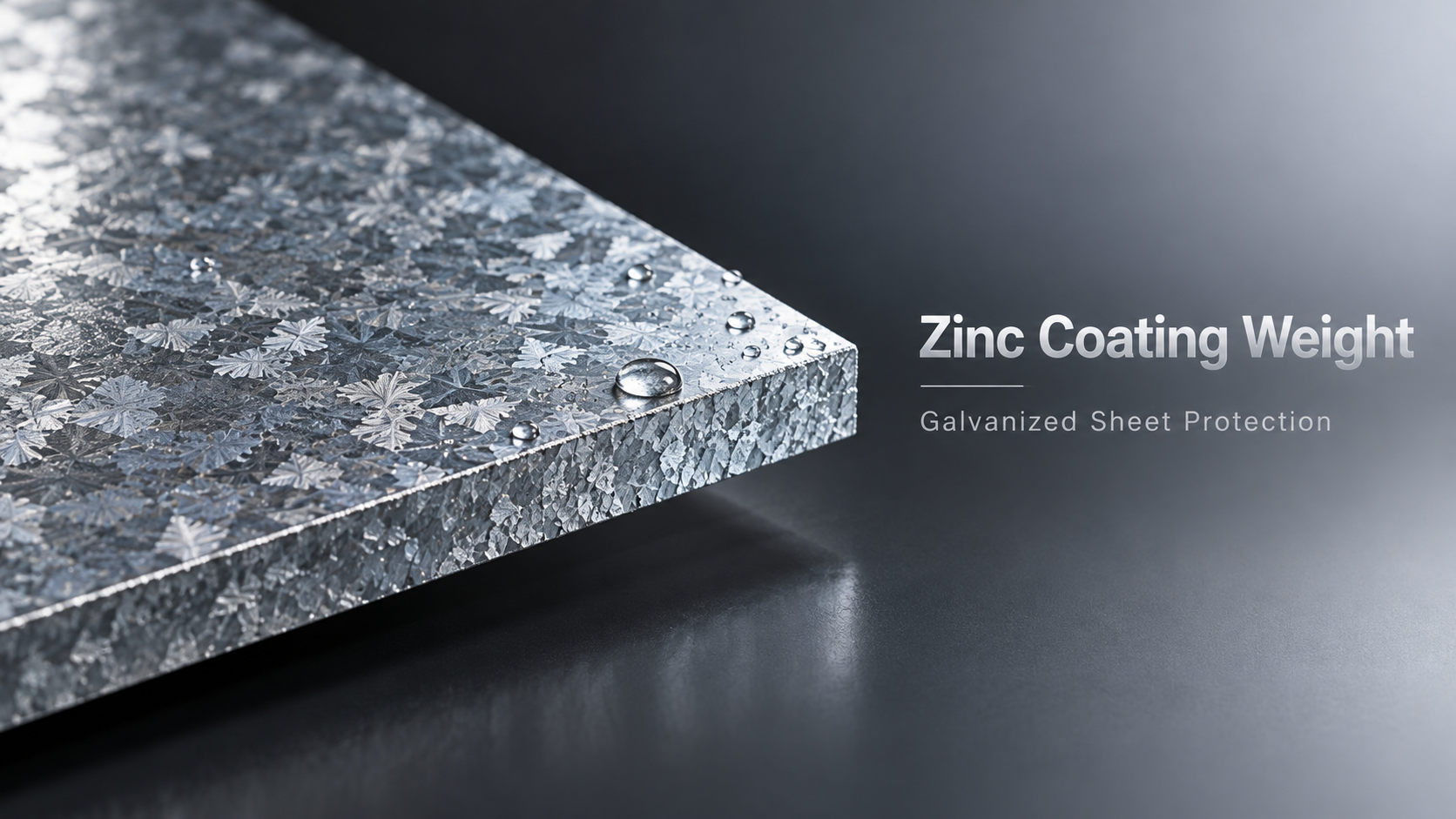
 Choosing the Right Zinc Coating Weight for Galvanized SheetOptimize your galvanized sheet selection by choosing the right zinc coating weight. Discover expert strategies to balance corrosion resistance, formability, and project costs.
 How to Specify Wall Thickness for Structural Steel TubingMaster wall thickness specification for structural steel tubing. Balance engineering loads, global tolerances, and costs. Read our expert guide to optimize procurement and ensure project safety!
 How much does 2 inch ss pipe price increase when upgrading from Schedule 40 to Schedule 80 for high-pressure systems?2 inch ss pipe price increases 18–35% when upgrading from Sch 40 to Sch 80—discover why, when it’s truly needed, and how to avoid overpaying.
Please give us a message


Please enter what you want to find