Galvanized sheet represents a fundamental solution to the inherent vulnerability of carbon steel: oxidation. Rather than acting as a mere cosmetic finish, the zinc coating functions as an active electrochemical and physical shield. For professionals evaluating material specifications for construction, manufacturing, or infrastructure projects, understanding the precise mechanics of this coating is critical. It dictates not only the initial material cost but also the long-term maintenance requirements and structural lifespan of the final application.
At its core, galvanized sheet is cold-rolled or hot-rolled steel that has been coated with a layer of zinc. While the basic definition is straightforward, the engineering value lies in how the zinc interacts with the steel substrate and the surrounding environment. The protection mechanism is dual-layered, relying on both physical isolation and electrochemical sacrifice.
The Dual Protection Mechanism
The primary way the zinc coating works is through barrier protection. The zinc layer physically separates the underlying steel from moisture, oxygen, and corrosive agents in the atmosphere. As long as this physical barrier remains intact, the steel substrate cannot rust. However, in real-world applications, scratches, cut edges, or micro-cracks are inevitable. This is where the second, more critical mechanism takes over.
Zinc is more electrochemically active than iron. In the galvanic series of metals, zinc sits higher than steel, meaning it has a greater tendency to lose electrons. When the coating is breached and both the zinc and the exposed steel are exposed to an electrolyte (such as rainwater or condensation), a galvanic cell is formed. The zinc acts as the anode and corrodes preferentially, while the steel acts as the cathode and remains protected. This process, known as cathodic protection or sacrificial anode action, ensures that even if the coating is physically damaged, the steel will not rust until the surrounding zinc has been entirely consumed.
The Metallurgical Bond: Why the Coating Stays Attached
A common misconception is that the zinc coating is simply painted or sprayed onto the steel surface. In hot-dip galvanizing, which is the standard for structural and heavy-duty galvanized sheet, the coating is formed through a metallurgical reaction. When the cleaned steel sheet is submerged in a bath of molten zinc (typically around 460°C), the iron in the steel reacts with the zinc to form a series of zinc-iron alloy layers.
This reaction creates a gradient structure. The outermost layer is pure zinc (the eta layer), which provides the initial barrier and cathodic protection. Beneath this, the alloy layers (zeta, delta, and gamma) become progressively harder and contain higher concentrations of iron. The innermost gamma layer is essentially an iron-zinc alloy with strong metallic bonds to the steel substrate. This metallurgical bond is why galvanized coatings are highly resistant to mechanical damage during handling, roll-forming, and installation. The coating does not peel off because it is literally part of the steel surface.
Decoding Coating Designations and Lifespan
When researching galvanized sheet, buyers and engineers will encounter various coating weight designations, such as G60, G90, or Z275. These numbers do not represent the thickness in millimeters, but rather the mass of the zinc coating per unit area. In North America, the "G" designation refers to ounces per square foot for both sides combined (e.g., G90 means 0.90 ounces per square foot). Internationally, the "Z" designation refers to grams per square meter (e.g., Z275 means 275 grams per square meter total for both sides).
Selecting the correct coating weight is a matter of matching the material to the environmental corrosivity. A thicker coating provides a larger reservoir of sacrificial zinc, directly extending the time before the steel substrate is exposed. However, the corrosion rate of zinc is not strictly linear. In the initial stages of exposure, zinc corrodes relatively quickly as it forms a protective patina of zinc carbonate (white rust). Once this dense patina is established, the corrosion rate slows down significantly. Therefore, doubling the coating weight does not necessarily double the service life, but it does provide a substantial and predictable extension, particularly in industrial or marine environments where the patina formation is constantly challenged by pollutants or salt.
Application Realities and Limitations
While galvanized sheet offers exceptional durability, it is not impervious to all environments. Understanding its limitations is crucial for preventing premature failure.
The most vulnerable points on a galvanized sheet are the cut edges. Unlike the flat surface where the zinc can form a protective patina on both the top and bottom, the cut edge exposes the bare steel cross-section. However, because of cathodic protection, the zinc adjacent to the cut edge will sacrifice itself to protect the exposed steel. This creates a characteristic "zinc depletion zone" near the edge. In highly corrosive environments, this edge recession can be significant, which is why edge sealing or additional touch-up painting is sometimes specified for critical structural joints.
Another critical factor is the distinction between white rust and red rust. White rust is the oxidation of the zinc coating itself, appearing as a white, powdery deposit. It is a normal part of the zinc's protective mechanism and does not compromise the underlying steel. However, if galvanized sheets are stored in tight, poorly ventilated bundles where condensation can accumulate, the white rust can build up excessively and consume the coating rapidly. Red rust, on the other hand, indicates that the zinc has been fully consumed in that area and the underlying steel is now oxidizing. Proper storage and handling to ensure water runoff and ventilation are essential to prevent premature white rust buildup.
Integration into Structural Components
The utility of galvanized sheet extends far beyond flat panels; it serves as the raw material for a wide array of cold-formed structural profiles. The metallurgical bond formed during galvanizing allows the coated steel to undergo significant deformation without the coating flaking off.
For instance, in the construction of steel structure buildings, components like C Sections Steel are frequently roll-formed from galvanized steel coils. These sections are used as purlins and wall beams, where their structural integrity must be maintained over decades of exposure to the elements. The galvanizing process ensures that the complex bends and edges created during the roll-forming process remain protected by the sacrificial zinc layer. When specifying such components, the choice of the base steel grade (such as Q235 or A36) combined with the appropriate zinc coating weight (like Z275) ensures that the structural members can withstand both mechanical loads and environmental degradation.
Key Variables in Material Evaluation
For those conducting material research or sourcing evaluations, focusing solely on the zinc coating weight provides an incomplete picture. The performance of galvanized sheet is determined by the interaction of several variables:
- Base Steel Quality: The mechanical properties of the underlying steel (yield strength, tensile strength, and formability) dictate the structural applications. The zinc coating protects the steel but does not alter its fundamental load-bearing characteristics.
- Surface Treatment (Passivation/Chromating): Most modern galvanized sheets undergo a chemical passivation treatment immediately after galvanizing. This creates a thin, transparent film that delays the formation of white rust during transit and storage. Understanding whether the material requires a fingerprint-resistant or oil-free passivation is important for downstream processes like painting or welding.
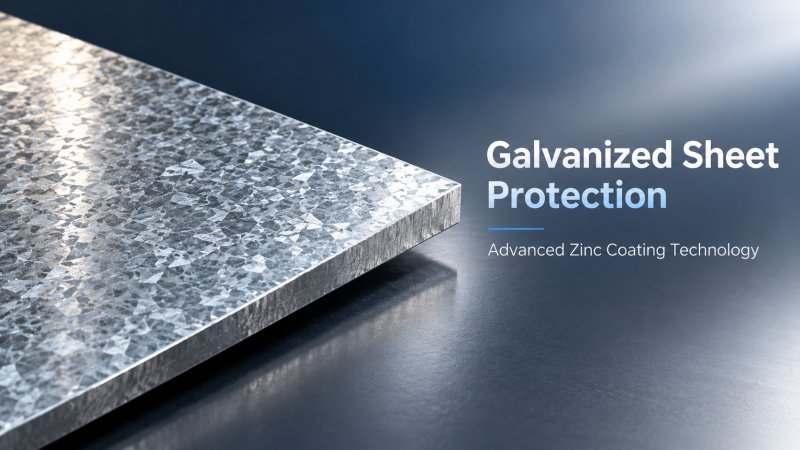
- Spangle Size: The visible crystalline pattern on the surface (spangle) is primarily aesthetic and does not significantly impact corrosion resistance. However, for applications requiring subsequent painting, a minimized or zero-spangle finish is often preferred to ensure better paint adhesion and a smoother final appearance.
Evaluating galvanized sheet requires looking past the surface shine to understand the electrochemical and metallurgical systems at play. By aligning the coating weight, base material properties, and environmental expectations, project stakeholders can ensure that the selected steel products deliver reliable, long-term performance without unnecessary over-engineering or premature maintenance costs.
Please give us a message


Please enter what you want to find