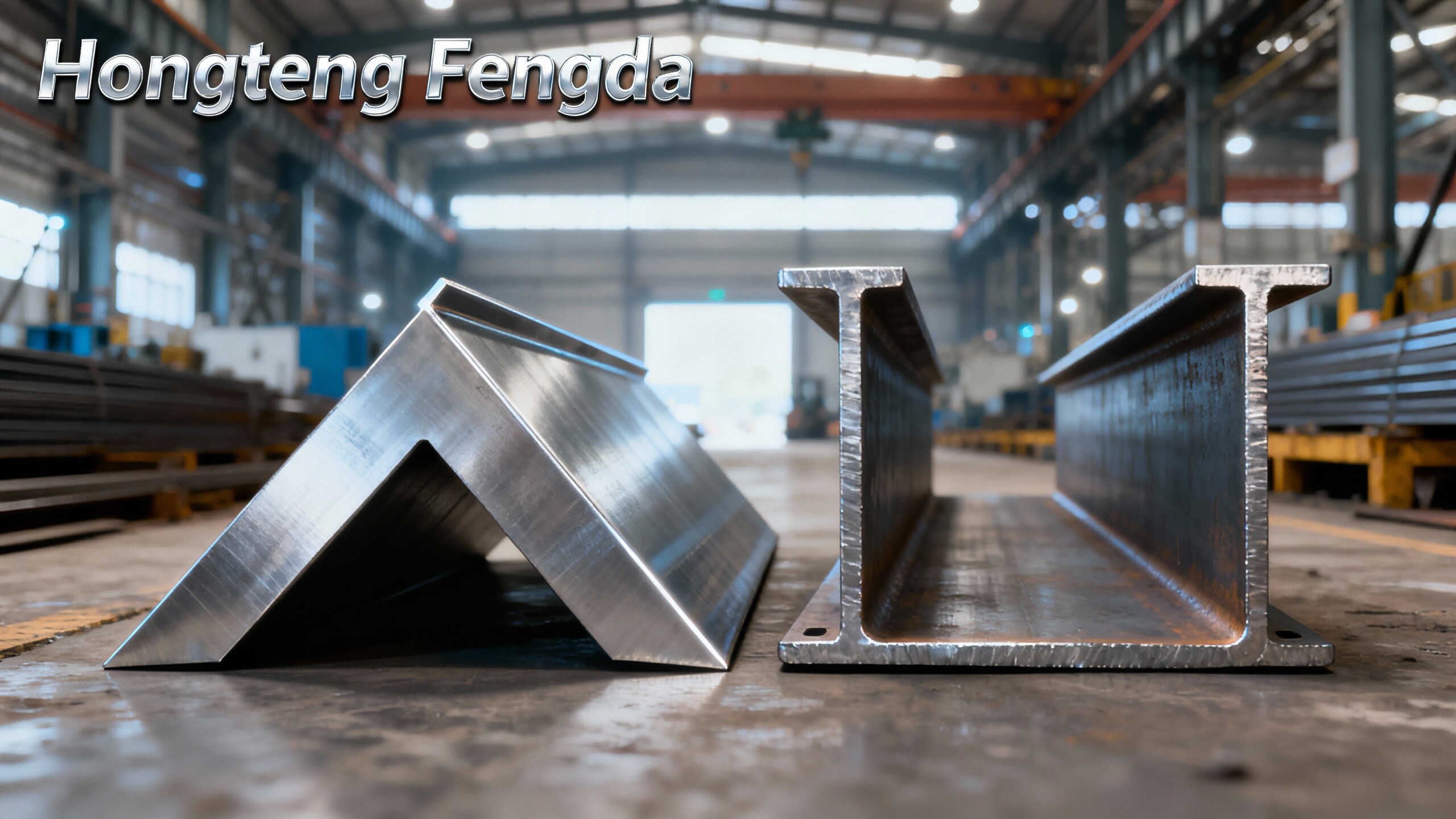
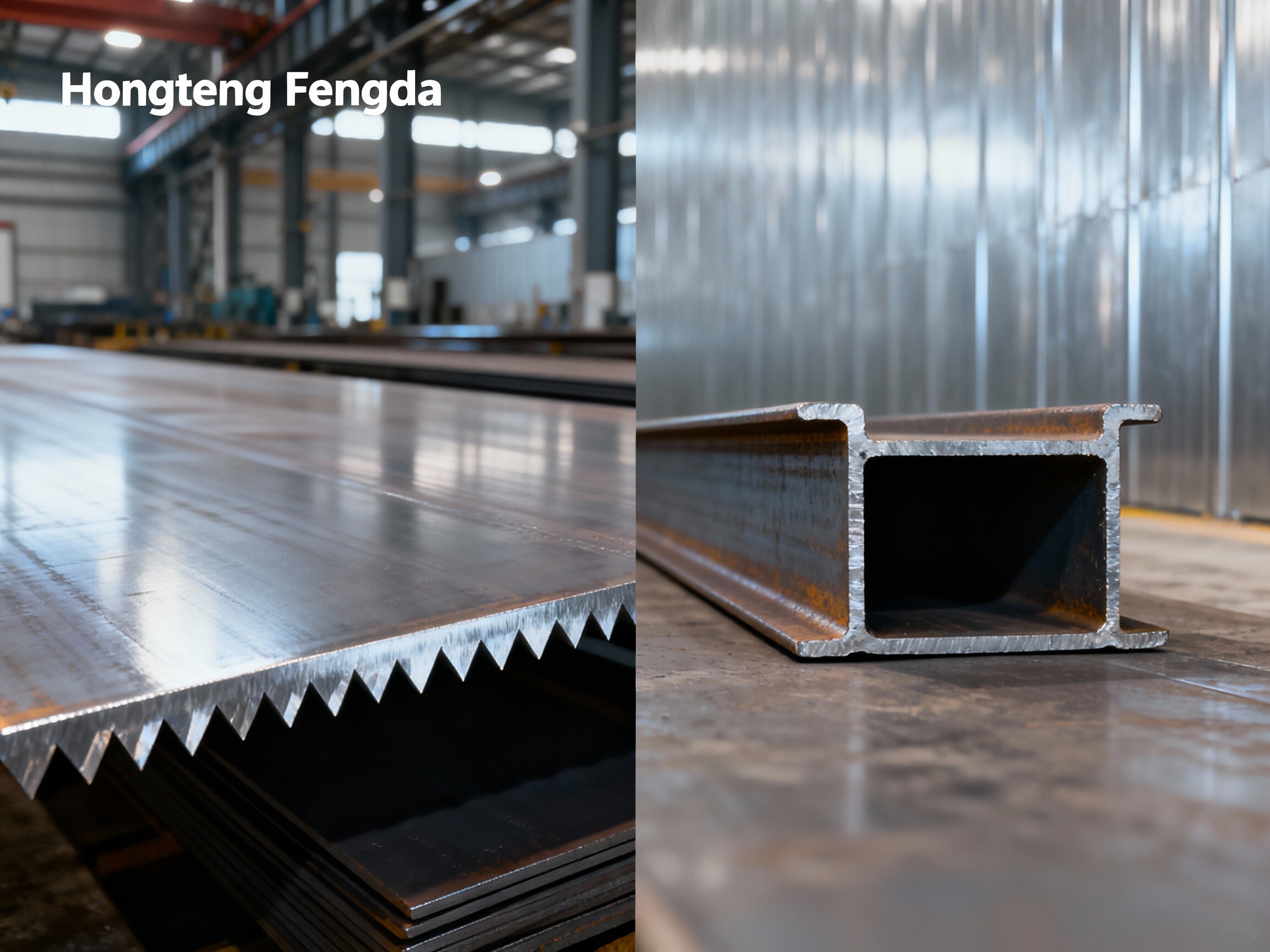
Selecting the correct structural profile is critical for the safety and longevity of any engineering project. This comprehensive guide, presented by “Hongteng Fengda”, explores the essential differences between “Angle vs Channel” steel. Whether you are designing a high-rise building, a solar mounting system, or industrial machinery, understanding the mechanical advantages and application scenarios of these two profiles is key. Our experts provide systematic insights into their technical principles, comparative performance, and global standards to help you optimize your procurement and engineering decisions.
【Defining Angle and Channel Steel: A Historical Context】
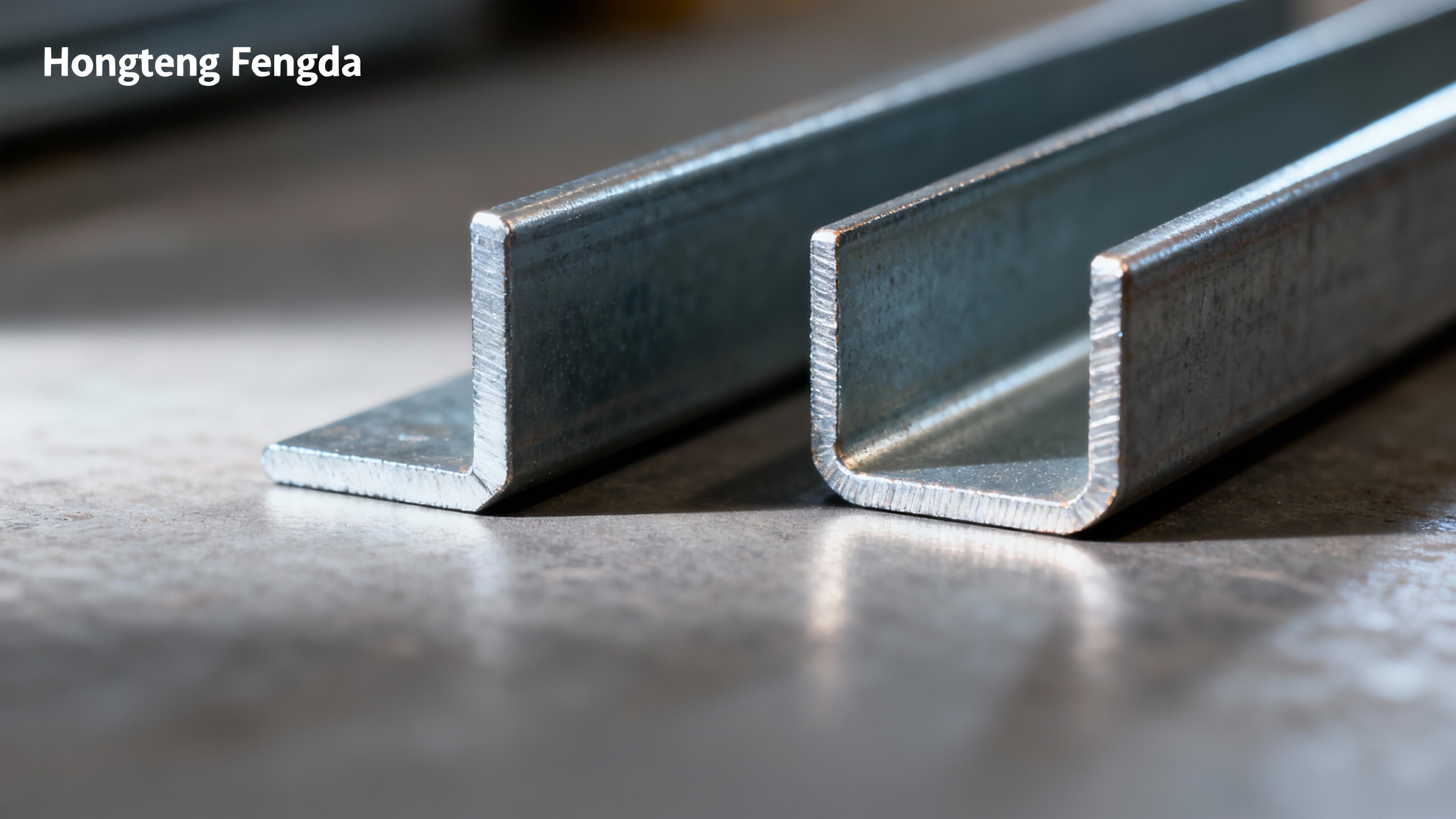
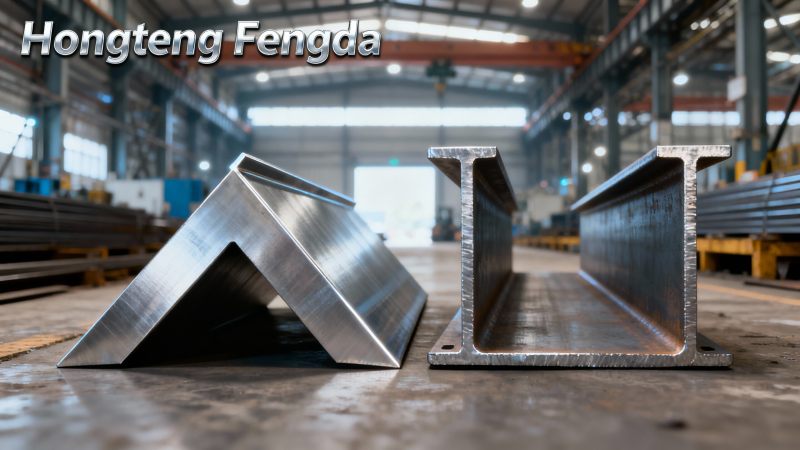
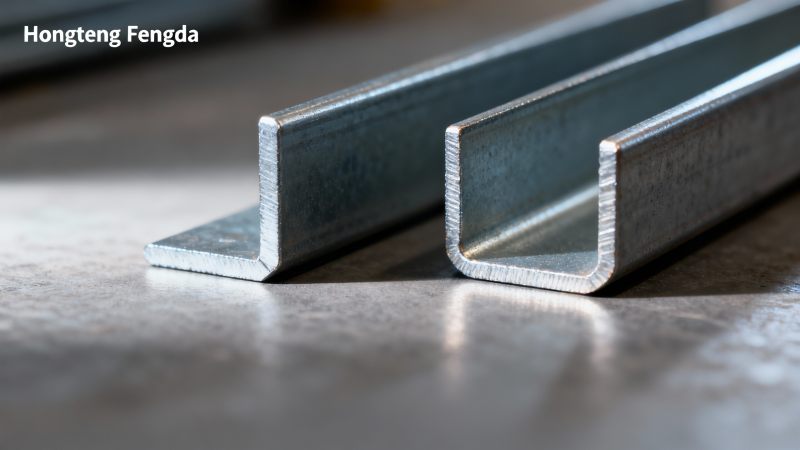
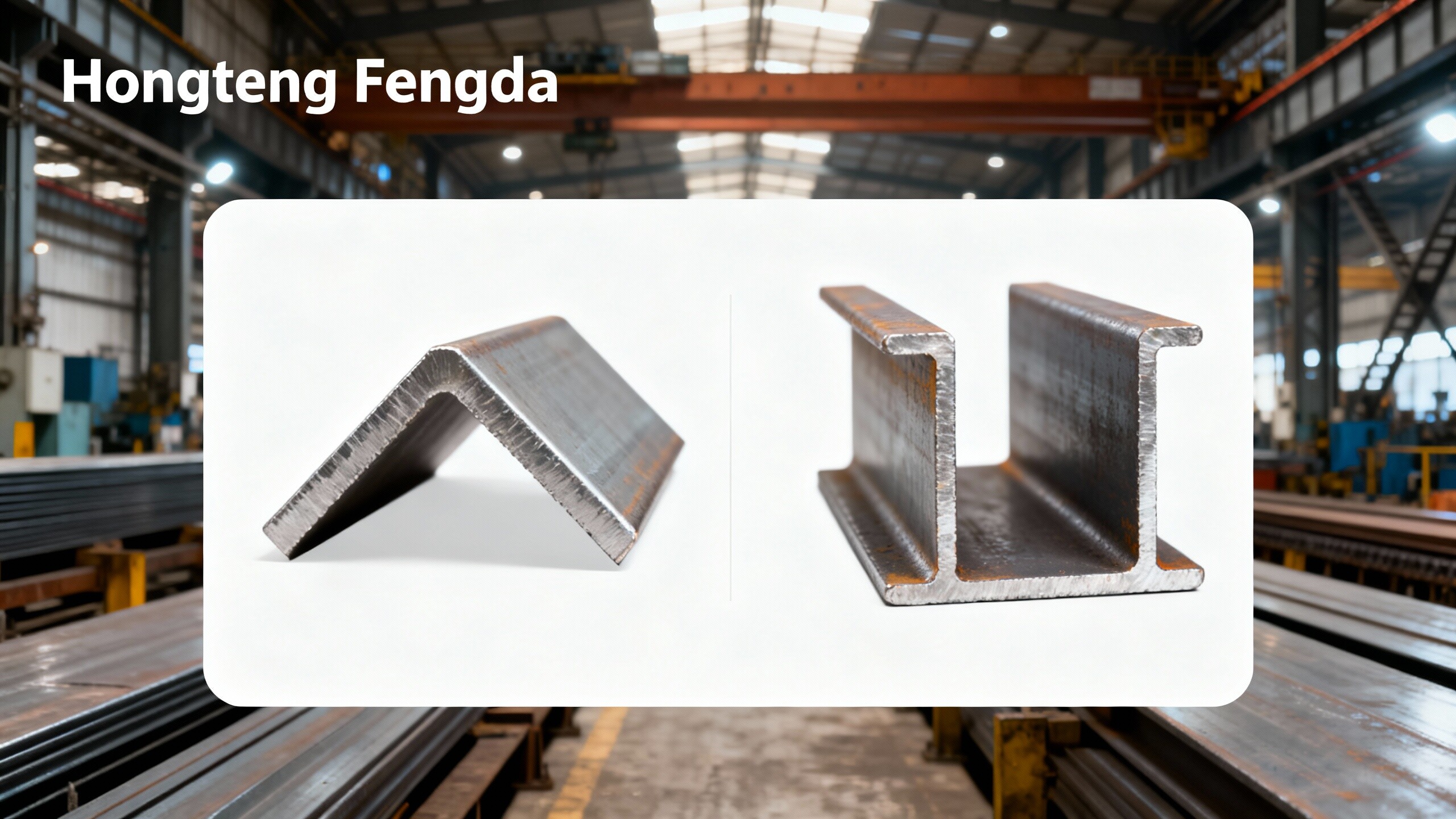
“Angle Steel”, commonly known as L-bracket or L-beam, features two legs that meet at a 90-degree angle. Conversely, “Channel Steel”, often referred to as C-channel or U-channel, consists of a wide web with two parallel flanges. Historically, these profiles emerged during the Industrial Revolution as the demand for standardized iron and steel components surged. “Hongteng Fengda” has inherited this legacy, utilizing modern hot-rolling and cold-forming technologies to produce profiles that meet the rigorous demands of 21st-century infrastructure.
【Technical Principles and Mechanical Characteristics】
The technical essence of the “Angle vs Channel” debate lies in their moment of inertia and load-bearing capacity. “Angle Steel” is optimized for tension and compression, making it ideal for bracing and lightweight framing. Its simple geometry allows for easy welding and bolting. “Channel Steel”, however, offers superior “Flexural Rigidity”. The parallel flanges provide enhanced resistance against bending forces when the load is applied perpendicular to the web. This makes the channel profile much stronger for horizontal spans where structural stability is paramount.
【“Hongteng Fengda” Product Function Modules】
To serve diverse global markets, our structural steel catalog is organized into specialized functional modules: 1. “High-Load Support Module”: Heavy-duty channel profiles designed for bridge girders and industrial floors. 2. “Stability Bracing Module”: Versatile angle steel solutions for cross-bracing and tower construction. 3. “Corrosion Defense Module”: Both profiles available in hot-dip galvanized finishes (ASTM A123) for extreme outdoor exposure. 4. “Precision Fabrication Module”: Custom length cutting, miter cutting, and CNC hole punching to match your exact blueprints.
【Angle vs Channel: Comparative Analysis and Industry Scenarios】
When performing an “Angle vs Channel” analysis, one must consider the direction of force. In “Telecommunication Towers”, angle steel is the preferred choice due to its excellent strength-to-weight ratio and wind resistance. In “Warehouse Racking Systems”, channel steel is often used for the main uprights and beams because of its ability to handle significant vertical and lateral loads without twisting. “Hongteng Fengda” recommends angle steel for “Architectural Trim” and “Lightweight Framing”, while channel steel is the standard for “Vehicle Chassis” and “Building Joists”.
【Standard Certifications and Global Compliance】
Global trade requires adherence to strict quality protocols. All structural profiles manufactured by “Hongteng Fengda” undergo rigorous testing to ensure compliance with “ASTM A36” (USA), “S235JR/S355JR” (EN 10025), and “JIS G3101” (Japan). Our “Quality Management System” is ISO 9001 certified, ensuring that every batch of angle and channel steel possesses the chemical and mechanical properties required for safety-critical applications.
【Standard FAQ: Angle vs Channel】
1. “Which is stronger, angle or channel steel?”: Generally, a “Channel Steel” profile is stronger for resisting bending and heavy loads due to its geometry, whereas “Angle Steel” is more efficient for bracing and tension members.
2. “Can I substitute angle steel for channel steel?”: This depends on the load requirements. Substitution should only be done after a “Structural Analysis” by a certified engineer to ensure the safety of the design.
3. “Does Hongteng Fengda offer galvanized versions of both?”: Yes, we provide “Hot-Dip Galvanized” finishes for both angle and channel steel to prevent rust in marine or industrial environments.
4. “What are the typical lengths available?”: Our standard lengths are 6m and 12m, but we offer “Customized Cutting Services” to meet specific project lengths and minimize waste.
【Global Customer Testimonials】
“David Miller”, a structural consultant from Canada, states: “The technical support from “Hongteng Fengda” was invaluable in helping us decide between angle and channel profiles for our latest solar farm project. The quality of their galvanized finish is exceptional.”
“Ahmed Al-Sayed”, a construction manager in Dubai, comments: “We have sourced thousands of tons of channel steel from “Hongteng Fengda” for our logistics park. Their products are perfectly straight, meet all international standards, and the delivery was flawlessly timed.”
 Angle vs Channel: How to Choose the Right Steel Section for Your 2024 Construction ProjectExplore angle vs channel steel choices for your 2024 construction with Hongteng Fengda. Discover durable steel angle, steel girder, steel rail, steel tube, steel roof sheet, and steel conduit solutions meeting global standards for strength and efficiency.
 Steel Square Rod Specifications and Cost Analysis for Industrial Procurement ManagersSteel square rod, steel angle, and steel girder solutions for industrial procurement managers. Compare angle vs channel, explore cost analysis, and discover high‑quality steel tube, steel roof sheet, and steel conduit options to optimize your project sourcing.
 Steel Angle vs Steel Tube: Which Offers Better Structural Performance and ROI in 2024?Explore the 2024 comparison of steel angle vs steel tube for superior strength, ROI, and reliability. Discover Hongteng Fengda’s certified steel square rod, steel girder, steel rail, and steel conduit solutions enhancing modern construction performance.
 Top 5 Quality Indicators When Sourcing Steel Girders for Large Infrastructure ProjectsExplore top quality indicators for steel girder sourcing, comparing angle vs channel, steel square rod, rail, tube, roof sheet, and conduit solutions from trusted manufacturer Hongteng Fengda to ensure durability and compliance.
Please give us a message


Please enter what you want to find