When fabricating coated metals, operators frequently encounter issues like zinc flaking, rough cut edges, or micro-cracks along the bend line. These defects compromise the material's corrosion resistance and require costly rework or touch-up painting. The core to solving these problems lies in adjusting tooling parameters to account for the zinc layer's physical properties and managing the underlying steel's mechanical behavior. By selecting the right cutting methods and bending dies, you can maintain the integrity of the zinc coating while achieving precise dimensions and structural reliability.
Mechanical Shearing and Blade Clearance Adjustments
Mechanical shearing remains the most common method for straight cuts, but the zinc coating introduces a unique physical challenge. The zinc layer acts as a soft, gummy barrier that can cause the cut edge to deform if the blade clearance is incorrect. Standard clearance settings for bare cold-rolled steel often result in excessive burr formation and edge tearing when applied to a galvanized sheet.
To prevent the zinc from being dragged or smeared, increase the blade clearance slightly compared to uncoated equivalents. A general rule is to add 5% to 10% to the standard clearance value based on the material thickness. This extra space allows the zinc to flow and shear cleanly without being trapped and compressed between the upper and lower blades. If the clearance is too tight, the zinc will extrude into the micro-gap, creating a heavy burr that must be removed before welding or assembly.
Dull blades exacerbate this problem significantly. A dull edge will tear the coating rather than shearing it cleanly, leading to zinc adhesion on the blade itself. Regular inspection and sharpening of shear blades are mandatory. If zinc buildup occurs on the blade, it must be cleaned immediately with a brass wire brush or appropriate solvent to prevent transferring surface defects onto subsequent pieces.
Thermal Cutting Parameters and Gas Selection
When thermal cutting methods like laser or plasma are required, the vaporization of zinc creates significant operational hurdles. During laser cutting, zinc vaporizes at a much lower temperature than the steel substrate. This vapor rises and can condense on the protective lens of the cutting head, causing rapid degradation of optical components and inconsistent cut quality.
Using a high-pressure assist gas, typically nitrogen for clean edges, helps blow the molten zinc and steel out of the kerf before it can re-solidify. Oxygen, while providing an exothermic reaction that increases cutting speed, will burn the zinc and leave a thick, porous oxide layer along the edge. Adjusting the focal point slightly below the surface of the material can also contain the zinc vaporization within the kerf, reducing the amount of vapor that escapes upward toward the lens.
Plasma cutting generates even more zinc dust and fumes. While it is faster for thicker sections, the heat-affected zone will completely burn away the zinc coating around the cut edge. Operators must account for this by planning for post-cut edge treatment. Using mixed gases like F5 (95% nitrogen, 5% hydrogen) can improve cut quality and reduce dross formation compared to standard shop air, minimizing the amount of post-cut cleanup required.
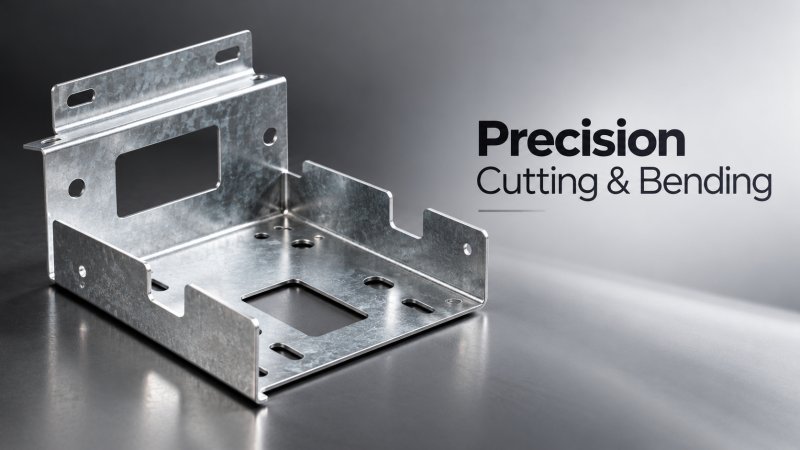
Bending Tooling and Friction Management
Bending presents a different set of mechanical challenges. The zinc coating acts as a dry lubricant, which reduces friction between the sheet metal and the bending die. While this might seem beneficial, it often causes the material to slide unpredictably during the bending cycle, leading to inconsistent flange lengths and misaligned parts.
To counteract this sliding, specialized tooling is required. Applying a polyurethane film or using dies with a textured, non-stick coating helps grip the material securely without scoring the zinc layer. Standard hardened steel dies without any surface treatment will inevitably cause friction-induced zinc pick-up, where the zinc strips off the sheet and welds itself to the die, creating deep scratches on future parts. Advanced physical vapor deposition (PVD) coatings like Titanium Carbonitride (TiCN) on the punch and die surfaces can drastically reduce this adhesion.
The choice of bending method also impacts the coating. Air bending is generally preferred over bottoming or coining for galvanized materials. Bottoming forces the material to rub heavily against the die surface to achieve the final angle, greatly increasing the risk of zinc pick-up and coating fracture. Air bending minimizes this sliding contact while still achieving the desired geometry.
Managing Springback and Base Material Properties
Springback—the elastic recovery of the metal after the bending pressure is released—is a constant variable in sheet metal fabrication. The presence of the zinc coating slightly alters the friction dynamics, but the primary driver of springback is the base steel's mechanical properties and yield strength.
When working with higher-strength low-alloy steels, the springback is significantly more pronounced than with mild steel. For instance, if the fabrication involves a high-strength Carbon Steel Sheet Plate such as Q345A (16Mn), the manganese content (1.20-1.50%) and specific carbon range (0.15-0.19%) increase the material's yield strength. This higher yield point means the metal will attempt to return to its original shape more aggressively after bending, requiring precise compensation.
To manage this, operators must employ overbending techniques. The punch must penetrate slightly deeper into the die than the target angle to compensate for the elastic recovery. The exact compensation value depends on the material thickness, yield strength, and the specific bend radius. Conducting test bends and measuring the final angle with a digital angle gauge is the only reliable way to dial in the correct CNC parameters for a new batch of material, especially when forming components for engineering machinery or mining trucks where dimensional accuracy is critical.
Post-Processing Inspection and Edge Protection
After the cutting and bending operations are complete, a thorough inspection of the zinc coating is necessary. Pay close attention to the inside of the bend radius. While minor micro-cracking in the zinc is normal and often acceptable for general atmospheric exposure, severe flaking that exposes the bare steel substrate requires immediate intervention.
Any area where the zinc coating has been completely removed—such as thermal cut edges or severely cracked bend radii—must be treated to prevent localized corrosion. Cold galvanizing compounds containing at least 90% zinc dust in the dry film should be applied to these exposed areas. Ensure the surface is clean, dry, and free of oil or drawing compounds before application. Solvent cleaning and light abrasive profiling may be necessary to guarantee proper adhesion of the touch-up paint.
Ventilation is another non-negotiable aspect of the workflow. Cutting and welding coated steel releases zinc oxide fumes, which can cause metal fume fever. Local exhaust ventilation systems must be positioned close to the work area, and operators must wear appropriate respirators equipped with P100 particulate filters when engineering controls are insufficient to capture the fumes at the source.
Optimizing Material Selection for Complex Forming
The success of cutting and bending operations often starts with the initial material selection and understanding the metallurgical behavior of the base steel. Not all coated sheets behave identically under stress. The forming quality of the base steel dictates how well the zinc coating will adhere during deformation.
For projects requiring deep drawing or complex, multi-stage bending, specifying a sheet produced from a high-formability base steel is essential. These steels are manufactured with strict control over impurities and inclusion shapes, ensuring uniform elongation. The silicon content (0.20-0.50%) and aluminum content (0.030-0.050%) in the base metal also play a role; excessively high silicon can lead to a thicker, more brittle zinc-iron alloy layer during the galvanizing process, which is highly prone to flaking during bending.
In heavy structural applications where both formability and high load-bearing capacity are required, selecting the right grade is a balancing act. A robust Carbon Steel Sheet Plate that meets international standards like ASTM, EN, JIS, or GB provides the necessary structural integrity. When the base metal possesses consistent mechanical properties and controlled chemical composition, the predictability of the bending process improves significantly. This consistency reduces scrap rates, minimizes tool wear, and ensures that the final fabricated components perform reliably in demanding construction and industrial environments without compromising their protective zinc layer.
Please give us a message


Please enter what you want to find