When evaluating structural materials for construction, engineers and project managers often compare steel angle vs channel, I-beam weight, beams weight, and alternatives like steel square rod or steel round bar. But what truly sets angle steel apart is its exceptional strength-to-weight ratio—offering rigidity without excess mass. Understanding how to measure a steel beam, the weight of I beam, or steel girder specs is critical for load calculations, cost control, and safety compliance. As a trusted structural steel manufacturer & exporter from China, Hongteng Fengda delivers ASTM/EN-certified steel angle and other profiles—supporting global buyers with precision, reliability, and OEM-ready solutions.
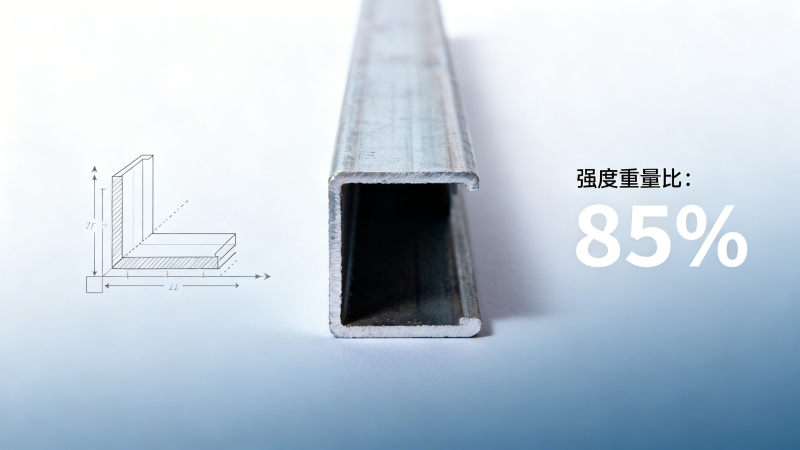
Why Strength-to-Weight Ratio Defines Structural Efficiency
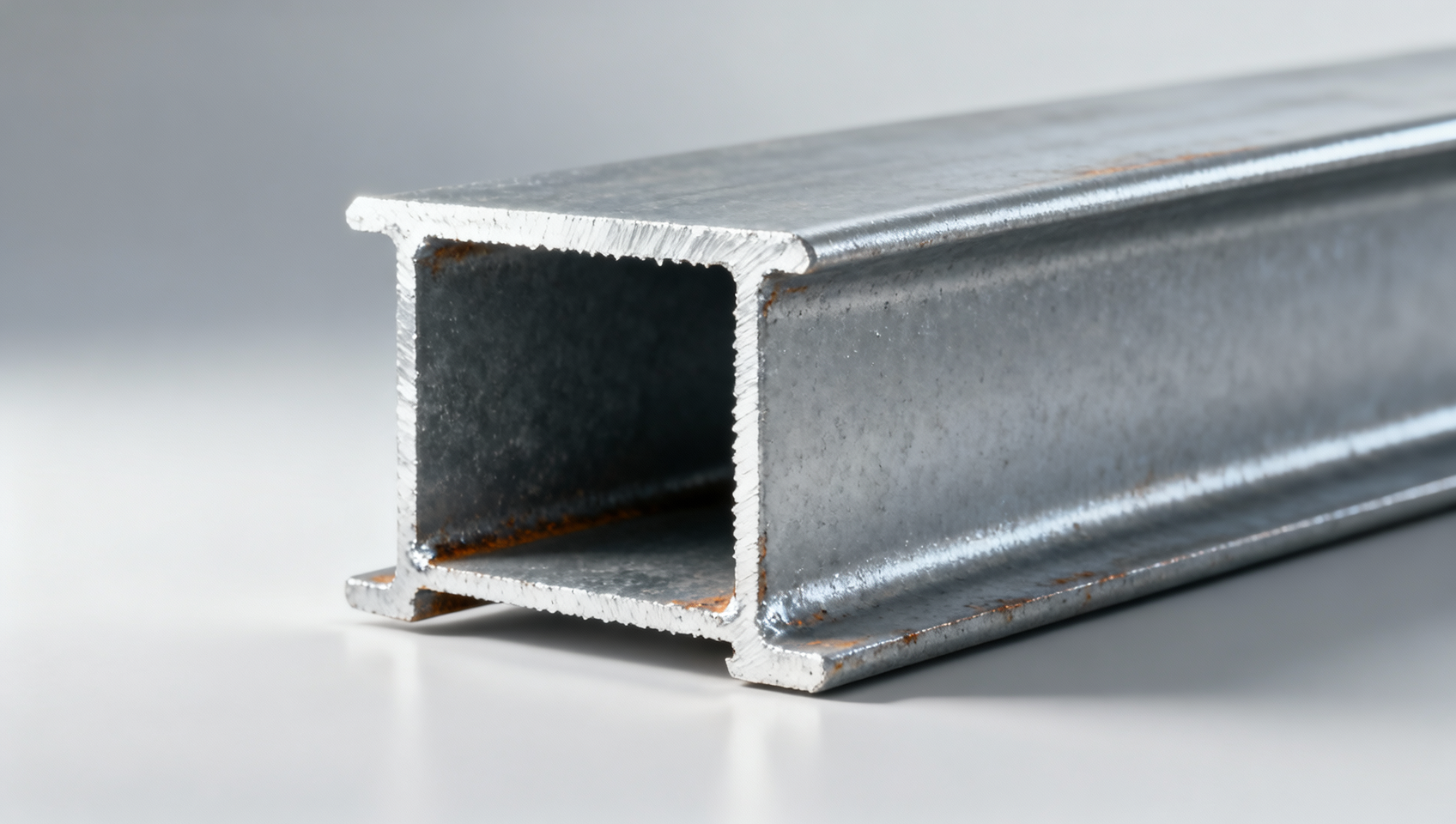
In modern construction—especially high-rise buildings, bridges, industrial sheds, and modular infrastructure—the strength-to-weight ratio isn’t just a theoretical metric; it directly impacts foundation design, transportation logistics, erection speed, and long-term lifecycle costs. Steel angle achieves an optimal balance: its L-shaped cross-section resists torsional and bending loads effectively while minimizing material volume. Compared to solid sections like steel square rod or steel round bar, angle steel reduces dead load by up to 35% without compromising joint stiffness. Unlike hollow structural sections (HSS), which require precise welding alignment, angle steel offers inherent stability in bolted connections—ideal for seismic zones and rapid assembly projects.
This efficiency becomes especially pronounced when calculating beams weight across large-scale frameworks. For example, a 6 m span supporting 45 kN/m uniformly distributed load may require a 200×200×12 mm angle section weighing ~36.7 kg/m—whereas an equivalent I-beam weight would be ~42.5 kg/m, and a solid steel square rod of comparable stiffness could exceed 98 kg/m. That difference compounds across thousands of linear meters: lower transport fuel consumption, reduced crane capacity requirements, and faster on-site handling. At Hongteng Fengda, we validate every steel angle specification against EN 10056-1, ASTM A6/A6M, and GB/T 706—ensuring certified dimensional accuracy and mechanical properties that align with real-world performance expectations.
Steel Angle vs Channel: Functional Trade-offs in Load Path Design
Selecting between steel angle and channel isn’t about superiority—it’s about load path logic. Channels offer superior moment resistance in single-axis bending (e.g., floor joists or purlins), thanks to their deep web and parallel flanges. Angles, however, excel in bracing, corner reinforcement, and tension-only members where bi-axial stability and compact geometry matter more than pure flexural capacity. In truss systems, for instance, steel angle provides predictable buckling behavior under compression and reliable tensile strength when galvanized or coated—critical for coastal or chemical-exposed environments.
The decision also affects how to measure a steel beam during QA/QC inspections. While channels demand precise web thickness verification at mid-span, angles require consistent leg thickness and root radius checks—both governed by tight tolerances in EN 10056-2. Our production lines use laser-guided profile measurement systems calibrated to ISO 17025 standards, ensuring repeatability across batches destined for North America or the Middle East. When paired with complementary products like Hot Rolled Steel Sheet Pile, angle steel forms integrated retaining structures—where U-sheet piles provide lateral earth pressure resistance and angled braces deliver diagonal stability.
From Theory to Practice: Calculating & Verifying Steel Beam Weight Accurately
Accurate beams weight calculation prevents over-engineering—and avoids dangerous underestimation. The standard formula for steel angle weight is: Weight (kg/m) = [(2 × Leg Length − Thickness) × Thickness × 7.85]. But real-world application demands nuance: surface treatments (hot-dip galvanizing adds ~3–5% mass), mill tolerances (±5% per EN 10056), and cutting losses must be factored into procurement planning. For I-beam weight, engineers rely on sectional property tables—but misreading “weight of I beam” as nominal rather than actual can skew connection design. At Hongteng Fengda, each shipment includes traceable mill test reports (MTRs) showing measured dimensions, chemical composition, and tensile yield strength—so project managers verify weight of I beam or steel girder against as-delivered reality—not catalog assumptions.
We also support digital integration: our BIM-compatible steel angle families include parametric weight fields synced to live material databases. This eliminates manual lookup errors when modeling complex façade supports or stair stringers. For distributors and procurement teams, this means fewer RFIs, tighter budget forecasting, and faster approval cycles—especially when coordinating with subcontractors who handle steel wire rope rigging or steel round bar anchor systems.
Global Standards, Localized Precision: How Certification Drives Trust
Compliance isn’t checkbox exercise—it’s risk mitigation. Our steel angle meets ASTM A6 (U.S.), EN 10056 (EU), JIS G3101 (Japan), and GB/T 706 (China), with third-party verification from SGS, TÜV, and BV. Each batch undergoes ultrasonic testing (UT) for internal defects and Charpy impact testing at −20°C for low-temperature applications. For clients specifying S355 or S430 grade sheet piles, we ensure seamless interoperability: same heat treatment protocols, identical corrosion resistance thresholds, and shared quality documentation formats—reducing engineering review time by up to 40%.
Beyond certification, our OEM service includes custom punching, pre-drilling, and CNC-bent angles—enabling exact-fit installation without field modification. This capability matters deeply for safety-critical roles: steel girder end plates, crane runway brackets, or seismic bracing assemblies where millimeter-level consistency prevents fatigue failure. With ISO 9001, ISO 14001, and ISO 45001 (formerly OHSAS 18001) certifications, plus CE FPC marking, we deliver not just steel angle—but engineered confidence.
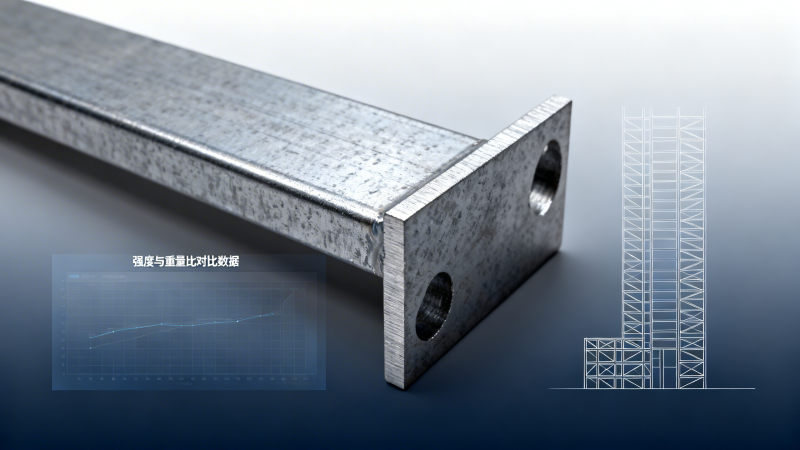
Conclusion: Optimized Performance Starts with Intelligent Material Selection
Steel angle stands out not because it replaces other profiles—but because it solves specific structural challenges with unmatched efficiency. Its strength-to-weight ratio enables leaner designs, faster builds, and lower total installed cost—whether compared to channel steel in bracing systems, I-beam weight in secondary framing, or steel square rod in non-load-bearing enclosures. Understanding how to measure a steel beam accurately, interpreting weight of I beam data contextually, and recognizing when steel angle outperforms alternatives—all stem from deep domain knowledge and verified manufacturing discipline.
As a structural steel manufacturer & exporter from China, Hongteng Fengda combines technical rigor with responsive global service. From ASTM-certified angle steel to specialized Hot Rolled Steel Sheet Pile for water retaining wall applications, we help project managers reduce sourcing risks, procurement teams lock in stable lead times, and safety officers verify compliance down to the millimeter. Ready to optimize your next structural solution? Get a customized quote and full technical dossier today.
- channel steel
- steel i
- l angle
- angle steel
- hot rolled steel sheet
- Hot Rolled Steel
- structural steel
- Structural Steel
- I-Beam
- Profile
- Galvanized
- Steel Sheet Pile
- Steel Beam
- Steel Wire
- steel sheet
- steel girder
- steel angle
- steel wire rope
- steel round bar
- steel square rod
- angle vs channel
- weight of i beam
- how to measure a steel beam
- beams weight
Related recommendations
 How long does acero prepintado retain gloss and color stability in direct desert sunlight?Acero prepintado gloss & color stability in desert sun? Discover real-world performance data, PVDF vs. polyester longevity, and spec-critical insights for GCC projects.
 Does acero pregalvanizado maintain coating integrity after cold bending to 90 degrees?Acero pregalvanizado maintains coating integrity after 90° cold bending — when engineered right. Discover how Hongteng Fengda guarantees real-world performance, adhesion & corrosion resistance.
 Do the advantages of galvanized steel include reduced fire risk compared to untreated carbon steel?Advantages of galvanized steel include measurable fire-risk reduction vs. untreated carbon steel—learn how zinc delays ignition, buys critical escape time, and enhances safety without false 'fireproof' claims.
 What is the minimum bend radius for 12mm steel wire rope without permanent deformation?12mm steel wire rope capacity depends on bend radius — discover the safe 72–96mm minimum to prevent permanent deformation, fatigue & failure. Expert rigging insights inside.
Please give us a message


Please enter what you want to find