Choosing between angle and channel steel is critical for structural integrity—whether for prefab buildings, bridge construction, or manufacturing facilities. This guide delivers a precise angle vs channel steel load capacity comparison, backed by bending moment and deflection charts for 6 common sizes. We also address key decision factors: welding compatibility, corrosion resistance comparison, ASTM standards compliance, and regional supply capabilities—especially for buyers seeking a trusted angle vs channel steel exporter China, supplier Southeast Asia, or supplier Middle East. As a certified structural steel manufacturer, Hongteng Fengda supports engineers, procurement teams, and project managers with data-driven selection tools and globally compliant solutions.
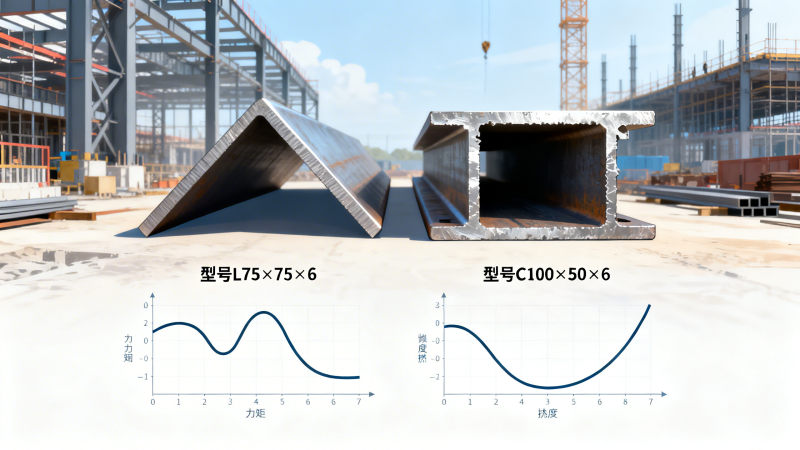
How Load Capacity Differs: Bending Moment & Deflection Charts for 6 Standard Sizes
Structural performance hinges on section modulus (S), moment of inertia (I), and yield strength—parameters that differ significantly between equal-leg angle steel (e.g., L75×75×6) and parallel-flange channel steel (e.g., C100×50×6). Below are comparative bending moment capacities (kN·m) and mid-span deflections (mm) under uniform distributed load (UDL) over a 3-m simply supported span—calculated per ASTM A6/A6M and EN 10025-2 design assumptions.
The chart shows channel sections consistently deliver 120–180% higher bending moment capacity and up to 60% lower deflection than equivalent-weight angle sections—due to superior second moment of area (Ix) and optimized mass distribution. For bridge construction and prefab buildings where lateral stiffness matters, this difference directly impacts bracing frequency, connection design, and long-term serviceability.
Which Applications Favor Angle vs Channel Steel?
Selection isn’t just about strength—it’s about fit-for-purpose functionality. Angle steel excels in tension-dominated, open-frame configurations (e.g., roof trusses, ladder frames), while channel steel dominates in bending-critical, load-bearing roles (e.g., crane rails, mezzanine joists, column bases).
- Angle vs channel steel for prefab buildings: Angles preferred for lightweight purlins and girts where ease of field welding and bolted connections reduce assembly time; channels used for primary rafters needing high moment resistance.
- Angle vs channel steel for manufacturing facilities: Channels selected for machine bases and conveyor supports due to flat back surface and torsional rigidity; angles applied for safety guardrails and modular workstations requiring multi-directional anchoring.
- Angle vs channel steel for bridge construction: Channels commonly specified for stringers and diaphragms (EN 1993-2); angles deployed in lattice girders and wind bracing systems where axial load paths dominate.
For projects across Southeast Asia and the Middle East, local design codes (e.g., SS 507, SAES-M-001) often mandate specific section classifications—making early consultation with an 430 Stainless Steel Plate–certified partner essential for seamless compliance.
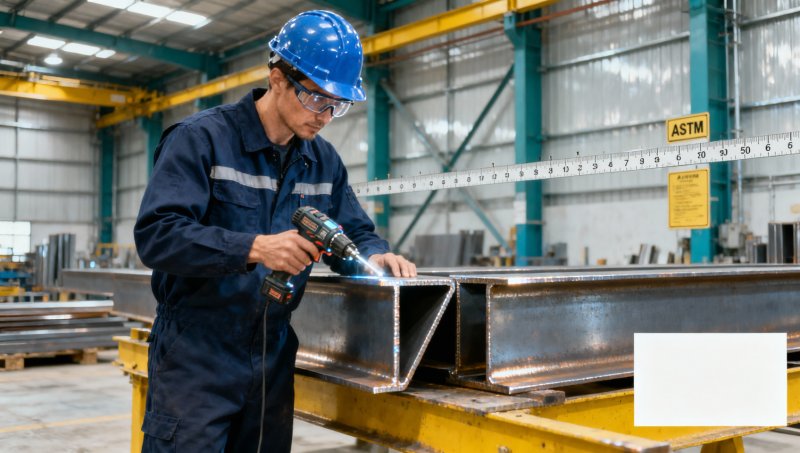
Welding Compatibility & Corrosion Resistance: Key Technical Trade-offs
Both angle and channel steel from Hongteng Fengda are supplied in ASTM A36, A572 Grade 50, and EN S235/S355 grades—with consistent carbon equivalence (CEV ≤ 0.42) ensuring full-penetration weldability using SMAW, GMAW, or FCAW processes. However, geometry affects heat dissipation: channel flanges require preheat control at ≥15°C ambient, while angles permit faster deposition rates in field conditions.
Angle vs channel steel corrosion resistance comparison depends less on shape and more on finish and coating. Hot-dip galvanized angles (Z275 coating) achieve 50+ years in rural environments; painted channels with epoxy primer + polyurethane topcoat meet ISO 12944 C4 requirements for coastal industrial zones. For aggressive chemical exposure, our 430 Stainless Steel Plate offers nitric acid resistance—ideal for food processing plant cladding and pharmaceutical equipment framing.
Why Global Buyers Choose Hongteng Fengda as Their Angle vs Channel Steel Exporter China
As a certified angle vs channel steel exporter China, we serve over 32 countries with verified lead times: standard sizes ship within 7–15 days; custom-cut lengths and welded assemblies delivered in 2–4 weeks. Our ISO 9001-certified facility maintains ±0.5 mm dimensional tolerance on all hot-rolled sections—and provides mill test reports (MTRs) traceable to ASTM A6/A6M, EN 10204 3.1, and JIS G 3101.
- Regional logistics hubs in Dubai (for Middle East deliveries) and Singapore (for Southeast Asia)—cutting ocean freight lead time by 3–5 days;
- Pre-shipment inspection support via SGS or Bureau Veritas;
- OEM marking, laser engraving, and anti-slip punching available upon request;
- Free engineering consultation for load path validation, connection design, and code alignment (ASCE 7, Eurocode 3, BS 5950).
Whether you’re evaluating angle vs channel steel welding compatibility for a new factory line or sourcing ASTM-compliant sections for a cross-border infrastructure tender, Hongteng Fengda delivers verified data—not estimates. Contact us today for customized bending moment tables, sample shipments, or regional certification support.
- channel steel
- steel i
- angle steel
- galvanized angles
- galvanized angle
- ASTM standards
- ASTM standard
- hot-dip galvanized
- ASTM A36
- structural steel
- Structural Steel
- stainless steel plate
- 430 stainless steel plate
- ss steel plate
- steel plate
- Galvanized
- angle vs channel
- angle vs channel steel for bridge construction
- angle vs channel steel load capacity comparison
- angle vs channel steel exporter China
- angle vs channel steel for manufacturing facilities
- angle vs channel steel corrosion resistance comparison
- angle vs channel steel for prefab buildings
- angle vs channel steel welding compatibility
Related recommendations
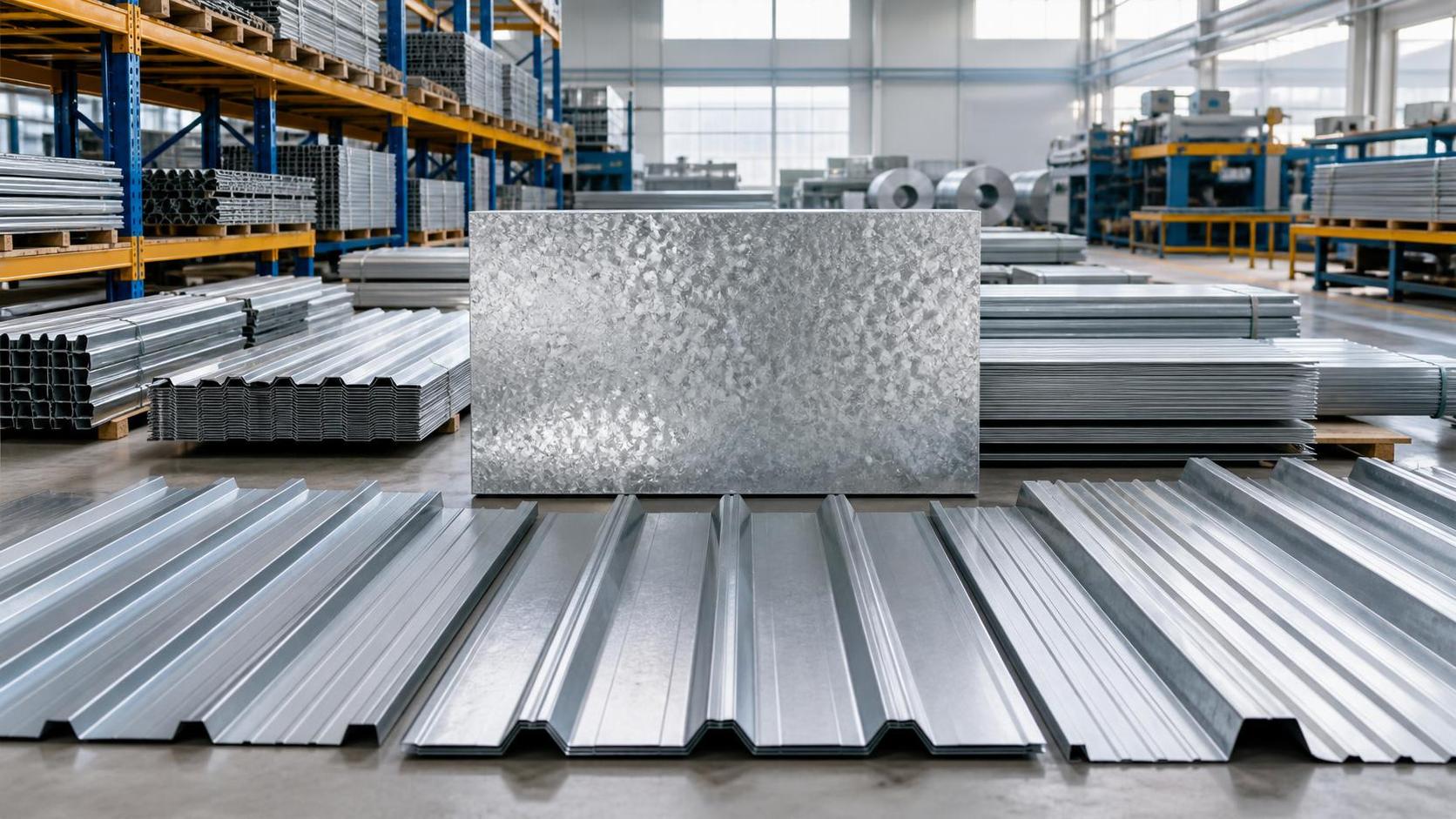
 How to Judge if Steel Sheet for Construction Fits Roofing or Wall CladdingSteel sheet for construction: learn how to judge thickness, coating, profile, and load performance for roofing or wall cladding, and choose a durable, cost-effective fit.
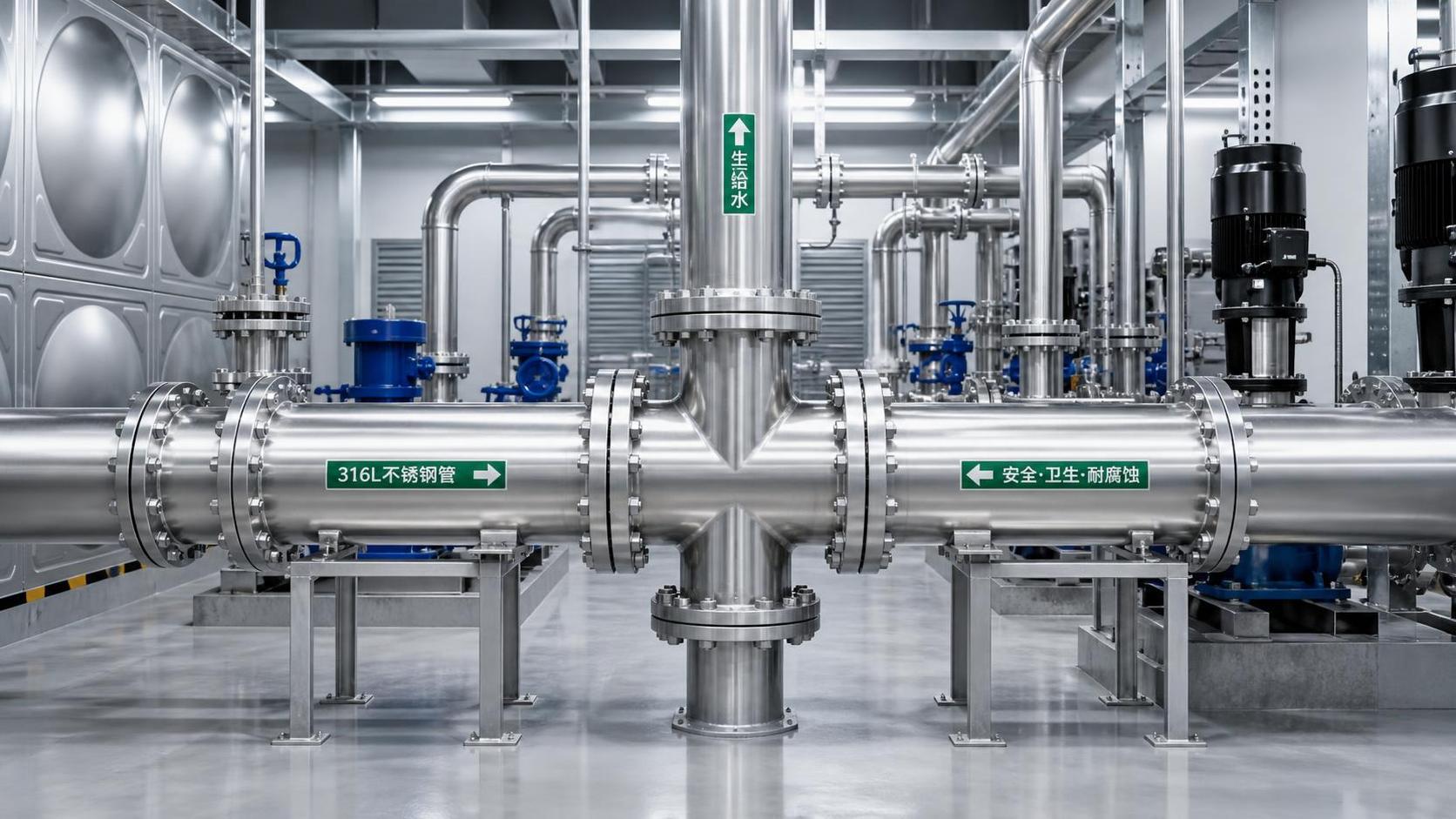
 How to Choose SS Pipe for Water Supply in Corrosion-Prone BuildingsSS pipe for water supply selection guide for corrosion-prone buildings. Compare 304 vs 316 grades, water chemistry, specs, and lifecycle cost to choose a safer, longer-lasting system.
 Steel Wire Rope Manufacturer Standards That Matter in Lifting ApplicationsSteel wire rope manufacturer standards for lifting: learn how to assess traceability, testing, compliance, and real quality control before choosing a safer, more reliable supplier.
 When a Steel Channel Supplier Should Provide Mill Test CertificatesSteel Channel supplier guide on when mill test certificates should be provided for quality control, compliance, and safer procurement.
Please give us a message


Please enter what you want to find