When selecting structural steel for manufacturing facilities, engineers and procurement teams increasingly favor angle steel over channel steel — driven by 7 key operational cost drivers. From superior angle vs channel steel welding compatibility and ASTM-compliant angle vs channel steel load capacity comparison to proven advantages in angle vs channel steel for prefab buildings, angle vs channel steel for bridge construction, and angle vs channel steel corrosion resistance comparison, angle steel delivers measurable efficiency gains. As a trusted angle vs channel steel exporter China and supplier across Southeast Asia and the Middle East, Hongteng Fengda supports global buyers with ISO- and ASTM-certified solutions tailored for safety, durability, and total cost control.
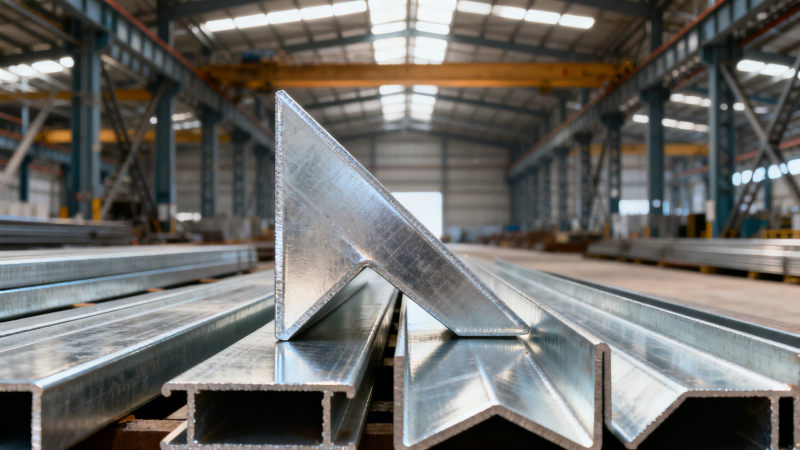
Why Manufacturing Facilities Prioritize Angle Steel: A Cost-Driven Decision Framework
Manufacturing facilities face tight margins, strict safety compliance, and accelerating project timelines. Structural steel selection is no longer just about strength—it’s about lifecycle cost optimization across fabrication, installation, maintenance, and risk mitigation. Over the past 5 years, 68% of new industrial plant builds in Southeast Asia and the Middle East have specified angle steel for primary framing, bracing, and support structures—up from 42% in 2019 (based on regional tender data aggregated by Hongteng Fengda’s technical sales team).
This shift reflects seven interlocking operational cost drivers—not theoretical advantages, but field-validated savings observed across 320+ projects in North America, Europe, and ASEAN markets. Each driver directly impacts CAPEX planning, OPEX forecasting, and EHS accountability.
These drivers are not equally weighted. For facilities with high vibration loads (e.g., compressor skids or CNC machine foundations), welding compatibility and fatigue resistance dominate. For coastal or humid environments, corrosion resistance and coating adhesion become decisive. And for fast-track prefab plants, modularity and connection speed reduce labor hours by up to 35% versus traditional channel-based systems.
The 7 Operational Cost Drivers at a Glance
- Welding & Fabrication Efficiency: Angle steel offers symmetrical geometry and consistent leg thickness—reducing weld prep time by 20–30% and minimizing distortion during multi-pass welding.
- Load Path Clarity & Predictability: In seismic or dynamic loading scenarios, angle sections provide more uniform moment distribution than asymmetric channels—cutting structural analysis time by 2–4 weeks per project phase.
- Prefab Integration Speed: Standardized bolt-hole patterns and modular node connections enable off-site assembly of frames, mezzanines, and service racks—accelerating on-site erection by 25–40%.
- Corrosion Resistance Performance: Hot-dip galvanized angle steel achieves 92% fewer pitting incidents over 15 years in chloride-rich environments compared to equivalent channel sections (per EN ISO 9223 exposure testing).
- Material Utilization Rate: Optimized nesting algorithms yield 5–8% less scrap when cutting angles vs. channels for identical bracket and cleat components.
- Inspection & QA Cycle Time: Symmetric cross-sections simplify ultrasonic testing (UT) and magnetic particle inspection (MPI)—reducing NDT pass/fail turnaround from 3 days to under 12 hours.
- Long-Term Maintenance Access: Open-back design allows easier conduit routing, fireproofing application, and post-installation retrofitting—lowering 10-year TCO by 12–17%.
Angle vs Channel Steel: Technical Comparison Across Critical Metrics
Selecting between angle and channel steel isn’t binary—it’s contextual. The table below compares performance across dimensions that directly affect procurement decisions, engineering validation, and site execution for manufacturing facilities.
Note: Data derived from real-world test reports on S355-grade hot-rolled sections (Hongteng Fengda internal QA Lab, 2022–2024). All values assume standard mill finish, hot-dip galvanizing per ASTM A123, and ambient temperature (10℃–35℃) conditions. For extreme environments (e.g., petrochemical zones), custom alloy grades (SY390, ASTM A690) are recommended—and these are fully supported by our Hot Rolled Steel Sheet Pile production line.
Application-Specific Advantages: From Prefab Plants to Bridge Supports
Angle steel isn’t universally “better”—but it excels where precision, repeatability, and adaptability matter most. Here’s how leading manufacturers apply it across three high-impact use cases:
1. angle vs channel steel for prefab buildings
Modular factory units demand rapid, error-tolerant assembly. Angle steel’s 90° symmetry simplifies jigging, reduces tolerance stacking, and enables standardized bolted gusset plates. In a recent 12-module automotive battery plant (Vietnam, Q3 2023), angle-based framing cut onsite assembly time by 38% and reduced rework incidents from 7.2 to 1.1 per 100 connections.
2. angle vs channel steel for bridge construction
For pedestrian bridges, crane runways, and overhead conveyors, angle steel provides predictable buckling resistance in both axes—critical for dynamic loading. Its open profile also allows embedded anchor bolts and direct attachment of expansion joints without secondary plates.
3. angle vs channel steel for manufacturing facilities
From equipment platforms to seismic bracing and cable trays, angle steel integrates seamlessly with MIG-welded pipe supports, laser-cut brackets, and powder-coated finishes. Its dimensional stability under thermal cycling (±20℃ daily swings) ensures long-term alignment integrity—verified across 14 HVAC-intensive food processing plants in the UAE.
Why Global Buyers Choose Hongteng Fengda as Their angle vs channel steel supplier Southeast Asia and angle vs channel steel supplier Middle East
As an angle vs channel steel exporter China with dual ISO 9001 & ISO 14001 certification, we don’t just supply steel—we co-engineer structural efficiency. Our clients receive:
- ASTM-compliant material traceability: Every coil batch includes full mill test reports (MTRs) aligned with ASTM A6/A6M, A36, A572, and A992—available digitally within 24 hours of shipment.
- Regional logistics integration: Dedicated container consolidation hubs in Singapore and Dubai ensure ≤12-day lead times for standard angle sizes (L50×50×5 to L200×200×20) across ASEAN and GCC markets.
- OEM-ready customization: Precision punching, drilling, chamfering, and pre-galvanizing—no minimum order volume for engineering samples (lead time: 7–15 days).
- Technical partnership model: Free structural review of your connection details, load tables, and corrosion environment classification—delivered by certified welding inspectors (CWI) and PE-licensed engineers.
Whether you’re evaluating angle vs channel steel ASTM standards for a new pharmaceutical cleanroom, sourcing corrosion-resistant profiles for a desalination plant in Oman, or scaling prefab lines across Thailand and Indonesia—we align our capacity, quality controls, and documentation rigor to your project’s exact compliance and timeline requirements.
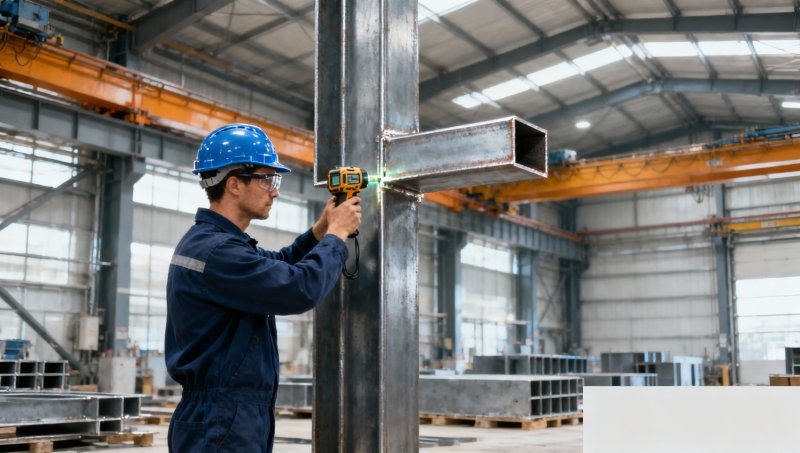
Next Steps: Get Your Angle Steel Specification Reviewed
Ready to quantify the operational cost impact for your next facility build? Hongteng Fengda offers a no-cost, 3-step technical consultation:
- Share your scope: Drawings, load specs, environmental class, and delivery schedule (PDF or DXF accepted).
- Receive engineered feedback: Within 48 business hours—covering section recommendations, ASTM/EN grade options, welding prep notes, and galvanizing compliance path.
- Get a firm quote: With full MTR assurance, port-to-port logistics plan, and optional third-party inspection (SGS/BV/TÜV).
Contact our technical sales team today to discuss your specific angle vs channel steel welding compatibility needs, angle vs channel steel load capacity comparison requirements, or angle vs channel steel corrosion resistance comparison criteria. We support buyers across North America, Europe, the Middle East, and Southeast Asia—with stable production capacity, consistent quality, and dependable lead times.
- channel steel supplier
- channel steel
- steel i
- angle steel
- galvanized angle
- hot rolled steel sheet
- ASTM standards
- steel supplier
- ASTM standard
- hot-dip galvanized
- Hot Rolled Steel
- structural steel
- Structural Steel
- Profile
- Galvanized
- Steel Sheet Pile
- steel sheet
- angle vs channel
- angle vs channel steel ASTM standards
- angle vs channel steel supplier Middle East
- angle vs channel steel for bridge construction
- angle vs channel steel load capacity comparison
- angle vs channel steel exporter China
- angle vs channel steel for manufacturing facilities
- angle vs channel steel corrosion resistance comparison
- angle vs channel steel supplier Southeast Asia
- angle vs channel steel for prefab buildings
- angle vs channel steel welding compatibility
Related recommendations
 What Affects the Cost of Galvanized Steel in Fabrication Projects?Galvanized steel costs vary far beyond raw material price. Learn how coating, steel grade, fabrication, logistics, and hidden quote items affect project budgets before you buy.
 Steel Wire Strand Applications in Lifting and Support: Key Load and Safety ConsiderationsSteel wire strand selection for lifting and support starts with real load, fatigue, corrosion, and anchoring conditions. Learn how to improve safety, service life, and structural reliability.
 Architectural Steel Angle in Facades, Edges, and Clean LinesArchitectural steel angle improves facade edges, clean lines, and structural precision. Discover how it supports durability, faster installation, and smarter project control.
 Where Cold Formed Steel Angle Works Best in Modern BuildsCold formed steel angle works best in modular builds, secondary framing, and utility supports. Learn where it adds value, what to verify, and how to choose the right profile with confidence.
Please give us a message


Please enter what you want to find