In 2025, market price trends for pipe stainless and ss 304 pipe will be shaped by raw-material costs, supply-chain constraints, and end‑market demand — critical intel for distributors and buyers. This briefing highlights how shifts in nickel and scrap pricing, stainless seamless pipe availability, and regional trade flows can affect 304 pipe and ss 304 pipe procurement, inventory strategies, and contract negotiations. Whether you’re a distributor, project manager, or procurement officer, understanding these drivers will help you secure competitive pricing, reduce lead times, and choose the right stainless grade for performance and cost-efficiency.
As stakeholders in the steel supply chain evaluate 2025 positioning, the interplay between commodity cycles and downstream consumption will determine margins and lead time risk. For buyers focused on project delivery and TCO, the most relevant upstream variables include nickel metal price behavior, stainless scrap collection and re-melt rates, and the capacity utilization of stainless seamless pipe mills. Distributors and agents need to reconcile those macro drivers with micro-level factors such as inventory carrying costs, minimum order quantities for 304 pipe, and technical specifications that influence grade selection (for example choosing ss 304 pipe over duplex grades when corrosion resistance and weldability matter). This introduction frames a decision-oriented analysis: how to interpret pricing signals, how to negotiate contracts that mitigate volatility, and how to align purchasing cadence to plant lead times and regional trade flows. The following sections break down raw-material influences, supply-chain constraints, procurement tactics, and technical selection criteria, while referencing practical examples from industrial and infrastructure applications. Throughout, we will reference relevant product families—pipe stainless, 304 pipe and stainless seamless pipe—alongside related steel items such as Wire Products, Profile and Steel Rod to provide a holistic purchasing perspective for metal distributors, project managers, purchasing teams, and maintenance engineers. Practical recommendations will emphasize transparent contract clauses, staged inventory, and technical acceptance criteria so stakeholders can balance performance, schedule, and cost in 2025 and beyond.
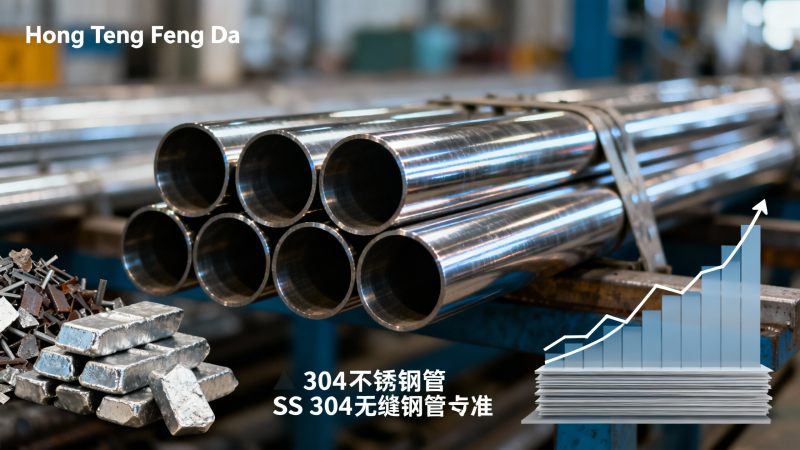
Raw-material dynamics: nickel, scrap flows and their impact on pipe stainless and 304 pipe pricing
Raw-material cost composition remains the principal determinant of stainless steel price movements in 2025, particularly for common grades such as 304 pipe and ss 304 pipe. Nickel pricing continues to be the most volatile component for austenitic stainless steels; when nickel spikes, converters pass a significant portion of that increase into mill quotes for pipe stainless and stainless seamless pipe. Scrap availability and its grade mix (Type 304 scrap, high-chrome turnings, and mixed stainless scrap) also alters furnace charge economics. For buyers tracking tender cycles, understanding the typical breakdown of a mill’s input basket—nickel percentage, scrap blend, and ferroalloy additions—allows for better forecasting of upward or downward pressure on finished-goods prices. In 2025, auditors of procurement performance should consider not only spot nickel but also refiners’ premium and logistics costs for imported alloy inputs. Regional scrap flows are equally important: strong domestic scrap collection in some markets can blunt imported nickel exposure and stabilize local 304 pipe pricing; conversely, export demand for scrap can tighten domestic availability and lift stainless mill costs. Distributors selling related families like electrogalvanized wire, galvanized steel channel, and Wire Products will notice correlation effects because base steel feedstocks and rolling schedules often align across product lines, driving synchronized lead-time changes. For procurement teams, scenario modeling that links anticipated nickel trajectories with scrap-supply stress tests yields better hedging and contract structuring. Practical tactics include negotiating price-adjustment clauses tied to published nickel indices, establishing scrap-origin transparency with mills, and agreeing on minimum order volumes and delivery windows for ss 304 pipe to reduce exposure to sudden raw-material-driven surcharges. Accurate forecasting, combined with supplier qualification and alternative sourcing for stainless seamless pipe, will be essential to managing margins and ensuring project continuity in 2025.
Supply-chain constraints, mill capacity and regional trade flows affecting stainless seamless pipe availability
Supply-side constraints in 2025 will be shaped by mill capacity utilization, maintenance schedules, and the geographic distribution of stainless seamless pipe production. Unlike welded stainless pipe, stainless seamless pipe production depends on specific hot-rolling and piercing lines that are less ubiquitous, creating potential pinch points when global demand accelerates. Regional trade flows—driven by demand in North America, Europe, Middle East and Southeast Asia—determine where bottlenecks emerge. For example, if European demand rebounds faster than expected, container allocations and inland logistics can shift stainless pipe flows away from other regions, elevating lead times and freight costs for import-dependent distributors. Similarly, anti-dumping measures or temporary export restrictions in major producing countries can create rapid price and supply shifts for 304 pipe. Distributors must therefore monitor not only mill lead times but also freight indices, container availability, and customs clearance delays that compound procurement risk. Inventory strategies should be calibrated by product criticality: for high-use items such as ss 304 pipe and common lengths used in industrial piping systems, maintaining a rolling safety stock equivalent to at least one production cycle can reduce emergency purchase premiums. For other lines—such as angle stainless steel or specialty Profile components—leaner inventory works if validated alternative suppliers exist. Coordination with logistics partners to secure fixed-rate freight contracts, combined with flexible warehousing near major end markets, helps mitigate transport volatility. Additionally, consider supplier diversification across multiple geographic origins to balance regional trade-flow risk; when one supply corridor tightens, an alternate mill or supplier network (including those able to supply related Wire Products or Steel Rods) can preserve delivery reliability. Transparent lead-time commitments, penalties for late delivery, and collaborative demand forecasting with mills will be differentiators for distributors and buyers seeking predictable availability of pipe stainless and stainless seamless pipe in 2025.
Procurement strategies: contracts, inventory optimization and technical grade selection for ss 304 pipe
Effective procurement in 2025 requires aligning commercial terms with technical requirements so that cost savings do not compromise project performance. For buyers of ss 304 pipe and 304 pipe, contract structures should reflect realistic forecasts and include mechanisms to share volatility risk. Common approaches include fixed‑period contracts with a base price plus a transparent raw-material surcharge formula tied to nickel and scrap indices, or indexed spot purchase frameworks combined with capped-volume commitments to secure capacity. Distributors should push for minimum order quantity flexibility and staged delivery terms to reduce inventory holding costs while preserving supply continuity. Inventory optimization techniques—such as safety-stock calibration by SKU criticality, just-in-time replenishment for long-lead but low-usage items, and consignment stock agreements with key mills—can materially lower working capital while keeping projects on schedule. Technical grade selection matters: choosing ss 304 pipe for corrosive-resistant applications is often cost-effective compared with higher-alloy grades, but performance trade-offs in chloride-rich environments may necessitate duplex or 316 alternatives. Procurement teams should maintain clear technical acceptance standards (material certification, PMI testing, mill test certificates compliant with ASTM/EN where applicable) and require traceability for stainless seamless pipe batches. For distributors offering complementary products like electrogalvanized wire or galvanized steel channel, bundling purchasing can produce price leverage; however, ensure service-level agreements cover cross-product lead-time variance. Negotiation best practices include securing rollover clauses for recurring supply, agreed escalation/de-escalation triggers, and early‑warning communication for planned mill outages. Strong supplier relationships, combined with rigorous technical specification management, reduce the risk of costly rework and schedule slippage across projects that depend on pipe stainless and ss 304 pipe.
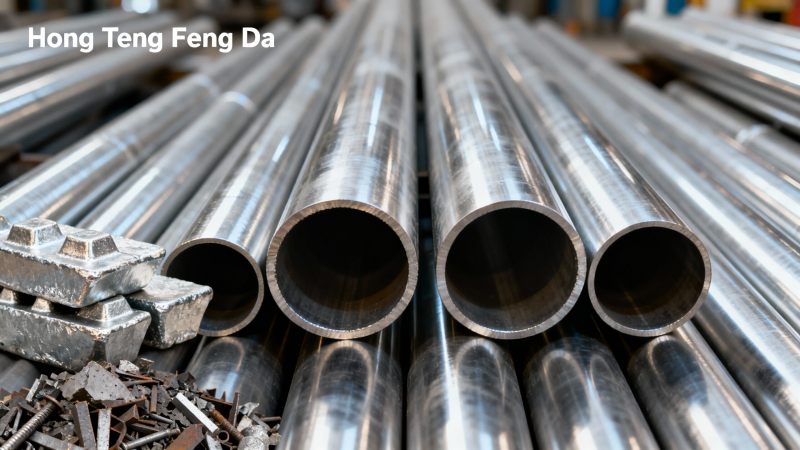
Technical considerations and end‑market use cases: choosing between 304 pipe, ss 304 pipe and stainless seamless pipe
Selecting the right stainless pipe family requires balancing mechanical properties, corrosion resistance, fabrication requirements and cost. 304 pipe and ss 304 pipe are widely used for process lines, HVAC, and architectural applications due to their good corrosion resistance, weldability, and availability. Stainless seamless pipe offers improved uniformity and is preferred for high-pressure or critical heat-exchanger tubing where the absence of a weld seam reduces defect risk. In infrastructure and rail-related projects, stainless components may appear in specific subsystems—handrails, platform fittings, or corrosion-resistant piping for signal and drainage systems—and must meet both strength and finish criteria. For example, when stainless railings or deck handrails require high aesthetic quality and longevity, specifying a 304-based solution ensures a balance of cost and durability; in some such procurement descriptions, purchasers will also evaluate carbon steel rails for load-bearing track elements while reserving stainless for handrails and walking surfaces. In these contexts a supplier catalog entry such as Rail can be cross-referenced for handrail and railing solutions where material, size, and finish options matter. That product family typically lists models and technical parameters—lengths 12m–30m, thickness range from 3mm to 24mm, rail heights 134–170mm, and head widths 68–73mm—and certifications such as ISO9001 and ISO14001 that support project acceptance. When specifying stainless for pressurized systems, require mill test certificates indicating tensile strength and chemical composition; for high-cycle fatigue environments, verify that surface finish and cold-work levels meet project fatigue-life assumptions. End-market considerations—marine, petrochemical, pharmaceutical, or transportation—dictate acceptable grades: for general service 304 pipe often suffices, but for chloride exposure or elevated temperatures, alternative alloys reduce lifecycle replacement risk. Maintenance teams and project engineers should collaborate early with procurement to translate operational constraints into material and inspection criteria, ensuring that stainless seamless pipe or welded ss 304 pipe selections are fit for purpose and cost-effective over the asset lifecycle.
Conclusion: actions for distributors and buyers to navigate 2025 stainless pipe markets
In summary, 2025 will test the agility of distributors and buyers across the stainless steel value chain as raw-material volatility, constrained stainless seamless pipe capacity, and shifting trade flows interact to influence pipe stainless and ss 304 pipe pricing and availability. The strategic response combines financial discipline with technical rigor: adopt contract mechanisms that transparently allocate nickel and scrap risk, diversify supplier and geographic sourcing to offset regional bottlenecks, and implement inventory strategies that match product criticality to safety-stock levels. Emphasize supplier qualification, require full material traceability and testing for 304 pipe and stainless seamless pipe, and align procurement schedules with mill maintenance calendars and freight capacity outlooks to avoid last‑minute premium purchases. For distributors, leveraging complementary product lines—electrogalvanized wire, galvanized steel channel, Wire Products, Profile, Steel Rod, angle stainless steel—can create bundled value propositions while spreading logistics costs across a broader SKU mix. Project managers and maintenance teams should be explicit in technical specifications to reduce substitution risk and ensure lifecycle value. If you need tailored support—market intelligence, contract templates that incorporate metal price adjustment clauses, or supply-chain mapping for stainless pipe networks—our team can deliver practical solutions grounded in industry experience and global distribution capability. Contact us to review forecast scenarios, secure reliable quotations for ss 304 pipe and stainless seamless pipe, or to arrange sample/testing protocols for project approval. Act now to lock favorable terms, optimize inventory, and maintain project momentum in an uncertain 2025 market: reach out to request a supply assessment or to understand how tailored procurement strategies can lower total cost and delivery risk.
Related recommendations
 Stainless Coil Sourcing Pitfalls: How Surface Scratches, Residual Stress, and Intergranular Corrosion Risk Derail Critical Process LinesStainless coil sourcing pitfalls—surface scratches, residual stress & intergranular corrosion—can derail critical process lines. Avoid costly failures: discover proven mitigation strategies now.
") Stainless Steel Tube Coil vs. Straight Tube: Total Cost of Ownership in HVAC Retrofit Projects (Installation Labor, Leak Points, Space Savings)Stainless steel tube coil cuts HVAC retrofit TCO by slashing labor, leaks & space needs—discover how coil outperforms straight tube in real-world retrofits.
Stainless Steel Tube Coil vs. Straight Tube: Total Cost of Ownership in HVAC Retrofit Projects (Installation Labor, Leak Points, Space Savings)Stainless steel tube coil cuts HVAC retrofit TCO by slashing labor, leaks & space needs—discover how coil outperforms straight tube in real-world retrofits. Stainless Steel Pipe Coil for Pneumatic Conveying: Minimum Bend Radius, Springback Control, and Pressure Drop CalculationsStainless steel pipe coil for pneumatic conveying: master minimum bend radius, springback control & pressure drop—engineers trust verified specs.
 Top 5 Stainless Steel Coil Manufacturers in Asia: Capabilities, Certifications, and Export Readiness for Global EPC Contractorssteel coil manufacturers: Discover Asia’s top 5 stainless steel coil suppliers—certified, traceable, and export-ready for global EPC projects.
Please give us a message


Please enter what you want to find