Before committing to orders, buyers and engineers must verify material integrity — this guide outlines the Top 7 inspection tests for stainless seamless pipe to ensure compliance and avoid costly rework. Whether procuring pipe stainless for process piping, specifying 304 pipe or ss 304 pipe for corrosion resistance, or integrating angle stainless steel and related wire products and profiles into projects, these practical checks cover dimensional, chemical, mechanical, non-destructive, and surface inspections. Read on to learn which tests matter for procurement, quality control, and long-term performance.
Dimensional and Visual Inspection: first-line defense against nonconforming stainless seamless pipe
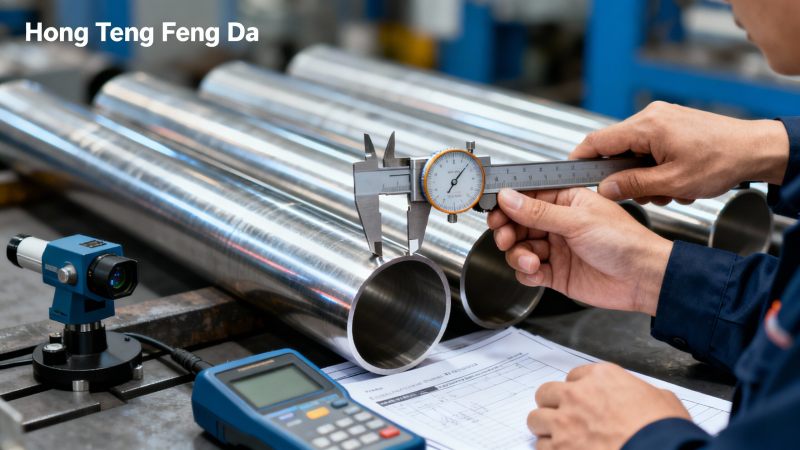
A rigorous dimensional and visual inspection is the fastest and most cost-effective way to screen batches of stainless seamless pipe before further testing. For procurement teams, this step validates that the physical geometry aligns with order specifications such as OD, wall thickness, length, straightness and chamfering. Use calibrated micrometers, vernier calipers and laser measuring systems for outer diameter and wall thickness checks; measure at multiple circumferential points and along the pipe length to detect ovality and eccentricity. Acceptance limits commonly reference project drawings or standards such as ASTM A312/EN 10216-5; confirm tolerance boxes and whether pipes are ordered as 304 pipe or other grades. Visual checks identify surface defects like scratches, millscale, seams, pits or weld flashes even on seamless material, which could lead to corrosion initiation when combined with stress and environment. Surface conditions should be compared against the specification for finish—pickled, annealed, or as-rolled—and any passivation claims should be verified with documentation. Record and photograph defects and tag affected pieces for quarantine. For corrosion critical applications choose ss 304 pipe with consistent surface finish and consider additional checks for associated items such as angle stainless steel supports, galvanized steel channel ancillary components, or wire products used for bracing. When receiving large shipments, implement sampling plans (e.g., ISO 2859-1 based) to define how many pieces receive full dimensional checks versus a visual-only screen. Early dimensional screening reduces unnecessary costs from machining, hot-work, or rework when pipes fail to meet essential geometric tolerances for process piping spools or structural runs.
2. Chemical Composition and Positive Material Identification (PMI): confirm metallurgy for corrosion resistance and code compliance
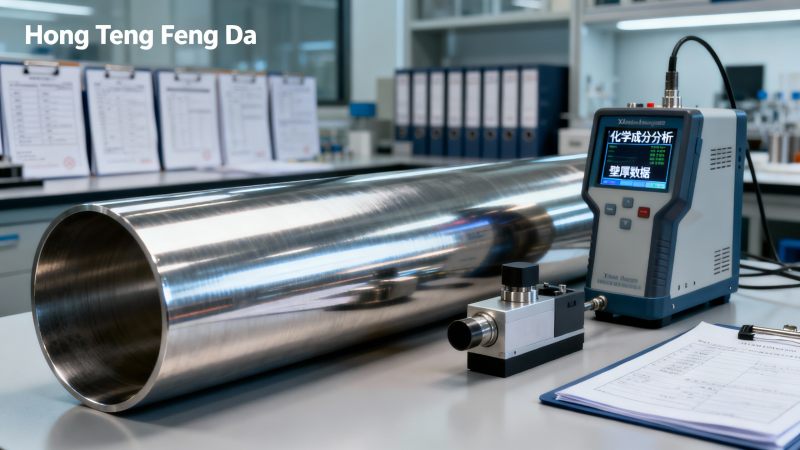
Chemical verification is essential when specifying stainless seamless pipe, particularly when ordering 304 pipe or other austenitic grades where chromium and nickel levels control corrosion resistance, strength and weldability. PMI using handheld X-ray fluorescence (XRF) spectrometers provides rapid alloy checks at receiving inspection to confirm that material is stainless, contains required minimum chromium (typically ~18% for 304) and nickel content and is not a lower-grade substitution. For project-critical piping, request full mill chemical analysis (MTRs) listing C, Si, Mn, P, S, Cr, Ni, Mo and other relevant elements; ensure MTR numbers match heat or melt numbers stamped on the pipe. Where hydrogen-induced cracking, chloride stress corrosion cracking (SCC) or pitting are concerns, specify limits on carbon and trace elements and consider low-carbon variants (304L) or stabilised grades. PMI cannot replace destructive verification in disputed cases—when in doubt, perform wet-chemistry or laboratory spectroscopy for a complete traceable record. Maintain a chain of custody for MTRs and PMI reports and attach copies to delivery documents to support acceptance. Procurement personnel and project managers should integrate PMI steps into purchase orders, stating inspection hold points prior to fabrication and welding. Combine chemical checks with surface passivation certificates and corrosion test results if the pipes will be used with aggressive media. Proper chemical verification saves project time by preventing substitution with cheaper alloys and reduces long-term maintenance costs tied to premature corrosion or failure.
3. Mechanical Testing: tensile, hardness, flattening and permanent set evaluations for stainless seamless pipe
Mechanical testing confirms that stainless seamless pipe meets strength and ductility requirements for fabrication, bending, flanging and service loads. Standard tests include tensile testing to determine yield and ultimate tensile strength and elongation; these are often specified per ASTM A370 or equivalent national standards. For 304 pipe and other austenitic grades, expected tensile values and elongation percentages must be met to ensure reliable forming and resistance to brittle behavior. Hardness testing (Rockwell or Vickers) detects improper heat treatment or cold work; an unexpectedly high hardness may indicate work hardening or thermal exposure and can impair weldability. Flattening and bend tests evaluate the pipe’s ability to deform without cracking; these are especially important for pressure piping and skid-mounted assemblies where onsite bending or spool fabrication occurs. Additionally, hydrostatic or pneumatic pressure testing verifies integrity under design conditions: a hydrostatic test at 1.5 times design pressure is common in many specifications to reveal leaks or manufacturing defects. For critical rotating equipment or high-temperature process lines, include impact testing and creep evaluation if the application demands high-temperature resistance. Document all mechanical test results with heat/lot numbers to trace back to mill certificates. Suppliers that bundle comprehensive mechanical test reports reduce project risk—look for vendors who provide full Wire Products and Profile documentation when stainless components are supplied as part of larger assemblies. Proper mechanical verification reduces the likelihood of fatigue failures, leakages, and costly field rework once pipe spools are welded into piping systems.
4. Non-Destructive Testing (NDT) and Surface Integrity: UT, RT, eddy current, dye penetrant and passivation verification
Non-destructive testing is fundamental for detecting internal and surface defects that may not be visible during visual inspection. Ultrasonic testing (UT) is commonly used for wall thickness verification and to detect inclusions, laminations or internal voids in stainless seamless pipe; pulse-echo and angle-beam techniques help map defect size and location. Radiographic testing (RT) provides a record of internal discontinuities and is specified in many codes for critical services. For lightweight or thin-walled pipes, eddy current testing is efficient to detect cracks and near-surface defects, and it is frequently used for heat exchanger tubing and thin ss 304 pipe. Liquid penetrant (dye penetrant) and magnetic particle testing provide complementary surface and near-surface detection—note that magnetic methods are not applicable to fully austenitic materials unless modified procedures are used. Beyond defect detection, surface passivation and electrochemical testing confirm that stainless stainless seamless pipe has a passive chromium oxide layer intact; tests such as copper sulfate or salt spray are informative for surface quality when corrosion resistance is a priority. Leak testing—either hydrostatic or pneumatic—validates joint and sleeve integrity after joining. For projects that integrate galvanized components (for example galvanized steel channel used for support frames) or electrogalvanized wire for binding, specify electrochemical compatibility and galvanic separation practices to avoid bimetallic corrosion in service. Maintain traceable NDT reports linked to pipe heat numbers and include NDT acceptance criteria in purchase orders. Implementing a multi-method NDT strategy produces a robust inspection package, giving procurement teams, project managers and maintenance personnel confidence that delivered stainless seamless pipe meets required safety and longevity standards.
5. Additional checks, documentation, supplier control and practical procurement tips
Beyond physical and laboratory tests there are procedural and documentary checks that protect buyers and end users. Review Mill Test Reports (MTRs) for every lot and confirm traceability between heat numbers, stamps and delivery labels. Check that certificates reference the correct standard (e.g., ASTM A312 for stainless seamless pipe) and include chemical and mechanical test results and NDT summaries. For critical procurement, perform supplier audits or request factory photos and witness tests during production to verify processes. Include clear inspection hold points in contracts: dimensional hold, PMI hold, hydrostatic test hold, and final visual/passivation hold are typical stages where shipments should not be released without buyer sign-off. Consider setting up a quality sampling plan with agreed AQL levels; for high-risk applications reduce sample sizes to 100% inspection for key properties. Account for associated items—Profile components, Steel Rod anchors, angle stainless steel fixtures, and Wire Products used in installation—since compatibility and supplier segmentation affect long-term performance. For rooftop and enclosure projects that combine structural elements with finishing materials, a complementary product such as Colored Corrugated Roof Sheet can be specified for durable, heat-resistant cladding; its color-coated steel plate or aluminum-zinc construction and specified coating thicknesses support long service life and reduce maintenance cycles. When assessing suppliers, weigh their logistics capability, secondary processing services (cutting, beveling, end finishing), and responsiveness to corrective actions. Keep a prioritized checklist that aligns with engineering codes and project-specific requirements to accelerate acceptance without compromising safety or quality.
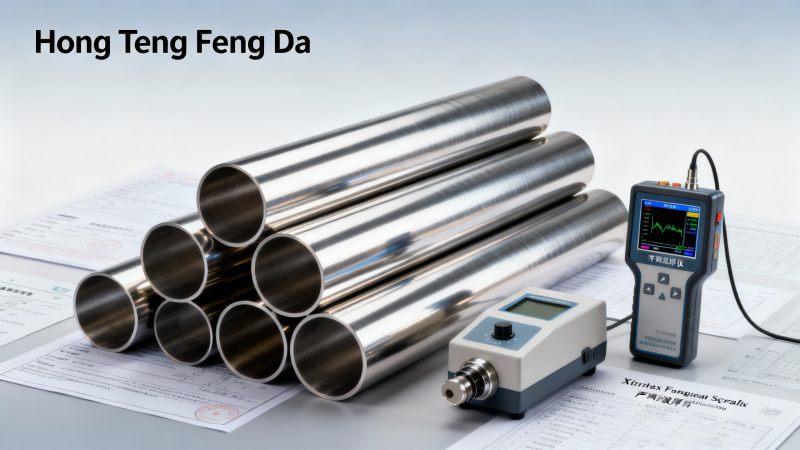
Summary and next steps: ensuring compliance of stainless seamless pipe requires a layered inspection program that blends dimensional and visual screening, chemical verification via PMI and MTRs, mechanical testing for strength and ductility, robust NDT to detect internal and surface defects, and strong supplier documentation and control. For procurement personnel, engineers and project managers the recommended workflow is: 1) require comprehensive MTRs and PMI at order entry; 2) perform initial dimensional and visual inspection upon receipt; 3) execute required mechanical and NDT sampling based on project criticality; 4) verify passivation and surface condition for corrosion-prone environments; 5) maintain traceability and hold points until acceptance. Integrate these checkpoints into purchase orders for pipe stainless, ss 304 pipe and other stainless components and align acceptance criteria with international codes used in your region. Choosing a vendor with proven production systems, complete testing capability and reliable logistics reduces on-site surprises and lifecycle costs. Shandong Hongteng Fengda Metal Materials Co.. Ltd. offers comprehensive steel manufacturing, finishing and distribution solutions across a global sales network, and can support batching, testing documentation and just-in-time deliveries for projects that use stainless seamless pipe, galvanised components or complementary profiles. To secure supply that meets both performance and budget targets, engage early: request supplier test plans, agree inspection hold points, and arrange witnessed tests for critical lots. Contact our sales and technical team to receive sample inspection plans, MTR templates and a customized quotation — immediately contact us to streamline procurement and ensure compliant material delivery, or request a detailed inspection checklist tailored to your project requirements.
Related recommendations
 What is an H-Beam and How Does it Differ from an I-Beam?Discover what an H-beam is and how it differs from an I-beam. Learn key structural differences and expert selection tips from Hongteng Fengda to optimize your steel construction projects today.
 How to Select the Correct Steel Sheet Grade for Auto PartsSelect the ideal steel sheet for auto parts by balancing performance and cost. Discover expert sourcing strategies to avoid manufacturing traps and optimize procurement. Read our guide now!
 Hot Rolled vs. Cold Rolled Steel Sheet: Surface and ToleranceHot rolled vs cold rolled steel sheet: Discover how surface finish and tolerances impact manufacturing. Optimize material selection, reduce costs, and ensure quality. Read our expert guide today!
 Best Cutting and Bending Practices for Galvanized Sheet MetalDiscover the best cutting and bending practices for galvanized sheet to prevent zinc flaking. Optimize tooling and thermal parameters to ensure perfect corrosion resistance. Read the full guide!
Please give us a message


Please enter what you want to find