H-beam steel price is more than a material quote—it directly shapes project budget, procurement timing, and structural steel erection planning. For buyers comparing suppliers, evaluating structural steel properties, or balancing cost with quality, understanding price drivers is essential. As a structural steel manufacturer and exporter from China, Hongteng Fengda helps global projects control sourcing risks and make informed purchasing decisions.
Why does H-beam steel price change so much from one project to another?
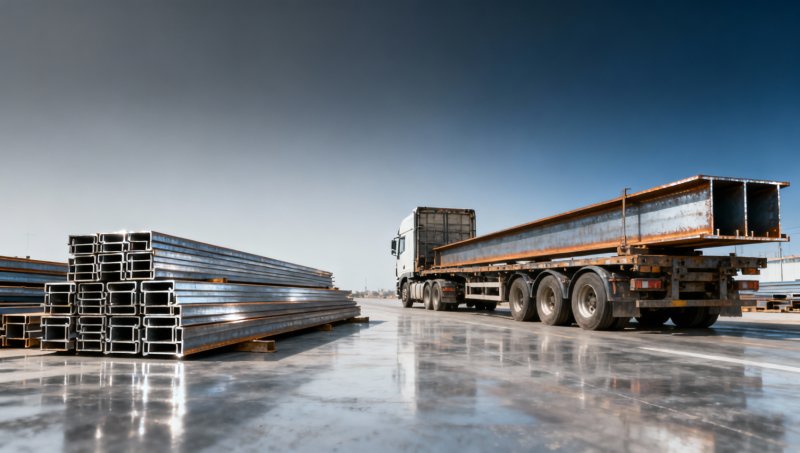
In steel procurement, the quoted H-beam steel price rarely depends on one factor alone. It is usually affected by grade, section size, rolling method, order quantity, delivery destination, processing requirements, and the timing of the purchase cycle. For project managers and procurement teams, this means a low unit price on paper may not produce the lowest landed cost after fabrication, inspection, shipping, and site handling are added.
For industrial structure projects, common material grades such as Q195-Q235, Q345, SS400, A36, ST37-2, S235J0, S235J2, and St52 can lead to different cost levels because yield strength, availability, and regional preference are not the same. In export business, specification matching also matters. A beam that meets ASTM, EN, JIS, or GB requirements may need additional documentation, tolerance verification, or marking control, which influences both lead time and budget planning.
Another reason for price variation is section geometry. Flange width, web depth, flange thickness, and web thickness directly affect theoretical weight per meter. Even when two beams have similar application roles, the heavier section may increase steel tonnage by a noticeable margin across a 200-ton to 800-ton project. When multiplied over 6 m to 12 m lengths, small dimensional changes can alter total procurement cost significantly.
Experienced buyers therefore evaluate H-beam steel price in three layers: base steel cost, processing and compliance cost, and logistics cost. This approach is especially useful for distributors, technical evaluators, quality teams, and decision-makers who need a realistic budget instead of a headline number that later changes during contract execution.
Core price drivers buyers should review first
- Material grade and standard alignment, especially when ASTM, EN, JIS, and GB requirements need cross-checking for export projects.
- Section size and weight per meter, including flange width from 100 mm to 400 mm and web dimensions up to 900 mm.
- Processing scope such as cutting, punching, welding, decoiling support, and bending preparation before installation.
- Order volume, because small-batch urgent orders and container optimization affect unit economics differently.
- Delivery conditions, including mill lead time, export packaging, port congestion, and inland transport to the jobsite.
How should project teams connect steel price with the full project budget?
A practical budget should connect material cost with engineering use, fabrication readiness, and schedule control. In many steel structure projects, the direct beam purchase value is only one part of the budget. Rework caused by dimensional mismatch, delayed shipping, or non-compliant documentation can generate secondary cost in crane time, labor standby, and installation sequencing. That is why technical and commercial teams should assess total project impact rather than compare quotations line by line only.
Budget planning usually works better when divided into 4 stages: specification confirmation, supplier quotation comparison, compliance and sample review, and delivery execution. In international sourcing, each stage influences cost certainty. For example, if the tolerance target is ±1%, but the order does not clearly define inspection method, the project may face disputes after arrival. This often costs more than selecting a well-managed supplier at the start.
Project leaders also need to account for procurement timing. Steel markets can move over short cycles, while sea freight, customs preparation, and warehouse turnover add another 2–6 weeks depending on route and shipment method. If the construction schedule is tight, paying slightly more for stable production capacity and dependable lead time may protect the overall budget better than chasing the lowest spot quote.
For buyers working with China-based manufacturers, budget control improves when drawings, standard references, length range, and processing list are locked before quotation. Hongteng Fengda supports this process by aligning production and export details early, which helps reduce sourcing risk for global customers across North America, Europe, the Middle East, and Southeast Asia.
Budget items that are often underestimated
The table below shows how H-beam steel price connects with wider project budget items. This is useful for procurement personnel, project managers, and business evaluators who need to explain cost decisions internally.
The main lesson is simple: budget overruns often come from coordination gaps, not from steel price alone. A supplier that can provide stable production, clear specification support, and export-ready documentation may help lower the total project cost even if the ex-works number is not the very lowest in the market.
A 5-point budget review checklist
- Confirm beam standard, grade, and required certificates before asking for price comparison.
- Check theoretical weight and total tonnage against drawing revisions.
- Separate base material cost from processing, inspection, and freight charges.
- Review realistic lead time, especially for 2–4 week production windows plus export movement.
- Estimate the cost of delay, because urgent replacement orders are usually more expensive.
Which specifications and product details matter most when comparing offers?
When technical teams compare structural steel beam offers, they should move beyond the broad category name and check exact dimensional and production data. For example, a hot rolled universal mill section with tighter dimensional consistency may support easier fit-up during fabrication. In many cases, that operational value matters as much as the material quote itself, especially for industrial structures with repetitive installation work.
A useful reference in this context is Structural I Beam. For projects that require non-alloy steel sections with industrial structure applications, common specifications include thickness from 4.5 mm to 15.8 mm, flange width from 100 mm to 400 mm, flange thickness from 6 mm to 28 mm, web width from 100 mm to 900 mm, length from 6 m to 12 m per piece, and tolerance around ±1%. Processing options such as bending, welding, punching, and cutting can also influence procurement planning.
From a technical evaluation perspective, product standards and adaptability are critical. If the beam is produced through hot rolled molding and intended for export projects, teams should verify whether JIS, ASTM, DIN, GB, and EN related expectations are understood at the quotation stage. This reduces the chance of mismatched interpretation between design office, buyer, and manufacturer. It also helps quality and safety personnel set acceptance criteria before shipment.
For distributors, EPC contractors, and OEM buyers, specification flexibility matters too. A supplier able to provide standard sections and customized structural steel components is often better positioned to support mixed orders. This is especially valuable when one project includes beam sections, channels, angle steel, and cold formed profiles under a coordinated delivery plan.
Technical comparison points that affect commercial value
The following table helps convert technical details into purchasing decisions. It can be used during supplier evaluation meetings or internal budget reviews.
This comparison shows why technical clarity protects commercial performance. The best steel beam purchase is not just the one with a competitive unit price, but the one that reduces waste, avoids disputes, and supports faster installation across the full project cycle.
Who should review these details before order release?
- Technical evaluators should verify load-related grade selection and section dimensions.
- Quality and safety personnel should confirm tolerances, inspection points, and document requirements.
- Procurement teams should compare total delivered value, not only nominal steel price.
- Project managers should align delivery sequence with erection schedule and storage conditions.
How can buyers reduce sourcing risk while keeping H-beam steel price under control?
Risk control starts with specification discipline. Before requesting final quotation, buyers should provide drawing references, required grade, section dimensions, length range, destination market, and whether processing such as punching or cutting is required. This simple preparation helps suppliers quote on the same basis. Without it, comparing offers becomes misleading because one supplier may include processing and another may not.
The second step is supplier capability review. For global buyers, a manufacturer should demonstrate modern production facilities, quality control procedures, and familiarity with export documentation. In practice, this affects consistency more than many first-time importers expect. A factory with stable output planning can support repeated orders, mixed specifications, and realistic delivery commitments, which is essential for distributors and large project accounts.
The third step is shipment and acceptance planning. Depending on project urgency, buyers may choose batch delivery, full-container loading, or staged release aligned with site progress. A 3-stage delivery plan can reduce yard congestion and lower the risk of material damage before installation. It can also improve cash flow because material arrives closer to the actual usage window.
Hongteng Fengda supports this style of procurement by combining structural steel manufacturing experience with export coordination. For customers sourcing from China, this means more than production alone. It means support in specification matching, standard compliance communication, delivery scheduling, and customized structural steel solutions that fit industrial, construction, and manufacturing needs.
A practical procurement flow for steel beam projects
- Confirm application scenario, structural loads, target standards, and beam dimensions.
- Request quotation with clear scope: raw section only, or section plus cutting, punching, and packaging.
- Review compliance documents, tolerance expectations, and inspection arrangements before production.
- Align delivery schedule with fabrication and erection timeline, usually in 2–4 week production windows depending on order complexity.
- Check receiving condition, labeling, and quantity reconciliation upon arrival to prevent downstream disputes.
Common mistakes that increase total cost
One common mistake is buying by nominal size only without checking weight per meter and tolerance. Another is choosing a supplier based on an incomplete quote that excludes processing, test documentation, or export packing. A third is delaying technical clarification until after purchase order release, which often causes production revision, shipment delay, or inconsistent acceptance criteria between supplier and project owner.
These issues matter to many roles: operators want beams that fit and install correctly, quality inspectors need traceable documents, project managers need delivery reliability, and business decision-makers need cost certainty. The more complex the project, the more important it becomes to treat H-beam steel price as part of a coordinated sourcing strategy rather than a single purchasing line.
FAQ: what do buyers and engineers usually ask before placing an order?
The questions below reflect common concerns from information researchers, technical teams, procurement staff, distributors, and end users who need practical answers before finalizing a structural steel beam purchase.
How should I compare H-beam steel price from different suppliers?
Use the same basis for comparison: identical grade, same section dimensions, same length range, same quantity, same processing scope, and the same delivery term. Then compare documentation support, tolerance control, and lead time. A quote for 6 m to 12 m beams with no cutting is not directly comparable to a quote that includes custom cutting, punching, and export packaging.
What delivery time is reasonable for structural steel beam orders?
This depends on tonnage, section range, and whether customization is needed. In many export projects, production may fall within 2–4 weeks for standard items, while shipping and destination handling require additional time. Buyers should confirm both mill completion and logistics schedule, not just the production date, because overall project timing depends on the full chain.
Which standards and certifications should be checked?
For international projects, common references include ASTM, EN, JIS, and GB, depending on design origin and market requirement. The key is not collecting labels, but ensuring the ordered material, mill documentation, and acceptance criteria match the project specification. Quality teams should also verify dimensional tolerance and traceability records before shipment release.
Is a lower steel beam price always better for the project budget?
Not always. Lower initial price can be offset by higher logistics cost, poor dimensional consistency, incomplete documentation, or site rework. In industrial structure projects, even one delayed batch can interrupt installation sequence and increase equipment standby cost. The best buying decision balances price, compliance, lead time, and processing suitability.
Why choose a China structural steel manufacturer that understands both price and project execution?
For many global buyers, the real challenge is not finding a steel beam supplier. It is finding a partner who can connect technical requirements, commercial expectations, and delivery execution with fewer gaps. Hongteng Fengda works as a structural steel manufacturer and exporter from China, supplying angle steel, channel steel, steel beams, cold formed steel profiles, and customized structural steel components for construction, industrial, and manufacturing projects.
Our advantage is practical coordination. We support standard specifications and OEM requirements, work with common international standards such as ASTM, EN, JIS, and GB, and help customers assess the balance between H-beam steel price, product suitability, and sourcing risk. For buyers managing repeated orders or multi-item projects, this reduces communication loss and improves procurement efficiency.
If you are evaluating steel beam options for an upcoming project, we can help you review 5 key areas: section parameters, grade selection, processing scope, delivery cycle, and documentation requirements. This is especially useful when your project has strict budget limits, mixed standards, or a compressed construction schedule.
Contact us to discuss quotation comparison, parameter confirmation, customized structural steel solutions, sample support, delivery planning, and export documentation needs. If you share your drawing, target market, quantity range, and required standards, we can help you build a more accurate purchasing plan instead of relying on steel price alone.
Please give us a message


Please enter what you want to find