Choosing the right galvanized sheet thickness for outdoor use is essential for long-term corrosion protection, structural performance, and cost control. Whether you are comparing materials with a structural steel supplier, reviewing specifications for lightweight steel roofing, or planning a broader structural steel project, understanding thickness standards helps buyers and engineers make safer, more efficient decisions.
How does galvanized sheet thickness affect outdoor performance?
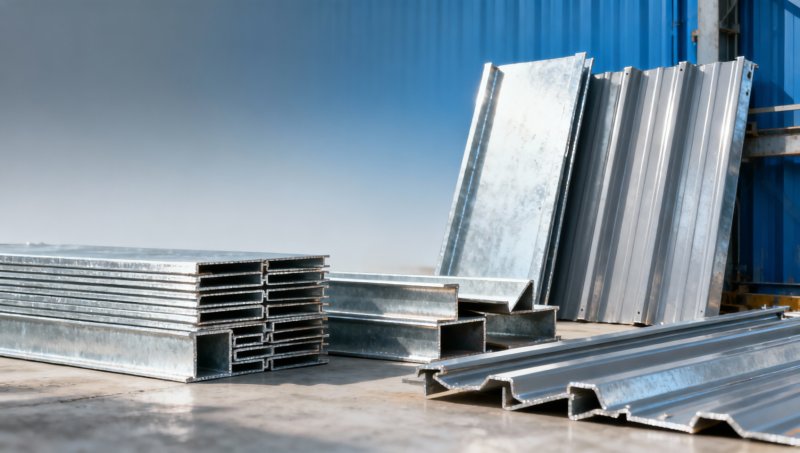
For outdoor applications, galvanized sheet thickness is not only a dimensional choice. It directly affects rigidity, dent resistance, installation stability, and service life under rain, UV exposure, dust, salt spray, and temperature changes. In most practical projects, buyers need to evaluate two layers at the same time: the base steel thickness and the zinc coating system.
A thinner sheet may work well for light cladding, temporary covers, or low-load enclosures, but it can deform more easily during transport, handling, and fastening. A thicker sheet usually performs better in wind-exposed zones, industrial yards, agricultural buildings, and rooftop systems that face long seasonal cycles of wetting and drying.
In steel procurement, common outdoor thickness discussions often fall into practical ranges such as 0.4 mm to 0.8 mm for light covering uses, 0.8 mm to 1.5 mm for stronger panel or formed-section applications, and above 1.5 mm for more demanding fabricated parts. The correct range depends on span, load, forming method, and maintenance access.
Decision-makers should also note that corrosion durability is not determined by thickness alone. The environment matters. Coastal exposure, chemical fumes, frequent condensation, and trapped water can shorten service life even when the sheet itself is relatively thick. That is why technical evaluation should combine thickness, coating class, fabrication quality, and drainage design.
What buyers and engineers usually assess first
- Base metal thickness tolerance and whether the quoted value is nominal or actual.
- Zinc coating type, such as hot-dip galvanized sheet or pre-galvanized material for roll forming.
- Outdoor exposure category, including rural, urban, industrial, or coastal conditions.
- Expected service cycle, such as 5–10 years for temporary assets or 15–25 years for longer-term structures.
Which thickness range is suitable for different outdoor scenarios?
The most effective way to select galvanized sheet thickness for outdoor use is to start from the application. Roofing sheets, wall cladding, equipment covers, fence panels, storage structures, and formed steel sections all operate under different stress conditions. A sheet that is acceptable for decorative enclosure may be unsuitable for load-bearing or vibration-prone use.
For example, light roofing in dry or moderate environments may use thinner material when purlin spacing is controlled and foot traffic is limited. In contrast, agricultural buildings with humidity, fertilizers, and wash-down exposure often require stronger thickness selection and more careful coating review. In coastal zones, both thickness and zinc mass should be checked more conservatively.
Project managers should also account for fabrication. Bending, punching, and roll forming can influence final performance, especially when profiles include lips, holes, or long spans. That is why many industrial buyers compare flat sheet specification with the finished part requirement before placing volume orders.
The table below summarizes typical thickness thinking for outdoor steel applications. These are practical reference ranges rather than a substitute for engineering calculation or local code review.
This comparison shows that there is no single best galvanized sheet thickness for outdoor use. The right choice depends on 3 core factors: structural demand, corrosion environment, and fabrication method. Buyers who skip one of these dimensions often face rework, edge rust, or avoidable material overspending.
Scenario-based selection checklist
- Define whether the sheet is purely protective, semi-structural, or load-bearing.
- Check outdoor environment severity over a 12-month cycle, especially moisture retention and salt exposure.
- Review fabrication steps such as cutting, punching, bending, or welding that may affect coating continuity.
- Confirm maintenance interval expectations, for example annual inspection versus low-access installations.
What technical parameters should procurement teams compare?
When technical assessment moves beyond basic thickness, procurement teams should compare a fuller specification set. In global steel sourcing, misunderstanding often happens because one supplier quotes total coated thickness, while another quotes base metal thickness. This difference can create major confusion during tender review, sample approval, and installation acceptance.
A more reliable approach is to compare at least 5 key items together: base steel thickness, coating type, coating mass, dimensional tolerance, and applicable standard. For many construction and industrial projects, compliance with ASTM, EN, JIS, or GB gives a common technical language across engineering, quality control, and purchasing teams.
Mid-project compatibility is also important. Outdoor sheet materials are often integrated with support systems, purlins, frames, and customized structural profiles. In many practical assemblies, formed sections can improve stiffness while reducing material waste. For example, C-Shaped Steel is widely used in construction, industrial, machinery, warehouse, and renewable energy frameworks because it combines high load-bearing capacity, accurate dimensional control, and corrosion-resistant surface options.
For projects that require standard and OEM structural solutions, profile compatibility matters as much as sheet thickness. A galvanized formed section with uniform dimensions, high resistance to deformation, and finishes such as galvanized, painted, or hot-dip treatment can simplify installation and reduce site adjustment time by 2–4 steps during assembly planning.
Key parameters that should appear on a quotation or technical sheet
The following table helps technical evaluators, quality managers, and buyers compare suppliers more effectively when reviewing galvanized sheet thickness for outdoor use and related structural steel components.
If a quotation omits any of these items, the purchasing risk increases. A low initial price can turn into a higher total project cost through replacement, delayed installation, or non-conforming material. That is why experienced buyers compare technical transparency before comparing unit price alone.
Why profile steel may matter in an outdoor sheet project
Outdoor systems often need more than flat sheet. Support members, framing rails, and purlins influence how sheet thickness performs in real service. A properly matched structural profile can reduce deflection and improve fastening reliability. In many projects, one well-selected section can lower the need for over-thick sheet material.
This is especially relevant in prefabricated buildings, solar panel mounts, warehouse shelving, machinery frameworks, and transportation infrastructure. Where design teams require premium-grade steel, uniform dimensions, excellent mechanical strength, and compatibility with ASTM, EN, JIS, or GB practices, a coordinated sheet-and-profile sourcing strategy usually delivers better results than isolated item purchasing.
How to balance cost, durability, and sourcing risk?
One of the most common mistakes in outdoor steel procurement is choosing the thinnest galvanized sheet that appears acceptable on paper. This may reduce initial material cost, but it can increase losses through oil-canning, damage during unloading, edge corrosion after cutting, or reduced resistance under wind and maintenance traffic. A better decision framework looks at total cost over the project cycle.
In practical B2B purchasing, total cost usually includes at least 4 parts: material price, fabrication cost, logistics risk, and maintenance or replacement exposure. A slightly thicker sheet can be more economical when it reduces breakage, increases installation speed, or supports longer inspection intervals such as every 6–12 months instead of frequent corrective attention.
Supplier capability also affects risk. For international buyers, stable production capacity, consistent quality control, and dependable lead times are often as important as thickness itself. Hongteng Fengda supports global construction, industrial, and manufacturing projects with structural steel products, cold formed profiles, customized components, and standard-compliant manufacturing aligned with ASTM, EN, JIS, and GB requirements.
This matters when your project timeline is tight. In many export-oriented steel orders, the practical sequence involves 3 stages: specification confirmation, production and inspection, and shipment coordination. Clear communication on thickness, coating, tolerance, surface finish, and OEM needs can reduce sourcing ambiguity before production starts.
Simple procurement decision points
- If the installation is exposed to coastal air or industrial fumes, prioritize coating durability and drainage design before choosing a lower gauge.
- If the component will be bent, punched, or assembled with other steel members, request tolerance and fabrication details in writing.
- If the project needs repeat orders, ask for consistency controls across batches, especially for dimensions and surface finish.
- If budget pressure is high, compare total installed cost instead of unit sheet price only.
What standards, quality checks, and common mistakes should you watch?
Outdoor galvanized steel purchasing should always include a compliance review. While exact project requirements vary by country and application, buyers commonly rely on ASTM, EN, JIS, or GB references to define acceptable material, coating, tolerances, and inspection methods. These standards create a shared baseline between supplier, contractor, and end user.
Quality control teams should verify at least 5 inspection points before acceptance: thickness, coating condition, dimensions, surface defects, and packaging protection. For fabricated products, additional checks may include hole position, section shape, edge condition, and weld-area treatment where applicable. These checks are especially important for export shipments that will travel over 2–6 weeks depending on destination.
A frequent misconception is that thicker galvanized sheet always guarantees better outdoor life. In reality, poor storage, water-trapping design, rough cutting, or coating damage during installation can shorten performance significantly. Another misconception is that all galvanized finishes behave the same. Process route, coating mass, and post-fabrication exposure all matter.
The best results usually come from coordinated review between engineering, procurement, and quality personnel. That means checking intended use, environmental conditions, joining methods, and inspection criteria before final PO release rather than solving problems after delivery.
FAQ on galvanized sheet thickness for outdoor use
Is thicker always better for outdoor galvanized sheet?
Not always. Thicker material generally improves rigidity and impact resistance, but it does not automatically solve corrosion risk. If the coating is inadequate for the environment, or if edges and fastener points are poorly handled, a thicker sheet can still fail earlier than expected. Thickness should match structural demand and exposure severity together.
What is the difference between sheet thickness and zinc coating?
Sheet thickness refers to the steel substrate dimension, while zinc coating refers to the corrosion-protective layer on the surface. Outdoor performance depends on both. The steel body provides strength; the zinc layer delays rust. Procurement documents should state them separately to avoid confusion during comparison and inspection.
Which applications usually need a more cautious thickness choice?
Roofing in high-wind areas, agricultural buildings with moisture and chemicals, machinery covers subject to vibration, and fabricated structural supports often need more cautious thickness review. Components with long spans, frequent maintenance access, or combined sheet-and-frame loading should never be selected by price alone.
How can buyers reduce international sourcing risk?
Use a supplier that can provide clear specifications, standard references, dimensional control, and stable lead-time communication. It is also useful to confirm sample requirements, packing method, batch consistency, and document alignment before production. For customized orders, drawings and approval checkpoints should be fixed early.
Why work with a structural steel supplier that understands outdoor applications?
Outdoor steel projects rarely depend on one material parameter alone. They involve corrosion protection, structural coordination, fabrication feasibility, inspection planning, and delivery timing. That is why many buyers prefer a supplier that can support both standard steel products and customized structural solutions under one sourcing process.
Hongteng Fengda manufactures and exports structural steel products for construction, industrial, and manufacturing projects. Our range covers angle steel, channel steel, steel beams, cold formed steel profiles, and customized structural steel components. For buyers comparing galvanized sheet thickness for outdoor use, this broader capability helps align sheets, supports, and formed members in one project workflow.
If you are evaluating thickness options, we can discuss 6 practical topics before ordering: application scenario, target thickness range, coating preference, compliance standard, fabrication method, and delivery schedule. This helps procurement teams, engineers, and project managers reduce uncertainty before confirming production.
Contact us if you need support with parameter confirmation, product selection, OEM customization, sample discussion, lead-time planning, certification reference, or quotation comparison. If your project includes roofing sheets, formed profiles, or structural members for outdoor use, we can help you review a practical material solution based on your drawings, load conditions, and destination market requirements.
Please give us a message


Please enter what you want to find