Lightweight steel roofing is gaining attention for its durability, cost efficiency, and fast installation, but understanding both its advantages and limitations is essential before making a decision. For buyers, engineers, and project managers comparing solutions from a structural steel manufacturer or evaluating structural steel properties, this guide explores the real pros and cons of lightweight steel roofing in practical applications.
What makes lightweight steel roofing attractive in modern construction?
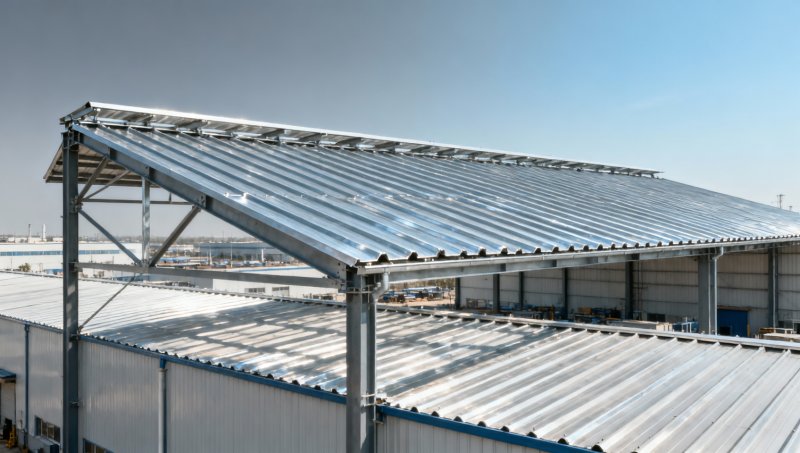
Lightweight steel roofing generally refers to roof systems made from thin-gauge steel sheets, coated steel panels, or formed steel roofing profiles that deliver structural efficiency without the dead load associated with heavier roofing materials. In industrial buildings, warehouses, workshops, agricultural facilities, and some residential projects, this roofing option is often selected because it balances strength, speed, and manageable installation requirements.
For project teams, the biggest immediate advantage is reduced roof weight. A lighter roof can lower the load transferred to purlins, rafters, and the main structural steel frame. In practical terms, this can influence foundation design, steel consumption, lifting plans, and installation sequencing. On projects with tight schedules of 2–4 weeks for enclosure works, lightweight roofing often helps contractors close the building envelope faster than traditional heavy roof assemblies.
Another reason it is popular is manufacturing flexibility. Steel sheets can be produced in different thickness ranges, coating systems, profile heights, and lengths to suit climate, span conditions, and installation methods. This is especially relevant for B2B buyers who need compatibility with ASTM, EN, JIS, or GB-based supply chains. Standardized production also supports repeat orders and more predictable quality control.
From a sourcing perspective, lightweight steel roofing is not just a roofing choice. It is part of a broader structural steel solution. When roofing, purlins, channels, beams, and custom formed components are coordinated through one structural steel manufacturer, buyers can often simplify procurement, reduce dimensional mismatch risk, and improve delivery planning across 3 key stages: fabrication, shipment, and site installation.
Why many procurement teams shortlist it early
- Lower dead load can reduce demands on secondary and primary steel framing, especially in long-span sheds and prefabricated buildings.
- Faster installation can support compressed project schedules, particularly when enclosure works must be completed within 7–15 days after frame erection.
- Coated steel roof panels are widely available in standard profiles, making replacement, expansion, and maintenance planning more practical.
- Export-oriented supply is easier when the manufacturer already works with international dimensions, tolerances, and inspection documentation.
Pros and cons of lightweight steel roofing at a practical level
The real value of lightweight steel roofing becomes clearer when performance is judged in day-to-day operating conditions rather than only by brochure claims. End users care about leakage risk, heat gain, maintenance frequency, corrosion resistance, and storm performance. Technical reviewers want to know whether the roof profile, fastening system, coating, and support spacing are appropriate for the building’s service conditions.
Its strengths are clear. Properly specified steel roofing offers good structural reliability, efficient water shedding, clean appearance, and low material waste during prefabrication. On large factory roofs or logistics buildings, long panel lengths can reduce lap joints, which may improve installation speed and reduce potential weak points. In many retrofit projects, the lightweight nature of the material also makes it easier to install over existing support arrangements, subject to engineering review.
However, lightweight does not mean problem-free. Steel roofs can be noisy during rain or hail if acoustic treatment is limited. Thermal performance depends heavily on insulation build-up, ventilation, and roof color rather than the steel sheet alone. Poor edge sealing, incorrect screw placement, or underdesigned support spacing can lead to premature leakage, oil-canning, wind uplift issues, or local deformation. In coastal or chemically aggressive environments, corrosion control is a major specification point rather than an optional upgrade.
This is why buyers should compare lightweight steel roofing as a system, not only as a sheet price per ton or per square meter. A lower initial material quote may create higher lifecycle cost if the coating class, drainage design, or fastener quality is inadequate for a 10–20 year service expectation. The best decision usually comes from balancing initial budget, expected service environment, maintenance access, and required compliance documentation.
Quick comparison of key pros and limitations
The table below summarizes the main lightweight steel roofing pros and cons that matter in procurement, engineering review, and site use.
A practical reading of this table is simple: lightweight steel roofing performs well when specification and installation quality are aligned. Most failures are not caused by steel itself, but by poor matching between coating grade, fixing details, roof pitch, drainage design, and the actual environment.
Which applications benefit most, and where should buyers be more cautious?
Lightweight steel roofing is especially suitable for industrial and commercial structures where rapid enclosure, long roof runs, and repeatable detailing matter. Typical applications include warehouses, manufacturing plants, workshops, storage buildings, equipment shelters, and agricultural facilities. These buildings often prioritize speed, weather protection, and practical maintenance over heavy architectural finishes.
It is also effective in modular and prefabricated projects. Because steel roofing integrates well with cold formed steel purlins, steel beams, channel sections, and light-gauge framing, it supports factory-based fabrication and controlled installation sequences. For global buyers sourcing from China, compatibility between roof materials and the broader structural package can reduce coordination errors during export packing, customs documentation, and site assembly.
That said, not every project should treat lightweight steel roofing as a default answer. Buildings with strict acoustic comfort targets, such as schools, offices, or some residential developments, may require additional insulation and sound control layers. Projects in cyclone-prone, salt-laden, or highly corrosive industrial environments may still use lightweight steel roofing, but only with more careful design, fastening strategy, and coating selection. In these cases, technical review should include at least 4 checkpoints: wind loading, corrosion class, drainage detail, and maintenance access.
In reinforced concrete or composite projects, roofing decisions are also connected to other structural materials. For example, some building packages require both roof systems and reinforcement products. In such cases, procurement teams often value suppliers that understand the broader steel ecosystem. For concrete reinforcement in construction applications, HRB600 Rebar can be relevant where high yield strength of 600 MPa, multiple sizes from φ6 to φ50, and compliance references such as ASTM, DIN, GB, and JIS are part of the engineering discussion. Its higher strength compared with lower grades can help reduce reinforcement ratio in appropriate designs, which matters when cost control and structural efficiency are reviewed together.
Application suitability by project type
The following table helps project teams judge where lightweight steel roofing is usually a strong fit and where more caution is needed.
This comparison shows that the material is most competitive where structural efficiency and fast project turnover are central. As the project becomes more comfort-sensitive or environment-sensitive, detailing quality and specification depth become more important than the base material cost alone.
Three scenarios where caution matters most
- Coastal projects within salt-exposed zones, where coating durability and fastener corrosion resistance must be reviewed together rather than separately.
- High-temperature facilities, where roof insulation, thermal movement, and sealant performance need attention over seasonal cycles.
- Retrofit projects on old frames, where existing purlin condition, spacing, and alignment should be checked before panel ordering.
How should buyers evaluate specification, cost, and compliance?
A smart lightweight steel roofing purchase starts with a system checklist rather than a unit price comparison. Procurement managers often receive several quotations that appear similar, but hidden differences may exist in base metal thickness, coating mass, panel profile, accessory scope, packing method, and documentation. Comparing only the headline number can create avoidable claims after shipment or installation.
A useful method is to review 5 key dimensions: structural requirement, coating suitability, fastening system, insulation configuration, and delivery capability. For international projects, documentation matters as much as the product. Mill test records, dimensional tolerances, coating details, packing lists, and standards alignment should be confirmed before production. This is particularly important when roof materials need to coordinate with structural steel beams, channels, and cold formed profiles in the same project package.
Cost analysis should cover more than raw material. Buyers should assess transport efficiency, expected installation hours, lifting equipment needs, accessory quantities, on-site cutting loss, and probable maintenance intervals. In many cases, a roof system with a slightly higher material price can reduce labor time by several days and lower rework risk. For distributors and contractors, this difference can strongly affect margin control.
Compliance is another decision layer. While exact requirements vary by country and project, buyers commonly ask for products aligned with ASTM, EN, JIS, or GB references, as well as clear quality control procedures during forming, coating, and final inspection. A manufacturer experienced in export markets can help clarify these points early, reducing the risk of document gaps, dimensional inconsistency, or shipment delays.
Procurement checklist for lightweight steel roofing
- Confirm roof span, purlin spacing, wind conditions, and service environment before selecting profile type or thickness.
- Check whether quoted scope includes ridge caps, flashings, gutters, sealants, screws, washers, and closures.
- Verify coating type and corrosion suitability, especially for coastal, humid, or chemical exposure conditions.
- Review delivery plan, including production lead time, packing method, container loading, and project installation sequence.
- Request inspection records and standards references matching the project’s contractual or engineering requirements.
Selection factors that often affect total cost
The table below highlights cost drivers that buyers frequently underestimate when comparing lightweight steel roofing offers.
For most buyers, the takeaway is that total roof value depends on coordination quality. Accurate specification at the quotation stage usually saves more than aggressive price cutting after the wrong material has already been chosen.
Common questions, misconceptions, and risk control points
Many concerns about lightweight steel roofing come from partial information. Some people assume all steel roofs are noisy, rust quickly, or fail in storms. In reality, performance depends on profile design, coating choice, support spacing, fastening details, insulation build-up, and maintenance practice. Understanding these variables helps both technical and commercial teams make more reliable decisions.
Another common mistake is assuming that “lightweight” means “weak.” Steel roofing can perform very well under service loads when it is designed as part of the total roof system. The material’s efficiency comes from profile geometry and steel strength, not from thickness alone. Conversely, choosing heavier roofing without solving detailing problems does not automatically improve weather-tightness or service life.
Maintenance should also be planned realistically. Even durable roof systems benefit from periodic inspection, commonly every 6–12 months depending on the environment. Project owners and facility managers should check fasteners, laps, sealants, drainage paths, coatings, and signs of localized corrosion. Early correction is usually less costly than waiting for water ingress or corrosion spread.
For distributors, EPC contractors, and project owners, the safest approach is to ask for pre-order technical confirmation. A short review covering dimensions, accessories, coating system, standards alignment, and packing can prevent disputes later. This is especially important in export projects where replacing missing components can add weeks to the timeline.
Does lightweight steel roofing always save money?
Not always at the material line-item level. Savings often come from the full project effect: reduced structural load, easier handling, shorter installation time, and lower transport burden. If the roof requires heavy acoustic treatment or advanced corrosion protection, the initial system cost may rise. The correct question is whether it lowers total installed and operating cost for the target application.
Is it suitable for harsh weather areas?
Yes, but only with appropriate engineering. Wind uplift, fixing layout, panel profile, support spacing, and corrosion resistance must be matched to the location. In storm-prone or marine environments, buyers should request project-specific confirmation rather than relying on a generic roof specification.
What are 4 warning signs of poor selection?
- The quotation lists roof panels but omits flashings, fasteners, and drainage accessories.
- No clear mention is made of coating type or applicable standards.
- Panel dimensions are confirmed before support spacing and wind conditions are reviewed.
- The supplier cannot explain inspection steps, packing details, or export documentation.
Why work with a structural steel manufacturer that understands the full project package?
For international buyers, the challenge is rarely limited to roofing alone. It often includes beams, channels, angles, cold formed steel profiles, and customized steel components that must fit together under one project schedule. Working with a structural steel manufacturer and exporter that understands this full package can reduce sourcing friction and help teams make faster, better-informed decisions.
Hongteng Fengda supports global construction, industrial, and manufacturing projects with structural steel products and customized solutions. With experience supplying markets in North America, Europe, the Middle East, and Southeast Asia, the company focuses on stable production capacity, consistent quality control, and dependable lead times. This matters when procurement teams need to balance budget, quality, and delivery risk across multiple steel categories.
A capable supplier should help buyers review 3 practical areas before order confirmation: product suitability, compliance alignment, and delivery coordination. That may include confirming roof-related steel sections, matching standard specifications or OEM requirements, and preparing documentation based on ASTM, EN, JIS, or GB expectations. This kind of support is valuable for technical assessors, project managers, distributors, and business decision-makers alike.
If you are evaluating lightweight steel roofing or related structural steel materials, you can discuss specific topics such as profile selection, coating suitability, matching steel components, lead time planning, sample support, certification references, and quotation structure. Clear early communication helps reduce sourcing risk, avoid specification gaps, and improve project execution from factory to site.
What you can consult before placing an order
- Parameter confirmation for roofing sheets, supporting steel sections, and compatible accessories.
- Product selection advice based on project type, climate exposure, and installation conditions.
- Typical production and delivery schedules, including export packing and shipment planning.
- Customized steel solution discussions for standard and OEM project requirements.
- Certification and standards communication for projects referencing ASTM, EN, JIS, or GB systems.
- Sample support and quotation discussion for distributor, contractor, or end-user evaluation.
When lightweight steel roofing is selected with the right technical and commercial checks, it can be a highly practical choice for modern steel construction. If you want to compare options, confirm specifications, or build a coordinated supply plan for roofing and structural steel products, reaching out with drawings, project conditions, and target standards will make the discussion faster and more useful.
Please give us a message


Please enter what you want to find