The performance and service life of steel rebar for earthquake resistance are crucial to the safety and durability of modern structures. For builders and engineers selecting materials such as steel profile for architectural design, steel channel for structural support, or carbon steel for pressure vessels, understanding the factors that influence rebar longevity is essential. As a leading structural steel manufacturer and exporter, Hongteng Fengda shares key insights to help global projects enhance structural reliability, optimize cost efficiency, and achieve long-term performance. Whether designing complex infrastructure or reinforcing mezzanine floors, proper selection and handling of steel rebar play a decisive role in ensuring the overall resilience of earthquake resistance structures. Specially engineered products like the Carbon Steel Sheet Plate and Q345A(16Mn) steels are increasingly important in achieving these outcomes, combining superior strength with outstanding conformity to GB, ASTM, and EN standards, widely used across worldwide construction and industrial sectors.
Definition and Material Overview of Steel Rebar for Earthquake Resistance
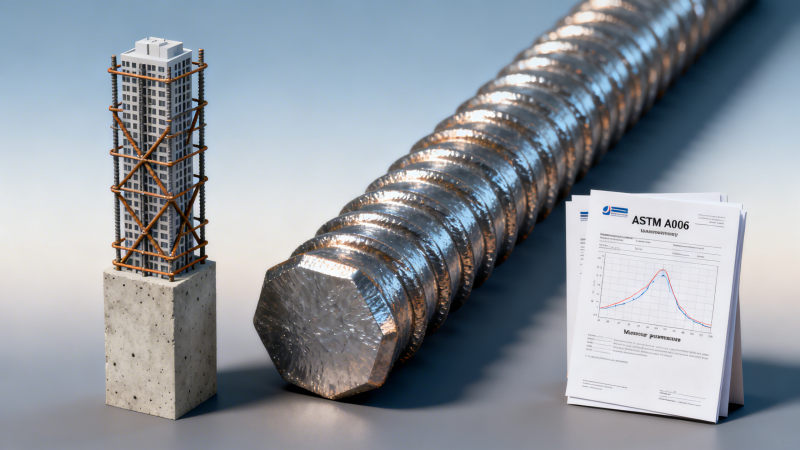
Steel rebar for earthquake resistance refers to high-tensile reinforcement bars embedded within concrete structures to absorb seismic energy, prevent catastrophic collapse, and extend structural lifetime. These rebars are produced from carbon steel or alloy steel, designed according to rigorous standards like ASTM A706, JIS G3112, and GB1499.2. Their mechanical properties—yield strength, ductility, and elongation—determine how effectively they behave under tension and cyclic loading conditions during earthquakes. For instance, in comparison with ordinary rebar, seismic-resistant rebar features controlled carbon composition and alloy additives such as vanadium or niobium that enhance microstructure stability. It is often coated with epoxy or galvanized layers to withstand corrosion, particularly when used near seashore projects or bridges using steel pile for port construction. In projects requiring higher corrosion resistance or aesthetic appeal, pre-painted steel sheet or corrugated steel sheet components are paired with structural rebars to maintain comprehensive durability and consistent design unity in architectural systems. These technological advancements ensure engineers can meet strict performance requirements while maintaining material efficiency and environmental sustainability.
Market Overview and Industry Background
The global demand for structural reinforcement materials, including steel bar for railway construction and steel rebar for earthquake resistance, has surged significantly over the past decade. Rapid urbanization, stricter building codes, and frequent seismic events have accelerated the adoption of high-performance steel materials in regions such as North America, East Asia, and the Middle East. Government initiatives like Japan’s “Strong Structure” program and China’s “Resilient Cities” strategy are leading the way in promoting high-strength rebars that comply with international norms. The steel channel for mezzanine floors and similar load-bearing frameworks are now essential for optimizing space while maintaining lateral stability. Hongteng Fengda, as an experienced structural steel exporter from China, leverages modern manufacturing lines and quality inspection systems that align with ASTM, EN, JIS, and GB standards. By producing consistent-quality materials like carbon steel for automotive industry and cold formed steel profiles, Hongteng Fengda supports projects ranging from precast concrete facilities to mega infrastructure. The forecasted CAGR for earthquake-resistant steel bars is projected to remain above 5% in the next five years, driven by technological innovation and compliance demands. This trend reflects how the market values structural reliability and long-term service capability above short-term cost savings.
Technical Performance and Key Factors Influencing Service Life
When evaluating steel rebar used in earthquake resistance structures, several interrelated factors influence its service life. Firstly, **chemical composition** plays an essential role. A controlled carbon content between 0.15% and 0.25% ensures optimal ductility, while trace elements such as vanadium, manganese, and chromium contribute to strength retention. For example, the Q345A(16Mn) grade used in Carbon Steel Sheet Plate presents balanced mechanical properties ideal for manufacturing plants, construction, and heavy equipment such as excavators or bulldozers. Secondly, **microstructural uniformity** resulting from strict heat treatment prevents micro-crack propagation during cyclic stress. Thirdly, **surface protection**—galvanizing, epoxy coating, or corrosion inhibitors—directly affects durability, especially for environments with moisture or chloride exposure. Fourthly, **fabrication and bending quality** determine how the steel rebar interacts with concrete during reinforcement. Incorrect bending radius or welding may introduce residual stress, reducing fatigue performance. In addition, **loading environment**, **maintenance frequency**, and **installation precision** are fundamental to extending the lifespan of earthquake-resistant rebars. Engineers also account for temperature cycles and environmental aggressiveness when choosing between carbon steel for pressure vessels or specially alloyed bars. Advanced steel profile for architectural design with superior adherence characteristics contributes to enhanced energy dissipation during seismic activity, thus reinforcing safety and sustainability objectives in construction.
Application Scenarios and Structural Integration
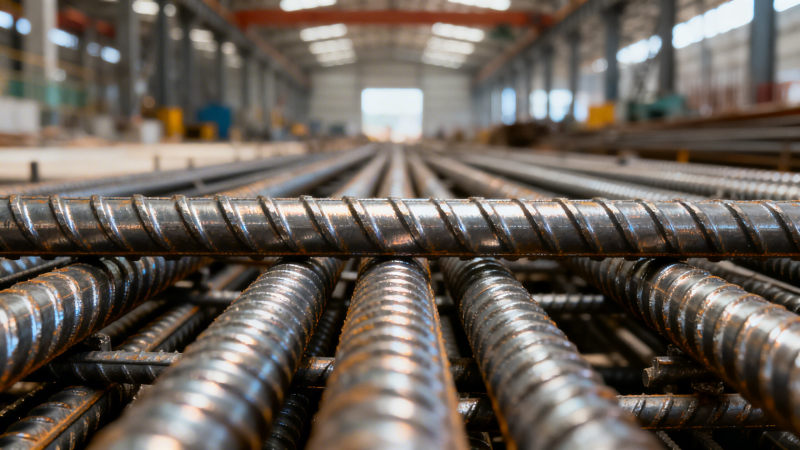
Steel rebar for earthquake resistance has wide-ranging applications across multiple sectors. In high-rise residential and commercial buildings, it forms the backbone of reinforced concrete beams, columns, and core walls, ensuring controlled flexibility under lateral motion. Industrial facilities such as manufacturing plants and power stations rely on steel beams and steel channels for structural support, where the rebar ensures the foundation’s stability against vibrations caused by machinery. Infrastructure systems—bridges, tunnels, and metro stations—utilize high-yield rebars to withstand seismic pulses. In port development, steel pile for port construction provides both axial load capacity and anti-buckling resistance, integrated with reinforcement cages made from corrosion-resistant rebar. In railway construction, specially configured steel bar for railway construction improves fatigue resistance under repetitive dynamic loads. Moreover, steel channel for mezzanine floors helps distribute weight evenly, providing safety and extra stability for storage facilities. Each of these applications requires precision manufacturing, adherence to quality certification, and project-specific customization, areas where Hongteng Fengda excels through its OEM solutions, advanced cold forming technology, and precise quality tracking procedures that meet ISO and EN compliance standards internationally.
Procurement Guide and Cost Considerations
Selecting the right type of steel rebar is not merely a purchasing decision—it’s a strategic investment in structural longevity. Buyers should evaluate several dimensions during procurement. First, assess local building codes and required seismic grades to determine appropriate tensile strength levels. Second, consider certifications like ASTM A706 or JIS G3112, ensuring the materials align with safety regulations. Third, request mill test certificates verifying chemical composition and mechanical strength, particularly for large-scale projects where quality consistency is critical. Cost-wise, while high-performance rebars may have a slightly higher initial price than conventional carbon steel bars, the overall lifecycle cost is significantly lower due to reduced maintenance and extended service life. Comparing different product types—such as pre-painted steel sheet for external cladding or corrugated steel sheet for roofing—helps buyers optimize procurement bundles. Suppliers like Hongteng Fengda provide transparent pricing, real-time production scheduling, and customized packaging options tailored to logistics efficiency. Corporate buyers, project managers, and quality inspectors appreciate consistent traceability and the ability to monitor compliance directly through documentation and digital platforms. Ultimately, a structured purchasing process lowers sourcing risks and ensures steady project execution from design to construction completion.
Standards, Certification, and Quality Management
Adherence to standards is crucial to guarantee the performance and safety of steel rebar for earthquake resistance. Globally recognized certifications—ASTM, EN, JIS, and GB—define mechanical performance ranges and testing methodologies. High-quality rebars undergo tensile strength analysis, bend testing, fatigue assessment, and corrosion resistance evaluation. Consistency across batches is verified through spectrometer chemical composition checks. Hongteng Fengda’s manufacturing system incorporates ISO9001 quality management and precisely controls every production stage—smelting, continuous casting, rolling, and final inspection—to eliminate internal defects. The combination of carbon steel for pressure vessels and structural-grade steel in one production line allows versatile application scalability. For instance, Q345A(16Mn) steels used in construction and engineering machinery meet certifications such as GB/T1591, JIS G3101, and EN10025, providing international cross-compliance. Such standardized production not only ensures the interoperability of steel components across projects but also enhances the credibility and competitiveness of both suppliers and distributors in global engineering supply chains. Quality assurance is not limited to testing; it encompasses proactive maintenance of machines, real-time monitoring of furnace temperatures, and continuous staff training for defect elimination at its source.
Case Studies and Success Practices
Across diverse geographies, Hongteng Fengda’s steel rebar and structural steel products have contributed to the success of numerous projects. One representative case involves a high-rise seismic retrofit project in Turkey where earthquake-resistant steel rebar combined with steel profile for architectural design achieved a 30% increase in load-bearing capacity and a 25% reduction in construction time. In another infrastructure project in Southeast Asia, steel channel for structural support and carbon steel for automotive industry-grade materials were used to create bridge decks capable of withstanding high humidity and fluctuating temperatures. Engineers praised the stability and uniformity of the supplied steel materials, particularly their ability to meet ASTM and GB standards simultaneously. A port construction project in Africa adopted customized steel pile for port construction solutions, integrating rebar cages and pre-painted steel sheet claddings, resulting in long-term corrosion resistance and reduced maintenance costs. These cases highlight how professional sourcing combined with advanced production engineering can mitigate risks and enhance the financial sustainability of infrastructure investments on a global scale. They also underline Hongteng Fengda’s ability to align global projects with regional compliance frameworks and deliver verified, efficient, and practical steel solutions.
FAQ and Common Misconceptions
A frequent misconception about steel rebar for earthquake resistance is that higher tensile strength automatically implies longer service life. In reality, over-strength rebars with low ductility may experience microcracking under repetitive seismic loads, leading to unexpected failure. Another misunderstanding is that cost-effective bars suffice for light-load structures. Even small-scale buildings in seismic zones need properly graded reinforcement to maintain integrity. Users often ask whether carbon steel for pressure vessels can substitute seismic rebar. The answer is partially—while both materials share similar chemical foundations, they differ in ductility designs and heat treatment processes. Questions also arise regarding corrosion protection: Is galvanized coating adequate in tropical climates? The best practice is combining epoxy coatings with cathodic protection for extended lifespan. Buyers concerned about weight versus strength can refer to engineering parameters that optimize section sizes without sacrificing performance. Lastly, many overlook the role of installation accuracy; even the highest-quality steel will underperform if concrete compaction, alignment, or cover thickness are inadequate. Addressing these misconception areas helps engineers, procurement specialists, and safety managers understand how strategic material selection and installation discipline contribute to achieving truly earthquake-resistant designs.
Trend and Future Outlook
Emerging trends in steel rebar technology focus on higher energy absorption efficiency, low-carbon production, and digital traceability systems. Smart metallurgical control using AI-driven rolling and temperature monitoring ensures consistent microstructures. The introduction of hybrid rebar combining carbon steel with fiber composites offers enhanced corrosion resistance for coastal structures and port installations. Sustainability goals push manufacturers to reduce carbon emissions by adopting electric arc furnace technology and recycling systems. As urban mega projects expand in regions prone to earthquake risks, demand for steel channel for structural support and steel profile for architectural design will continue to rise. International collaborations are expected to refine material classification, harmonizing GB, EN, and ASTM standards to accelerate global approvals. Hongteng Fengda continuously integrates innovation into manufacturing by developing new cold formed steel profiles and adopting predictive maintenance systems that guarantee stable performance. As digital construction and Building Information Modeling (BIM) evolve, traceable steel data will enhance coordination between design, procurement, and on-site quality control, setting a new standard for the future of structural steel reliability and safety in earthquake-resistant architecture.
Why Choose Hongteng Fengda
Choosing Hongteng Fengda means choosing reliability, precision, and long-term value. As a trustworthy structural steel manufacturer and exporter from China, the company delivers tailored solutions for global buyers across construction, industrial, and manufacturing sectors. Its core products—angle steel, channel steel, steel beams, and cold formed steel profiles—adhere to ASTM, EN, JIS, and GB benchmarks, ensuring global compatibility. Customers benefit from stable production capacity, strict quality control, and responsive delivery management that minimize sourcing risks and downtime. Furthermore, the company’s advanced equipment and testing facilities verify every component’s mechanical and chemical properties, guaranteeing consistent performance even under demanding seismic conditions. Global clients—from information researchers to procurement officers—rely on Hongteng Fengda for comprehensive technical consultation, precise customization, and transparent communication. For those looking to optimize project durability, improve cost efficiency, and secure a dependable steel partnership for future developments, contact Hongteng Fengda today to explore how high-quality steel rebar for earthquake resistance and related structural products can elevate your engineering achievements worldwide.
- channel steel
- steel i
- angle steel
- carbon steel sheet plate
- ASTM standards
- ASTM standard
- structural steel
- steel beams
- steel profiles
- Structural Steel
- Steel Beams
- Profile
- Rebar
- Galvanized
- Steel Beam
- Steel Channel
- carbon steel
- steel sheet
- steel rebar
- steel profile
- steel pile
- steel bar
- corrugated steel sheet
- carbon steel for automotive industry
- Steel Channel for structural support
- steel bar for railway construction
- steel pile for port construction
- steel profile for architectural design
- steel rebar for earthquake resistance
- pre-painted steel sheet
- carbon steel for pressure vessels
- Steel Channel for mezzanine floors
- steel sheet for roofing
Related recommendations
 What Affects the Cost of Galvanized Steel in Fabrication Projects?Galvanized steel costs vary far beyond raw material price. Learn how coating, steel grade, fabrication, logistics, and hidden quote items affect project budgets before you buy.
 Steel Wire Strand Applications in Lifting and Support: Key Load and Safety ConsiderationsSteel wire strand selection for lifting and support starts with real load, fatigue, corrosion, and anchoring conditions. Learn how to improve safety, service life, and structural reliability.
 Architectural Steel Angle in Facades, Edges, and Clean LinesArchitectural steel angle improves facade edges, clean lines, and structural precision. Discover how it supports durability, faster installation, and smarter project control.
 Where Cold Formed Steel Angle Works Best in Modern BuildsCold formed steel angle works best in modular builds, secondary framing, and utility supports. Learn where it adds value, what to verify, and how to choose the right profile with confidence.
Please give us a message


Please enter what you want to find