In industrial HVAC duct systems, thermal cycling poses critical challenges to material integrity—making hot galvanized steel a top choice for durability and corrosion resistance. As an ASTM galvanized pipe supplier and trusted manufacturer of hot rolled steel coil, Hongteng Fengda delivers structurally sound, internationally certified galvanized solutions engineered for real-world thermal stress. This article examines how hot galvanized steel performs under repeated heating and cooling cycles—key insight for technical evaluators, procurement teams, project managers, and safety-focused stakeholders seeking reliable, long-term duct system performance.
Why Thermal Cycling Demands More Than Basic Corrosion Resistance
Industrial HVAC ducts in power plants, data centers, and manufacturing facilities routinely endure temperature swings from 10°C to 85°C over daily or shift-based cycles. These fluctuations induce micro-stress at the zinc-steel interface, accelerating interfacial fatigue and compromising coating adhesion—especially where condensation, vibration, or mechanical abrasion coexist.
Unlike static exposure environments, thermal cycling tests both the metallurgical bond strength and the coefficient-of-thermal-expansion (CTE) compatibility between zinc (α ≈ 30.2 × 10⁻⁶/°C) and steel substrate (α ≈ 12.0 × 10⁻⁶/°C). Mismatched CTE values can generate cyclic shear strain at the interface—leading to micro-cracking, blistering, or localized delamination after 200–500 cycles.
Hongteng Fengda’s hot-dip galvanizing process employs controlled immersion time (≥ 4.5 minutes), bath temperature (445–465°C), and post-cooling protocols that promote uniform η–zinc and Γ–zinc-iron alloy layer formation. This results in intermetallic layers with enhanced ductility and fatigue resistance—validated per ASTM A123/A123M and EN ISO 1461 testing protocols.
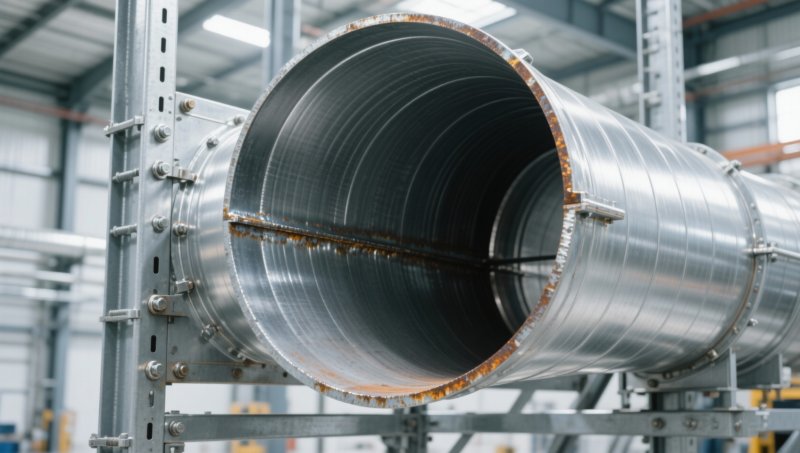
Performance Comparison: Hot-Dip Galvanized vs. Alternatives Under Cycling Stress
Selecting the right protective system isn’t just about initial cost—it’s about lifecycle reliability under dynamic thermal loads. Below is a comparative assessment based on third-party accelerated thermal cycling tests (ASTM D6941-22, 500 cycles, -20°C to +80°C, 2-hour dwell per extreme):
The HDG solution outperforms alternatives not only in coating retention but also in maintaining barrier integrity during expansion/contraction events. Its robust intermetallic structure resists crack propagation better than pure zinc or aluminum-rich coatings—critical for ductwork joints, flanges, and support brackets exposed to repeated flexural stress.
Key Technical Parameters That Matter in Cycling Applications
- Coating thickness consistency: ±5% tolerance across 100 mm sample length (measured per ISO 1461 Annex B)
- Adhesion strength: ≥5.0 MPa (pull-off test, ASTM D4541), verified on curved duct sections
- Intermetallic layer ratio: Γ-layer (Fe₃Zn₁₀) content ≥25% by weight—ensures ductile response under cyclic strain
- Surface roughness (Ra): ≤3.2 µm—reduces turbulence-induced erosion in high-velocity airflow zones
How Hongteng Fengda Ensures Thermal Cycle Readiness in Real-World Duct Fabrication
Beyond raw material compliance, Hongteng Fengda integrates thermal cycle resilience into every stage of production—from billet selection to final packaging. Our DC01-grade Galvanized Round Steel undergoes cold drawing with ISO h8/h9 diameter tolerances (±0.012 mm for <10 mm, ±0.022 mm for >10 mm), ensuring precise fit-up for welded duct assemblies—minimizing residual stress points prone to accelerated fatigue.
Each batch is subjected to ultrasonic control (for subsurface defect detection), spectrotest antimixing verification, and Circograph-based roundness validation (out-of-roundness ≤½ of diameter tolerance). This level of dimensional and metallurgical control directly translates to reduced thermal distortion risk during field installation and operation.
For HVAC integrators specifying custom duct profiles, we offer OEM support including pre-galvanized bending, flange welding, and joint reinforcement—all validated via simulated thermal cycling (300 cycles, -15°C to +75°C) before shipment. Lead times remain stable at 2–4 weeks for standard orders, with expedited options available for urgent projects across North America and the Middle East.
Certification Alignment for Global HVAC Projects
All galvanized structural components meet or exceed requirements for ASHRAE 170, EN 1507, and UL 181B-FX standards—including fire-rated duct applications. Certifications include:
- ASTM A123/A123M (zinc coating mass & adherence)
- EN ISO 1461 (coating thickness, appearance, adhesion)
- GB/T 13912 (Chinese national standard, equivalent to ISO 1461)
- Third-party salt-spray and thermal cycling reports issued by SGS and TÜV Rheinland
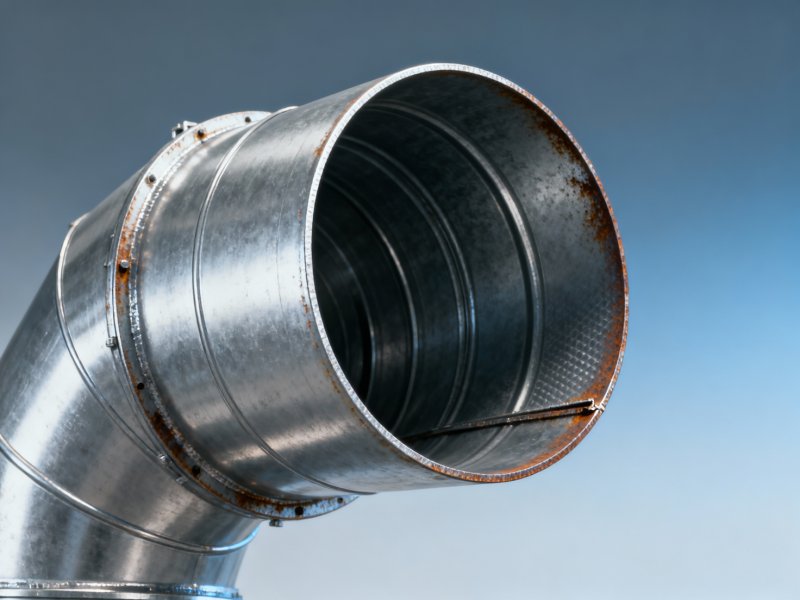
Procurement Guidance: What to Verify Before Ordering Galvanized Duct Materials
When sourcing hot galvanized steel for thermally cycled HVAC applications, procurement and engineering teams should jointly validate these five criteria—not just coating weight:
- Intermetallic layer verification: Request XRD or SEM cross-section report confirming Γ-layer presence and thickness (target: 5–12 µm)
- Thermal cycling test summary: Ask for documented results of ≥200-cycle tests matching your operating range (e.g., -20°C to +70°C)
- Dimensional stability data: Confirm cold-drawn tolerances and roundness compliance—especially for round duct supports and hanger rods
- Batch traceability: Ensure each coil or bundle carries heat number, galvanizing date, and coating mass per ASTM A123 Table 1
- OEM fabrication capability: Confirm weldability of galvanized surfaces (e.g., pre-galv vs. post-galv welding protocols) if custom duct sections are required
Hongteng Fengda provides full documentation packages—including mill test reports, galvanizing certificates, and thermal cycle validation summaries—for every order. For project-critical duct systems, we support joint witness testing at our ISO 9001-certified facility in Jiangsu Province.
Why Partner With Hongteng Fengda for Thermally Resilient Galvanized Solutions
As a structural steel manufacturer serving over 42 countries, Hongteng Fengda bridges the gap between international specification rigor and responsive local execution. We don’t just supply steel—we engineer thermal resilience into every component:
- Customized galvanizing parameters aligned to your HVAC system’s max/min temperature envelope and expected cycle count
- End-to-end traceability from raw billet to finished duct component—including digital QA records accessible via secure portal
- Technical support for spec alignment with ASHRAE, EN, or GB-compliant duct design manuals
- Stable lead times (2–4 weeks standard) backed by dual production lines and 30,000+ MT monthly capacity
Whether you’re evaluating materials for a new pharmaceutical cleanroom, retrofitting aging refinery ductwork, or sourcing standardized round supports for telecom tower HVAC, our team helps you select, validate, and deploy galvanized steel that performs—not just survives—under thermal cycling. Contact us today for coating thickness recommendations, thermal cycle test reports, or OEM duct fabrication quotes.
Related recommendations
 Sustainability Trends in the Global Steel Tubing MarketsExplore sustainability trends in the global steel tubing market. Discover insights on carbon accounting, metallurgical limits, and lifecycle optimization to enhance procurement and reduce emissions.
 Lifecycle Cost Analysis of Steel Roofing vs. Traditional TilesDiscover how Steel Roofing outperforms traditional tiles in lifecycle cost analysis. Learn about CapEx savings, lower maintenance, and higher ROI for your commercial project.
 Why do 20 feet square pipe prices vary significantly between inland and port-adjacent warehouses?20 feet square pipe price varies by location—discover why port-adjacent warehouses often deliver better total cost, speed & ROI. Get the finance-approved breakdown.
 Do the advantages of galvanized steel outweigh long-term maintenance costs in humid industrial zones?Advantages of galvanized steel in humid industrial zones? Yes—when engineered right. Discover how proper specification cuts long-term maintenance costs by 2–3×.
Please give us a message


Please enter what you want to find