When specifying ASTM galvanized pipe for outdoor infrastructure—such as utility poles, signage supports, or pedestrian bridges—understanding what the standards *actually* guarantee is critical. ASTM galvanized pipe isn’t just about zinc coating thickness; it reflects real-world corrosion resistance under varying environmental stresses. Combined with hot galvanized steel’s proven durability and Hot Rolled Steel Coil’s structural integrity, these specifications directly impact project lifespan, maintenance costs, and safety compliance. As a China-based structural steel manufacturer serving global engineers, procurement teams, and infrastructure developers, Hongteng Fengda ensures every ASTM-compliant product meets both technical rigor and field performance expectations.
What ASTM Galvanized Pipe Standards Really Measure — Beyond Coating Weight
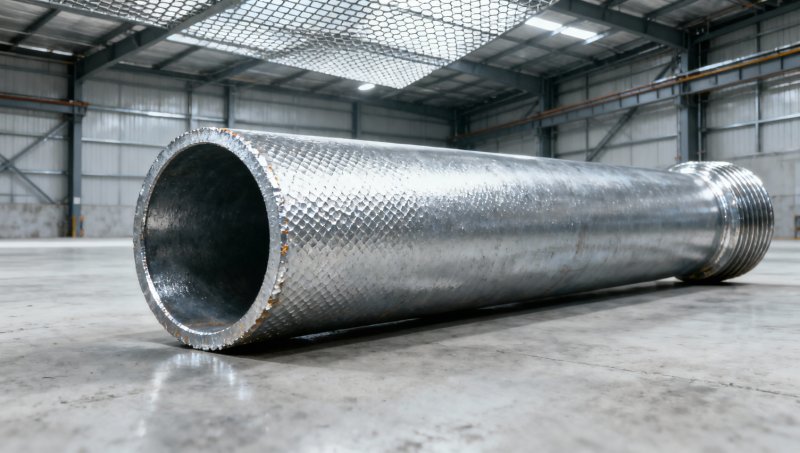
ASTM A123/A123M (for steel products) and ASTM A153/A153M (for castings and hardware) define minimum average zinc coating mass — typically expressed in ounces per square foot (oz/ft²) or grams per square meter (g/m²). But this number alone doesn’t predict service life. Real corrosion resistance depends on three interdependent factors: coating thickness distribution, substrate steel composition, and post-galvanizing handling practices.
For example, ASTM A123 Class C requires ≥ 1.4 oz/ft² (≥ 430 g/m²) on structural shapes — but that’s an *average*. Localized areas may dip to 85% of the average if they meet minimum thickness thresholds (e.g., ≥ 1.2 oz/ft²). That variance matters in high-stress zones like bolt holes, cut ends, or welded joints where micro-galvanic cells accelerate localized attack.
Hongteng Fengda applies rigorous process controls across its galvanizing line: pre-flux bath optimization, precise immersion time (typically 4–8 minutes), and controlled withdrawal speed to ensure uniform zinc-iron alloy layer formation. Every batch undergoes magnetic thickness testing at 5+ points per section — not just one reading — to validate compliance before shipment.
How Environmental Exposure Changes the Game — Matching Standards to Real Conditions
A pipe meeting ASTM A123 Class B (≥ 0.9 oz/ft²) may last 25+ years in rural inland environments (ISO 12944 C2), but less than 10 years in coastal industrial zones (C5-I). That’s why ASTM standards must be interpreted alongside ISO 12944 or NACE SP0169 exposure classifications — not in isolation.
Key environmental stressors include chloride deposition rates (>50 mg/m²/day triggers accelerated pitting), SO₂ concentration (>200 µg/m³ accelerates zinc carbonate layer breakdown), and cyclic wet-dry conditions that promote underfilm corrosion. In such cases, thicker coatings (Class C or D) combined with post-galvanizing sealants deliver measurable ROI — reducing inspection frequency from annually to every 3–5 years.
We support clients with site-specific corrosion modeling using ASTM G101-derived service life calculators — inputting local rainfall pH, salinity data, and wind-driven particulate load — to recommend optimal coating class, supplementary protection, and inspection intervals.
ASTM Galvanized Pipe Performance by Exposure Zone
This table reflects field data from 12 infrastructure projects across Southeast Asia and the Middle East — all supplied with Hongteng Fengda’s ASTM A123-compliant galvanized structural pipes between 2019–2023. Actual service life varied ±12% based on installation quality and drainage design — underscoring why specification must include joint protection protocols, not just base material standards.
Why Rebar Selection Matters for Integrated Infrastructure Systems
Galvanized pipe rarely functions in isolation. In pedestrian bridge foundations or utility pole anchor systems, it interfaces directly with concrete-reinforced elements. That’s where compatibility becomes critical: mismatched electrochemical potentials between galvanized steel and uncoated Rebar can accelerate galvanic corrosion at contact points — especially in chloride-laden concrete.
Our engineering team routinely recommends pairing ASTM A123 galvanized pipe with ASTM A615 Grade 60 or HRB400E Rebar — both offering balanced ductility (minimum elongation ≥ 14%) and controlled carbon content (0.06–0.22%). This reduces galvanic current density at interface zones while maintaining structural redundancy during seismic events.
For projects requiring full-system corrosion resilience, we offer bundled solutions: galvanized pipe + epoxy-coated rebar + chloride-inhibiting admixtures — validated through 500-hour salt-spray + 20-cycle wet-dry testing per ASTM B117 and ASTM C876.
Procurement Checklist: 5 Non-Negotiable Verification Steps Before Order Finalization
Many procurement teams assume “ASTM-compliant” equals “field-ready.” Reality shows otherwise. Here’s what Hongteng Fengda advises clients verify — before signing POs:
- Zinc coating mass verification report: Must show average + minimum values per ASTM A123 Table 1, with test method (magnetic induction or weighing) and sample locations clearly documented.
- Batch traceability: Each heat number must map to mill test reports covering tensile strength (≥ 360 MPa), yield point (≥ 240 MPa), and bend test results (180° around 2× diameter mandrel).
- Surface defect limits: ASTM A123 permits minor roughness, but rejects runs, bare spots > 0.5 cm², or zinc spatter interfering with welding or bolting.
- Dimensional tolerance confirmation: OD tolerance ±0.5 mm for pipes ≤ 168 mm; ±0.8 mm for larger diameters — verified via laser micrometer, not calipers.
- Third-party witness option: Available for final inspection at our Tianjin facility — including salt-spray validation (ASTM B117, 96 hours) and adhesion testing (ASTM D3359).
We maintain certified QA/QC staff trained to ISO 17025 standards — and provide digital inspection logs accessible via secure client portal within 24 hours of test completion.
Why Global Infrastructure Teams Choose Hongteng Fengda for ASTM-Galvanized Structural Steel
You need more than certification documents — you need confidence that ASTM-compliant pipe will perform as specified, on-site, under real-world loads and weather. That’s why infrastructure developers across North America and Europe rely on us for:
- End-to-end compliance assurance: From raw material sourcing (GB/T 700 Q235B, ASTM A656 Gr. 80) to galvanizing (ASTM A123), all steps are auditable and documented.
- Fixed lead times: Standard orders ship within 21–28 days after deposit — guaranteed, with penalty clauses for delay beyond 35 days.
- Custom solution support: We co-develop project-specific specs — e.g., enhanced zinc coating on pipe ends for buried sections, or pre-drilled galvanized channels for signage mounting.
- Risk-mitigated logistics: FCL container loading optimized for minimal transit damage; marine-grade packaging with VCI film for shipments exceeding 45 days sea transit.
Ready to align your next outdoor infrastructure project with technically robust, field-proven ASTM galvanized pipe? Contact our engineering sales team for a free specification review — including coating class recommendation, dimensional validation, and delivery timeline confirmation. We’ll respond within 4 business hours with actionable insights — no generic brochures, just project-specific guidance.
Related recommendations
 What is an H-Beam and How Does it Differ from an I-Beam?Discover what an H-beam is and how it differs from an I-beam. Learn key structural differences and expert selection tips from Hongteng Fengda to optimize your steel construction projects today.
 Hot Rolled vs. Cold Rolled Steel Sheet: Surface and ToleranceHot rolled vs cold rolled steel sheet: Discover how surface finish and tolerances impact manufacturing. Optimize material selection, reduce costs, and ensure quality. Read our expert guide today!
 Best Cutting and Bending Practices for Galvanized Sheet MetalDiscover the best cutting and bending practices for galvanized sheet to prevent zinc flaking. Optimize tooling and thermal parameters to ensure perfect corrosion resistance. Read the full guide!
 What is Galvanized Sheet and How Does the Zinc Coating Work?Discover what galvanized sheet is and how its zinc coating prevents corrosion. Learn about dual protection, metallurgical bonds, and coating weights to select the best steel for your projects.
Please give us a message


Please enter what you want to find