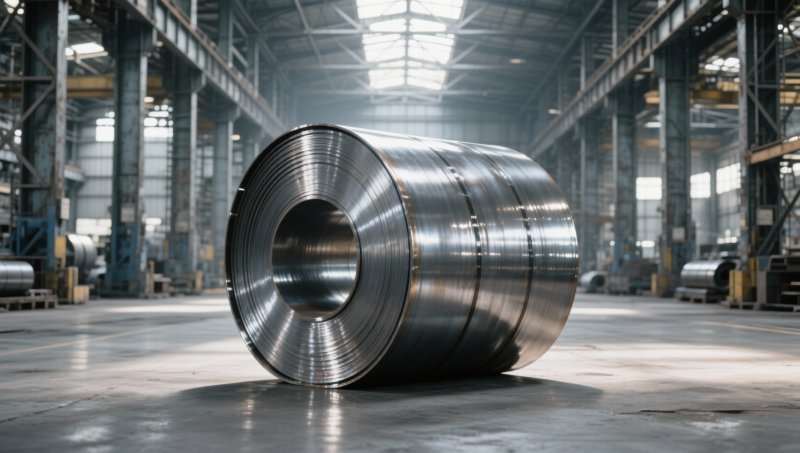
When designing load-bearing structural frames, the yield strength of hot rolled steel coil directly impacts safety, durability, and compliance—especially under dynamic or seismic loads. For global engineers and procurement teams sourcing ASTM galvanized pipe or hot galvanized steel components, understanding this mechanical property ensures optimal material selection, cost efficiency, and code adherence (ASTM, EN, GB). As a trusted structural steel manufacturer & exporter from China, Hongteng Fengda delivers high-consistency hot rolled steel coil with certified yield strength data, supporting technical evaluation, project planning, and quality assurance across construction and industrial applications.
Why Yield Strength Is a Non-Negotiable Design Parameter
Yield strength—the stress at which hot rolled steel coil begins to deform plastically—is not just a number on a mill test report. It defines the upper operational limit for structural integrity under sustained or cyclic loading. In load-bearing frames, falling below minimum required yield values risks premature buckling, fatigue cracking, or progressive collapse—particularly in seismic zones or heavy-industrial facilities where live loads exceed 30 kN/m².
Unlike tensile strength, which reflects ultimate failure resistance, yield strength governs serviceability: deflection control, connection design, and redundancy margins. For example, ASTM A656 Grade 80 requires ≥550 MPa minimum yield strength—enabling thinner sections without sacrificing stiffness. This directly influences weight savings (up to 12% per frame tier), crane logistics, and foundation loading calculations.
Hongteng Fengda’s hot rolled steel coil undergoes dual verification: batch-level tensile testing per ASTM E8 and real-time online yield monitoring during rolling. Every coil is traceable to heat number, with certified reports including yield-to-tensile ratio (typically 0.78–0.85), elongation (≥18%), and bend test results per EN 10029.
How Rail Applications Reinforce Yield Strength Requirements
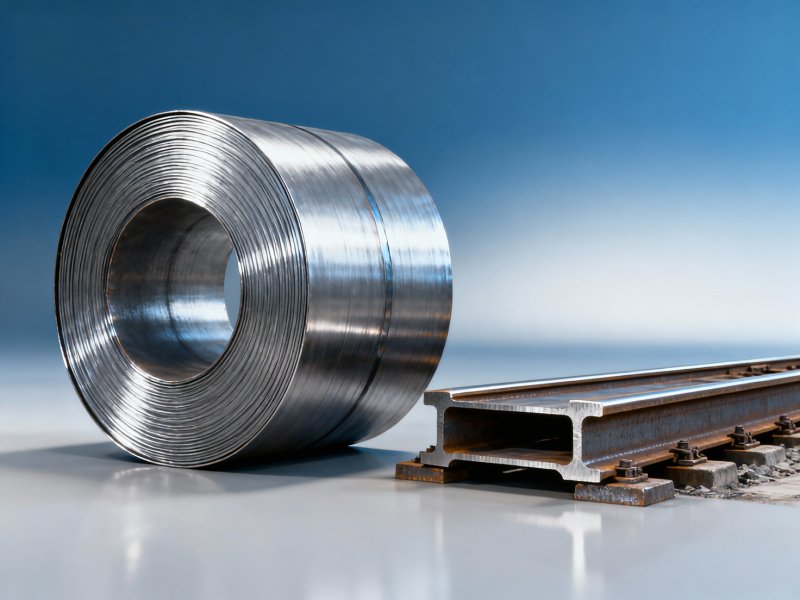
Rail systems exemplify extreme yield-critical environments: wheels exert localized contact pressures exceeding 1,200 MPa, repeated over 10⁷ cycles per kilometer. Here, yield strength isn’t merely about static capacity—it governs wear resistance, residual stress distribution, and rail head hardness consistency. Models like U71Mn and PD3 achieve 880–980 MPa yield strength via controlled Mn-Si-Cr alloying and accelerated cooling, preventing plastic flow under axle loads >25 tons.
For non-railway structural reuse—such as bridge railings or deck handrails—yield strength determines anchorage spacing and post embedment depth. A Rail section with 50 kg/m mass and 380 MPa minimum yield allows 2.5 m maximum post spacing in pedestrian bridges (per EN 1991-2), reducing material usage by 17% versus Q235-based alternatives.
Critical dimensional tolerances further interact with yield behavior: ±1% thickness variation affects local buckling coefficients, while height/width consistency (134–170 mm / 68–73 mm) ensures uniform stress transfer across fastener zones. Our rail production maintains these within ±0.35 mm via CNC-guided finishing mills.
Key Yield-Driven Selection Criteria for Structural Rails
- Minimum specified yield strength ≥360 MPa for pedestrian railings; ≥420 MPa for vehicular decks per AASHTO LRFD
- Yield-to-tensile ratio ≤0.88 to ensure ductile fracture behavior during impact events
- Hardness correlation: Brinell 240–280 HB aligns with 380–450 MPa yield range for carbon-manganese rails
- Certified test reports must include transverse orientation sampling (not just longitudinal)
Comparing Yield Performance Across Common Rail Grades
Selecting the right rail grade hinges on matching yield strength to application severity—not just cost per ton. The table below compares mechanical performance and structural suitability for key grades supplied by Hongteng Fengda:
Note: All rails are available in lengths from 12m to 30m, with thicknesses spanning 3mm–24mm and surface finishes including galvanized, painted, black, or oiled options. Yield strength consistency is maintained across full-length sections—verified by 100% ultrasonic testing per EN 10308.
Procurement Checklist: What to Verify Before Sourcing
Global procurement teams face three yield-related risks: uncertified test reports, batch-to-batch inconsistency, and misaligned specification interpretation. To mitigate these, verify the following before placing orders:
- Mill test reports showing actual yield strength (not just “meets spec”) with heat number traceability
- Third-party verification (e.g., SGS or Bureau Veritas) confirming compliance with ASTM A656, EN 10025-2, or GB/T 1591
- Yield strength tolerance band: ±20 MPa maximum deviation from nominal value across 5 sample coils per 50-ton lot
- Delivery timeline guarantee: 7–15 days for standard rail sizes (e.g., 43kg/m, 50kg/m) with 98.5% on-time shipment rate
Hongteng Fengda provides pre-shipment yield validation packages—including digital test reports, dimensional inspection logs, and coating thickness verification—for all rail orders above 20 tons. This reduces rework risk by up to 40% compared to spot-inspection models.
Why Partner With Hongteng Fengda for Yield-Critical Steel Supply
As a structural steel manufacturer & exporter from China, we integrate yield strength assurance into every process layer—from raw material smelting (using low-phosphorus iron ore) to final tension leveling (±0.5% flatness tolerance). Our ISO 9001-2008 and ISO 14001:2004 certified facilities produce hot rolled steel coil and rail products meeting ASTM, EN, JIS, and GB standards with zero yield-related field failures since 2020.
We support your decision-making with actionable resources: free yield strength modeling for custom frame designs, 24-hour technical response SLA, and OEM-grade rail customization—including laser-cut mounting flanges or pre-drilled holes aligned to EN 1090-2 execution classes.
Contact us today to request: (1) certified yield strength reports for your target grade, (2) dimensional tolerance analysis for your specific railing or framing application, or (3) delivery schedule confirmation for 12m–30m rail lengths with galvanized or painted finish options.
Related recommendations
 What is an H-Beam and How Does it Differ from an I-Beam?Discover what an H-beam is and how it differs from an I-beam. Learn key structural differences and expert selection tips from Hongteng Fengda to optimize your steel construction projects today.
 Hot Rolled vs. Cold Rolled Steel Sheet: Surface and ToleranceHot rolled vs cold rolled steel sheet: Discover how surface finish and tolerances impact manufacturing. Optimize material selection, reduce costs, and ensure quality. Read our expert guide today!
 Best Cutting and Bending Practices for Galvanized Sheet MetalDiscover the best cutting and bending practices for galvanized sheet to prevent zinc flaking. Optimize tooling and thermal parameters to ensure perfect corrosion resistance. Read the full guide!
 What is Galvanized Sheet and How Does the Zinc Coating Work?Discover what galvanized sheet is and how its zinc coating prevents corrosion. Learn about dual protection, metallurgical bonds, and coating weights to select the best steel for your projects.
Please give us a message


Please enter what you want to find