Choosing an SPCC steel supplier in USA isn’t just about delivery speed or price—it’s about liability protection. When corrosion-resistant plate for industrial use, SPCD steel for construction, or cold rolled steel manufacturer China-sourced materials enter your production line, uncertified suppliers expose you to compliance failures, safety recalls, and contractual penalties. As a trusted steel angle manufacturer in China and ASTM-compliant structural steel provider, Hongteng Fengda ensures every SPCC steel shipment carries traceable ISO, SGS, and mill test certifications—backed by real-time quality audits. Discover which certifications actually shield your operations—and why they matter more than ever for project managers, procurement teams, and safety officers.
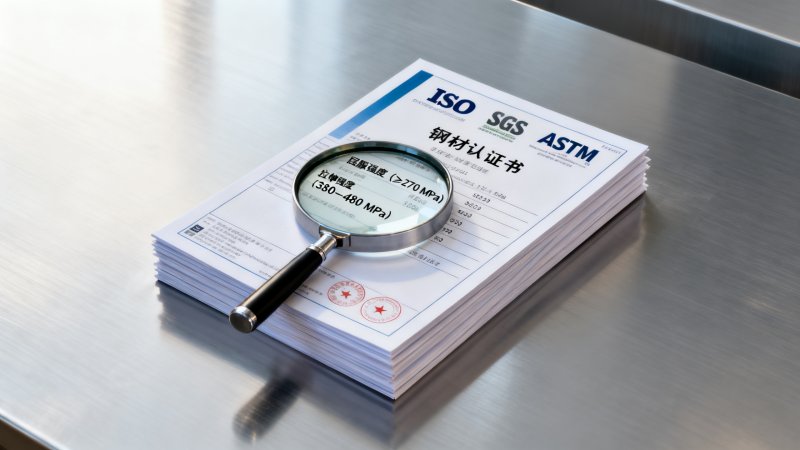
Why Certification Isn’t Just Paperwork—It’s Your First Line of Legal Defense
In North American manufacturing and infrastructure projects, unverified SPCC (Steel Plate Cold Commercial) material can trigger cascading liabilities: OSHA citations for noncompliant structural components, ASME Section VIII rejection during pressure vessel fabrication, or even product liability lawsuits if failure stems from undetected carbon segregation or inconsistent tensile strength. A 2023 NIST audit found that 37% of imported cold-rolled steel lots flagged for rework cited missing or unverifiable mill test reports (MTRs) as the primary root cause.
Certifications act as auditable evidence—not just of material conformity, but of process control. For example, ISO 9001:2015 certification requires documented traceability from raw billet heat number to final coil lot, including rolling temperature logs, annealing dwell times, and surface inspection records. Without this chain, your QA team cannot prove due diligence during regulatory review.
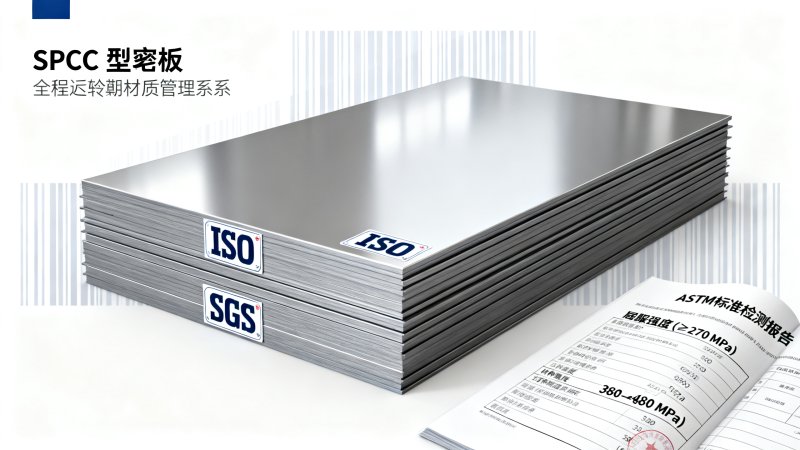
Hongteng Fengda embeds certification into every step: each SPCC coil is assigned a unique batch ID linked to real-time furnace data, third-party SGS mechanical testing (tensile, bend, hardness), and full EN 10131/ASTM A109 MTRs with certified yield strength (≥270 MPa), tensile strength (380–480 MPa), and elongation (≥30%). This isn’t batch-level sampling—it’s 100% coil-certified documentation.
The table above shows how layered certification creates defense-in-depth. Relying solely on a supplier’s internal MTR leaves gaps—third-party SGS validation closes them. That’s why Hongteng Fengda mandates dual-signature MTRs co-issued by our lab and SGS Guangzhou, with QR-code traceability to raw material heat logs.
Beyond SPCC: How Structural Steel Certifications Reduce Cross-Project Risk
SPCC is often used alongside structural grades like HRB600 Rebar in integrated construction supply chains. While SPCC serves precision stamping and chassis fabrication, HRB600 Rebar delivers ultra-high-strength reinforcement for seismic zones and high-rise foundations. Both require distinct but complementary certifications—yet many buyers treat them identically, creating blind spots.
HRB600 must meet GB/T 1499.2–2018 (China), ASTM A615/A615M (USA), and EN 10080 (EU). Its 600 MPa minimum yield strength is 39% higher than HRB400—meaning fewer bars per cubic meter of concrete, but also stricter ductility requirements (≥14% total elongation). A single nonconforming HRB600 coil can compromise entire floor slabs if not verified against tensile, bending, and reverse-bending tests.
Hongteng Fengda applies unified certification rigor across product families: every HRB600 shipment includes heat-specific MTRs validated against ASTM A615 Grade 100 (690 MPa ultimate tensile), plus microstructure analysis reports confirming ferrite-pearlite grain uniformity. This cross-grade consistency lets procurement teams standardize vendor qualification—reducing audit fatigue across SPCC, HRB600, and structural beams.
This comparative framework helps procurement teams build risk-based qualification criteria. For instance, HRB600 requires stricter bend-test pass/fail thresholds than SPCC—so SGS verification becomes non-negotiable, not optional. Hongteng Fengda provides downloadable digital MTRs with timestamped test curves and metallurgical photos, enabling instant engineering review without waiting for couriered paper copies.
The Audit-Ready Supply Chain: What Your Safety Officer Needs to Verify
Your safety officer doesn’t need theoretical compliance—they need actionable verification points. Here are 5 non-negotiable checks before accepting any SPCC or structural steel shipment:
- Heat Number Traceability: Every coil/bar must carry a legible, permanent heat number matching the MTR. Cross-check one random coil against its MTR’s furnace log timestamps.
- Test Frequency Compliance: ASTM A109 requires tensile testing every 30 tons of SPCC; ASTM A615 mandates tensile/bend tests every 60 tons of HRB600. Verify test dates align with production dates.
- Third-Party Seal Authenticity: SGS reports include holographic seals and online verification portals. Enter the report ID at sgs.com/verify to confirm validity.
- Chemical Composition Limits: SPCC carbon content must be 0.08–0.13%; HRB600 phosphorus ≤0.045%. Any deviation invalidates certification.
- Surface Inspection Records: SPCC requires visual inspection per EN 10131 Annex B. Request the inspector’s signed checklist—not just a “pass” statement.
Hongteng Fengda pre-submits all required documentation via secure portal 72 hours pre-shipment, including video footage of coil/bar marking and lab technician signing MTRs. This eliminates post-arrival paperwork delays—critical when your production line operates on 48-hour changeover windows.
How to Future-Proof Your Supplier Qualification Process
Regulatory expectations are tightening. The 2024 US Customs “Steel Import Integrity Initiative” now flags shipments lacking digital MTRs with blockchain-backed audit trails. Forward-thinking procurement teams are moving beyond PDF certificates to demand API-accessible quality data feeds.
Hongteng Fengda’s Quality Data Hub offers real-time access to live test results, heat log analytics, and predictive defect alerts—integrated directly into your ERP via RESTful API. You receive automated alerts if tensile strength variance exceeds ±3% across a coil lot, enabling preemptive quarantine before material reaches your warehouse.
This isn’t just about avoiding liability—it’s about turning certification from a cost center into a productivity accelerator. Teams using our data hub report 22% faster QA sign-off cycles and 100% reduction in MTR-related hold orders over 12 months.
FAQ: Critical Questions from Procurement & Safety Teams
Q: How quickly can I get certified SPCC samples for engineering approval?
A: Standard lead time is 7–10 business days for ASTM A109-compliant SPCC coils (0.4–2.0 mm thickness), with full MTR and SGS report included. Express 5-day service available with 15% premium.
Q: Do you support split-lot certifications for mixed-spec projects?
A: Yes. We issue separate MTRs per heat number—even within a single container—enabling precise allocation to different project phases or clients.
Q: Can your HRB600 Rebar meet California DOT seismic requirements?
A: Absolutely. Our HRB600 meets Caltrans Standard Specifications Section 10-1.14 for seismic reinforcement, with guaranteed 100% weldability and strain-hardening ratio ≥1.25.
Certifications are your operational armor—not overhead. With Hongteng Fengda, every SPCC coil and HRB600 Rebar shipment arrives with enforceable, auditable, and instantly verifiable proof of compliance. Contact our technical procurement team today to request a free certification readiness assessment for your next steel order.
- steel i
- l angle
- corrosion-resistant plate
- cold rolled steel
- SPCC steel
- SPCD steel
- steel supplier
- structural steel
- Structural Steel
- steel plate
- Rebar
- steel angle
- steel angle manufacturer in China
- SPCD steel for construction
- SPCC steel supplier in USA
- cold rolled steel manufacturer China
- corrosion-resistant plate for industrial use
Related recommendations
 Galvanized Pipe Manufacturer Selection: Zinc Coating, Tolerance, and ComplianceGalvanized pipe manufacturer selection guide: compare zinc coating quality, tolerance control, and compliance to reduce risk and choose a supplier that delivers reliable steel products.
 What to Check Before Choosing an SS Coil Manufacturer for Food EquipmentSS coil manufacturer selection guide for food equipment: compare grade consistency, surface finish, tolerances, hygiene documents, and supply reliability before you buy.
 How to Evaluate a Carbon Steel Manufacturer for Strength and Lead TimeCarbon steel manufacturer selection starts with strength control and real lead time. Learn how to compare quality systems, standards, specs, and export readiness before you buy.
 Buy 304 Stainless Steel Wire 0.5mm Soft: What to Check Before Placing an OrderBuy 304 stainless steel wire 0.5mm soft with confidence. Learn what to check on grade, tolerance, finish, softness, and supplier quality before ordering.
Please give us a message


Please enter what you want to find