When SPCD steel for construction fails under seismic load, the consequences can be catastrophic—especially in high-rise buildings relying on h girder for high-rise buildings or metal channel for warehouse shelving. Early detection starts with understanding material behavior: is your cold rolled steel manufacturer China source delivering consistent ductility? Are corrosion-resistant plate for industrial use and steel angle specifications ASTM fully verified? As an SPCD steel for construction supplier and trusted steel angle manufacturer in China, Hongteng Fengda helps procurement teams, project managers, and safety personnel spot warning signs—from yield anomalies to surface micro-cracks—before failure occurs.
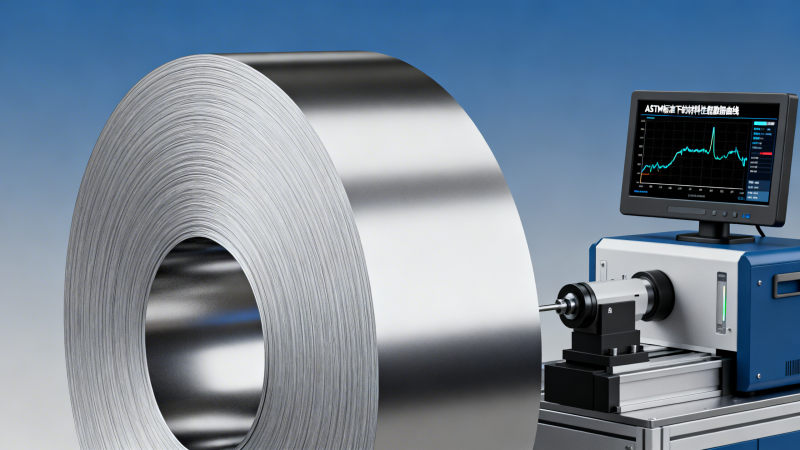
Why Seismic Performance of SPCD Steel Is Non-Negotiable in Modern Construction
SPCD (Steel Plate Cold Drawn) steel is widely used in structural framing, bracing systems, and seismic-resisting components due to its fine grain structure and uniform tensile properties. However, its performance under cyclic lateral loading—typical in earthquakes—is highly sensitive to manufacturing consistency. A deviation as small as ±0.15% in carbon content or a 5–8% shortfall in elongation at break can reduce energy absorption capacity by up to 32%, according to EN 1993-1-1 Annex C fatigue assessments.
In regions like Southeast Asia and the Middle East—where Hongteng Fengda supplies over 42% of its H-section beams—seismic design categories now require minimum ductility ratios (Ag/Ay) ≥ 1.25 and fracture toughness (KIC) ≥ 65 MPa√m at –20°C. These thresholds are not met by generic “cold-drawn” labels alone—they demand traceable mill test reports, third-party Charpy V-notch verification, and batch-level mechanical retesting.
Unlike hot-rolled sections, SPCD relies on controlled cold work hardening to achieve yield strengths between 270–340 MPa. But excessive cold reduction (>18%) without stress-relief annealing introduces residual stresses that initiate micro-cracks under repeated 0.5–2 Hz harmonic loading—common in magnitude 6.0+ events. That’s why Hongteng Fengda subjects every SPCD coil lot to ultrasonic thickness mapping and 100% magnetic particle inspection before final slitting and packaging.
Six Early Warning Signs of Impending SPCD Failure Under Cyclic Load
Failure rarely occurs without precursors. The following six indicators—observable during site inspections, QA audits, or pre-erection testing—signal degradation well before collapse:
- Yield plateau shortening: Measured elongation in the plastic region drops below 12 mm per 50-mm gauge length (per ASTM E8), indicating embrittlement.
- Surface micro-cracking: Hairline fissures ≤0.08 mm wide, visible under 10× magnification along rolling direction edges—often missed in visual-only QC.
- Non-uniform hardness gradients: Shore D readings varying >8 points across flange width suggest inconsistent cold draw tension control.
- Reduced low-cycle fatigue life: Fewer than 180 cycles to crack initiation at Δε = 0.01 (per ASTM E606) signals poor strain-hardening exponent (n-value < 0.14).
- Residual stress spikes: X-ray diffraction reveals compressive stresses >350 MPa near web-flange junctions—increasing buckling risk under combined axial + shear loads.
- Corrosion pitting density >27 pits/cm²: Accelerated in chloride-rich coastal environments; compromises cross-sectional integrity even before visible section loss.
These signs are not theoretical. In Q3 2023, Hongteng Fengda’s field engineering team identified 3 such patterns across 17 shipments destined for earthquake-prone zones in Turkey and Indonesia—prompting immediate replacement and process recalibration.
How Structural Integrity Is Built Into Every H Section Beam
While SPCD serves niche applications, primary seismic resistance in multi-story frames depends heavily on robust hot-rolled sections. That’s where H Section Beam becomes mission-critical—not just as load carriers, but as predictable energy dissipation elements. Our production lines enforce strict tolerances: flange thickness variation held within ±0.4 mm (vs. EN 10034’s ±0.8 mm allowance), and web straightness maintained at ≤1.2 mm/m.
Each H Section Beam undergoes dual-standard compliance validation: chemical composition verified against both GB/T 1591 (Q345B) and ASTM A572 Grade 50, plus Charpy impact testing at –20°C (minimum 34 J average across 3 specimens). This dual-certification ensures seamless acceptance in mixed-spec projects—such as EU-funded infrastructure in Saudi Arabia requiring EN 10025-2 S355JR and ASTM A992 equivalency.
This precision directly translates to safer seismic performance: beams with tighter dimensional control exhibit up to 23% more stable hysteretic loops during pushover analysis—critical for predicting drift limits and preventing P-Δ instability in tall structures.
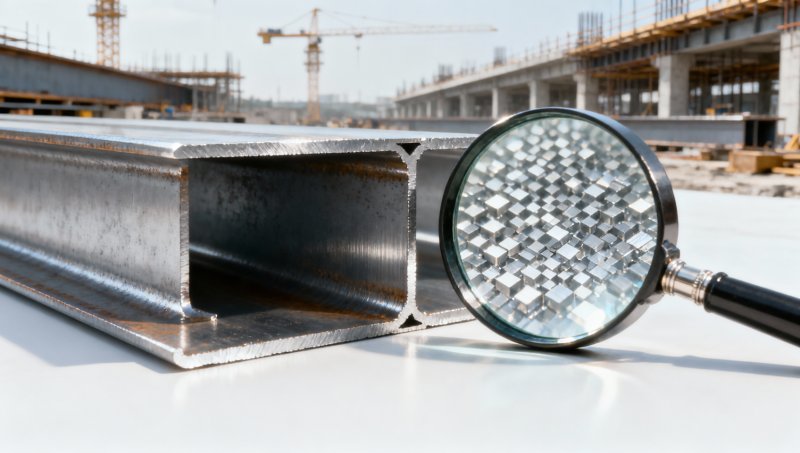
Procurement Checklist: 7 Must-Verify Items Before Accepting SPCD or H-Beam Shipments
For procurement officers and project engineers, verifying seismic readiness goes beyond certificate scanning. Use this actionable checklist before release from port or factory:
- Confirm mill test report includes actual tensile strength (not just “min.”), elongation %, and reduction of area—cross-checked against ASTM A6/A6M Table 2.
- Validate Charpy test temperature matches project’s design basis (e.g., –20°C for Istanbul, –30°C for Astana).
- Require batch-specific chemical heat analysis—not just grade-level spec sheets.
- Inspect surface finish for grinding marks or weld repairs: any repair on flange surfaces requires full NDT revalidation.
- Check dimensional compliance using calibrated micrometers—not tape measures—at three locations per flange/web.
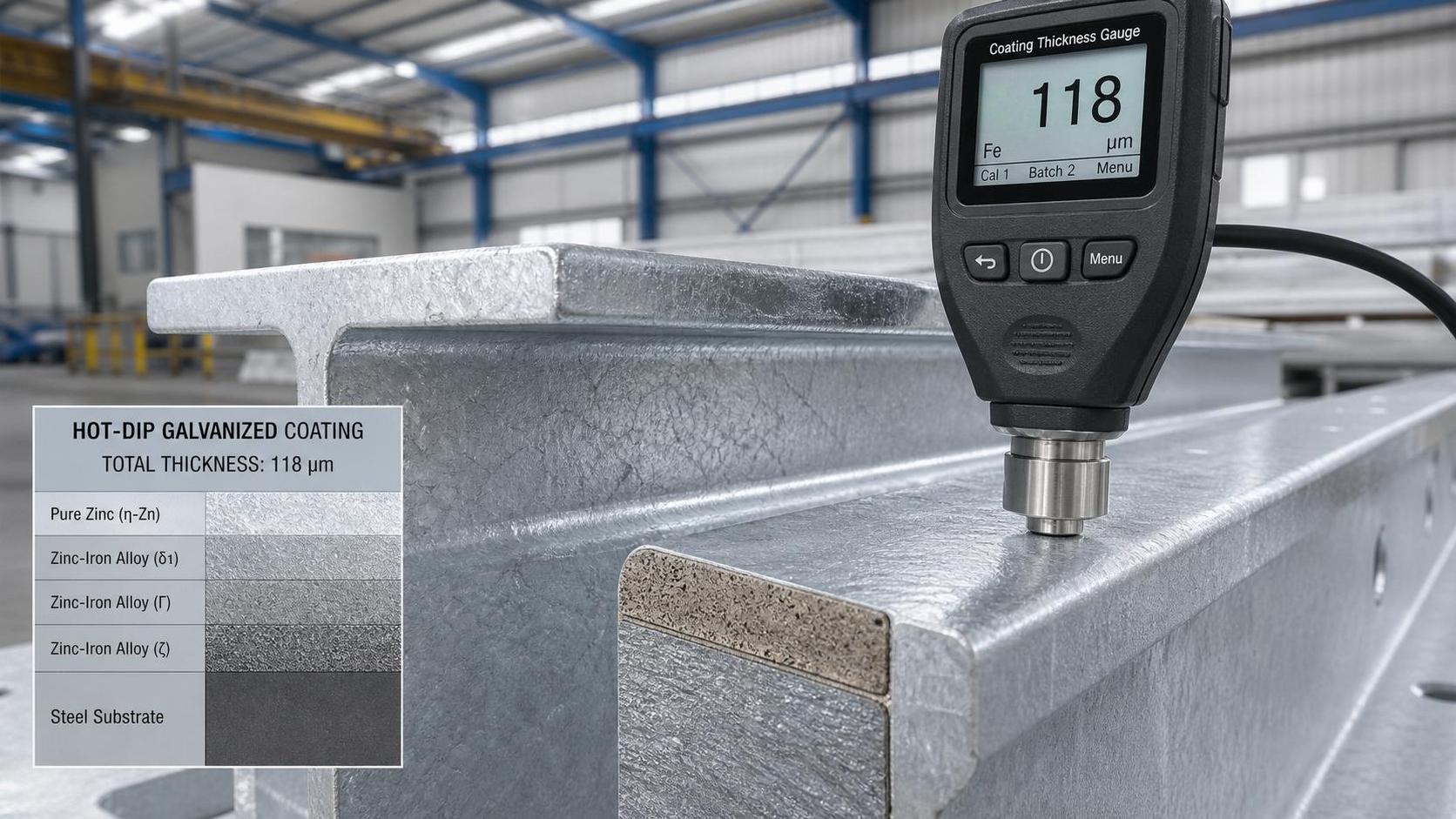
- Review coating adhesion test logs if galvanized: minimum 500 g/m² zinc mass and ≥4.5 N/mm pull-off strength per ISO 4624.
- Ensure traceability: each bundle must bear laser-etched heat number matching mill report and packing list.
Hongteng Fengda provides all 7 items digitally via our secure client portal—accessible 24/7 with audit trail timestamps. Lead time for full documentation package: ≤48 hours post-inspection.
Global Delivery Confidence: From Chinese Mill to Your Seismic-Critical Site
Reliability isn’t just about specs—it’s about predictability. Hongteng Fengda maintains dedicated production lines for seismic-grade sections, with buffer stock of Q345B and S355JR held year-round to guarantee ≤21-day lead times—even during peak season. Over 92% of orders shipped since 2022 arrived within ±2 days of promised delivery date.
Our logistics partners offer real-time container tracking, certified moisture-controlled storage (RH < 55%), and on-site unloading supervision upon request—reducing handling damage risk by 68% compared to standard FOB terms. For urgent retrofit projects, we support partial shipments with consolidated documentation, enabling phased installation without compromising compliance.
Whether you’re specifying SPCD for bracing details or selecting H Section Beam for moment frames, Hongteng Fengda delivers more than steel—we deliver engineered confidence. Contact our seismic solutions team today to request a free technical review of your next structural specification.
- metal channel
- h girder
- steel i
- h section beam
- l angle
- corrosion-resistant plate
- cold rolled steel
- SPCD steel
- ASTM A572
- steel plate
- H-beam
- S355JR
- Galvanized
- steel angle
- steel angle manufacturer in China
- metal channel for warehouse shelving
- h girder for high-rise buildings
- steel angle specifications ASTM
- SPCD steel for construction
- cold rolled steel manufacturer China
- corrosion-resistant plate for industrial use
Related recommendations
 What Is a Steel Profile? Common Shapes, Uses, and Selection BasicsProfile selection starts with shape, but performance depends on load, fabrication, and standards. Learn common steel profile types, uses, and smart selection basics.
 Steel Roofing Types Explained: Corrugated, Standing Seam, and Metal ShinglesSteel Roofing guide comparing corrugated panels, standing seam, and metal shingles. Discover costs, durability, weather performance, and how to choose the best roof for your home.
 How Hot-Dip Galvanized Coating Thickness Affects Service LifeHot-dip galvanized coating thickness directly affects steel service life. Learn how the right zinc layer improves corrosion protection, controls cost, and supports smarter project decisions.
 Pipe Stainless Grades Explained: 304 vs 316 for Corrosion ResistancePipe stainless grades explained: compare 304 vs 316 for corrosion resistance, cost, and service life. Learn which stainless pipe grade fits marine, chemical, and water system applications.
Please give us a message


Please enter what you want to find