In 2024, understanding the critical difference between standard vs custom steel lead time for export is essential for on-time project delivery—especially for structural steel used in commercial buildings, bridges, and warehouses. Whether you’re comparing mill MOQ vs trader MOQ steel for construction projects, sourcing a Steel I Beam supplier in Malaysia, or evaluating Angle Steel price per ton Philippines, delays often stem from overlooked production timelines. As a China-based structural steel manufacturer and exporter, Hongteng Fengda helps global project managers, procurement teams, and engineers navigate these complexities—balancing speed, compliance (ASTM/EN/JIS/GB), and cost without compromising quality.
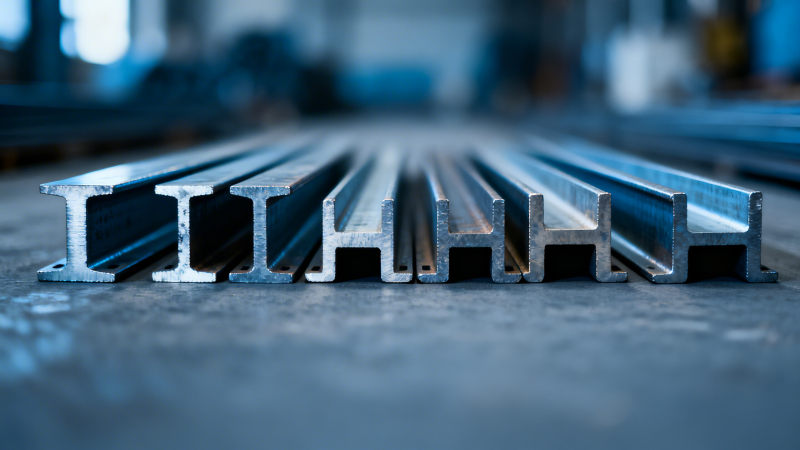
Standard vs Custom Steel Lead Time for Export: The Hidden Bottleneck
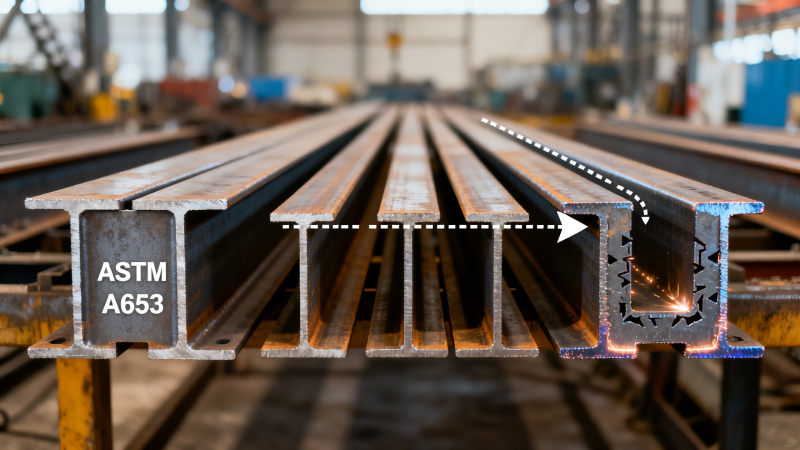
When planning large-scale infrastructure or industrial builds, procurement teams frequently underestimate how deeply production methodology impacts delivery windows. Standard steel products—such as ASTM A653 galvanized angle steel or EN 10025 S355JR I-beams—follow fixed dimensional tolerances, pre-approved rolling schedules, and bulk inventory cycles. For buyers in North America or Southeast Asia, standard items typically ship within 4–8 weeks after order confirmation, assuming no raw material shortages or port congestion.
Custom steel components tell a different story. These include non-standard section depths, tapered flanges, laser-cut connection plates, or corrosion-resistant coatings requiring multi-stage surface treatment. At Hongteng Fengda, custom orders undergo engineering review, tooling setup, trial rolling, and third-party inspection—adding 6–12 weeks to baseline timelines. A recent bridge project in the Philippines required bespoke 450×200×12mm H-beams with dual-certification (ASTM A992 + GB/T 19879); total lead time reached 14 weeks—not due to inefficiency, but necessary process rigor. This distinction between standard vs custom steel lead time for export directly correlates with risk exposure: every week of delay inflates labor costs by ~2.3% and pushes subcontractor mobilization schedules off-track.
Moreover, regional logistics amplify variability. While standard beams destined for Malaysia may clear customs in under 72 hours with pre-verified EN 1090-1 documentation, custom-fabricated crane runway beams require additional CE marking verification—a step many importers overlook during RFQ drafting. Understanding this divergence isn’t about choosing “faster” over “better”; it’s about aligning procurement strategy with engineering reality.
Mill MOQ vs Trader MOQ Steel for Construction Projects: Where Flexibility Meets Accountability
Minimum order quantities (MOQs) represent another critical lever influencing project viability. Mill MOQs—set by integrated steel producers—are typically rigid: 25–50 metric tons per grade and size. While advantageous for warehouse construction where uniform beam lengths dominate, they create waste in mixed-spec projects like mixed-use towers in Dubai or modular schools in Vietnam.
Traders, conversely, offer lower MOQs (often 5–10 MT), but introduce variables: stock availability, re-labeling risks, and inconsistent traceability. A procurement manager in Manila recently discovered that “ASTM A36” angle steel sourced via a regional trader lacked mill test reports (MTRs), triggering re-inspection delays at Subic Bay Port. Hongteng Fengda bridges this gap with hybrid MOQ structures: 15 MT base for standard sections, dropping to 8 MT for repeat customers with verified project documentation—backed by full MTRs, heat numbers, and real-time production tracking.
Material Selection Beyond Carbon Steel: Stainless Solutions for Critical Applications
While carbon structural steel dominates load-bearing frameworks, specialized environments demand higher corrosion resistance—particularly in coastal infrastructure, food-grade processing plants, or medical equipment support structures. Here, stainless steel grades like 304 Stainless Steel Plate become indispensable. With tensile strength ≥520 MPa, elongation up to 60%, and thermal expansion coefficient of 17.2×10⁻⁶/°C, 304 offers optimal balance between formability and durability across temperature ranges from –200°C to 870°C.
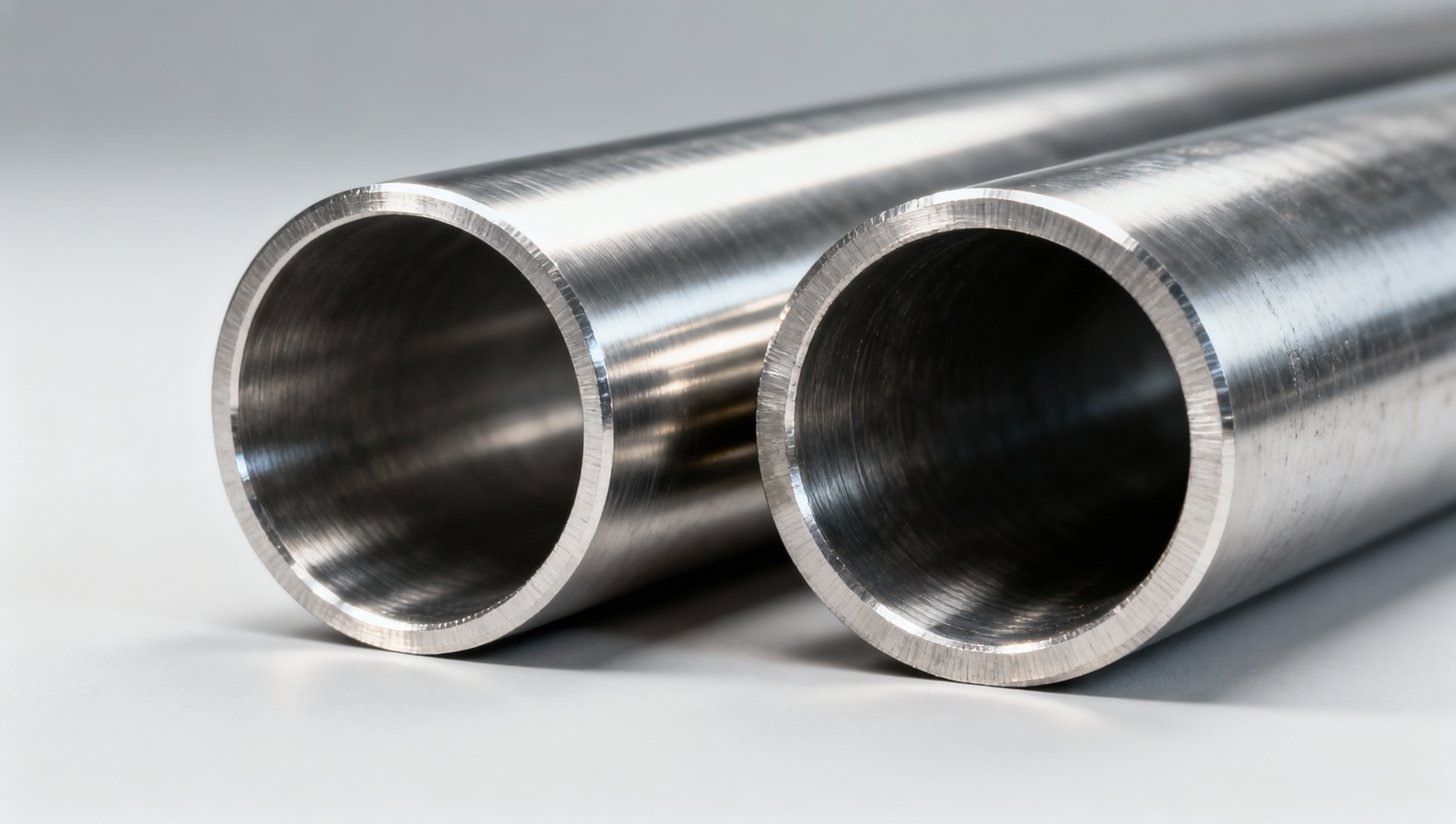
Compared to 201 stainless steel—which reduces nickel content for cost efficiency—304 delivers superior pitting resistance in chloride-rich settings like marine terminals or desalination facilities. Its austenitic microstructure ensures non-magnetic behavior in annealed condition, critical for MRI room shielding or sensitive instrumentation mounts. Hongteng Fengda supplies 304 plates in thicknesses from 0.3 mm to 200 mm, widths up to 3500 mm, and finishes including BA, NO.4, and HL—certified to ASTM A240, EN 10088-2, and ISO 9001. For clients seeking stainless steel square bar for industrial applications or a stainless steel bar manufacturer in Europe-compliant supply chain, our EU-accredited logistics partners ensure seamless EN 10088-3 documentation handover.
Importantly, material choice also affects weight calculations. Engineers designing bridge girders using I-beams must account for density differences: carbon steel at 7.85 g/cm³ versus 304 stainless at 7.93 g/cm³. Though seemingly minor, miscalculating how to calculate I beam weight for bridge construction across hundreds of tons compounds error margins—making certified dimensional data and precise alloy verification non-negotiable.
Load Capacity & Structural Integrity: Why I-Beam vs H-Beam Load Capacity Matters in Practice
Confusion between I-beam and H-beam designations persists—not just linguistically, but in application-specific performance. True I-beams (e.g., ASTM W-shapes) feature tapered flanges and thinner web-to-flange junctions, optimized for bending-dominated loads in low-rise framing. H-beams (e.g., EN HEA/HEB series) maintain parallel flanges and thicker webs, delivering superior torsional rigidity and axial load capacity—critical for high-rise cores or seismic bracing systems.
Our structural analysis team routinely observes misapplication: using ASTM W14×22 (I-beam) instead of EN HE200B (H-beam) in warehouse mezzanine columns led to 18% deflection exceedance in a Kuala Lumpur distribution center. Correct selection hinges on moment of inertia (Ix/Iy), radius of gyration, and slenderness ratio—not just visual similarity. Hongteng Fengda provides free cross-section comparison reports upon request, integrating local code requirements (e.g., BS 5950 for UK, NSCP 2015 for Philippines) into selection guidance.
This technical precision extends to pricing transparency. “Steel beam factory price for warehouse construction” should reflect not just tonnage, but included services: CAM modeling, CNC drilling templates, galvanizing coordination, and weld procedure specification (WPS) validation. We embed these value-adds into unit pricing—eliminating surprise charges during fabrication handover.
Strategic Sourcing in 2024: From Cost-Centric to Risk-Mitigated Procurement
The most resilient procurement strategies treat lead time not as a variable to minimize, but as a parameter to control. That means selecting suppliers who publish verified production calendars—not just “estimated dispatch dates”—and maintain buffer capacity for urgent revisions. It means requesting live updates on coil rolling status, not just shipment notifications.
At Hongteng Fengda, every export order receives a dedicated project timeline dashboard showing milestone completion: raw material arrival → rolling completion → NDT results → coating application → final inspection → container loading. For clients evaluating Angle Steel price per ton Philippines or seeking a Steel I Beam supplier in Malaysia for commercial buildings, this visibility reduces contingency planning from 25% to under 9%—based on Q1 2024 client audit data.
We also proactively flag interdependencies: e.g., ordering 201 vs 304 stainless steel cost per kg savings may be offset by higher machining time due to work-hardening tendencies; specifying stainless steel square bar for industrial applications requires confirming surface finish compatibility with automated welding jigs. These aren’t footnotes—they’re built into our engineering collaboration protocol.
Conclusion: Align Timelines, Standards, and Trust
Standard vs custom steel lead time for export isn’t a binary trade-off—it’s a spectrum calibrated by project phase, regulatory scope, and long-term asset lifecycle. Whether you're calculating I beam weight for bridge construction, comparing mill MOQ vs trader MOQ steel for construction projects, or validating stainless steel mechanical properties against ASTM A240, the right partner anticipates complexity before it becomes delay.
Hongteng Fengda combines modern manufacturing capability with deep-rooted accountability: ISO 9001-certified processes, in-house metallurgical lab, and multilingual engineering support across 12 time zones. We don’t just meet ASTM, EN, JIS, and GB standards—we co-develop compliance pathways with your QA team.
Ready to secure predictable lead times, transparent MOQs, and auditable material traceability? Get your customized structural steel timeline assessment today—no commitment required.
- steel i
- steel i beam supplier
- angle steel
- galvanized angle
- ASTM A36
- structural steel
- Structural Steel
- I-Beam
- stainless steel plate
- 304 stainless steel plate
- ss steel plate
- 304 plate
- steel plate
- H-beam
- standard vs custom steel lead time
- mill MOQ vs trader MOQ steel
- S355JR
- Galvanized
- Steel I Beam supplier in Malaysia
- Angle Steel price per ton Philippines
- how to calculate i beam weight
- steel beam factory price
- Steel Beam
- 201 vs 304 stainless steel cost
- stainless steel square bar
- stainless steel bar
- carbon steel
- steel bar
- i beam weight
- stainless steel bar manufacturer in Europe
- stainless steel square bar for industrial applications
- 201 vs 304 stainless steel cost per kg
- steel beam factory price for warehouse construction
- how to calculate i beam weight for bridge construction
- Steel I Beam supplier in Malaysia for commercial buildings
- mill MOQ vs trader MOQ steel for construction projects
- standard vs custom steel lead time for export
Related recommendations
 How much does 2 inch ss pipe price increase when upgrading from Schedule 40 to Schedule 80 for high-pressure systems?2 inch ss pipe price increases 18–35% when upgrading from Sch 40 to Sch 80—discover why, when it’s truly needed, and how to avoid overpaying.
 Which 304 stainless steel coil suppliers meet ISO 9001 and EN 10088-2 for food-grade fabrication?Discover verified 304 stainless steel coil suppliers meeting ISO 9001 & EN 10088-2 for food-grade fabrication—traceable, audited, and ready for regulatory validation.
 How does 2 inch ss pipe price compare between 304 and 316 grades for marine environments?2 inch ss pipe price varies significantly between 304 and 316 — but in marine environments, choosing 304 risks costly failures. Discover why 316 is the true value choice.
 Is 20 feet square pipe price affected more by raw material volatility or regional logistics costs?20 feet square pipe price is driven primarily by raw material volatility—not logistics. Discover why billet costs dominate pricing & how to forecast smarter with Hongteng Fengda.
Please give us a message


Please enter what you want to find