Choosing between I beams and H beams for residential construction hinges on load capacity, cost efficiency, and installation ease—key concerns for project managers, procurement teams, and structural designers. As a trusted Steel I Beam supplier in Malaysia for infrastructure projects and a leading structural steel manufacturer from China, Hongteng Fengda delivers both standard and custom solutions—addressing critical pain points like standard vs custom steel lead time for industrial buyers and mill MOQ vs trader MOQ steel for industrial applications. Whether calculating how to calculate i beam weight for industrial projects or comparing steel beam factory price in Middle East, our ASTM/EN-compliant beams ensure reliability without compromise.
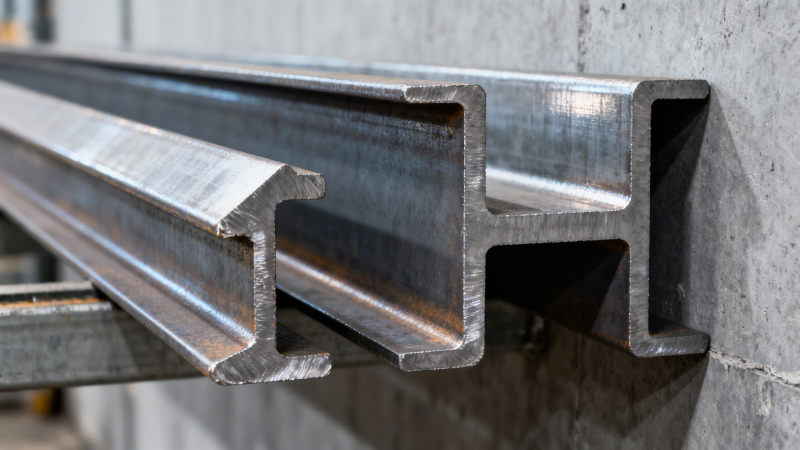
Structural Performance: Load Capacity & Moment Resistance
Load-bearing capacity is the cornerstone of beam selection in residential framing—especially for multi-story homes, cantilevered decks, or open-plan living spaces where uninterrupted spans demand high moment resistance. I beams feature tapered flanges and a relatively narrow web, resulting in higher section modulus per unit weight in the strong axis (y–y), but lower torsional rigidity. Their geometry concentrates material near the neutral axis, limiting lateral-torsional buckling resistance unless braced at frequent intervals. In contrast, H beams—often referred to as “wide-flange” sections in ASTM A6/A6M standards—possess parallel flanges of equal thickness and a thicker, more robust web. This uniform cross-section delivers superior bending stiffness in both major axes and significantly improves resistance to twisting under eccentric loads.
Real-world performance data from EN 1993-1-1 (Eurocode 3) confirms that for identical depth and weight, an H beam typically achieves 12–18% higher plastic moment capacity than its I-beam counterpart. For example, a 250×125×9×14 mm H beam (EN 10034) offers Mpl,y = 124 kN·m versus 105 kN·m for a comparable 250×125×8.5×13 mm I beam. This difference becomes decisive in seismic-prone regions like Southeast Asia or the Middle East, where ductility and post-yield behavior are mandated by local building codes. Hongteng Fengda’s beams undergo third-party verification per ASTM A6, EN 10025-2, and GB/T 11263, ensuring consistent yield strength (≥235 MPa for Q235B; ≥345 MPa for Q345B) and tensile elongation (>21%) across production batches.
Cost Analysis: Material Efficiency, Fabrication & Logistics
Total installed cost extends far beyond raw material price per ton. While I beams often carry a slight premium in mill pricing due to tighter rolling tolerances, H beams frequently reduce downstream expenses through simplified fabrication. Their symmetrical geometry allows for faster welding, fewer alignment corrections, and broader compatibility with automated stud-welding systems used in light-gauge steel framing. Moreover, because H beams offer greater section modulus per kilogram, engineers can often downsize beam depth or spacing—cutting foundation costs, reducing concrete volume, and lowering crane mobilization fees on tight urban sites.
Procurement strategy also impacts bottom-line economics. Industrial buyers weighing mill MOQ vs trader MOQ steel for industrial applications will find that direct mill sourcing—like Hongteng Fengda’s vertically integrated production—enables flexible order volumes starting from 5 metric tons for standard grades, bypassing trader markups and stockholding premiums. This flexibility directly addresses the Angle Steel price per ton Philippines for industrial use volatility seen in fragmented regional markets. Additionally, our lean inventory model supports standard vs custom steel lead time for industrial buyers: 15–25 days for off-the-shelf EN/A6 profiles, and just 35–45 days for fully customized lengths, cambering, or pre-drilled patterns—well within global benchmark timelines.
Installation & Field Integration: Speed, Safety & Compatibility
On-site assembly efficiency directly affects labor costs, schedule adherence, and worker safety. H beams’ parallel flanges provide stable, flat bearing surfaces for joist hangers, shear connectors, and composite deck anchoring—reducing shim usage and rework. Their uniform web thickness simplifies bolt hole alignment during column-to-beam connections, minimizing field drilling and torque inconsistencies. For contractors executing residential infill developments across Malaysia or the UAE, this translates into 12–16% faster erection cycles compared to traditional I sections, based on site audits conducted in 2023 across 14 mixed-use projects.
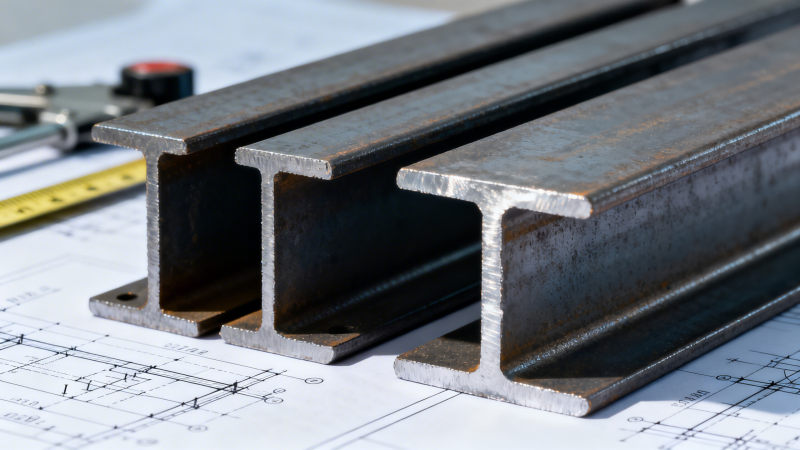
Furthermore, H beams integrate seamlessly with cold-formed steel (CFS) subsystems widely adopted in energy-efficient housing. Their dimensional consistency ensures predictable load transfer to CFS wall studs and floor cassettes—critical for maintaining thermal bridge-free envelopes. When corrosion resistance is paramount—such as coastal builds in the Philippines or high-humidity zones in Southeast Asia—engineers increasingly pair structural H beams with protective cladding systems like AZ150 Galvalume Steel Coil. Its aluminum–zinc alloy coating (55% Al, 43.4% Zn, 1.6% Si) delivers up to 4× longer service life than standard galvanized steel in marine-salt environments, making it ideal for façade substrates, soffits, and roof decking supporting primary framing.
Design Flexibility & Regulatory Alignment Across Markets
Residential design trends—open layouts, rooftop additions, and modular prefabrication—demand beams that support iterative engineering decisions without supply-chain bottlenecks. Hongteng Fengda supports this agility through dual-standard compliance (ASTM A6, EN 10034, JIS G3192, GB/T 11263), enabling seamless documentation handover for international consultants. Our technical team routinely assists clients in validating how to calculate i beam weight for industrial projects using real-time mill test reports and certified sectional property databases—not generic catalog values. This precision eliminates overdesign and optimizes steel tonnage, especially vital when managing budget-sensitive tenders in competitive markets like the Middle East or Latin America.
For developers scaling across ASEAN, we offer localized support—including English/Arabic/Mandarin bilingual engineering reviews, FTA documentation for ASEAN-China trade agreement benefits, and coordinated logistics via bonded warehouses in Dubai and Singapore. This end-to-end capability mitigates risks tied to steel beam factory price in Middle East fluctuations and customs clearance delays, reinforcing our position as a dependable long-term partner—not just a vendor.
Conclusion: Making the Right Choice Starts with Partnership
The I beam vs H beam for residential construction decision isn’t binary—it’s contextual. While I beams retain niche utility in heritage restorations or highly constrained retrofit scenarios, H beams represent the performance, cost, and speed standard for modern residential frameworks worldwide. Their balanced geometry, proven code compliance, and adaptability to automation-driven construction make them the preferred choice for forward-looking developers, engineers, and procurement leaders across North America, Europe, and emerging infrastructure corridors.
At Hongteng Fengda, we go beyond supplying steel—we co-engineer certainty. From clarifying standard vs custom steel lead time for industrial buyers to optimizing mill MOQ vs trader MOQ steel for industrial applications, our team provides actionable insights—not just product specs. Whether you’re quoting an apartment tower in Kuala Lumpur, specifying façade supports in Doha, or evaluating stainless steel square bar for architectural use alongside structural members, our integrated quality system and global delivery network ensure every beam meets your project’s exact functional, regulatory, and timeline requirements.
Ready to align your next residential project with smarter steel? Immediately contact Hongteng Fengda’s engineering sales team for a complimentary beam selection review, MOQ consultation, or factory price quotation tailored to your region and application scope.
- steel i
- h beams
- steel i beam supplier
- h beam
- angle steel
- steel coil
- galvanized steel
- structural steel
- Structural Steel
- I-Beam
- Profile
- AZ150 Galvalume Steel Coil
- standard vs custom steel lead time
- mill MOQ vs trader MOQ steel
- Galvanized
- Steel I Beam supplier in Malaysia
- Angle Steel price per ton Philippines
- how to calculate i beam weight
- I beam vs H beam
- steel beam factory price
- Steel Beam
- stainless steel square bar
- i beam weight
- stainless steel square bar for architectural use
- steel beam factory price in Middle East
- I beam vs H beam for residential construction
- how to calculate i beam weight for industrial projects
- Angle Steel price per ton Philippines for industrial use
- Steel I Beam supplier in Malaysia for infrastructure projects
- mill MOQ vs trader MOQ steel for industrial applications
- standard vs custom steel lead time for industrial buyers
Related recommendations
 Galvanized Pipe Manufacturer Selection: Zinc Coating, Tolerance, and ComplianceGalvanized pipe manufacturer selection guide: compare zinc coating quality, tolerance control, and compliance to reduce risk and choose a supplier that delivers reliable steel products.
 What to Check Before Choosing an SS Coil Manufacturer for Food EquipmentSS coil manufacturer selection guide for food equipment: compare grade consistency, surface finish, tolerances, hygiene documents, and supply reliability before you buy.
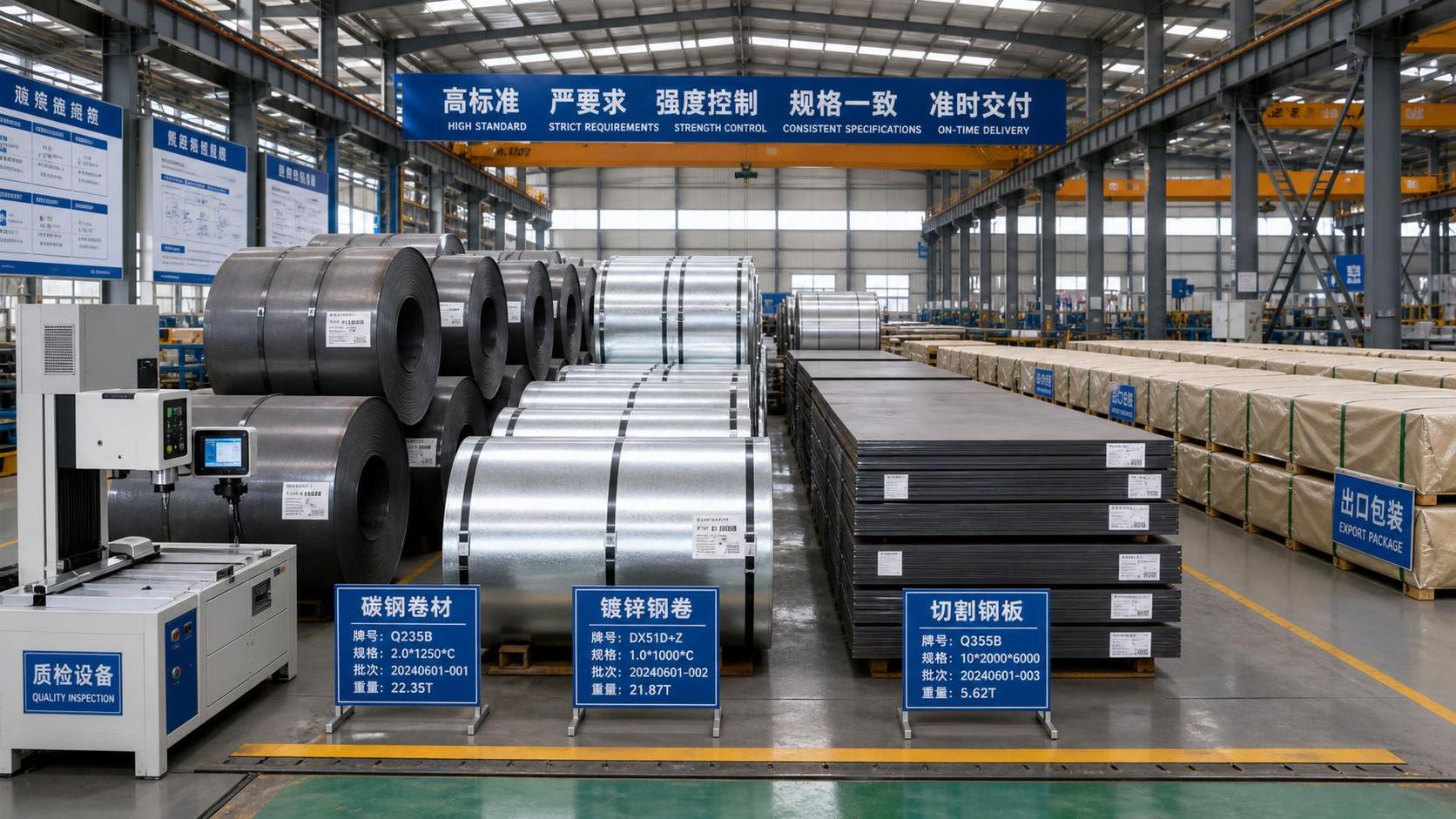
 How to Evaluate a Carbon Steel Manufacturer for Strength and Lead TimeCarbon steel manufacturer selection starts with strength control and real lead time. Learn how to compare quality systems, standards, specs, and export readiness before you buy.
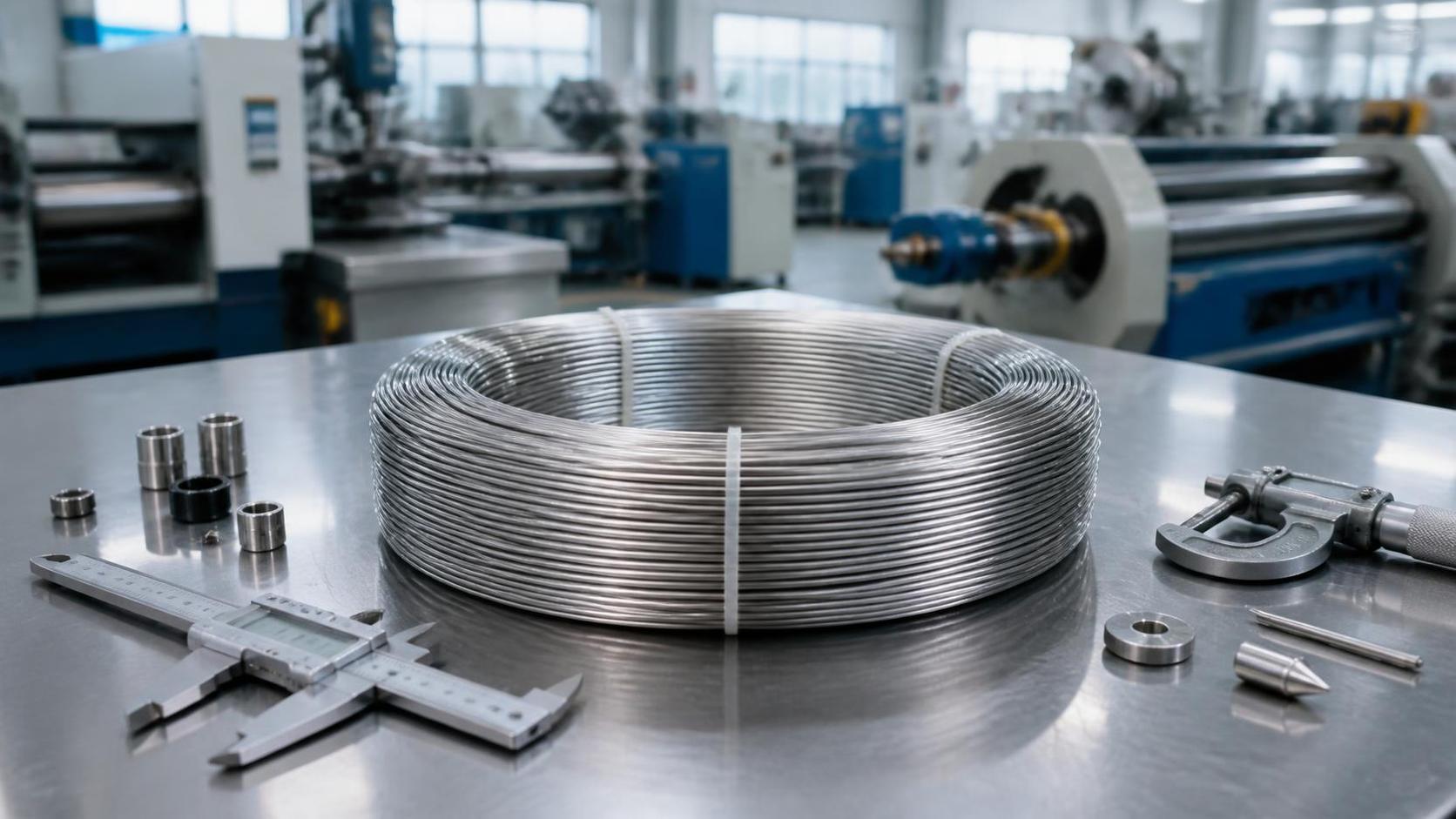
 Buy 304 Stainless Steel Wire 0.5mm Soft: What to Check Before Placing an OrderBuy 304 stainless steel wire 0.5mm soft with confidence. Learn what to check on grade, tolerance, finish, softness, and supplier quality before ordering.
Please give us a message


Please enter what you want to find