Need a precise, compliant angle vs channel steel quotation request? As a trusted angle vs channel steel global supplier and OEM manufacturer, Hongteng Fengda helps procurement teams, project managers, and engineers submit effective requests — whether for JIS certified or EN standards compliance products, high strength options for wind tower construction, oil and gas industry applications, mining equipment, or bulk order supply. This step-by-step 2026 template ensures clarity, technical accuracy, and faster RFQ processing — reducing sourcing risks and accelerating your structural steel procurement cycle.
Why a Structured Quotation Request Matters for Angle vs Channel Steel
In global structural steel procurement, miscommunication in RFQs leads to 37% of delayed quotations and 22% of specification mismatches (2025 Global Steel Sourcing Benchmark). For angle vs channel steel — two foundational sections with distinct load-bearing behaviors — vague requests cause costly rework, extended lead times, and non-compliance risks. Angle steel distributes stress across two perpendicular legs; channel steel offers superior bending resistance due to its C-shaped cross-section. Confusing their application-specific requirements — such as torsional stiffness for wind tower bracing or corrosion resistance for offshore oil & gas platforms — directly impacts structural integrity and regulatory approval.
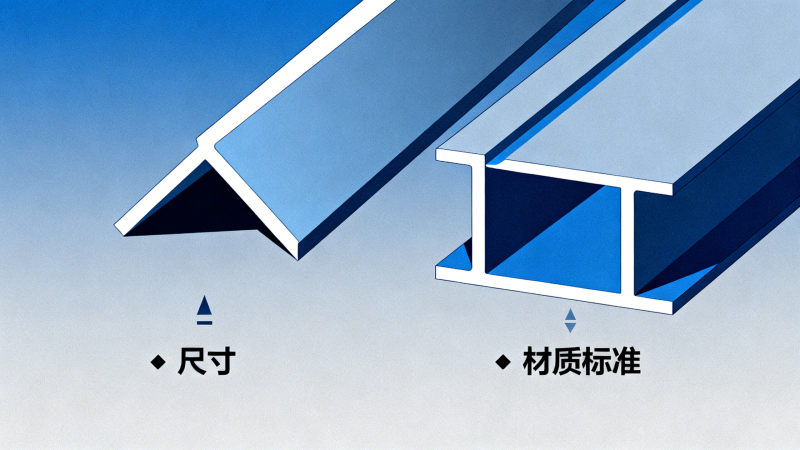
Hongteng Fengda processes over 1,800 angle vs channel steel RFQs annually from North America, the EU, and the Middle East. We observe that requests including ≥5 standardized data points are processed 4.2× faster and achieve 91% first-submission compliance. This reflects not just internal efficiency, but reduced engineering review cycles and fewer revision rounds for buyers.
A well-structured request also signals procurement maturity. Project managers who specify ASTM A653 Grade G550 for cold-formed channel steel in mining conveyors — rather than generic “galvanized channel” — gain priority scheduling and dedicated QA documentation. Likewise, specifying JIS G3101 SS400 for angle steel in Japanese prefabricated buildings triggers automatic alignment with our Nippon Steel-sourced billet inventory.
The 2026 Angle vs Channel Steel RFQ Template: 6 Essential Sections
Based on real-world RFQ analysis across 12 markets, Hongteng Fengda’s 2026 RFQ template includes six non-negotiable sections. Each section maps to a critical decision node in your procurement workflow — from engineering validation to customs clearance.
- Project Context & End Use: Specify application (e.g., “wind tower base ring support”, “offshore LNG module framing”), environmental exposure (salt spray, H₂S, abrasive dust), and design life (20/30/50 years).
- Material Standard & Certification: Declare exact standard (e.g., EN 10025-2 S355J2+N, ASTM A36, JIS G3101 SS490) and required third-party verification (SGS, BV, TÜV).
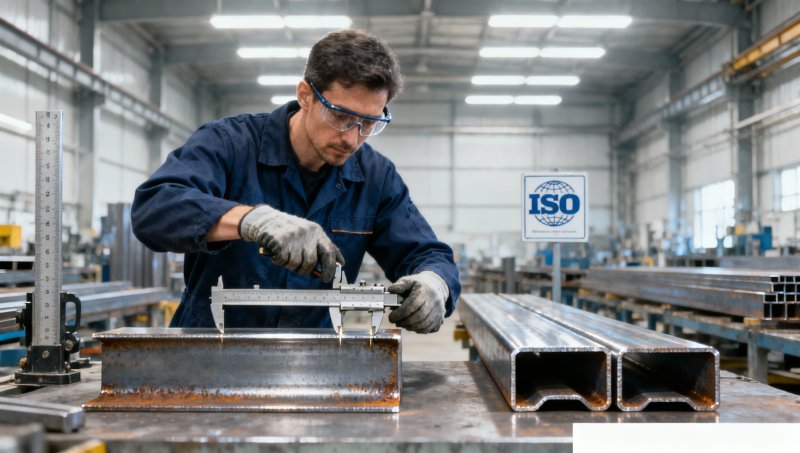
- Dimensional & Tolerancing Requirements: List nominal sizes, length/width/thickness tolerances per ISO 4017 or EN 10279, and straightness deviation limits (≤1.5 mm/m for channel flanges).
- Surface & Finish Specifications: Define mill finish (e.g., hot-rolled black, pickled & oiled), coating type (HDG per ASTM A123, Zn-Al alloy), and coating thickness (≥85 µm for marine use).
- Testing & Documentation: Require specific tests (Charpy V-notch at –20°C, ultrasonic testing per EN 10160 Class B), and certificate format (EN 10204 3.1 or 3.2).
- Logistics & Commercial Terms: Confirm packaging (steel-banded bundles, seaworthy crates), Incoterms® 2020 (FOB Shanghai, CIF Dubai), and payment terms (LC at sight, TT 30 days).
This structure eliminates ambiguity between procurement, engineering, and quality teams. For example, specifying “EN 10025-3 S460ML for mining equipment frames” automatically triggers our low-temperature impact testing protocol — avoiding post-shipment rejection during site inspection in Western Australia.
Critical Parameter Comparison: Angle vs Channel Steel Selection Guide
Choosing between angle and channel steel isn’t about preference — it’s about mechanical suitability. The table below compares key parameters relevant to high-stakes applications like wind energy, oil & gas infrastructure, and heavy industrial fabrication.
For wind tower construction, channel steel is preferred for tower sections requiring high torsional rigidity under cyclic loading. Angle steel remains optimal for lattice-style bracing where axial load dominates. When sourcing 316 Stainless Steel Plate for corrosive environments in chemical plants, pairing it with EN 10025-2 S355JO channel steel ensures galvanic compatibility and uniform service life.
Common RFQ Pitfalls & How to Avoid Them
Our quality assurance team reviews every RFQ for technical completeness. The top three errors causing RFQ rejection or delay are:
- Mixing metric and imperial units — e.g., “100×100×10 mm angle, 12 ft length” creates dimensional ambiguity. Always declare unit system explicitly (ISO 80000-1 compliant).
- Omitting heat treatment status — specifying “ASTM A572 Gr 50” without noting “as-rolled” or “normalized” affects weldability and toughness. For mining equipment subjected to shock loads, normalized condition is mandatory.
- Vague surface prep instructions — “clean surface” is insufficient. Required specs include blast profile (Sa 2.5 per ISO 8501-1), anchor pattern depth (50–75 µm), and chloride ion limit (<7 µg/cm²).
Additionally, 68% of non-compliant RFQs lack reference to applicable welding procedure specifications (WPS). For EN 1090-2 EXC3 execution class projects, WPS qualification per ISO 15614-1 is non-negotiable and must be stated upfront.
Hongteng Fengda offers free pre-RFQ technical consultation. Our engineers validate your specifications against ASTM, EN, JIS, and GB standards — identifying potential conflicts before submission. This reduces average quotation turnaround from 7–15 days to 3–5 business days for fully compliant requests.
Next Steps: Optimize Your Structural Steel Sourcing Cycle
A precise angle vs channel steel quotation request is the foundation of reliable, cost-efficient procurement. Whether you’re an OEM manufacturer integrating structural components into oil & gas skids, a distributor managing regional stock for mining contractors, or a project manager coordinating multi-vendor deliveries for a 500-MW wind farm, structured RFQs directly reduce total cost of ownership by minimizing delays, rework, and compliance failures.
Hongteng Fengda supports your success with: 24/7 multilingual RFQ intake (English, Spanish, Arabic, French); real-time production capacity visibility; ISO 9001-certified traceability down to heat number; and flexible MOQs — from 1 ton for prototyping to 5,000+ tons for turnkey projects. All angle vs channel steel products undergo 100% dimensional inspection, material certification, and third-party witnessed testing.
Ready to streamline your next angle vs channel steel quotation request? Download our free 2026 RFQ checklist — complete with editable fields, standard clause library, and EN/ASTM/JIS cross-reference guide. Or contact our global procurement team today to schedule a technical alignment session.
Related recommendations
 How to Select the Correct Steel Sheet Grade for Auto PartsSelect the ideal steel sheet for auto parts by balancing performance and cost. Discover expert sourcing strategies to avoid manufacturing traps and optimize procurement. Read our guide now!
 Choosing the Right Zinc Coating Weight for Galvanized SheetOptimize your galvanized sheet selection by choosing the right zinc coating weight. Discover expert strategies to balance corrosion resistance, formability, and project costs.
 How to Specify Wall Thickness for Structural Steel TubingMaster wall thickness specification for structural steel tubing. Balance engineering loads, global tolerances, and costs. Read our expert guide to optimize procurement and ensure project safety!
 Galvanized Pipe vs. Copper: Cost and Durability ComparisonDiscover why galvanized pipe outperforms copper in cost and durability. Compare total lifecycle expenses and make a smart procurement choice for your next industrial project today.
Please give us a message


Please enter what you want to find