When sourcing materials for large-scale construction or industrial projects, procurement professionals often face a critical choice between galvanized pipe and copper. While copper offers excellent conductivity and a premium aesthetic, a high-quality galvanized pipe provides superior structural strength, robust corrosion resistance, and significant cost savings. This comprehensive comparison explores the long-term durability, initial investment, and lifecycle costs of both materials, helping you make an informed, cost-effective purchasing decision for your next project.
Initial Investment and Commodity Volatility
The most immediate difference between these two materials is the upfront cost. Copper is a globally traded commodity, meaning its price is highly susceptible to market volatility, geopolitical tensions, and mining supply chain disruptions. For procurement managers working with fixed budgets, this unpredictability can be a significant risk.
In contrast, galvanized pipe—carbon steel coated with a protective layer of zinc—offers a much more stable and predictable pricing structure. The raw material (steel) is generally more abundant and less expensive to produce in massive quantities. When calculating the initial material budget for a large-scale infrastructure project, a commercial building, or an industrial plant, switching from copper to galvanized pipe can reduce material costs by a substantial margin. This allows project managers to allocate funds to other critical areas without compromising the functional integrity of the piping or structural systems.
Installation Dynamics and Labor Economics
Material cost is only half of the installation equation; labor is the other. The physical properties of copper and galvanized steel dictate entirely different installation methods, which directly impact labor hours and the need for specialized skills.
Copper piping typically requires soldering (sweating) or the use of specialized press-fit tools. Soldering demands a high level of craftsmanship, open flames (which can be a fire hazard on certain job sites), and strict quality control to prevent leaks. Press-fit systems are faster but require expensive proprietary tools and fittings. Both methods require skilled, and therefore more expensive, labor.
Galvanized pipe, on the other hand, is predominantly joined using threaded connections or grooved couplings. Threading can be done on-site with standard machinery, and grooved couplings allow for rapid, bolt-together assembly. These methods do not require open flames, making them safer for confined spaces or sites with strict hot-work permits. Furthermore, the labor pool capable of threading or grooving steel pipe is generally larger and more cost-effective than the pool of certified copper solderers. For projects with tight schedules, the speed and simplicity of assembling galvanized systems translate directly into labor savings.
Mechanical Strength and Structural Demands
In heavy industrial environments, mechanical strength and impact resistance are non-negotiable across all project components. Copper is a relatively soft metal. While this makes it easy to bend and form, it also means copper pipes are vulnerable to physical damage during construction, accidental impacts from heavy machinery, or even intentional vandalism.
Galvanized pipe inherits the high tensile strength and rigidity of its carbon steel core. It can withstand significant physical abuse, high pressure, and heavy loads without deforming. This makes it the preferred choice for applications where the piping system might also serve a structural purpose, such as handrails, fencing, scaffolding, or support frameworks.
This need for structural integrity extends beyond just the piping. Structural steel manufacturers like Hongteng Fengda emphasize high-strength, compliant materials for global construction and manufacturing projects to ensure overall site safety. Just as a facility might rely on an A36 Carbon Steel Round Bar for critical structural supports, handrails, or heavy machinery components due to its excellent strength and wear resistance, the galvanized pipe system provides the necessary ruggedness for industrial fluid transport and structural framing. When a project demands materials that can endure harsh physical environments, the inherent strength of galvanized steel is a decisive advantage.
Corrosion Resistance and Environmental Limits
Durability is heavily dependent on the environment in which the material operates. Copper is naturally highly resistant to water corrosion and does not support bacterial growth, which is why it has historically been the gold standard for indoor potable water lines. However, copper can be susceptible to pinhole leaks if the water chemistry is highly acidic or if there are high velocities causing erosion.
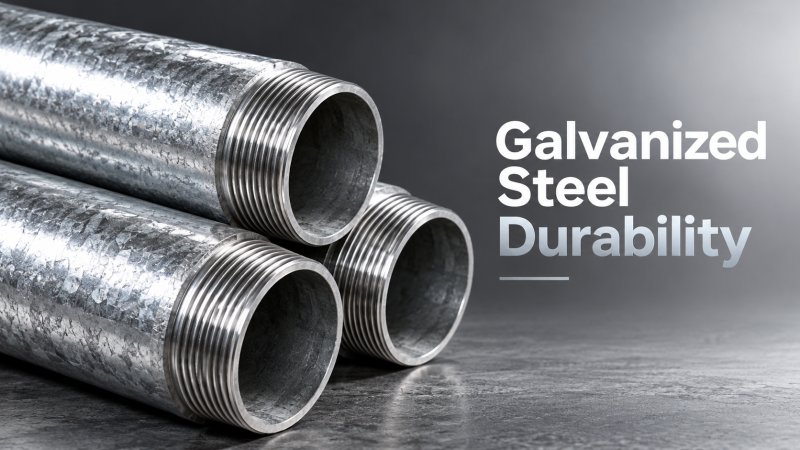
Galvanized pipe relies on its zinc coating to protect the underlying steel from rust. The zinc acts as a sacrificial anode, corroding before the steel does. In outdoor environments, underground applications, and industrial settings where pipes are exposed to the elements, moisture, and chemical exhaust, galvanized pipe performs exceptionally well.
However, procurement professionals must be aware of the limitations. In systems carrying highly acidic or very soft water over decades, the zinc coating can eventually degrade, leading to internal rust and reduced flow capacity. Therefore, while galvanized pipe is incredibly durable for structural, outdoor, and industrial applications, its use in long-term indoor potable water systems has declined in favor of alternative materials. Understanding the specific fluid and environmental conditions of your project is crucial before finalizing the material selection.
Security, Theft, and Site Risks
A frequently overlooked factor in procurement and project management is site security. Copper has a high scrap value, making it a frequent target for theft on construction sites and in completed, unoccupied buildings. The cost of replacing stolen copper piping, combined with project delays and increased security measures, can severely impact the bottom line.
Galvanized pipe has a significantly lower scrap value. While it is not entirely immune to theft, it is far less likely to be targeted by scrap thieves. Choosing galvanized pipe can inherently reduce site security risks and the hidden costs associated with material loss and project delays.
Evaluating Total Lifecycle Cost
Smart procurement looks beyond the initial invoice. The Total Cost of Ownership (TCO) includes material, labor, maintenance, and replacement costs over the lifespan of the system.
Copper systems, when installed correctly in the right environment, can last for many decades with minimal maintenance. However, the massive initial premium in both material and skilled labor means the TCO remains high.
Galvanized pipe offers a highly favorable TCO for industrial, outdoor, and structural applications. The initial costs are low, installation is fast and economical, and the system provides decades of reliable service. If a section of galvanized pipe does eventually corrode or require modification, it is relatively inexpensive and straightforward to cut, thread, and replace compared to soldering copper. For facilities managers and project owners focused on long-term budget efficiency, galvanized pipe delivers exceptional value.
Procurement Decision Matrix
To simplify the decision-making process, procurement professionals can use the following guidelines based on project requirements:
When to Specify Galvanized Pipe
- Outdoor and Underground Applications: Excellent resistance to weather, soil conditions, and external physical damage.
- Industrial Fluid Transport: Ideal for compressed air lines, industrial water, and chemical processing where high pressure and physical durability are required.
- Structural and Architectural Uses: Perfect for handrails, guardrails, fencing, scaffolding, and structural supports where high tensile strength is necessary.
- Cost-Sensitive Large-Scale Projects: When budget constraints require maximizing material coverage without sacrificing structural integrity.
- High-Risk Security Sites: Projects where the theft of high-value scrap metal is a known concern.
When to Specify Copper
- Indoor Potable Water Systems: In premium residential or commercial buildings where long-term water quality and specific plumbing codes mandate copper.
- HVAC and Refrigerant Lines: Where excellent thermal conductivity and the ability to handle specific refrigerants are required.
- High-End Aesthetic Exposed Piping: In architectural designs where the natural patina and look of copper are desired as a design feature.
- Specialized Medical Gas Lines: Where specific cleanliness and bacterial resistance standards must be met.
Ultimately, the choice between galvanized pipe and copper is not about which material is universally "better," but which material is the right tool for the specific job. By aligning the material properties with the actual environmental, structural, and financial demands of the project, procurement professionals can ensure they are delivering both quality and value to their stakeholders.
Please give us a message


Please enter what you want to find