Choosing the right structural steel is critical for safety, cost-efficiency, and project timeline adherence—especially when deciding between angle and channel steel. This practical angle vs channel steel comparison highlights key differences in load capacity, installation flexibility, welding behavior, and application suitability—tailored for project managers overseeing construction, industrial, or infrastructure work. As a trusted structural steel manufacturer and exporter from China, Hongteng Fengda supports global buyers with ASTM/EN/GB-compliant angle steel vs channel steel differences insights, OEM-ready solutions, and real-world sourcing expertise.
Definition & Structural Identity
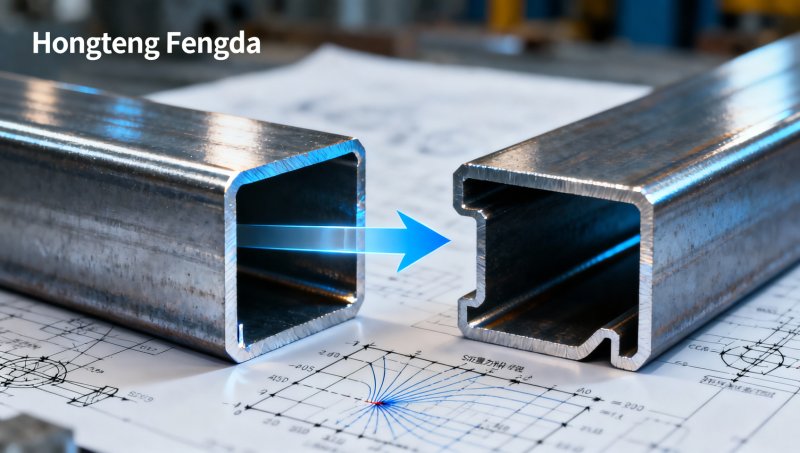
Angle steel—commonly known as L-section steel—features two legs intersecting at a 90° angle, forming an “L” shape. It’s available in equal-leg (e.g., 50×50×5 mm) and unequal-leg (e.g., 75×50×6 mm) configurations. Channel steel, by contrast, resembles a squared “C” or “U”, with parallel flanges and a web connecting them—offering a deeper cross-section ideal for bending resistance along one axis.
Both are hot-rolled carbon structural steels, typically produced to ASTM A6/A6M, EN 10025-2, or GB/T 706 standards. Their geometric divergence drives distinct mechanical behaviors—notably in moment of inertia, torsional rigidity, and stress distribution under asymmetric loading. Understanding this foundational distinction prevents misapplication during design review or shop drawing approval.
Technical Performance: A Side-by-Side Analysis
The core angle steel vs channel steel differences emerge in structural performance metrics. Below is a comparative summary based on typical 100×100×8 mm angle and 100×48×5.3 mm channel (both Grade S235JR per EN 10025):
Note how channel steel delivers nearly double the torsional constant—making it superior for purlin bracing or crane rail supports where lateral twist must be minimized. Meanwhile, angle steel offers balanced Ix/Iy ratios, enabling dual-axis bracing in truss diagonals without orientation dependency.
Application Scenarios: Where Each Excels
Angle steel shines in framing connections, tower lattice structures, and seismic bracing systems—especially where multi-directional load paths converge. Its open geometry simplifies bolting and field welding at junctions. Channel steel dominates in floor joists, wall studs, conveyor frames, and railway sleepers—leveraging its deep web to resist vertical bending while minimizing deflection.
In industrial maintenance, channels serve as durable machine bases due to high web stiffness; angles function as lightweight stiffeners on tank walls or ductwork flanges. For modular building systems, cold-formed channel sections enable rapid assembly—while hot-rolled angles remain preferred for heavy-duty anchor points in offshore platforms. When corrosion resistance is paramount—such as in food processing plants or marine environments—a 304 Stainless Steel Plate may complement structural frameworks as cladding or wear surfaces.
Procurement Guide: What Project Managers Should Verify
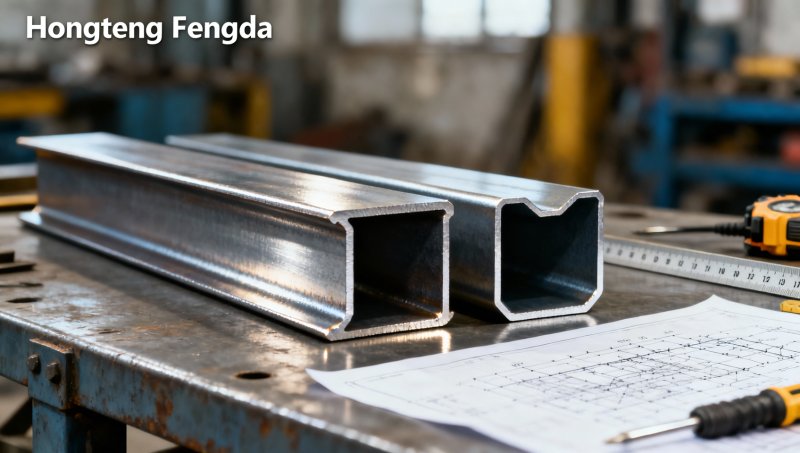
Sourcing decisions hinge on more than geometry. Confirm dimensional tolerances (per ASTM A6), surface finish (mill scale vs. pickled), and metallurgical compliance—especially carbon equivalent (CEV) for weldability. For export projects, verify mill test reports (MTRs) include tensile strength, yield point, and elongation per batch—not just grade stamping.
Hongteng Fengda provides full traceability: each coil or bundle carries heat numbers linked to certified EN 10204 3.1 documentation. We pre-test samples for Charpy impact values at sub-zero temperatures upon request—critical for Middle Eastern wind turbine towers or Nordic infrastructure. Our lean production system ensures ≤45-day lead time for standard EN/ASTM sizes, with no MOQ for repeat customers across Southeast Asia and the EU.
Why Choose Hongteng Fengda?
As a professional structural steel manufacturer and exporter from China, we bridge engineering precision with global supply chain reliability. With ISO 9001-certified facilities, automated rolling lines, and in-house metallurgical labs, we deliver consistent angle and channel steel compliant with ASTM, EN, JIS, and GB—without compromise.
Our project management team co-develops BOMs with engineers, validates cut lists against fabrication drawings, and coordinates containerized shipments with bonded warehousing in Dubai and Rotterdam. Whether you need custom-cut angles for solar racking or galvanized channels for wastewater treatment plants—we reduce procurement friction, mitigate quality variance, and accelerate your critical path. Contact us today for a free technical consultation and sample pack.
Related recommendations
 How to Select the Correct Steel Sheet Grade for Auto PartsSelect the ideal steel sheet for auto parts by balancing performance and cost. Discover expert sourcing strategies to avoid manufacturing traps and optimize procurement. Read our guide now!
 Choosing the Right Zinc Coating Weight for Galvanized SheetOptimize your galvanized sheet selection by choosing the right zinc coating weight. Discover expert strategies to balance corrosion resistance, formability, and project costs.
 How to Specify Wall Thickness for Structural Steel TubingMaster wall thickness specification for structural steel tubing. Balance engineering loads, global tolerances, and costs. Read our expert guide to optimize procurement and ensure project safety!
 How much does 2 inch ss pipe price increase when upgrading from Schedule 40 to Schedule 80 for high-pressure systems?2 inch ss pipe price increases 18–35% when upgrading from Sch 40 to Sch 80—discover why, when it’s truly needed, and how to avoid overpaying.
Please give us a message


Please enter what you want to find