Choosing between angle steel and channel steel is a critical decision for engineers, procurement teams, and project managers—impacting structural integrity, cost efficiency, and fabrication speed. In this angle vs channel steel comparison, we break down key angle steel vs channel steel differences: load-bearing capacity under bending and axial loads, material and processing costs, and weldability in real-world construction and industrial applications. As a certified structural steel manufacturer and exporter from China, Hongteng Fengda delivers ASTM/EN/GB-compliant products with consistent quality and OEM flexibility—helping global buyers make data-driven, standards-aligned choices.
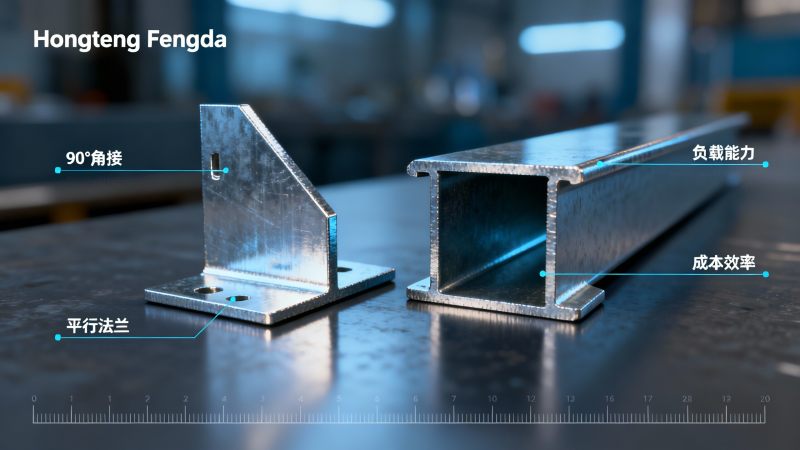
Definition & Structural Geometry
Angle steel (L-section) consists of two legs joined at a 90° angle, forming an “L” shape. It’s available in equal-leg (e.g., 50×50×5 mm) or unequal-leg (e.g., 75×50×6 mm) configurations. Its symmetry—or lack thereof—directly affects moment resistance and torsional stability. Channel steel (C-section), by contrast, features a “C”-shaped cross-section with parallel flanges and a web connecting them. The standardized dimensions—flange width, web thickness, and depth—are governed by ASTM A6, EN 10025, and GB/T 706.
Geometrically, channel steel offers higher second moment of area (Ix) about its major axis than equivalent-weight angle steel. This makes it inherently superior in resisting bending moments when oriented with the web vertical. Angle steel, however, provides balanced biaxial stiffness when used in bracing or corner framing—especially where space constraints or multi-directional loading exist.
Load-Bearing Capacity Comparison
Load-bearing performance depends on section modulus (S), radius of gyration (r), and slenderness ratio—especially under compression. Below is a technical comparison of common hot-rolled sections:
Weldability & Fabrication Practicality
Both angle and channel steels are highly weldable when using low-carbon grades like Q235B, A36, or S235JR. However, geometry introduces critical differences. Angle steel’s open profile allows unrestricted access for fillet welding along both legs—ideal for lattice girders, truss connections, and field assembly. Channel steel requires careful joint preparation when welding across the web-to-flange junction, especially in thick sections (>10 mm), where preheating and interpass temperature control become essential to prevent cracking.
For automated fabrication (e.g., robotic MIG welding), channel steel’s uniform geometry enables faster programming and repeatability. Angle steel often demands more fixturing to maintain angular accuracy during multi-pass welding. Hongteng Fengda applies strict mill test reports (MTRs) and pre-welding simulation for all custom OEM orders—ensuring compliance with AWS D1.1 and ISO 3834.
Cost Drivers & Procurement Considerations
Material cost per ton differs marginally—typically within ±5% for comparable grades—but total landed cost diverges significantly. Channel steel incurs higher rolling complexity and tighter dimensional tolerances (±0.3 mm per EN 10025), raising base price by ~7–12%. Yet, its superior bending efficiency often reduces required section size—yielding net savings in structural weight, transport, and foundation design.
Angle steel excels in modular and repetitive builds—think scaffolding, equipment frames, or cable trays—where fast bolting and minimal cutting lower labor cost. For projects prioritizing rapid deployment and inventory flexibility, angle steel’s wide availability in standard lengths (6m, 12m) and stock sizes streamlines procurement. Hongteng Fengda maintains over 15,000 MT of rotating inventory across 200+ SKU variants—enabling same-week dispatch for urgent SS440 Patterned steel plate and structural sections alike.
Standards Compliance & Global Certification
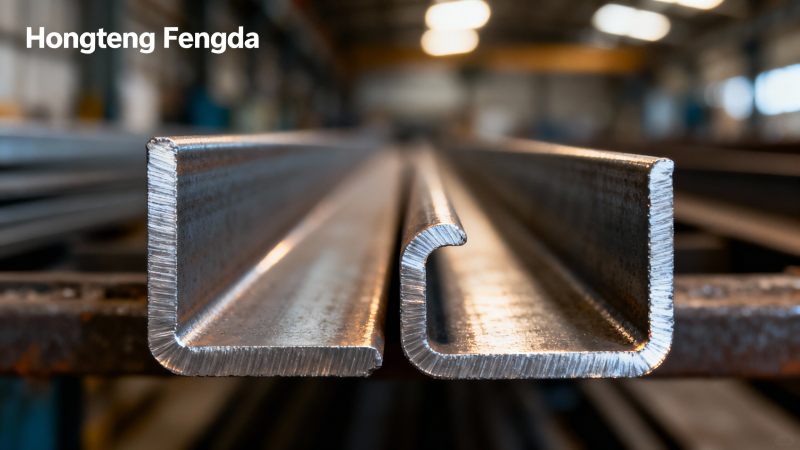
Hongteng Fengda’s angle and channel steel products are certified to multiple international frameworks—not as marketing claims, but as auditable deliverables. Every coil and billet undergoes ultrasonic testing (UT), tensile verification, and Charpy impact assessment per ASTM A6/A6M, EN 10025-2, and GB/T 706. Third-party inspections by SGS, Bureau Veritas, and TÜV are available upon request. Our traceability system links each batch number to heat analysis, rolling logs, and final dimensional reports—critical for safety-critical infrastructure in North America and EU markets.
Notably, our cold-formed channel profiles meet ASTM A1003 for corrosion resistance and dimensional precision—making them ideal for architectural façades and interior support systems where aesthetics and tolerance matter as much as strength.
Why Choose Hongteng Fengda?
You’re not just sourcing steel—you’re securing engineering continuity, supply chain resilience, and long-term compliance. With 18 years of export experience across 42 countries, Hongteng Fengda combines deep metallurgical expertise with agile OEM responsiveness. Whether you need dual-certified (ASTM + EN) angle steel for a Middle East refinery or laser-cut channel assemblies for German automation lines—we engineer solutions, not just shipments.
Our value proposition is threefold: First, certainty—rigorous QC ensures zero non-conformance in third-party audits since 2020. Second, control—transparent lead times, flexible MOQs (from 1 MT), and bilingual engineering support. Third, collaboration—we co-develop drawings, validate FEA models, and offer free sample kits for qualification. Contact our global trade team today to receive a tailored quote, full MTR package, and logistics roadmap—all within 24 business hours.
Related recommendations
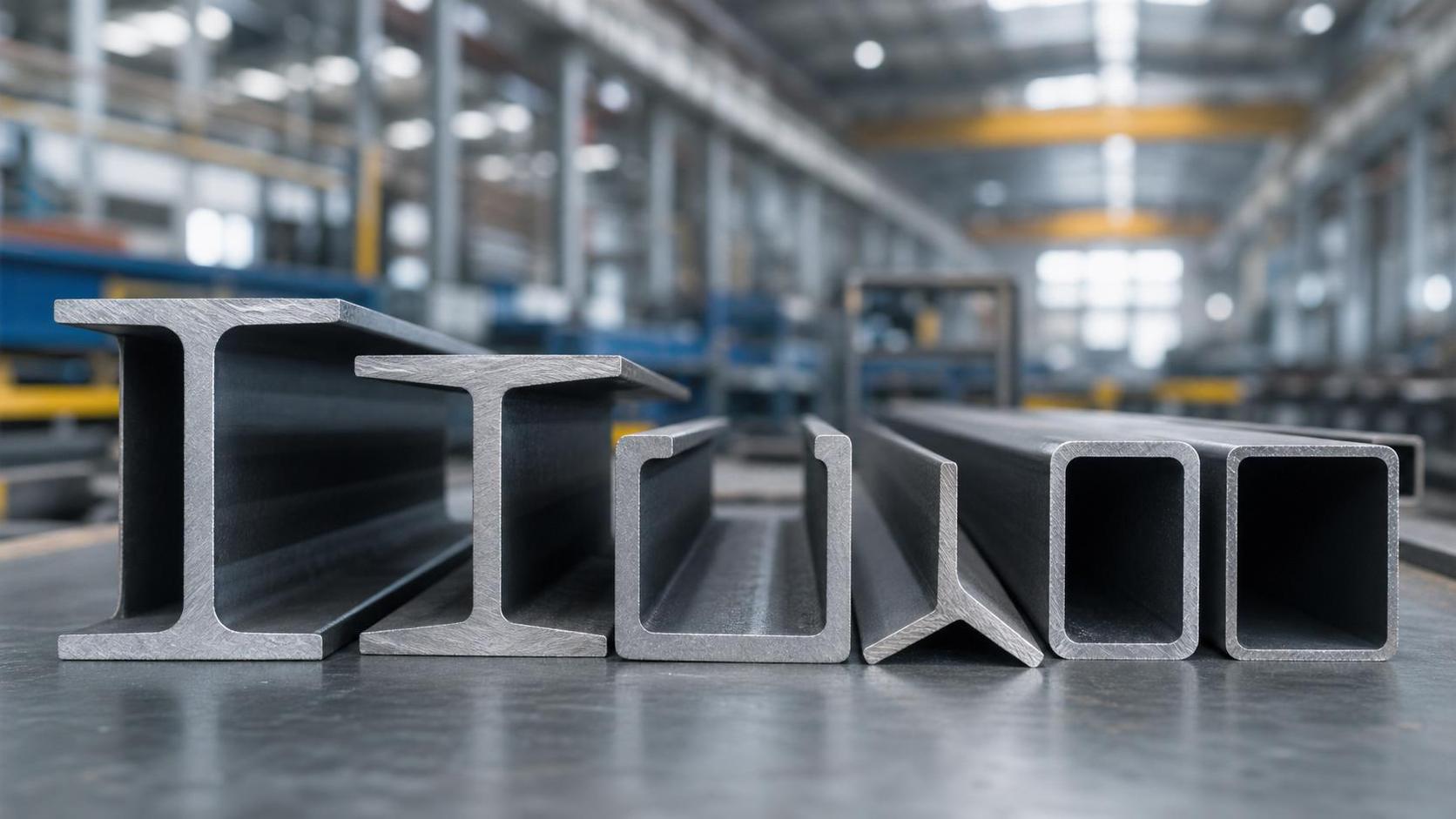
 What Is a Steel Profile? Common Shapes, Uses, and Selection BasicsProfile selection starts with shape, but performance depends on load, fabrication, and standards. Learn common steel profile types, uses, and smart selection basics.
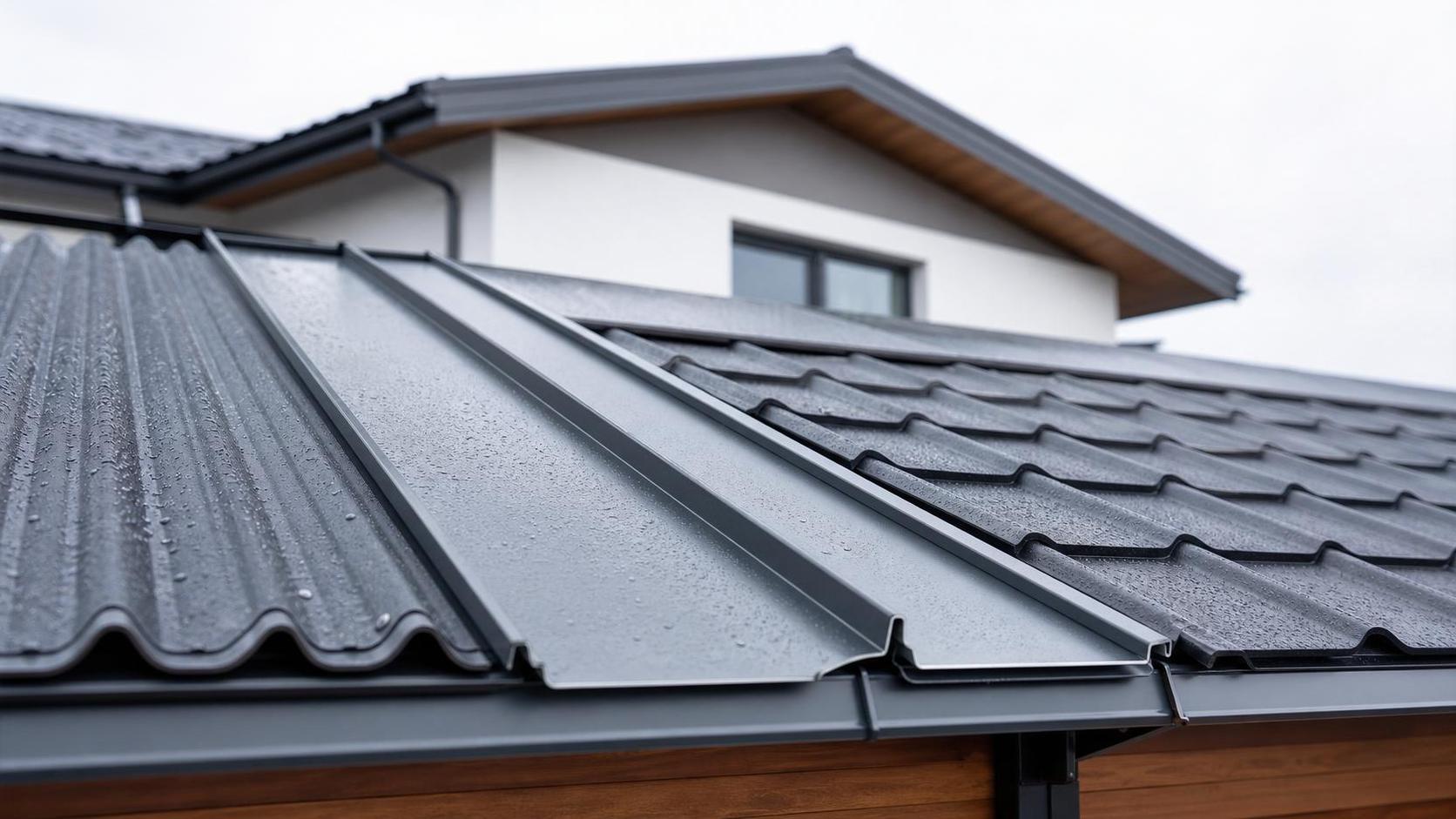
 Steel Roofing Types Explained: Corrugated, Standing Seam, and Metal ShinglesSteel Roofing guide comparing corrugated panels, standing seam, and metal shingles. Discover costs, durability, weather performance, and how to choose the best roof for your home.
 How Hot-Dip Galvanized Coating Thickness Affects Service LifeHot-dip galvanized coating thickness directly affects steel service life. Learn how the right zinc layer improves corrosion protection, controls cost, and supports smarter project decisions.
 Pipe Stainless Grades Explained: 304 vs 316 for Corrosion ResistancePipe stainless grades explained: compare 304 vs 316 for corrosion resistance, cost, and service life. Learn which stainless pipe grade fits marine, chemical, and water system applications.
Please give us a message


Please enter what you want to find