When you’re evaluating stainless steel pipe for high-pressure systems—especially 2 inch ss pipe price considerations—the jump from Schedule 40 to Schedule 80 isn’t just about thicker walls. It’s a procurement decision that balances pressure rating, weight, installation logistics, and long-term system integrity. For buyers sourcing internationally, the cost impact is real—but it’s rarely just a flat percentage. Let’s break down what actually drives the price difference, why “15–30%” is a useful starting point but not a universal rule, and how to avoid overpaying—or under-specifying.
What Changes Between Schedule 40 and Schedule 80 in 2-Inch Stainless Steel Pipe?
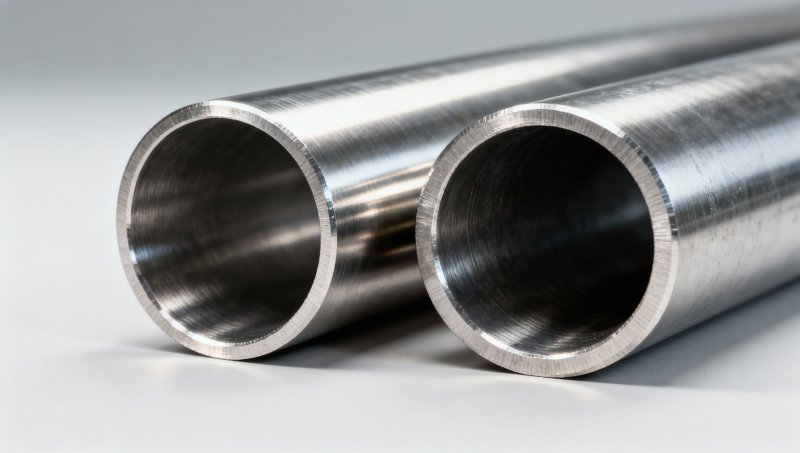
Schedule numbers reflect wall thickness relative to nominal pipe size—not material grade or pressure class directly. For a 2-inch NPS (Nominal Pipe Size) stainless steel pipe:
- Schedule 40: Typical wall thickness ≈ 3.91 mm (0.154 in)
- Schedule 80: Typical wall thickness ≈ 5.49 mm (0.216 in)
That’s a ~40% increase in wall thickness—but because stainless steel is priced by weight (not linear foot), the mass increase is closer to 32–38%. That’s where the core of the 2 inch ss pipe price uplift originates: more raw material, more melting, more rolling, more testing, and often tighter dimensional tolerances.
But here’s what procurement teams sometimes overlook: Schedule 80 doesn’t automatically mean “better for all high-pressure use.” It means *higher allowable working pressure*—yes—but only if the design temperature, end connection type, and support conditions align. In many industrial steam or compressed air lines, Schedule 40 with proper flange rating and inspection may already meet ASME B31.1 or B31.3 requirements. Upgrading without revalidating the full system design adds cost without added safety.
Why the 2 Inch SS Pipe Price Increase Isn’t Fixed
You’ll see quotes ranging from +18% to +35% when moving from Sch 40 to Sch 80 for 2" stainless pipe—especially across grades like 304, 316, or duplex. That variation isn’t random. It reflects real variables your supplier controls—and ones you can influence during sourcing:
- Material grade & availability: 316L is inherently more expensive than 304. If Sch 80 316L is low-stock or requires special heat treatment, premiums compound.
- Manufacturing method: Seamless Sch 80 pipe carries higher processing costs than welded—especially at smaller diameters like 2". Some mills charge 25% more for seamless Sch 80 vs. Sch 40; others apply only a 12% surcharge due to optimized rolling schedules.
- Testing & certification: High-pressure applications often require 100% hydrostatic test, PMI, and EN 10204 3.1/3.2 certs. Sch 80 lots are more likely to be batch-tested—adding traceability cost, not just material cost.
- Logistics & handling: Sch 80 pipe weighs ~36% more per meter. That affects packaging, container loading efficiency, and even inland freight—costs that may appear as line-item surcharges or get baked into unit pricing.
So while “2 inch ss pipe price increases 15–30%” is a reasonable benchmark for initial budgeting, treat it as a range—not a guarantee. Always request a line-item breakdown: base material cost, mill surcharge, testing fee, export documentation, and packing. Without that, you’re comparing apples to oranges—even between two reputable Chinese suppliers.
When Schedule 80 Is Necessary—and When It’s Overkill
Procurement isn’t about selecting the highest schedule—it’s about matching specification to function. Here’s how experienced buyers assess necessity:
Go with Schedule 80 if:
- Your design pressure exceeds 1,200 psi at 100°C (e.g., boiler feedwater, hydraulic power units, high-pressure chemical transfer).
- The pipe will undergo frequent thermal cycling or mechanical vibration—thicker walls reduce fatigue risk.
- Future system upgrades are planned (e.g., pump head increase), and replacing pipe later would cost 3× more than installing Sch 80 now.
Consider staying with Schedule 40 if:
- Your max operating pressure is ≤ 800 psi at ambient-to-moderate temperatures (common in food-grade CIP lines, HVAC condensate, or instrumentation air).
- Weight matters—for overhead supports, modular skids, or retrofit installations where structural reinforcement would be costly.
- You’re using flanged connections rated for Class 600 or higher—pressure containment then shifts to the flange, not the pipe wall.
Bottom line: Don’t let “high-pressure” trigger automatic Sch 80 selection. Run the actual ASME B31.3 pressure design calculation—or ask your engineering partner to validate it. Many projects downgrade to Sch 40 after review, saving 20%+ on pipe cost without compromising safety.
How Sourcing from China Impacts Real Cost—Beyond the Quote
For global procurement teams, choosing a Chinese structural steel manufacturer like Hongteng Fengda isn’t just about lower base pricing—it’s about managing total landed cost. Our production capacity allows consistent rolling of both Sch 40 and Sch 80 2" stainless pipe (304/316) with ASTM A312 / EN 10216-5 compliance, strict wall thickness control (±0.12 mm), and mill-test reports included.
What sets reliable exporters apart isn’t just competitive 2 inch ss pipe price—it’s predictability:
- No surprise surcharges: We quote all testing, packaging, and documentation upfront—not as post-order add-ons.
- Stable lead times: Sch 80 orders typically ship in 45–60 days (vs. 75+ for some mills)—critical when project timelines tighten.
- Custom length cutting: Reducing field welding saves labor and NDT cost—often offsetting part of the Sch 80 premium.
We also support hybrid approaches: Sch 40 for low-stress runs, Sch 80 only at critical junctions or near pumps/valves. That kind of granular specification—backed by engineering input—is where real cost control happens.
A Practical Alternative for Non-Pressure Applications
Not every application demanding durability needs thick-walled pipe. In equipment platforms, walkways, or machinery bases, anti-slip performance and structural rigidity matter more than internal pressure rating. That’s where products like 235JR Patterned steel plate offer smarter value: 2–8 mm thickness, certified anti-skid surface, and high bending resistance—without stainless-grade material cost. Used for floor around equipment or access platforms in pump stations, it complements high-pressure piping systems while optimizing overall project steel spend.
Three Actions Before You Finalize the Order
To avoid misalignment between spec, cost, and performance:
- Confirm the governing code: Is it ASME B31.1 (power piping), B31.3 (process), or local regulation? Each has different derating rules for temperature and cyclic service—impacting whether Sch 80 is truly required.
- Validate wall thickness tolerance: Sch 80’s nominal 5.49 mm wall can vary ±12.5% under ASTM A312. Ask for mill test reports showing actual measured thickness—not just nominal.
- Clarify “stainless steel” grade and finish: “SS” alone isn’t enough. Specify 304L vs. 316L, pickled & passivated, and surface roughness (Ra ≤ 0.8 µm for hygienic use). These affect both price and long-term corrosion resistance.
At its core, upgrading from Schedule 40 to Schedule 80 for 2-inch stainless pipe isn’t a binary cost trade-off—it’s a systems decision. The 2 inch ss pipe price increase matters, yes—but only as one input among many. When sourced with engineering clarity and supply chain transparency, that premium delivers not just thicker walls, but reduced risk, longer service life, and fewer field surprises. That’s how procurement professionals move from cost center to value partner.
Please give us a message


Please enter what you want to find