As global demand for carbon sheet steel intensifies amid infrastructure expansion and industrial reshoring, buyers face rising uncertainty in pricing and supply stability. In 2026, carbon sheet steel cost per ton is projected to fluctuate significantly—driven by raw material volatility, energy costs, trade policies, and regional logistics bottlenecks. For procurement professionals, project managers, and financial decision-makers sourcing structural steel from China, understanding these drivers isn’t just strategic—it’s essential for risk mitigation and cost control. As a certified structural steel manufacturer and exporter, Hongteng Fengda delivers ASTM/EN-compliant carbon sheet steel with transparent pricing, stable lead times, and end-to-end supply chain visibility.
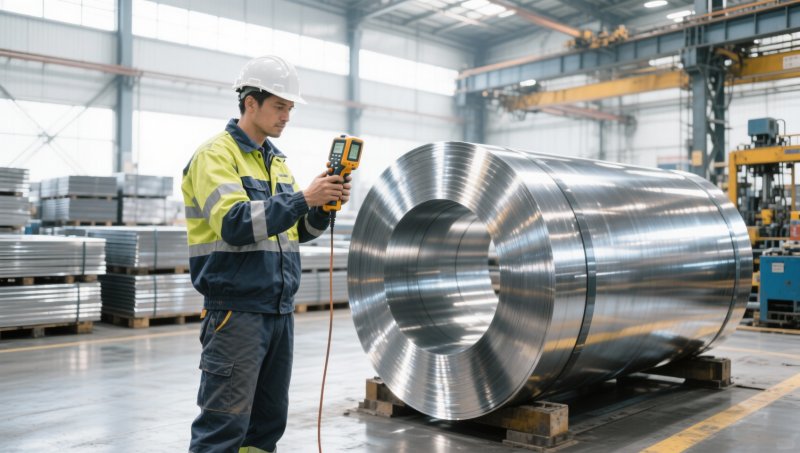
What’s Driving Carbon Sheet Steel Price Volatility in 2026?
Carbon sheet steel pricing in 2026 is shaped by four interlocking macroeconomic and operational forces—notably iron ore price swings (±18% YoY), coking coal cost fluctuations (up to $220/ton in Q2 2026), electricity tariffs in key Chinese production zones (ranging from ¥0.52–¥0.78/kWh), and export duty adjustments under new EU Carbon Border Adjustment Mechanism (CBAM) Phase II implementation timelines.
Regional logistics constraints add further pressure: average port dwell time at Qingdao and Tianjin rose to 7–10 days in early 2026 due to container shortages and vessel schedule instability—extending landed cost calculations by 3–5% for North American and European buyers. Meanwhile, domestic Chinese mill capacity utilization remains at 82–86%, limiting rapid output scaling during peak demand windows.
For structural steel users requiring consistent specifications—especially angle steel, channel steel, and cold-formed profiles—this volatility directly impacts budgeting accuracy, tender validity windows (typically 30–45 days), and contract renegotiation cycles. Buyers sourcing from China must now factor in not only base metal cost but also certification verification lead time (5–12 working days for EN 10025-2 or ASTM A653 reports) and pre-shipment inspection scheduling.
Key Price Drivers at a Glance
This table reflects real-time benchmark data from Metal Bulletin, UN Comtrade, and EU Commission CBAM registry updates as of April 2026. It underscores why forward-pricing mechanisms—such as quarterly index-linked contracts with Hongteng Fengda—are gaining traction among Tier-1 contractors in the Middle East and Southeast Asia.
How Structural Steel Buyers Can Mitigate 2026 Cost & Supply Risk
Proactive procurement strategies now require three parallel actions: (1) dual-sourcing qualified mills with overlapping compliance certifications (ASTM + EN), (2) locking in fixed-price agreements for ≥500-ton orders with delivery windows spanning ≤90 days, and (3) integrating non-ferrous alternatives where technically permissible—such as substituting 316L stainless steel pipe in high-corrosion chemical process lines instead of carbon steel with costly external cladding.
Hongteng Fengda supports this approach through its “Stable-Ton” program: clients receive guaranteed pricing valid for 60 days post-quotation, backed by documented inventory coverage and ISO 9001-certified production traceability. This reduces exposure to spot market spikes while preserving flexibility for engineering changes within approved tolerances (±0.8mm on thickness, ±1.2° on bending angles).
For project managers overseeing multi-phase builds, we recommend aligning steel procurement milestones with design freeze points: structural drawings finalized → mill order placed → third-party inspection scheduled → shipment release coordinated. This 4-stage sequence typically compresses total cycle time to 28–35 days—versus industry averages of 42–58 days.
Critical Procurement Evaluation Criteria
- Quality Traceability: Full heat number mapping across mill test reports (MTRs), dimensional inspection records, and packaging documentation—available digitally within 24 hours of shipment
- Logistics Coordination: FCL/LCL consolidation support, bonded warehouse options in Dubai and Rotterdam, and real-time GPS-enabled container tracking
- Compliance Readiness: Pre-validated documentation packages for ASTM A6/A6M (structural shapes), EN 10025-2 (S235/S355), and GB/T 706 (Chinese standard beams)
Why Global Buyers Choose Hongteng Fengda for Structural Steel Sourcing
Unlike general commodity exporters, Hongteng Fengda operates as an integrated structural steel partner—not just a supplier. Our 120,000+ sqm manufacturing campus includes dedicated lines for angle steel (20×20 mm to 200×200 mm), channel steel (C80 to C400), and custom cold-formed sections—with full CNC punching, bending, and welding capability certified to ISO 3834-2.
We serve over 230 clients across 42 countries, maintaining 98.7% on-time delivery performance in 2025—even during Q4 peak season. Every order undergoes 5-point dimensional verification, surface defect scanning, and mechanical testing (tensile strength, yield point, elongation) per batch—not just per lot.
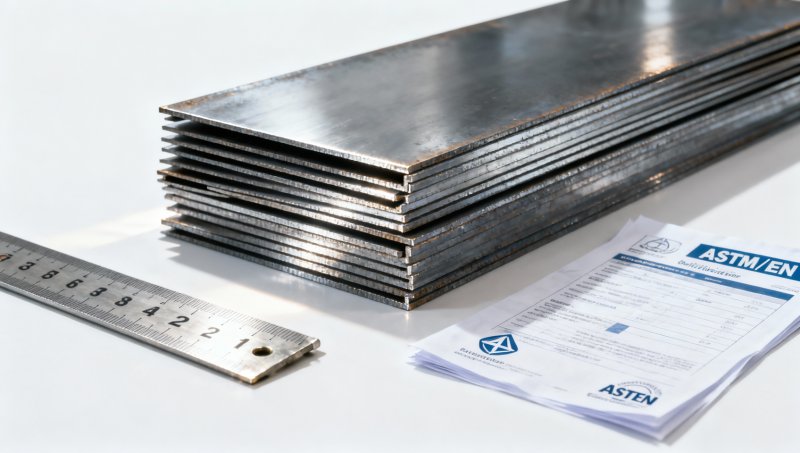
For procurement teams evaluating vendors, our engagement model includes: free technical consultation on section optimization (reducing weight without compromising load capacity), sample provision within 7 business days, and quotation turnaround under 48 hours for standard items. We also offer OEM co-engineering support—helping clients adapt designs for local fabrication standards in Saudi Arabia (SASO), Canada (CSA G40.21), or Australia (AS/NZS 3679.1).
Next Steps for Your 2026 Structural Steel Procurement
If you’re finalizing budgets, issuing RFQs, or validating supplier capacity for upcoming infrastructure or industrial projects, contact Hongteng Fengda today to:
- Request a 2026 carbon sheet steel price forecast tailored to your volume, specification, and destination port
- Review ASTM/EN-compliant product samples—including certified MTRs and dimensional reports
- Discuss customized solutions for complex components (e.g., tapered beams, perforated channels, or hybrid steel-concrete connection systems)
- Initiate pre-shipment inspection coordination with SGS, Bureau Veritas, or TÜV Rheinland
Let us help you convert supply chain uncertainty into predictable execution—backed by 18 years of structural steel export experience and a commitment to quality that begins at the billet and ends at your job site.
Related recommendations
") Stainless Steel Tube Coil vs. Straight Tube: Total Cost of Ownership in HVAC Retrofit Projects (Installation Labor, Leak Points, Space Savings)Stainless steel tube coil cuts HVAC retrofit TCO by slashing labor, leaks & space needs—discover how coil outperforms straight tube in real-world retrofits.
Stainless Steel Tube Coil vs. Straight Tube: Total Cost of Ownership in HVAC Retrofit Projects (Installation Labor, Leak Points, Space Savings)Stainless steel tube coil cuts HVAC retrofit TCO by slashing labor, leaks & space needs—discover how coil outperforms straight tube in real-world retrofits. Steel Coils Suppliers vs. Direct Mills: Lead Time, MOQ, and Custom Slitting Flexibility Compared for Mid-Volume BuyersSteel coils suppliers offer faster lead times, lower MOQs (5–10 tons), and precision custom slitting—ideal for mid-volume structural fabricators seeking agility, quality, and cost control.
 How to Vet Stainless Steel Coil Suppliers: 7 Due-Diligence Checks for Quality, Traceability, and ISO ComplianceStainless steel coil suppliers vetted right mean zero surprises on site. Discover 7 field-tested due-diligence checks for quality, full traceability & real ISO compliance.
 Stainless Coil Pipe vs. Seamless Pipe: When to Choose Welded Coiled Tubing for High-Pressure Fluid SystemsStainless coil pipe delivers unmatched efficiency for high-pressure fluid systems—superior continuity, faster installation, and proven weld integrity vs. seamless.
Please give us a message


Please enter what you want to find