When precision bending demands tight tolerances, repeatability, and superior surface quality, structural engineers increasingly specify carbon sheet steel—particularly cold-rolled over hot-rolled. This article explains why cold-rolled carbon sheet steel delivers better flatness, dimensional accuracy, and edge consistency for complex fabrication, while addressing real-world trade-offs in strength, cost, and formability. As a trusted structural steel manufacturer and exporter from China, Hongteng Fengda supports global project teams with ASTM/EN-compliant carbon sheet steel solutions—tailored for builders, procurement specialists, engineers, and OEM partners who prioritize performance, compliance, and supply chain reliability.
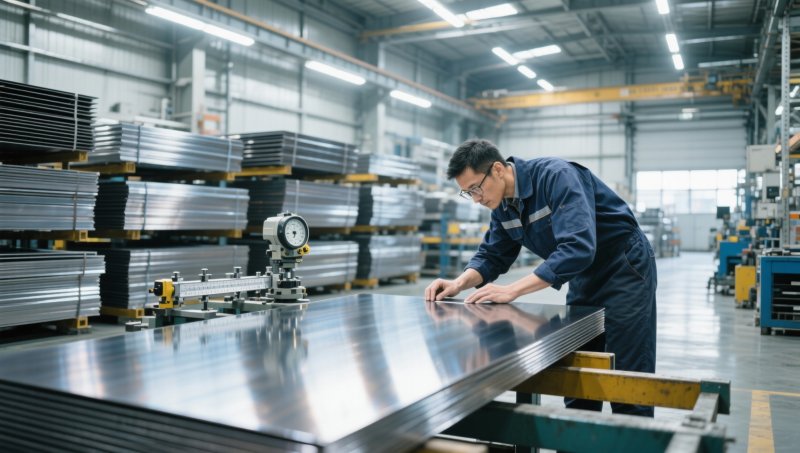
Why Cold-Rolled Carbon Sheet Steel Wins in High-Precision Bending
Cold-rolled carbon sheet steel undergoes final rolling at room temperature (typically<100°C), resulting in tighter dimensional control—±0.05 mm thickness tolerance versus ±0.3 mm for hot-rolled equivalents. This directly translates to predictable springback behavior during press brake operations, reducing rework by up to 40% in high-volume fabrication shops across North America and Southeast Asia.
Surface finish is another decisive factor: cold-rolled sheets achieve Ra values of 0.4–0.8 μm, enabling clean laser cutting, consistent powder coating adhesion, and minimal post-bend grinding. In contrast, hot-rolled surfaces often require descaling or shot blasting before precision forming—adding 1–2 days to lead time and increasing labor cost by 12–18%.
Edge consistency matters most when assembling multi-part assemblies like roof purlin systems or machine frames. Cold-rolled edges maintain squareness within ±0.3°, ensuring weld fit-up tolerances stay within AWS D1.1 limits without manual correction. Hot-rolled edges—often slightly tapered or wavy—require additional edge trimming, especially for parts bent to radii under 3× material thickness.
Key Performance Differences at a Glance
This table highlights how cold-rolled carbon sheet steel delivers measurable advantages where bend angle repeatability, weld prep efficiency, and finish consistency are non-negotiable—especially in OEM manufacturing and architectural metalwork. For applications requiring rapid prototyping or small-batch production, the higher yield strength and uniform elongation of cold-rolled grades also reduce tooling wear on CNC press brakes.
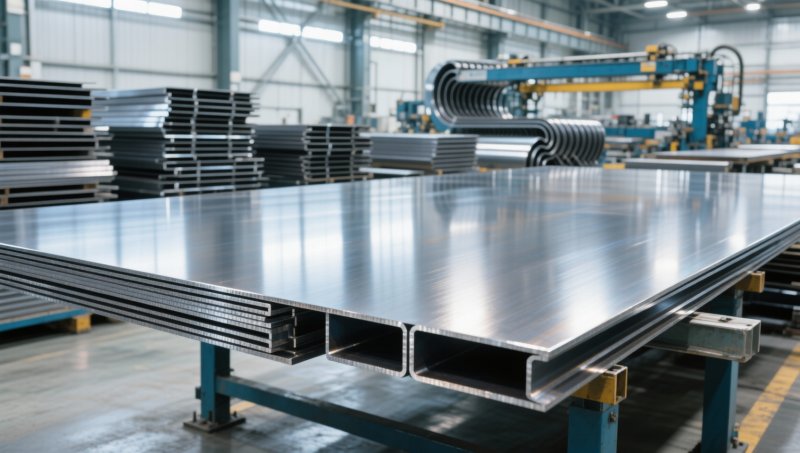
Where Cold-Rolled Precision Meets Structural Practicality
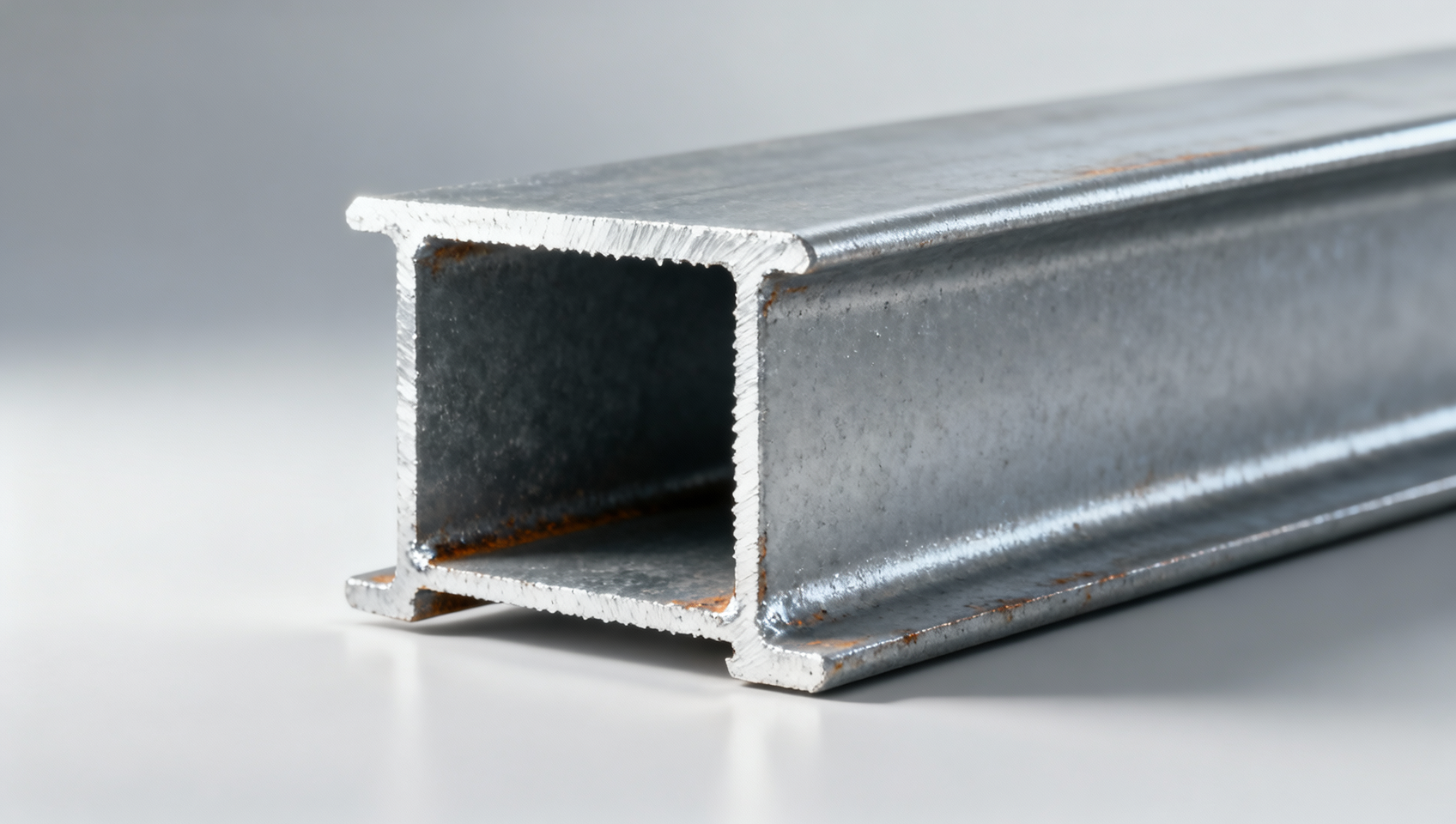
Not all projects demand cold-rolled precision—but many structural components benefit from its blend of accuracy and strength. Consider C Channel Beam used in purlins for industrial warehouses: when fabricated from cold-rolled Q235 or S235JR sheet (1.5–3.0 mm thick), these beams achieve straightness tolerances of ≤1.5 mm/m—critical for maintaining roof membrane integrity and drainage slope.
In mechanical light industry manufacturing, cold-formed C-channel sections serve as load-bearing arms and support frames for automated assembly lines. Their consistent cross-section ensures repeatable bolt-hole alignment across hundreds of units—reducing field drilling by 90% and eliminating misalignment-related downtime. Hongteng Fengda’s cold-rolled C Channel Beam offerings support thicknesses from 1 mm to 12 mm, with galvanized or powder-coated finishes meeting ISO 1461 and AAMA 2604 standards.
For projects combining structural function with aesthetic requirements—such as exposed steel canopies or interior feature walls—cold-rolled carbon sheet enables sharp, crisp bends at 90° or tighter radii without cracking or orange-peel surface defects. This eliminates costly secondary finishing and accelerates installation timelines by 3–5 days per 1,000 m² of façade area.
Common Applications Requiring Cold-Rolled Accuracy
- Architectural cladding subframes requiring ±0.5° angular repeatability
- Automated conveyor system supports needing identical mounting hole spacing across 500+ units
- Medical equipment enclosures demanding EMI-shielded, laser-cut panels with zero burr
- Custom steel stair stringers with compound bends and integrated handrail brackets
Procurement Decision Framework: When to Choose Cold-Rolled
Procurement professionals and project managers should evaluate three core criteria before specifying cold-rolled carbon sheet steel:
- Bend complexity: If >30% of parts require bends with radius ≤2× material thickness or angular tolerances tighter than ±0.8°, cold-rolled is strongly recommended.
- Volume & repeatability: For batches exceeding 200 identical parts, cold-rolled reduces setup time per part by 25–35% due to stable material flow and reduced trial runs.
- Downstream processing: If parts undergo welding, painting, or plating, cold-rolled’s oxide-free, uniform surface cuts pretreatment time by 1.5–2 days per batch.
Hongteng Fengda offers dual-certified cold-rolled carbon sheet steel compliant with both ASTM A1008 and EN 10131 standards—ensuring seamless integration into global supply chains. Our standard delivery window is 15–20 days from order confirmation, with full traceability down to heat number and mill test reports (MTRs) provided with every shipment.
Why Partner with Hongteng Fengda for Your Next Precision Steel Project
As a structural steel manufacturer and exporter from China, Hongteng Fengda bridges the gap between international engineering expectations and reliable Asian manufacturing execution. We combine ISO 9001-certified production, CE/SGS/BV-accredited quality control, and dedicated technical support—from initial material selection through bend simulation validation.
Whether you’re sourcing cold-rolled carbon sheet for custom chassis fabrication or need ASTM-compliant C Channel Beam with perforated patterns and galvanized coating, our team provides:
- Free engineering consultation on bend allowances, k-factor adjustments, and tooling recommendations
- Pre-shipment dimensional verification reports with coordinate measuring machine (CMM) data
- Flexible trade terms (FOB/CFR/CIF) and payment options including LC at sight or 30% TT deposit + 70% balance pre-shipment
- OEM support for custom packaging, labeling, and documentation aligned with your ERP system
Contact us today to request a material datasheet, review bend feasibility for your specific geometry, or schedule a virtual factory audit. Let’s ensure your next precision steel project starts with the right specification—and ends on time, within budget, and fully compliant.
Related recommendations
 How long does acero prepintado retain gloss and color stability in direct desert sunlight?Acero prepintado gloss & color stability in desert sun? Discover real-world performance data, PVDF vs. polyester longevity, and spec-critical insights for GCC projects.
 Does acero pregalvanizado maintain coating integrity after cold bending to 90 degrees?Acero pregalvanizado maintains coating integrity after 90° cold bending — when engineered right. Discover how Hongteng Fengda guarantees real-world performance, adhesion & corrosion resistance.
 Do the advantages of galvanized steel include reduced fire risk compared to untreated carbon steel?Advantages of galvanized steel include measurable fire-risk reduction vs. untreated carbon steel—learn how zinc delays ignition, buys critical escape time, and enhances safety without false 'fireproof' claims.
 What is the minimum bend radius for 12mm steel wire rope without permanent deformation?12mm steel wire rope capacity depends on bend radius — discover the safe 72–96mm minimum to prevent permanent deformation, fatigue & failure. Expert rigging insights inside.
Please give us a message


Please enter what you want to find