Choosing lightweight steel roofing means balancing cost, durability, and project performance. For buyers, engineers, and contractors comparing options, understanding structural steel properties, galvanized sheet thickness, and long-term maintenance is essential. This guide explores whether lightweight steel roofing fits your building needs while showing how a reliable structural steel manufacturer and structural steel supplier can help reduce risk and improve project efficiency.
In industrial buildings, warehouses, workshops, agricultural facilities, and commercial sheds, lightweight steel roofing is often selected for its lower dead load, faster installation, and adaptable design. Yet the right choice depends on more than roof sheet price. Structural span, wind load, corrosion exposure, insulation goals, and maintenance access all affect whether a lighter roof system will deliver real long-term value.
For procurement teams and technical evaluators, the decision usually comes down to 4 practical questions: how much structural load can be reduced, what coating and thickness are suitable, how often maintenance will be required over 10–20 years, and whether the supplier can provide stable quality under ASTM, EN, JIS, or GB aligned production. Those factors matter as much as the initial quotation.
What Lightweight Steel Roofing Means in Real Projects
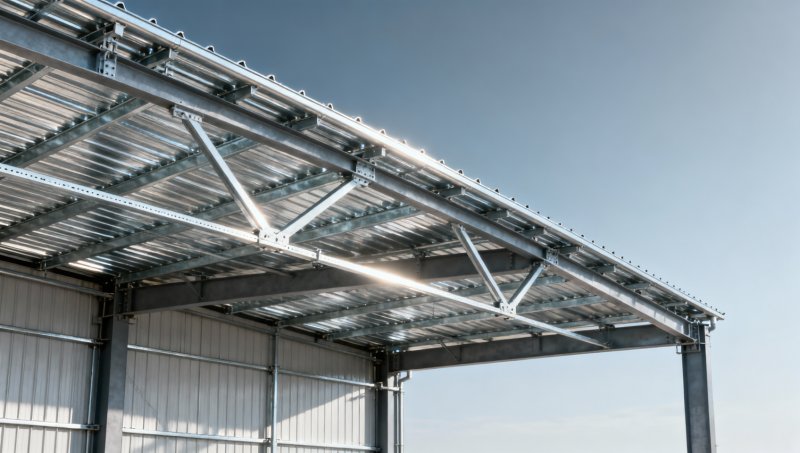
Lightweight steel roofing generally refers to roofing systems made from thin-gauge steel sheets or formed panels designed to reduce roof dead load while maintaining sufficient strength. In many projects, sheet thickness may range from 0.30 mm to 0.80 mm for cladding applications, while the supporting purlins and framing are sized according to span, live load, and local code requirements.
The term “lightweight” should not be confused with weak performance. Properly specified roofing steel can provide high strength-to-weight efficiency, especially when combined with profiled sheet geometry, galvanized or pre-painted coatings, and carefully designed fastener systems. A lighter roof may also reduce the size demand on secondary support members, helping control material consumption across the whole structure.
For factories and storage facilities, reduced dead load can simplify erection and improve installation speed. In projects with medium spans of 6–18 meters, lightweight roof panels are commonly used because they can be handled more easily on site, which may lower crane time and labor pressure. This is especially relevant where project schedules are tight and site access is limited.
However, the roofing sheet is only one part of the decision. The roof system must work together with steel beams, channels, cold formed profiles, bracing, drainage details, and edge protection. A structural steel manufacturer with experience in coordinated supply can help project teams avoid mismatch between roof sheets and the supporting frame, which is a common cause of rework and leakage.
Typical components in a lightweight steel roof system
- Roofing sheets or panels, often galvanized or color-coated, selected by thickness, profile depth, and coating weight.
- Cold formed purlins such as C or Z sections, usually designed according to spacing, uplift resistance, and span.
- Primary support members including steel beams or trusses, sized to carry combined dead, live, and wind loads.
- Fasteners, sealants, ridge caps, flashing, and drainage parts that directly influence watertightness and service life.
When the lightweight approach is most relevant
It is particularly suitable when buyers need faster installation, lower transport weight, and efficient coverage over large roof areas. It is less straightforward in highly corrosive coastal zones, heavy snow regions, or facilities with high thermal and acoustic demands unless additional layers such as insulation boards, anti-condensation treatment, or thicker coatings are included.
The table below helps clarify how lightweight steel roofing compares with heavier roofing choices from a project decision perspective.
The key takeaway is that lightweight steel roofing is not defined by sheet weight alone. Its real value comes from system-level efficiency: lower dead load, coordinated structural design, controlled corrosion risk, and predictable installation and maintenance planning.
Key Selection Criteria: Thickness, Coating, Span, and Environment
Selecting the right lightweight steel roofing starts with measurable technical criteria. The first is sheet thickness. A very thin sheet may reduce upfront cost, but if the roof sees frequent foot traffic, high uplift, or long spans between purlins, insufficient thickness can lead to denting, oil-canning, or reduced fastening reliability. In practical purchasing, teams often compare 0.40 mm, 0.50 mm, and 0.60 mm options for general industrial roof applications.
The second factor is coating performance. Galvanized or coated steel is commonly selected because roofing is continuously exposed to rain, ultraviolet radiation, airborne salts, and industrial fumes. The service life of the roof can vary significantly depending on whether the building is inland, coastal, humid tropical, or in a chemical processing zone. A roof in a low-corrosion environment may perform well for many years with standard galvanizing, while harsher conditions demand stronger protective systems.
Span and purlin spacing are equally important. If purlins are spaced at 1.0–1.5 meters, the roof sheet must have adequate profile stiffness to resist deflection and local deformation. In high wind zones, uplift pressure can become the governing condition rather than gravity load. That means procurement decisions should not rely only on nominal thickness; profile shape, fastening pattern, and support detail must be reviewed together.
Thermal behavior should also be checked early. Lightweight steel roofing can heat up quickly under direct sun and may form condensation under large temperature swings. In food storage, livestock buildings, workshops, or logistics centers, this often makes insulation and vapor control necessary. The added layers increase system performance, but they also change installation method, weight, and total cost.
Four questions buyers should ask before final specification
- What is the actual design environment: dry inland, coastal, industrial, high humidity, or chemical exposure?
- What are the code-based load conditions, including wind uplift, maintenance load, and possible snow load?
- How much roof traffic is expected during installation and future servicing over a 5–15 year period?
- Does the supplier provide consistent thickness tolerance, coating control, and support for matching structural members?
Common specification ranges in steel roofing projects
The following table summarizes commonly reviewed decision points for buyers and engineers. These are practical ranges, not fixed rules, and should always be checked against project drawings and local standards.
For many B2B buyers, these factors matter more than choosing the lowest unit price. A low-cost sheet that requires earlier replacement, more sealant repair, or more frequent inspection can become the more expensive option within just a few years of operation.
Where Lightweight Steel Roofing Performs Well—and Where Caution Is Needed
Lightweight steel roofing performs well in buildings where speed, coverage, and structural efficiency are priorities. This includes warehouses, temporary industrial shelters, fabrication workshops, machinery storage areas, distribution hubs, and agricultural buildings. In these cases, the roof often needs to span large areas economically while keeping the overall steel framework efficient and practical to install.
It is also suitable for retrofit projects where the existing structure has limited reserve capacity. Replacing an old heavy roof with a lighter steel alternative can help reduce load on older beams or trusses. That said, any retrofit should still include structural checking, especially if corrosion, fatigue, or unknown modifications have affected the original frame over 10–30 years of use.
Caution is needed in severe environments. Coastal facilities exposed to salt spray, chemical plants with aggressive fumes, and regions with repeated storm events may require thicker material, higher-performance coatings, and more robust fastening layouts. In some cases, the roof system remains viable, but only if specification upgrades are made from the start instead of being added after early deterioration appears.
Another common issue is overestimating lightweight roofing as a complete envelope solution. Steel sheets alone do not automatically provide acoustic comfort, heat control, or condensation resistance. For production halls, processing lines, and worker-occupied spaces, insulation build-up and ventilation design need to be planned at the same time as steel selection.
A related material consideration in industrial projects
In many construction and plant projects, roofing decisions happen alongside broader steel package sourcing. That may include beams, channels, cold formed sections, and piping materials for mechanical or utility systems. For example, when petroleum, chemical, mechanical, or construction facilities require pipeline components, buyers may also review Carbon Seamless Pipe as part of the same project supply strategy.
Such pipe materials are commonly available in standards like ASTM A106 Gr.B, ASTM A53 Gr.B, DIN2448, and JISG3452-54, with outer diameters from 17–914 mm and wall thickness options from SCH10 to SCH160. For procurement teams, coordinated sourcing across structural steel and pipe products can simplify document control, shipment planning, and supplier communication, especially on projects with 2–4 parallel material categories.
Common fit-for-use scenarios
- Good fit: warehouses, workshops, logistics centers, farm structures, and light industrial buildings where rapid coverage and lower dead load are important.
- Needs enhanced specification: coastal buildings, corrosive process plants, high-wind regions, or roofs with frequent maintenance foot traffic.
- Needs broader envelope design: temperature-sensitive spaces, noise-sensitive operations, or facilities where condensation can affect goods or equipment.
The most successful projects do not ask whether lightweight steel roofing is universally good or bad. They ask whether it matches the exposure condition, performance target, and maintenance capability of the specific building.
Procurement, Quality Control, and Supplier Evaluation
From a purchasing standpoint, lightweight steel roofing should be evaluated as a controlled industrial product, not just a commodity sheet. Quality consistency matters because even small variation in thickness, coating condition, or profile accuracy can affect installation speed and watertightness. For project managers, this means supplier evaluation should include both manufacturing capability and export execution reliability.
A professional structural steel manufacturer can add value beyond material supply by aligning roofing materials with structural members such as angle steel, channel steel, steel beams, and cold formed profiles. This matters when buyers want a more coordinated procurement package and fewer compatibility issues between roof cladding and the supporting steel frame. Stable production capacity and controlled lead times are especially important for export projects with fixed shipping windows.
Hongteng Fengda serves global buyers with structural steel products and customized solutions for construction, industrial, and manufacturing projects. With manufacturing facilities, quality control procedures, and familiarity with standards including ASTM, EN, JIS, and GB, the company supports customers who need predictable supply, OEM coordination, and reduced sourcing risk across different regions.
For quality and safety personnel, documentation should be reviewed before order confirmation, not after goods arrive. Typical checks include mill test documentation, dimensional inspection records, coating appearance verification, packing protection, and shipment marking. On international orders, clear agreement on tolerances, bundle identification, and inspection timing can prevent avoidable claims and delays.
Practical supplier evaluation checklist
The following comparison table can be used by buyers, distributors, and project decision-makers when shortlisting roofing and structural steel supply partners.
In many cases, the right supplier helps lower total project risk more than a small unit-price reduction ever could. That is especially true when roofing, framing, and related steel products must arrive in sequence and fit without extensive field modification.
Maintenance Planning, Common Mistakes, and Long-Term Value
Long-term performance depends on maintenance discipline as much as initial specification. Lightweight steel roofing should be inspected on a planned cycle, often every 6–12 months in standard industrial environments and more frequently in corrosive locations. Routine checks should focus on fasteners, overlaps, sealant condition, coating damage, drainage paths, and any areas of standing water.
One common mistake is selecting the thinnest possible sheet to reduce initial budget while ignoring maintenance access and service loads. Another is failing to separate roof selection from environmental exposure. A roof that performs acceptably inland may degrade much faster near the coast or in facilities handling moisture, fertilizer, acids, or alkaline dust. These are not product failures alone; they are often specification failures.
A third issue is poor installation control. Even a well-made roof sheet can leak if fasteners are overdriven, laps are misaligned, or flashings are not sealed correctly. For this reason, project teams should define 3 acceptance stages: incoming material inspection, installation quality check, and post-installation water-shedding review. This simple process reduces the chance of expensive remedial work after operation begins.
When the system is correctly chosen and maintained, lightweight steel roofing can offer very competitive lifecycle value. It can reduce transport burden, speed site work, and integrate efficiently with modern structural steel systems. For distributors and end users alike, the most economical roof is often the one that balances initial cost with stable service performance over the intended operating period.
FAQ
How do I know if lightweight steel roofing is right for my building?
Start with 5 checks: building use, environmental exposure, roof span, expected maintenance traffic, and insulation requirement. If your project values fast installation, moderate span coverage, and lower structural dead load, lightweight steel roofing is often a strong option. If exposure is severe, upgrade thickness, coating, and detailing instead of rejecting the concept too early.
What thickness should be considered?
Many buyers compare 0.40–0.60 mm sheets for general roofing, but the correct choice depends on profile shape, purlin spacing, wind load, and foot traffic. Thicker is not always necessary, but under-specification can quickly create durability and appearance issues.
How often should the roof be inspected?
A 6–12 month inspection cycle is common. In coastal, chemical, or high-debris environments, more frequent checks may be justified. Inspection should include drainage cleaning, fastener condition, sealant review, and treatment of scratches or coating damage before corrosion spreads.
What should procurement teams focus on besides price?
Look at standards compliance, thickness consistency, coating suitability, support for related structural members, document traceability, and realistic delivery time. For export procurement, reliable communication and packing quality can be just as important as the material itself.
Lightweight steel roofing is the right choice when it is specified as a complete system rather than a low-cost sheet alone. Buyers who evaluate thickness, coating, span, environment, and supplier capability together usually achieve better durability, smoother installation, and lower total project risk. For companies sourcing structural steel, roof components, or customized steel solutions for global construction and industrial projects, working with an experienced manufacturing and export partner can make selection and delivery much more predictable.
If you are comparing roof systems, planning a new build, or upgrading an existing structure, now is a good time to review your technical requirements and procurement strategy in detail. Contact Hongteng Fengda to discuss your project, request a customized structural steel solution, or learn more about reliable supply options for roofing support systems and related steel products.
Please give us a message


Please enter what you want to find