When evaluating 316 stainless steel plate, buyers often ask whether the higher cost truly delivers long-term value. For projects that demand corrosion-resistant pipes, stainless steel sheet for kitchen applications, or durable industrial components, understanding performance, pricing, and sourcing is essential. This guide explains where 316 plate stands out, how it compares in cost, and what to consider when working with a reliable structural steel manufacturer or supplier.
Is 316 stainless steel plate really worth the extra cost?
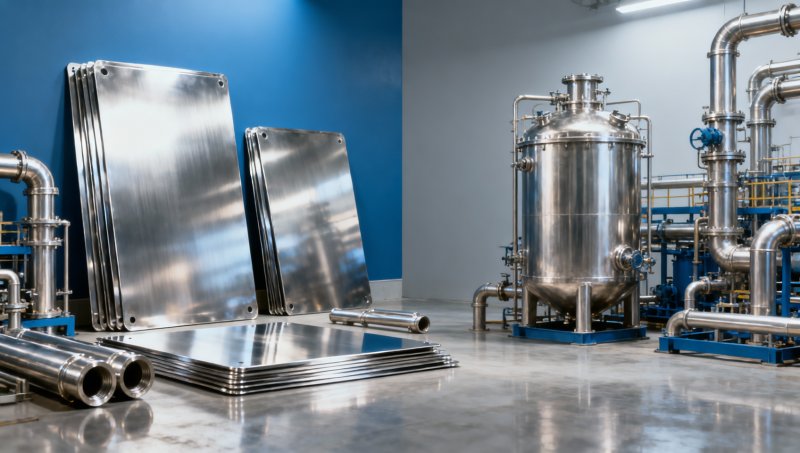
In many cases, yes—but only when the service environment actually requires it. The short answer is this: 316 stainless steel plate is worth the higher price when your application involves chlorides, salt exposure, moisture, chemicals, food processing, marine environments, or demanding hygiene requirements. In these conditions, the added molybdenum in 316 improves corrosion resistance and often reduces long-term maintenance, replacement, and failure risk.
If the environment is mild and corrosion exposure is limited, 304 stainless steel or even other steel materials may offer better overall value. That is why the real decision is not simply about upfront price. It is about lifecycle cost, operating reliability, fabrication needs, compliance requirements, and the consequences of premature corrosion.
For procurement teams, engineers, project managers, and end users, the best question is not “Which grade is cheaper?” but “Which grade is more economical for the actual working conditions?”
What makes 316 stainless steel plate different from other options?
316 stainless steel plate is an austenitic stainless steel known for its excellent corrosion resistance, especially in chloride-rich environments. Compared with 304 stainless steel, 316 contains molybdenum, which gives it stronger resistance to pitting and crevice corrosion.
This performance difference matters in real applications such as:
- Coastal construction and marine equipment
- Chemical tanks and processing lines
- Food production and commercial kitchen equipment
- Pharmaceutical and sanitary systems
- Heat exchangers and industrial components exposed to aggressive media
For buyers comparing materials, 316 stainless steel plate typically delivers value through:
- Better corrosion resistance than 304 in harsh environments
- Longer service life under wet or chemical exposure
- Lower risk of staining, pitting, and maintenance shutdowns
- More confidence in safety-critical or quality-sensitive applications
However, it is not automatically the best choice for every use. In dry indoor environments or non-corrosive service conditions, the premium may not be necessary.
When does 316 plate provide the best return on investment?
316 plate usually offers the strongest return when material failure would be expensive, dangerous, or disruptive. This includes projects where corrosion can cause contamination, repair downtime, structural weakness, or customer complaints.
It tends to be worth the investment when:
- The installation is near seawater or coastal air
- The material contacts salt, cleaning chemicals, or acidic substances
- The part is difficult or expensive to replace
- Appearance and surface cleanliness matter over time
- Regulatory or quality standards require stronger corrosion performance
For example, a stainless steel sheet for kitchen use may benefit from 316 when frequent washing, food acids, salt exposure, and hygiene are major concerns. Similarly, industrial plants using corrosion-resistant pipes, fittings, or tanks may justify 316 because repair costs and downtime can quickly exceed the initial material premium.
In contrast, if the plate will be used in a protected indoor setting with low corrosion risk, a less expensive material may achieve the same practical result.
What are buyers most concerned about before choosing 316 stainless steel plate?
Most serious buyers are not just comparing grades. They are evaluating risk. The main concerns usually include:
- Price difference: How much more does 316 cost than 304 or carbon steel?
- Performance need: Does the environment truly require 316?
- Fabrication: Can it be cut, welded, formed, and finished efficiently?
- Supply consistency: Can the supplier deliver stable quality and lead times?
- Standards compliance: Does the material meet ASTM, EN, JIS, or other project requirements?
- Long-term value: Will the plate reduce maintenance and replacement costs?
These are valid concerns because the wrong material choice can create two different problems: over-specification, which increases purchasing cost unnecessarily, or under-specification, which leads to premature corrosion and operational losses.
For this reason, technical evaluation should include exposure conditions, expected service life, fabrication method, surface finish requirements, and total installed cost—not just the ton price.
How should you compare 316 stainless steel plate with carbon steel and other steel products?
The comparison should be based on application, not just material category. 316 stainless steel plate is designed for corrosion resistance and durability in demanding environments, while carbon steel is often selected for strength, cost efficiency, and structural use where protective coatings or controlled environments are acceptable.
In many industrial and manufacturing projects, buyers may need both stainless and carbon steel products for different functions. For example, corrosion-prone parts may require 316 stainless steel plate, while structural or formed components may use Carbon Steel Plate for cost-effective fabrication.
For reference, this product range includes grades such as SPCC, SPCCT, SPCD, SPCE, SPCF, and SPCG, with applications in refrigerators, rails, switchboards, iron baskets, automobile chassis, roofs, car fenders, rear side panels, and interior boards. Available dimensions cover widths from 100 mm to 3000 mm, lengths from 1 m to 12 m, and thicknesses from 0.1 mm to 400 mm. Key advantages include high tensile strength, excellent formability, smooth surface finish, uniform appearance, and strong deformation resistance.
This kind of comparison helps buyers choose the right material for each part of a project rather than forcing one material to solve every requirement. In practice, smart sourcing often means combining stainless steel for corrosion-critical areas and carbon steel for structural or cost-sensitive components.
How can you tell if a supplier is reliable enough for 316 plate procurement?
Supplier selection is just as important as grade selection. Even high-grade stainless steel can become a sourcing problem if quality is inconsistent, certification is incomplete, or delivery schedules are unstable.
A reliable structural steel manufacturer or exporter should be able to provide:
- Clear grade and specification documentation
- Mill test certificates and traceability records
- Compliance with major standards such as ASTM, EN, JIS, or GB
- Stable manufacturing capacity and dependable lead times
- Support for customized sizes and processing requirements
- Responsive communication for technical and commercial questions
For international buyers, this is especially important. A dependable partner helps reduce sourcing risk, improve project planning, and avoid quality disputes. Manufacturers with export experience are often better prepared to support packaging, documentation, logistics coordination, and specification matching across different markets.
Hongteng Fengda, as a professional structural steel manufacturer and exporter from China, supports global construction, industrial, and manufacturing projects with stable production, strict quality control, and customized solutions. For buyers managing mixed-material sourcing or multi-country supply chains, this kind of operational reliability can be as important as the material itself.
So, is 316 stainless steel plate worth it for your project?
316 stainless steel plate is worth it when corrosion resistance directly affects service life, safety, maintenance cost, or product quality. It is especially valuable in marine, chemical, food-grade, hygienic, and high-moisture environments. In those situations, paying more upfront often saves more over time.
But it is not the universal best choice. If your application does not face aggressive corrosion, another stainless grade or a carbon steel solution may deliver better overall value. The key is to match the material to the real operating conditions and the total project objective.
For buyers, engineers, and decision-makers, the most effective approach is to evaluate 316 stainless steel plate through lifecycle thinking: environment, compliance, fabrication, replacement risk, maintenance burden, and sourcing reliability. When those factors point to high corrosion exposure or costly failure consequences, 316 is often not just worth it—it is the smarter business decision.
Please give us a message


Please enter what you want to find