Choosing the right structural steel supplier is critical to project quality, cost control, and delivery reliability. Whether you are comparing H-beam steel price, evaluating structural steel properties, or reviewing structural steel connection requirements, a careful vetting process helps reduce sourcing risks. This guide explains how buyers, engineers, and project teams can assess a structural steel manufacturer for compliance, production capability, and long-term partnership value.
For construction companies, fabricators, distributors, and project owners, supplier selection is rarely only about unit price. A low quote can become expensive if the mill cannot maintain dimensional tolerances, produce to ASTM or EN requirements, or deliver within a 3–6 week project window. In structural steel procurement, technical fit, process control, documentation, and communication speed all influence the final outcome.
When sourcing from China or other export markets, the evaluation process should combine engineering review, commercial analysis, and supply chain checks. A reliable manufacturer should demonstrate stable production capacity, traceable quality records, and the ability to support both standard sections and customized structural steel components for different international markets.
Start with Compliance, Standards, and Product Scope
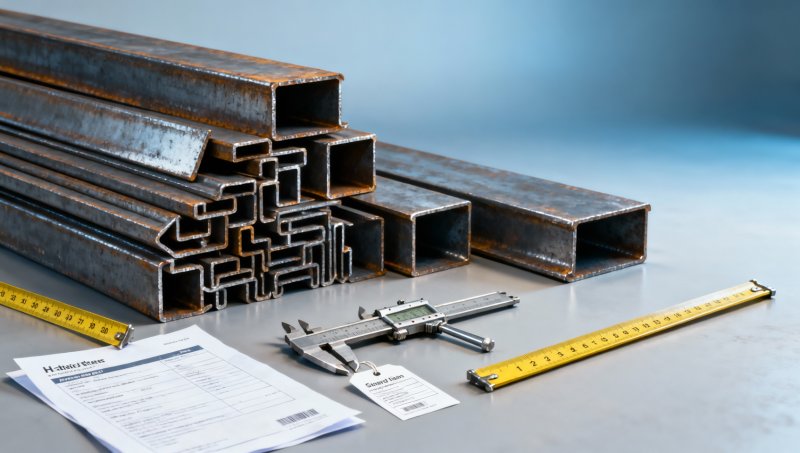
The first screening step is to confirm whether the structural steel supplier can consistently manufacture to the standards required by your project. For global buyers, the most common benchmarks include ASTM, EN, JIS, and GB. If your design team works with A36, S275, S355, or equivalent grades, the supplier should clearly explain what can be matched, what can be substituted, and what documentation will be provided before production starts.
A credible supplier should also have a broad but relevant product range. In structural applications, that usually includes angle steel, channel steel, steel beams, cold formed steel profiles, and fabricated or OEM structural components. A wider product portfolio can reduce the number of vendors you need to manage, but only if the supplier has proven control over each category rather than trading loosely across unrelated items.
Buyers should request mill test certificates, chemical composition ranges, mechanical property data, and tolerance references at an early stage. Even a basic review of yield strength, tensile strength, elongation, and section tolerances can eliminate high-risk suppliers before sample approval. This is especially important for projects involving welded frames, load-bearing structures, or exposed steelwork where dimensional errors can affect fit-up and installation time.
Key documents to request in the first 7 days
- Material specification sheets showing grade, size range, and applicable standards such as ASTM, EN, JIS, or GB.
- Sample quality documents, including mill test certificates, inspection records, and traceability format used for batch control.
- Dimensional tolerance references for angles, channels, beams, or cold formed profiles, especially if tolerance affects connection alignment.
- List of export markets served in the last 12–24 months to confirm experience with destination-specific compliance expectations.
The table below shows a practical way to compare supplier compliance readiness during the early qualification stage.
A supplier that answers these points clearly within 3–5 business days is often easier to work with during later engineering and delivery stages. Slow or incomplete answers at the start usually signal future delays in quotation updates, drawing confirmation, and claim handling.
Assess Manufacturing Capability and Process Control
After confirming standards, the next step is to verify whether the supplier is an actual structural steel manufacturer with stable production resources. For most B2B buyers, this means checking equipment range, process flow, forming or cutting capability, coating or fabrication options, and realistic monthly output. A supplier may offer attractive prices, but if production is heavily outsourced, consistency can drop from one order batch to the next.
For sections such as beams, channels, and cold formed profiles, process stability affects straightness, surface condition, hole alignment, weld preparation, and final fit-up. Small deviations can become major field issues when hundreds of members must be assembled under tight installation schedules. In many projects, a tolerance deviation of even a few millimeters can increase site correction work, crane time, and labor hours.
Ask the supplier to explain how raw material inspection, in-process inspection, and final inspection are handled. A disciplined factory usually has at least 3 control points: incoming material verification, dimensional checks during production, and pre-shipment inspection. For custom components, there should also be drawing approval and sample confirmation before mass production begins.
Questions that reveal real factory capability
- What is the normal lead time for standard sections versus customized steel parts, and how does it change for orders above 200–500 tons?
- Which operations are completed in-house: cutting, punching, drilling, welding preparation, surface treatment, or packaging?
- How are nonconforming products isolated, recorded, and corrected before shipment?
- Can the supplier provide inspection photos, production videos, or third-party inspection support before loading?
The comparison below helps buyers separate a capable manufacturer from a purely price-driven trader model.
Manufacturing capability is especially important for long-term procurement. A supplier with modern facilities and strict quality control can support repeat orders more reliably, which matters for distributors, project contractors, and OEM buyers managing phased deliveries over 2–6 months.
Review Quality Assurance, Testing, and Technical Communication
Quality assurance is not just about passing inspection at the end. In structural steel sourcing, it includes how the supplier interprets drawings, confirms material substitutions, manages traceability, and responds when tolerances or surface conditions fall outside agreement. Strong suppliers usually communicate technical limits early instead of accepting every requirement and creating problems later.
Project teams should pay special attention to dimensional accuracy, section geometry, coating condition where applicable, and documentation alignment between purchase order, packing list, and inspection records. For fabricated parts, weld preparation details, drilling position, and assembly references should be checked before production begins. That is often where procurement, QC, and site installation teams need the most coordination.
In some projects, structural steel purchasing also overlaps with enclosure or roofing materials. For example, industrial buildings, warehouses, public buildings, and agricultural facilities may require both structural members and durable coated sheets. In those mixed procurement cases, it is useful to work with a supplier familiar with related steel products such as Color Coated Galvanized Steel Sheet PPGI, especially when corrosion resistance, weather exposure, and installation efficiency are project priorities.
Example of related steel product evaluation in combined building projects
For roofing and cladding packages used alongside structural frames, buyers may compare PPGL options made from aluminum-zinc steel. Common thickness ranges are 0.2mm–1.2mm, width ranges are 600mm–1250mm, and coating thickness may fall within Top 11–35μm and Back 5–14μm. These parameters affect corrosion resistance, service life, and forming suitability in applications such as factories, warehouses, schools, hospitals, garages, and agricultural sheds.
A technically capable steel supplier should be able to discuss where ordinary PE, SMP, HDP, or PVDF coatings are more appropriate, and how environmental exposure influences product selection. In coastal, humid, or high-UV regions, the difference between a basic coating and a higher weather-resistance system can significantly affect maintenance frequency over a 10–25 year service period.
Quality checkpoints buyers should define in writing
- Material grade confirmation and substitution approval procedure before production release.
- Inspection criteria for dimensions, straightness, quantity, marking, and surface condition.
- Hold points for photos, video review, or third-party inspection at 30%, 80%, or 100% production completion.
- Claim response timeline, ideally within 24–72 hours after quality evidence is submitted.
This level of communication protects both sides. It helps the buyer control risk, and it helps the manufacturer avoid rework, shipping disputes, and unclear responsibility after goods arrive at site or warehouse.
Check Commercial Terms, Lead Times, and Supply Chain Reliability
Commercial evaluation should go beyond the quoted H-beam steel price or base material rate. Buyers need to understand what is included in the quotation: raw material basis, processing scope, testing, export packing, port terms, and expected validity period. Two suppliers may differ by 3%–8% on price, but the lower quote may exclude cutting, marking, or documentation that your project still requires.
Lead time analysis is equally important. For standard structural sections, the delivery cycle may be 2–4 weeks under normal production load, while custom fabricated components may require 4–8 weeks depending on drawing complexity, approval speed, and surface treatment steps. Buyers should ask for a breakdown of production time, inspection time, inland transport, and vessel booking rather than accepting a single delivery promise.
Another core issue is supply chain resilience. If a project requires phased shipments over several months, the supplier should show how material availability, rolling schedule, and packaging capacity are managed across multiple lots. This matters for project managers and distributors who must balance inventory cost with site delivery timing.
Commercial factors that affect total landed cost
The following table highlights the difference between unit price evaluation and total procurement cost evaluation. This is where many sourcing decisions either create savings or generate hidden losses later.
From a procurement perspective, reliable lead times are often more valuable than the lowest initial quote. Delays in 1 shipment can impact installation sequence, subcontractor allocation, and crane bookings, especially on large industrial or commercial projects with multi-stage steel erection plans.
Evaluate Service, Partnership Fit, and Long-Term Procurement Value
The final stage of supplier vetting is to determine whether the company can become a dependable long-term partner rather than a one-time vendor. This is particularly important for distributors, OEM buyers, contractors, and manufacturers who need repeat purchasing, stable quality, and predictable response times over multiple orders each year.
A supplier with long-term value usually performs well in 4 areas: technical response, production stability, problem-solving speed, and commercial transparency. For example, if a design revision changes section size or hole position, the supplier should respond with updated feasibility and lead time impact within 24–48 hours, not after production has already started. Good service reduces not only communication friction but also operational risk.
For global buyers, working with a structural steel manufacturer and exporter from China can be efficient when the supplier combines consistent production capacity with strict quality control and export experience. Companies such as Hongteng Fengda, which focus on angle steel, channel steel, steel beams, cold formed profiles, and customized structural steel solutions, are often evaluated on their ability to support international standards, dependable lead times, and practical sourcing support across North America, Europe, the Middle East, and Southeast Asia.
Practical supplier vetting checklist
- Confirm standards, grades, and section range before requesting a final quotation.
- Review sample documents, including test certificates and inspection records, within the first week.
- Verify production capability for your expected order size, whether 20 tons, 200 tons, or a phased project supply.
- Define tolerances, marking, packing, and acceptance criteria in writing before production release.
- Check communication speed for technical changes, shipping updates, and after-sales issues.
Common mistakes to avoid
- Choosing only by price without comparing documentation scope, tolerance control, and packing method.
- Assuming all export suppliers understand project drawings and connection details at the same technical depth.
- Waiting until shipment stage to clarify inspection method, causing delays and disputes.
- Ignoring long-term reliability indicators such as repeatability, response time, and corrective action process.
A strong supplier relationship should help you reduce sourcing risks, control total cost, and keep projects moving on schedule. If your team needs both standard structural steel and customized solutions, it is worth selecting a partner that can support technical review, quality assurance, and export execution in one coordinated process.
FAQ for Buyers, Engineers, and Project Teams
The questions below address frequent concerns raised during structural steel supplier qualification and international sourcing decisions.
How many suppliers should I compare before making a decision?
For most projects, comparing 3 qualified suppliers is a practical minimum. This gives enough contrast on price, lead time, and technical response without creating unnecessary procurement delay. If the project involves customized fabrication or cross-border compliance requirements, a shortlist of 4–5 suppliers can provide better risk visibility.
What lead time is considered reasonable for structural steel orders?
For standard sections, 2–4 weeks is common under normal factory loading, while more customized structural parts may take 4–8 weeks. The more important metric is not the shortest promise but whether the supplier can break down each stage clearly, including material preparation, processing, inspection, packing, and booking.
Which quality indicators matter most during vetting?
Focus on 4 areas: material traceability, dimensional tolerance control, inspection records, and responsiveness to nonconforming issues. These indicators affect installation accuracy, claim handling, and overall project reliability more directly than general marketing claims about quality.
When should I involve technical and QC teams in supplier review?
Ideally before the final commercial negotiation. Procurement can lead the process, but engineering and QC should review grades, tolerances, drawings, and inspection requirements early. This usually saves time within the first 7–10 days of supplier evaluation and prevents costly revisions after order confirmation.
A well-vetted structural steel supplier should offer more than competitive pricing. The right partner demonstrates compliance with international standards, stable manufacturing capability, disciplined quality control, clear lead-time management, and responsive technical support. For buyers sourcing from China, these factors are essential for reducing project risk and maintaining predictable delivery performance.
If you are evaluating a supplier for angle steel, channel steel, steel beams, cold formed profiles, or customized structural steel components, take time to verify documents, production processes, and service responsiveness before placing a large order. To discuss project requirements, compare specifications, or request a tailored steel sourcing solution, contact us today and get a customized proposal for your application.
Please give us a message


Please enter what you want to find