Ensuring compliance when sourcing ASTM steel beams from multiple suppliers
Ensuring compliance when sourcing ASTM steel beams from multiple suppliers is crucial for maintaining project quality and efficiency. As a trusted Structural Steel Manufacturer & Exporter from China, Hongteng Fengda provides dependable ASTM steel beam for industrial shelving, steel profiles for automotive industry, and structural steel purlin for commercial buildings. With standards-driven production and global experience, we help buyers navigate complex regulations, mitigate supply risks, and secure reliable materials for diverse applications from stadium projects to shipbuilding and transmission towers.
Understanding ASTM Standards and Their Impact on Global Projects
ASTM International standards are among the most recognized benchmarks for structural steel quality, mechanical properties, and test methods. For steel beams, grades such as ASTM A36, A992, and A572 define yield strength levels ranging between 250 MPa and 460 MPa, chemical composition limits, and tolerance requirements that directly affect load-bearing performance. Compliance with these specifications ensures material uniformity across different sources and projects.
Global construction and industrial buyers often manage multiple supply chains to meet project volume, delivery schedules, and regional demands. When procurement crosses borders, variations in production practices or certification interpretation can create inconsistencies. This is why reliable partners like Hongteng Fengda emphasize ASTM, EN, JIS, and GB standards alignment through consistent metallurgical testing and documented quality procedures.
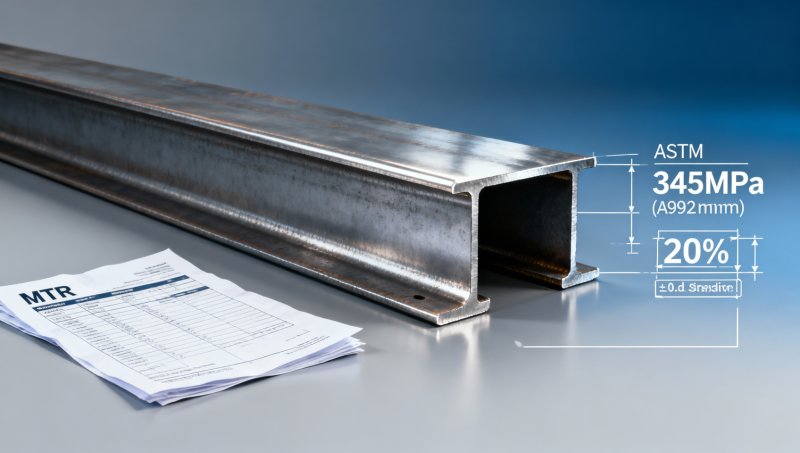
Each shipment typically includes mill test reports (MTRs) verifying tensile strength (minimum 400 MPa for A36) and elongation values exceeding 20%. Buyers should confirm that suppliers provide traceable batch documentation and that material certificates are validated prior to fabrication. In high-load structures such as bridges or transmission towers, an inconsistency of even ±1.5 mm in beam flange thickness can influence assembly accuracy and safety margins.
Different ASTM designations also correspond to unique applications. A992 beams with a yield strength of 345 MPa are preferred for high-rise frames, while A572-50 beams balance weldability with strength. Understanding these technical nuances allows procurement teams to align structural requirements with supplier capabilities and compliance records.
Key ASTM Steel Beam Categories and Specifications
This table highlights the strength and specialization differences across ASTM beam types. Selecting the right grade avoids over-engineering costs of up to 12% and minimizes fabrication delays during conformity inspections.
Challenges in Multi-Supplier Sourcing and Compliance Risks
Working with several suppliers can improve delivery flexibility but introduces disparity risks. The most reported issues include inconsistent mechanical testing, dimensional deviations beyond ±0.3 mm, and missing traceability documents. Cross-regional suppliers may label identical materials under varying standard equivalences, complicating audits. For instance, an EN 10025 S355 beam might share similar properties with ASTM A572 yet differ slightly in sulfur content and Charpy impact toughness.
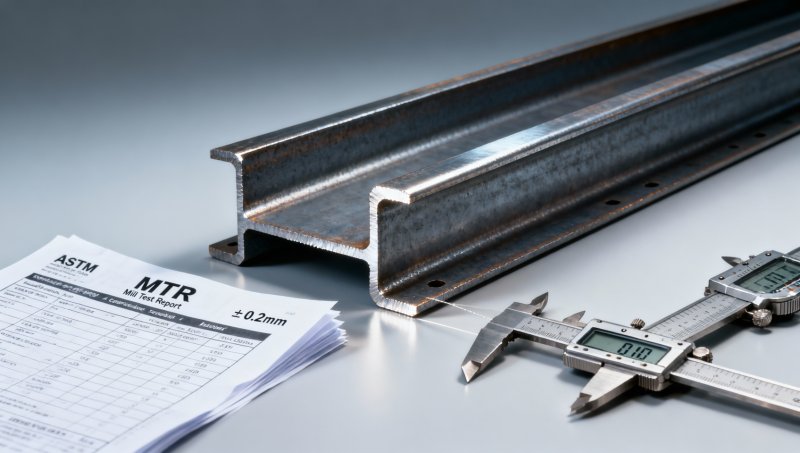
Buyers should implement a centralized compliance verification framework covering four primary checkpoints: material certification validation, mechanical testing reviews, visual inspection logs, and document traceability audits. Each stage reduces discrepancies and ensures contractual compliance across production batches, typically spanning 3–5 suppliers for large-scale projects.
Another practical approach is adopting third-party inspection services accredited by ISO 17020, ensuring inspection frequency every 500 tons of output or per 10 days of rolling operations. Such systematic checks prevent structural defects and optimize quality across sites.
Hongteng Fengda supports inspection coordination at both export and domestic levels, ensuring photographic documentation of each heat number and chemistry composition review. With an average compliance deviation below 0.5%, our quality management delivers confidence to engineers and project decision-makers worldwide.
Risk Assessment Framework
Following structured risk identification and mitigation steps can reduce non-compliance cases by 20–35% during project inspection phases.
Best Practices for Multi-Supplier Quality Coordination
Effective compliance management requires standardized communication among all supply partners. Establishing shared digital records helps synchronize mill certificates, third-party inspection results, and shipping documentation. A project may involve weekly data uploads, coordinated through supplier portals or ERP integrations covering mechanical test data and surface inspection images.
Procurement managers should define measurable KPIs such as on-time delivery rates above 95%, non-conformity incidents fewer than 2 per 1000 tons, and documentation completeness indicators. Quantified metrics enable quick supplier performance review every quarter and encourage continuous improvement.
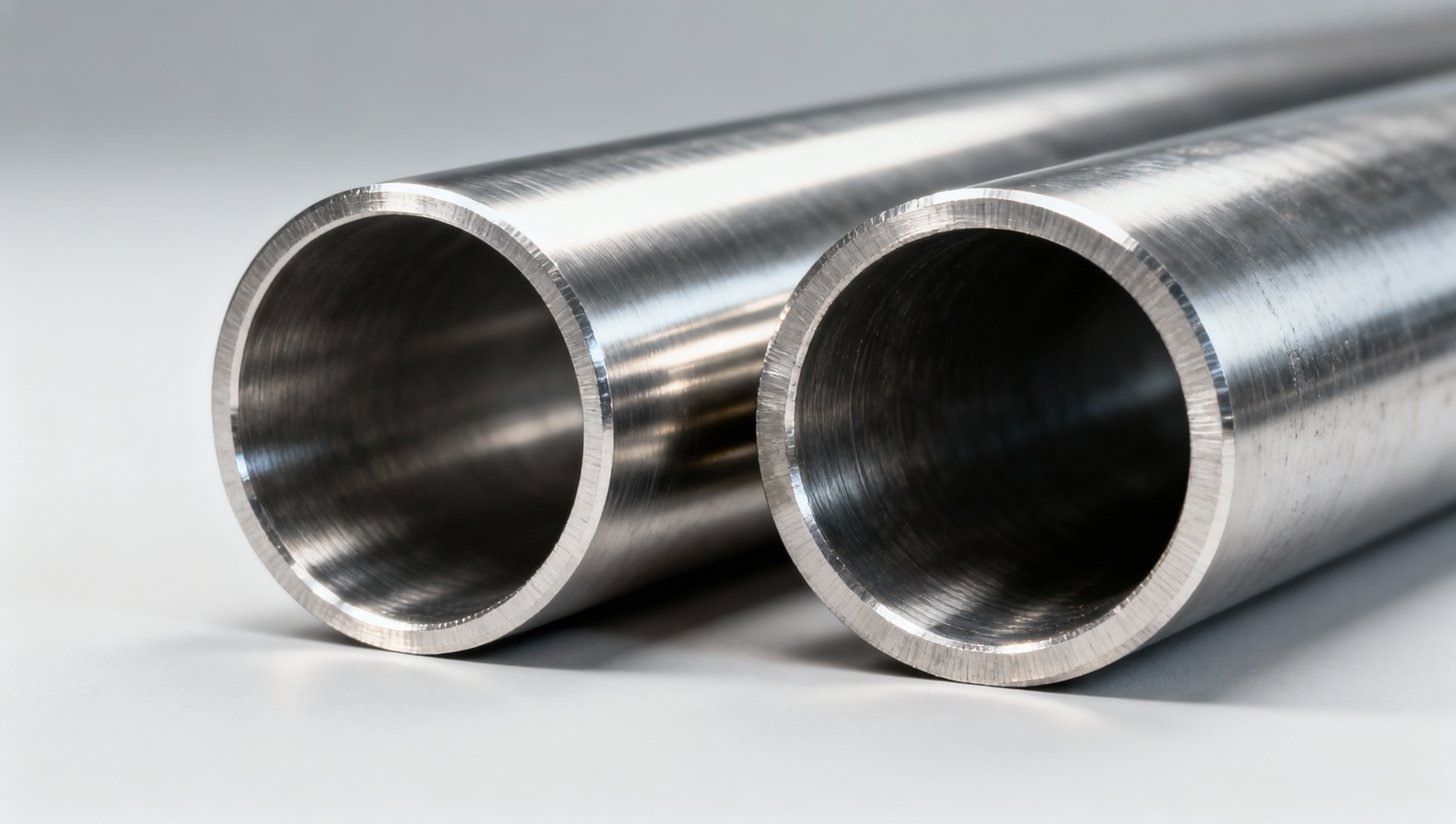
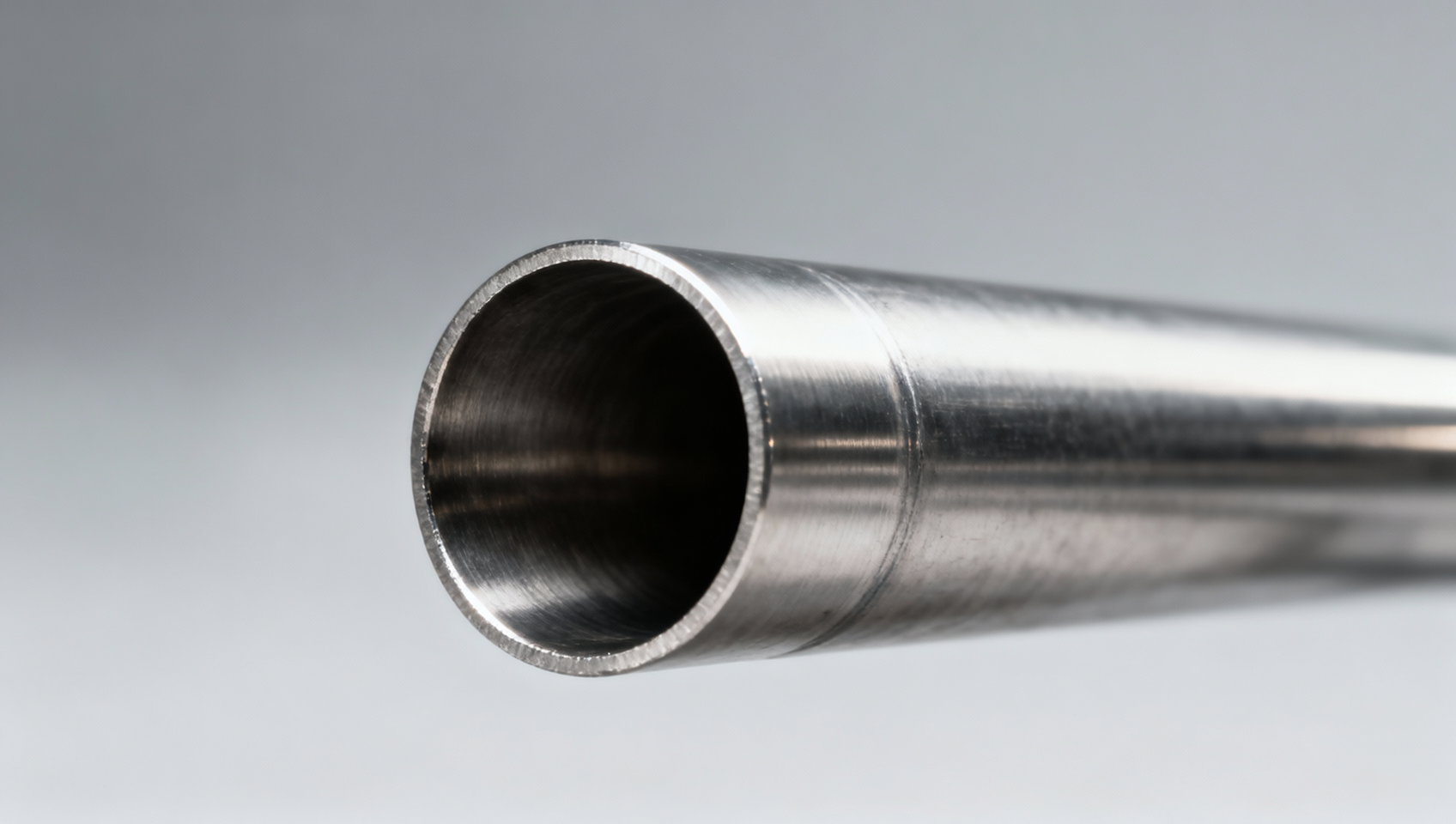
Beyond beams, stainless steel components are often integrated into complementary systems like handrails, supports, or piping. For example, the 201 Stainless steel pipe provides oxidation resistance, tensile strength ≥ 520 MPa, and yield strength ≥ 205 MPa, suitable for building and automotive applications. With wall thickness between 0.6 mm and 6.0 mm and finishes like No. 4 and BA, it complements structural assemblies requiring both durability and aesthetic continuity.
Hongteng Fengda aligns its quality systems with ISO 9001 and SGS/BV inspection standards, achieving consistent compliance even with output capacities exceeding 10,000 tons per month. Centralized material tracking from billets to finished beams minimizes internal variance and reduces client verification efforts by 30%.
Implementing a Compliance Verification Workflow
A systematic workflow enables consistent ASTM compliance when sourcing from several suppliers. Each stage must be documented and validated by procurement and quality teams. The following five-step framework demonstrates the approach:
- Pre-qualification of suppliers through analysis of historical conformity and certification validity.
- Sampling inspection for tensile, yield, and elongation testing – ideally 1 sample per 20 tons.
- Visual and dimensional checks using calibrated instruments with ±0.2 mm tolerance range.
- Batch marking and trace recording to link physical beams with digital quality files.
- Final audit before packaging to verify ASTM stamp placement and document completeness.
Executing this 5‑phase process can shorten compliance confirmation time by up to 25%, ensuring beams arrive ready for fabrication. Electronic record retention also supports future audits and compliance reporting.
For projects involving mixed material categories, similar traceability should extend to subsidiary products. The 201 Stainless steel pipe exemplifies how product documentation—including density (8.0 g/cm³), hardness (≤ 187 HB), and thermal expansion coefficient (16.9 × 10⁻⁶/°C)—supports integrated compliance management across construction systems.
Common Missteps and Recommendations for Buyers
Many procurement teams underestimate the complexity of maintaining uniform compliance across distributed supply chains. Common missteps include skipping regular testing after specification updates or over-relying on supplier declarations without third-party validation. Such neglect may lead to warranty disputes or rework costs, sometimes amounting to 8–10% of project budgets.
Another frequent pitfall lies in insufficient communication between design, procurement, and quality control departments. Implementing a single digital platform for inspection approval shortens response time by 15–20% and ensures all stakeholders view identical certification versions. Buyers are also advised to conduct random beam sampling every 300–500 tons and perform visual defect checks upon arrival.
When working with multiple overseas producers, aligning incoterms and shipping documentation must follow compliance guidelines to avoid customs delays. Ensuring packing lists contain ASTM grade, batch number, and heat identification enhances customs clearance efficiency by up to 30%.
Frequently Asked Questions (FAQ)
How often should compliance audits be conducted?
For consistent quality, audits should occur after every 1,000 tons of received material or every six months, whichever comes first. Higher-frequency spot inspections are recommended if more than 3% of samples show deviations.
What documents must accompany ASTM steel beam shipments?
Mandatory documents include Mill Test Reports (MTRs), origin certificates, packing lists, and third-party inspection results meeting ASTM A6/A6M requirements. Each report should clearly show chemical composition and mechanical properties.
How can buyers ensure consistency across multiple suppliers?
By establishing unified testing protocols, imposing equal tolerance thresholds, and employing independent laboratories every 200–300 tons of supply, buyers can achieve reproducibility across suppliers within ±2 MPa tensile deviation.
Conclusion and Collaboration Insight
Maintaining ASTM compliance across multiple steel beam suppliers is a complex but essential task for modern global projects. It influences safety, cost control, and project timelines. Through data transparency, rigorous inspection, and disciplined supplier management, companies protect both performance and reputation.
Hongteng Fengda provides full‑spectrum structural steel solutions—from ASTM steel beams to stainless components—produced under certified processes meeting ASTM, EN, JIS, and GB standards. Our commitment to consistency and reliability helps buyers around the world simplify procurement, meet technical specifications, and ensure on‑site compliance under real‑world conditions.
To explore tailored sourcing plans, technical recommendations, or compliance documentation support, contact Hongteng Fengda today for expert guidance and dependable structural steel solutions.
- ASTM standards
- ASTM standard
- steel pipe
- ASTM A36
- structural steel
- steel beams
- steel profiles
- ASTM steel beam
- Structural steel purlin
- Structural Steel
- Steel Beams
- 201 stainless steel pipe
- stainless steel pipe
- 1 stainless steel pipe
- Profile
- Steel Beam
- steel profile
- Structural steel purlin for commercial buildings
- ASTM steel beam for industrial shelving
- Steel profiles for automotive industry
Related recommendations
 How much does 2 inch ss pipe price increase when upgrading from Schedule 40 to Schedule 80 for high-pressure systems?2 inch ss pipe price increases 18–35% when upgrading from Sch 40 to Sch 80—discover why, when it’s truly needed, and how to avoid overpaying.
 Which 304 stainless steel coil suppliers meet ISO 9001 and EN 10088-2 for food-grade fabrication?Discover verified 304 stainless steel coil suppliers meeting ISO 9001 & EN 10088-2 for food-grade fabrication—traceable, audited, and ready for regulatory validation.
 How does 2 inch ss pipe price compare between 304 and 316 grades for marine environments?2 inch ss pipe price varies significantly between 304 and 316 — but in marine environments, choosing 304 risks costly failures. Discover why 316 is the true value choice.
 Is 20 feet square pipe price affected more by raw material volatility or regional logistics costs?20 feet square pipe price is driven primarily by raw material volatility—not logistics. Discover why billet costs dominate pricing & how to forecast smarter with Hongteng Fengda.
Please give us a message


Please enter what you want to find