How ASTM Steel Beam Standards Affect Load Ratings in Industrial Shelving Systems
Understanding how ASTM steel beam standards influence load ratings in industrial shelving systems is essential for engineers, procurement teams, and safety managers aiming to ensure durability and compliance. As a Structural Steel Manufacturer & Exporter from China, Hongteng Fengda offers reliable ASTM steel beams for industrial shelving along with Hot Rolled I Beams for structural support and other steel profiles for automotive industry applications. These standardized solutions help streamline design accuracy, optimize load-bearing performance, and enhance safety in modern structural steel projects worldwide.
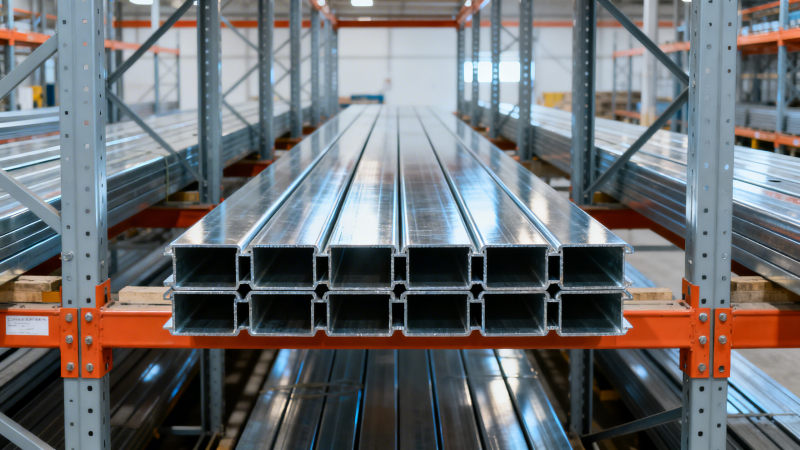
1. The Role of ASTM Standards in Steel Beam Classification
ASTM International provides the framework that governs the chemical composition, mechanical properties, and dimensional tolerances of structural steel beams used in industrial shelving and racking systems. Among the most relevant standards are ASTM A36, ASTM A992, and ASTM A572, which define yield strength levels ranging typically from 250 MPa to 450 MPa. These grades help determine how shelving beams respond to static loads, dynamic movement, and repetitive stress cycles during warehouse operations.
Purchasers rely on ASTM standard specifications to avoid performance deviation between different batches or suppliers. In fact, benchmark data show that shelving beams following ASTM A992 Grade 50 exhibit approximately 15–20% higher load capacity than non-standard equivalents with comparable dimensions. This ensures predictable performance, a key element for safety audits and compliance with ISO-based industrial storage regulations.
Engineering teams use ASTM mechanical tests such as tensile strength (measured up to 450–550 MPa) and elongation (around 18–21%) to assess whether beams can support varying pallet loads from 500 kg to more than 2,000 kg per level. These measurable metrics connect directly with system stability and material utilization efficiency.
Hongteng Fengda’s production processes integrate hot rolling, controlled cooling, and precision calibration to ensure ASTM conformity. Combined with strict inspection requirements—often including 100% ultrasonic and magnetic particle testing—the result is a consistent beam profile ready for global export to clients seeking ASTM, EN, JIS, or GB compliance.
The table below illustrates how major ASTM beam grades impact performance parameters in shelving load calculations.
As shown above, higher grades not only increase strength but improve the stiffness-to-weight ratio. This contributes to lighter frames with equivalent or superior carrying capacity—an important consideration for modern high-density warehouse systems.
2. Load Rating Calculations and Engineering Influence
In industrial shelving systems, load ratings are derived from the combination of beam span, section modulus, material yield strength, and anticipated dynamic factors such as forklift impact or vibration frequency. According to engineering benchmarks, deflection limits typically range between L/180 and L/240, depending on storage type and safety requirements. ASTM beam standards enable accurate definition of these parameters within a reliable tolerance of ±2%.
Properly categorized ASTM beams enable uniform load distribution across uprights, maintaining permissible deflection thresholds under 5 mm per meter span. This precision reduces uneven loading, which can otherwise lead to structural fatigue or long-term deformation over 10–12 years of regular usage.
Load ratings are also influenced by beam geometry; for instance, a W200×100×7 ASTM A992 I-beam may support up to 3,200 kg per pair over a 2,500 mm span, depending on system configuration. Using verified software models based on ASTM parameters allows engineers to predict safe capacities with deviations less than 5% compared to actual test data.
Procurement teams often request documentation confirming mechanical test results, mill certificates, and third-party validation—these details ensure accountability across project phases. With Hongteng Fengda’s production traceability system, every beam shipped carries a batch code linking back to its mechanical history and dimensional record.
Supplementary materials such as Carbon Seamless Pipe can also interface with shelving or support structures, particularly in warehousing or petrochemical environments. It is available in outer diameters from 17–914 mm and wall thicknesses from SCH10 to SCH160, making it suitable for high-stability lattice and structural integration modules.
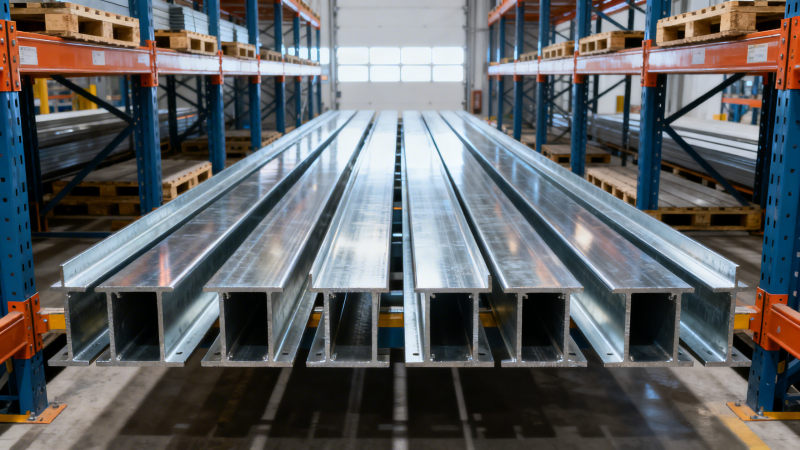
3. Quality Control and Compliance in Manufacturing
Strict quality control is essential to achieving uniform mechanical performance in ASTM steel beams. Hongteng Fengda operates facilities where dimensional accuracy is maintained within ±0.5 mm tolerance per meter of beam length. Mill testing includes tensile testing, yield checks, and impact testing at -20 °C to ensure durability in cold-storage applications.
Consistent metallurgical composition—typically 0.20–0.25% carbon, 1.2–1.5% manganese, and less than 0.04% sulfur and phosphorus—is maintained through batch-controlled melting. This composition delivers balanced hardness, ductility, and weldability needed for modern framing systems that often undergo field fabrication or bolted assembly.
Manufacturers must conform to ASTM A6/A6M for general requirements, including dimensional checks and camber verification. These inspection routines reduce variation risks and improve consistency when beams are paired in racking systems or mezzanine decks. Each beam lot is verified across five key checkpoints—chemical analysis, dimensional tolerance, surface inspection, mechanical testing, and marking verification—to maintain traceability.
The table below summarizes typical quality control indicators used in ASTM beam manufacturing and their acceptable ranges.
By ensuring these parameters, manufacturers can consistently meet client specifications from North America to Southeast Asia, where certification and traceability form a prerequisite to supplier approval.
4. Application Scenarios and Integration Solutions
Industrial shelving systems vary significantly depending on the warehouse layout and storage density. In automotive manufacturing, heavy beams must support components weighing 800–1,500 kg per pallet position, while in e‑commerce fulfillment centers, lighter beams graded A36 or A572 can achieve cost-efficient load performance for lighter goods below 500 kg per shelf.
For facilities with corrosive or high-humidity environments—such as food storage or chemical batching—ASTM beams are frequently paired with galvanized coatings or powder finishing exceeding 80 µm thickness. This surface treatment helps extend service life by 30–40%, ensuring reliability through 24‑hour continuous operations over many years.
In dynamic or hybrid structures integrating piping and framework, Hongteng Fengda provides modular solutions including Carbon Seamless Pipe assemblies. With lengths between 5 m–14 m and anti‑corrosion coatings like 3PE or FBE, it complements beam-based systems by adding rigidity and resistance to torsional stress, essential in mechanical and construction fields.
Such integration ensures load consistency, simplifies on‑site installation through prefabricated connections, and minimizes field welding—often reducing construction time by 20–25% and labor cost by up to 15% compared to conventional fabrication methods.
5. Procurement Insights and Lifecycle Optimization
Procurement officers and project managers evaluating steel beams under ASTM standards should focus on four dimensions: strength class, dimensional precision, coating quality, and documentation integrity. Each factor carries measurable value, especially when assessing long-term maintenance cycles ranging 8–15 years for heavy-duty shelving systems.
For rapid global projects, Hongteng Fengda maintains stable production capacity exceeding 5,000 tons per month and average shipment lead times of 20–30 days. Buyers can specify OEM adaptations such as pre‑drilled holes, galvanization grades (50–120 µm range), or color-coded beam finishes for inventory zoning.
Lifecycle optimization depends on both material consistency and proper load documentation. ASTM standard markings visibly etched on each beam simplify inspection and auditing processes, reducing downtime by an estimated 10–12 hours annually in large facilities that conduct periodic compliance reviews.
To further assist decision-makers, the following table outlines key procurement evaluation factors when sourcing ASTM beams for industrial shelving projects.
Considering these parameters helps organizations align cost efficiency with operational reliability, making ASTM-certified beams a long-term investment rather than a short-term expense.
Conclusion and Next Steps
ASTM steel beam standards form the backbone of reliable industrial shelving systems. They define measurable performance metrics that directly influence load ratings, lifespan, and safety compliance. For buyers seeking dependable supply chains, working with a professional producer like Hongteng Fengda ensures precision-engineered solutions, including structural beams, angle steels, and complementary piping products for integrated frameworks.
By adhering to ASTM and complementary EN/JIS/GB standards, Hongteng Fengda delivers structural steel products that meet varied international demands—from high-bay warehouses to petrochemical facilities—while maintaining stable quality and timely global delivery.
For project managers, procurement officers, and distribution partners aiming to strengthen their next industrial infrastructure project, contact Hongteng Fengda to explore tailored steel beam and structural solutions that integrate global standards with cost-effective manufacturing performance.
- h beam
- angle steel
- carbon seamless pipe
- carbon seamless
- ASTM A572
- seamless pipe
- ASTM standards
- ASTM standard
- Hot Rolled I Beam
- ASTM A36
- structural steel
- steel beams
- structural steel beams
- steel profiles
- ASTM steel beam
- Structural Steel
- I-Beam
- Structural Steel Beams
- Steel Beams
- ss pipe
- Profile
- Galvanized
- Steel Beam
- steel profile
- Steel profiles for automotive industry
Related recommendations
 How to Judge if Steel Sheet for Construction Fits Roofing or Wall CladdingSteel sheet for construction: learn how to judge thickness, coating, profile, and load performance for roofing or wall cladding, and choose a durable, cost-effective fit.
 How to Choose SS Pipe for Water Supply in Corrosion-Prone BuildingsSS pipe for water supply selection guide for corrosion-prone buildings. Compare 304 vs 316 grades, water chemistry, specs, and lifecycle cost to choose a safer, longer-lasting system.
 Steel Wire Rope Manufacturer Standards That Matter in Lifting ApplicationsSteel wire rope manufacturer standards for lifting: learn how to assess traceability, testing, compliance, and real quality control before choosing a safer, more reliable supplier.
 When a Steel Channel Supplier Should Provide Mill Test CertificatesSteel Channel supplier guide on when mill test certificates should be provided for quality control, compliance, and safer procurement.
Please give us a message


Please enter what you want to find