Definition and Overview of Cold Rolled and Hot Rolled Steel Sheets
Choosing between a cold rolled steel sheet and a hot rolled alternative can significantly influence your production efficiency, precision, and cost control. Whether you manufacture steel piles for offshore platforms, steel bars for power plants, or steel channels for modular construction and mezzanine floors, understanding the right material properties is key. As a trusted Chinese structural steel manufacturer and exporter, Hongteng Fengda offers tailored solutions to meet diverse application needs—from carbon steel for aerospace to steel profiles for greenhouse construction and rebar for precast concrete projects.
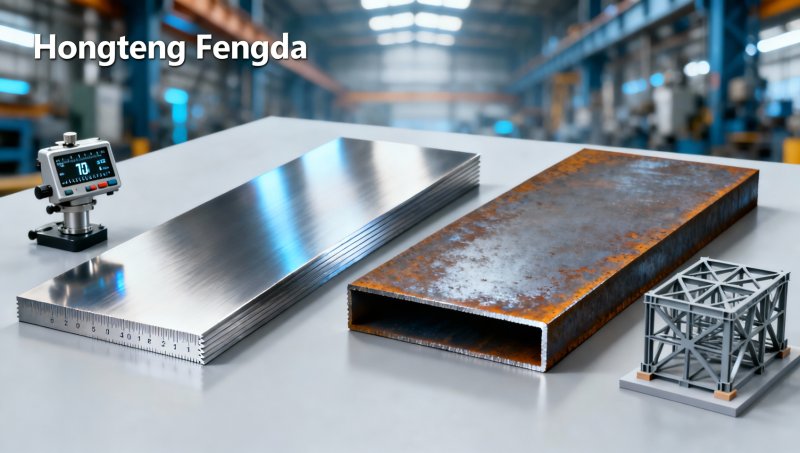
In the steel manufacturing industry, both cold rolled and hot rolled steel sheets represent fundamental processing technologies that affect the microstructure, surface finish, and dimensional precision of products. Hot rolled steel is produced at high temperatures above the recrystallization point of steel, allowing the material to be shaped easily and formed into thicker sheets or beams. Cold rolled steel sheet, by contrast, is processed at or near room temperature, which increases its strength and imparts a smoother surface finish. This distinction plays a crucial role for end-users working in industrial projects ranging from steel rebar for precast concrete to steel bar for agricultural machinery. Understanding these base differences will help procurement personnel and engineers choose the most suitable material for each scenario. Cold rolling generally leads to higher tolerance control and enhanced mechanical strength, while hot rolled steel offers better cost performance for bulk structural uses.
Market Overview and Demand Trends
The global structural steel market has been expanding swiftly, driven by infrastructure development in emerging economies and the modernization of industrial facilities. For procurement managers and project supervisors, this landscape presents new challenges in balancing cost, supply chain security, and quality stability. In markets such as North America and Europe, cold rolled steel sheet consumption has accelerated due to increasing demand for precision components in automotive, appliance, and modular construction sectors. Likewise, the hot rolled steel segment remains dominant in large-scale construction, steel piles for retaining walls, and offshore platform applications.
Within Asia-Pacific, particularly China, manufacturers like Hongteng Fengda leverage technological upgrades and precision control to serve global buyers with customized steel channel and profile solutions. Compared with global competitors, Chinese producers have achieved remarkable efficiency in both cold and hot rolling capacities. This infrastructure allows continuous supply for diverse customers—from distributors seeking Steel Channel for modular construction to contractors deploying carbon steel for aerospace or agricultural components. Moreover, with stringent international standards such as ASTM A1008 for cold-rolled sheets and ASTM A1011 for hot-rolled sheets, customers gain consistency and traceability in production quality. These regulatory frameworks have further enhanced the reliability of Chinese-made steel products in global markets.
Technical Performance and Comparison Analysis
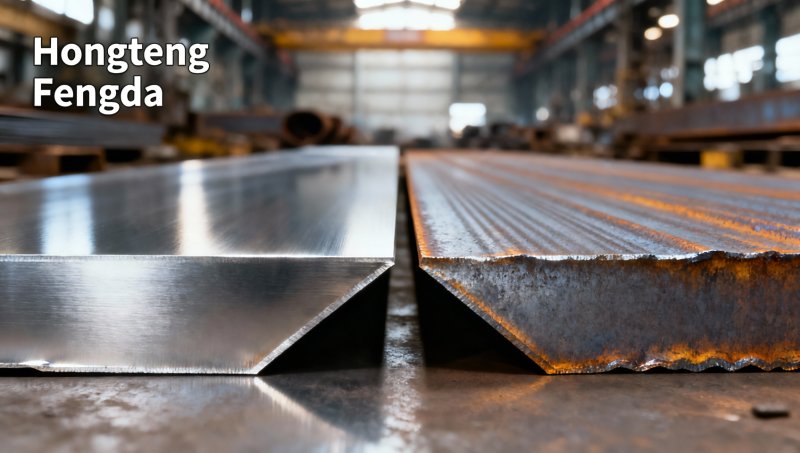
From a technical standpoint, the difference between cold rolled and hot rolled steel lies primarily in the manufacturing process and resultant mechanical properties. Hot rolled steel is rougher, ideal for welded sections, beams, and large structures where dimensional precision is less critical. Cold rolled steel sheet, however, exhibits superior dimensional accuracy, tighter thickness tolerances, improved tensile strength, and a smoother surface suitable for aesthetic or high-precision applications. For example, when producing Steel Channel for mezzanine floors or modular walls, cold rolled steel enhances alignment and assembly quality due to its refined geometry.
Below is a concise comparison of general attributes often considered by engineering and quality teams:
For users engaged in regulated industries such as power generation or aerospace, these properties determine the suitability of material. For instance, cold rolled materials are often selected for carbon steel for aerospace components requiring exact tolerances and strength-weight control ratios. Meanwhile, hot rolled steels find their utility in steel piles for offshore platforms and retaining walls, where formability and strength in heavy load-bearing structures matter most.
Application Scenarios Across Industries
The choice between cold and hot rolled steel extends beyond manufacturing cost—it defines operational reliability. In the construction sector, steel channel and beam products derived from hot rolling ensure robustness and cost efficiency for high-volume projects. For factories producing modular housing, greenhouses, and industrial mezzanine floors, cold rolled steel profiles guarantee precision-fit assembly, shortening installation times and enhancing overall project safety. Meanwhile, producers of steel rebar for precast concrete depend on consistent hot rolled billet quality, while suppliers dealing with steel bars for agricultural machinery may prefer cold rolled rounds for improved wear resistance.
An interesting example lies in mesh and filtration equipment where stainless steel wires are cold formed to provide stable accuracy and corrosion resistance. The Stainless Steel Welded Mesh series, available in SS 201, 304, 304L, 316, 316L, and 430 models, illustrates how advanced forming processes expand steel performance. With its mesh range of 2–635, and cloth thickness between 0.06–1.21 mm, this product supports numerous industrial sectors such as chemical filtering, mining, and architectural safety. By integrating such refined materials with Hongteng Fengda’s structural profiles, clients can achieve enhanced durability against acid, alkali, and heat – vital attributes for long-term industrial applications.
Procurement Guide and Cost Considerations
Procurement specialists often evaluate key factors like strength-to-cost ratio, availability, lead time, compliance standards, and conversion cost when choosing between cold rolled and hot rolled materials. While cold rolled steel sheet provides superior quality and precision, its price may exceed that of hot rolled equivalents by 20–30% due to extra processing. For cost-sensitive projects like large steel piles or foundation beams, hot rolled structures remain ideal. However, when tolerances, aesthetics, and surface coating adhesion are crucial—such as in modular units, automotive parts, or equipment casings—cold rolled steel offers substantial value through reduced post-fabrication adjustments.
To streamline decisions, companies can employ a performance-cost matrix aligning structural requirements with life cycle expenses. Project managers and engineers should collaborate with steel suppliers to define mechanical expectations (tensile strength, yield point, thickness tolerance) and verify certifications like ASTM, EN, JIS, or GB standards. Hongteng Fengda’s supply chain capability assures both options are available within tight delivery schedules, enabling customers across North America, Europe, the Middle East, and Southeast Asia to reduce sourcing risks while maintaining consistent product quality.
Standards, Compliance, and Quality Control
For international buyers and safety managers, ensuring steel material compliance with recognized standards is essential. Cold rolled steel sheets generally adhere to ASTM A1008/A1008M or JIS G3141, guaranteeing consistent mechanical strength and elongation. Hot rolled plates follow ASTM A36, ASTM A1011, EN 10025, or equivalent GB/T standards widely applied in building codes and manufacturing designs. Hongteng Fengda thoroughly implements ISO9001 quality management systems combined with in-line testing for thickness, tensile performance, and surface finish. Moreover, batch traceability through mill certificates ensures customers can verify the conformity of their steel bar for power plants, steel channel for modular construction, or steel profile for greenhouse construction.
Another emphasis is corrosion protection. Post-production coatings like galvanization or painting may enhance the lifespan of hot or cold rolled steel components. For example, when combining sections with high-corrosion exposures, integrating materials such as the Stainless Steel Welded Mesh can provide effective filtration or reinforcement where rust resistance and durability are critical. These synergistic combinations demonstrate how versatile Hongteng Fengda’s product lines can support complex engineering ecosystems.
Trends and Future Insights
The evolving global steel market increasingly emphasizes sustainability, innovation, and digital manufacturing. Smart automation in cold rolling mills improves dimensional accuracy and energy efficiency. Concurrently, green production technologies—such as use of low-carbon billets and recyclable alloys—will continue to influence procurement decisions. Analysts forecast steady demand growth for high-quality cold rolled steel in renewable energy projects, while hot rolled materials remain essential for infrastructure and shipbuilding.
As environmental regulations tighten and customers prioritize quality traceability, the integration of data-driven quality control, customized thickness ranges, and flexible production scheduling will become industry norms. Hongteng Fengda actively adapts by upgrading cold forming lines and introducing digital inspection systems aligned with ASTM, EN, JIS, and GB standards. For distributors and project leaders, partnering with a capable manufacturer ensures seamless transitions from concept to delivery, minimizing operational downtime.
Why Choose Hongteng Fengda
Selecting the right manufacturing partner is as crucial as choosing the correct steel type. Hongteng Fengda, as a leading structural steel manufacturer and exporter from China, provides more than just materials—it delivers engineering trust. By specializing in angle steel, steel beams, cold formed profiles, and customized components, the company supports both standard and OEM solutions. For project planners, quality inspectors, and procurement teams, this reliability translates into consistent production schedules, strict international compliance, and cost control advantages. Whether your project demands cold rolled steel sheet with tight dimensional control or hot rolled sections for robust load-bearing application, Hongteng Fengda offers dependable expertise every step of the way.
Ready to optimize your supply chain and material performance? Reach out to Hongteng Fengda today to discuss customized structural steel solutions that match your operational goals and international standards. Reliable steel, proven expertise, and professional service — that is why clients worldwide continue to trust Hongteng Fengda as their preferred long-term partner in structural steel manufacturing and export.
- steel i
- angle steel
- ss steel wire
- stainless steel wire
- cold rolled steel
- hot rolled steel sheet
- steel supplier
- steel suppliers
- Hot Rolled Steel
- ASTM A36
- structural steel
- steel beams
- steel profiles
- Structural Steel
- Steel Beams
- Profile
- Rebar
- Stainless Steel Welded Mesh
- Steel Beam
- Steel Wire
- Steel Channel
- carbon steel
- steel sheet
- steel rebar
- steel profile
- steel pile
- steel bar
- Steel Channel for mezzanine floors
- steel bar for agricultural machinery
- steel profile for greenhouse construction
- steel rebar for precast concrete
- cold rolled steel sheet
- carbon steel for aerospace
- Steel Channel for modular construction
- steel bar for power plants
Related recommendations
 How to Select a Steel Profile Based on Load, Span, and Fabrication NeedsProfile selection starts with load, span, and fabrication needs. Learn how to compare steel sections for strength, cost, workability, and sourcing efficiency.
 Galvanized Pipe vs Black Pipe: Which One Fits Water, Gas, or Outdoor Lines?Galvanized pipe or black pipe? Compare the best choice for water, gas, and outdoor lines, with key insights on corrosion, codes, cost, and long-term performance.
 How to Choose Steel Roofing for Warehouses, Farms, and Residential BuildingsSteel Roofing selection depends on building type. Learn how warehouses, farms, and homes differ in corrosion, insulation, drainage, and cost for smarter roofing decisions.
 Hot-Dip Galvanized vs Pre-Galvanized Steel: Which Should You Specify?Hot-dip galvanized vs pre-galvanized steel: compare corrosion resistance, fabrication impact, cost, and standards to specify the right steel solution for durable, compliant projects.
Please give us a message


Please enter what you want to find