In 2024, carbon steel for aerospace continues to prove its strength, versatility, and cost-efficiency, making it a trusted choice in modern engineering. With Hongteng Fengda’s expertise as a leading structural steel manufacturer and exporter from China, industries benefit from high-quality materials such as steel channel for modular construction, cold rolled steel sheet, and steel bar for power plants. These reliable steel products support global projects across sectors, ensuring precision, durability, and efficiency for every application from aerospace components to large-scale infrastructure.
Definition and Overview of Carbon Steel for Aerospace
Carbon steel is an alloy primarily composed of iron and carbon, enhanced by small amounts of manganese, silicon, and other elements to fine-tune its performance. In aerospace manufacturing, carbon steel serves as a dependable material in structural components, landing gears, fasteners, and tooling systems. Its excellent balance of high strength, formability, and affordability makes it a competitive alternative to exotic alloys when performance and cost optimization are equally essential. Aerospace engineers often choose carbon steel for its proven record in fatigue resistance, dimensional stability, and heat tolerance, qualities that are critical in flight and space applications. Compared to composite or titanium materials, carbon steel offers simplicity in fabrication and consistent performance across temperature variations. Hongteng Fengda, as a structural steel manufacturer and exporter from China, ensures that products such as steel pile for retaining walls, steel profile for greenhouse construction, and steel bar for agricultural machinery adhere to leading standards like ASTM, EN, JIS, and GB, delivering the same reliability demanded in aerospace manufacturing.
Market Overview and Industry Dynamics in 2024
The aerospace materials market in 2024 faces growing pressure for sustainability, performance optimization, and global supply chain resilience. Carbon steel for aerospace remains vital due to its well-established production infrastructure, enabling manufacturers to achieve stable pricing and supply. Demand from commercial aviation, space exploration, and defense programs continues to rise, encouraging suppliers to refine metal-processing technologies. Modern aerospace applications do not always require ultra-light alloys—certain subsystems, testing jigs, and molding frames rely on robust, cost-efficient carbon steel profiles. Hongteng Fengda leverages automation, precision rolling, and heat treatment to maintain consistency for steel beam and cold formed steel profile production. This technological maturity helps customers minimize waste, reduce machining time, and secure timely delivery. The company exports to North America, Europe, the Middle East, and Southeast Asia, aligning its supply chain to overcome logistics disruptions and ensure dependable lead times. In this context, carbon steel products, such as Steel Channel for mezzanine floors or steel pile for offshore platforms, demonstrate their integral role across different engineering sectors beyond aerospace.
Technical Performance and Characteristics
The mechanical characteristics of carbon steel used in aerospace infrastructure demonstrate impressive tensile strength, typically exceeding 500 MPa, and yield strength that guarantees high load-bearing performance even under cyclic stress. When combined with appropriate thermal treatment, carbon steel resists wear, corrosion, and fatigue cracking, ensuring long-term reliability. Compared to aluminum or composite materials, its isotropic nature provides predictable deformation behavior and excellent machinability during component fabrication. Hongteng Fengda ensures high precision by applying advanced testing protocols and adherence to ISO-certified quality management systems. In addition, specialized materials such as the A36 Steel Pipe offer seamless cold-drawn low-carbon steel tubes with minimum wall thicknesses suitable for use in tubular heat exchangers and heat transfer equipment. This product conforms to ASTM A106, API 5L, and EN10210 certifications, ensuring compliance with both energy and aerospace sectors. With customizable specifications such as diameter ranging from 10mm to 914.4mm and unit lengths up to 13.5m, Hongteng Fengda delivers tailored technical solutions for global buyers seeking consistency, dimensional accuracy, and stable performance.
Application Scenarios and Practical Use
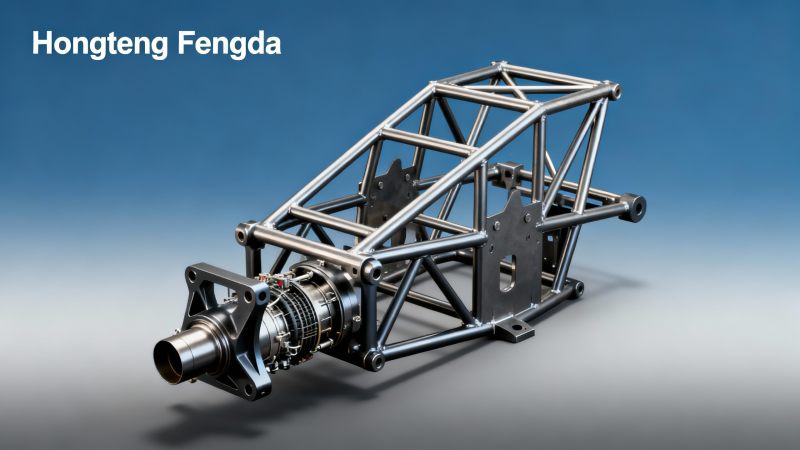
Carbon steel for aerospace is widely implemented across a range of applications, including structural frames for ground maintenance platforms, engine mounting brackets, test stands, and hydraulic support structures. Its adaptability allows engineers to design components that endure mechanical stress, high vibration, and extreme temperature fluctuations. When combined with surface coatings or galvanization, carbon steel maintains its integrity under severe environments such as high-altitude conditions or coastal aerospace facilities. Hongteng Fengda’s diversified product line supports these applications through materials like steel rebar for precast concrete, Steel Channel for modular construction, and steel pile for offshore platforms. Manufacturers of defense vehicles, rocket carriers, and satellite assemblies increasingly use carbon steel modules for auxiliary systems. Through OEM customization, Hongteng Fengda supplies cold rolled steel sheet and structural assemblies that meet both international standards and project-specific parameters, offering advantages in cost control, easy maintenance, and scalable production. Clients benefit from a one-stop supply chain solution that integrates procurement, fabrication, and quality testing, simplifying the supplier management process for aerospace integrators worldwide.
Comparison with Alternative Materials
The modern aerospace sector employs a diverse range of materials from titanium alloys to carbon fiber composites. However, each alternative comes with trade-offs. While titanium provides high specific strength, it is expensive and challenging to machine. Composites offer low weight but limited recyclability and complex joining procedures. Carbon steel strikes a practical balance—it remains easily weldable, readily available, and highly traceable across global supply networks. For certain load-bearing and ground-support equipment, the modest weight penalty of carbon steel is offset by its strength-to-cost ratio. For instance, a well-fabricated welded steel channel may outperform certain aluminum assemblies under cyclic, high-torque conditions. Furthermore, Hongteng Fengda’s commitment to precision standards like ASTM and EN makes its products compatible with existing aerospace quality systems. By supplying standards-compliant components and modern alloys, the company assists procurement managers and quality control engineers in meeting performance targets without budget overruns. In hybrid applications such as aerospace test rigs or production tooling, carbon steel’s uniform mechanical behavior ensures safe and predictable performance compared with mixed-material alternatives.
Procurement Guide for Aerospace-Grade Carbon Steel
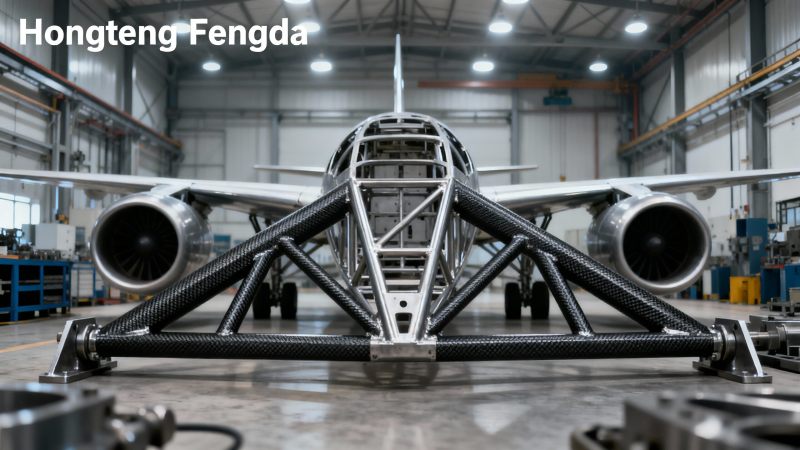
Choosing the right supplier for aerospace-grade carbon steel involves evaluating not only material specifications but also production stability and certification credibility. Buyers should consider international standards compliance (ASTM, EN, JIS, GB), batch traceability, and mechanical property documentation. Hongteng Fengda’s integrated industrial model—from smelting through to final inspection—guarantees strict quality supervision. Procurement professionals can select between hot rolled and cold rolled variants, or specify custom chemical composition depending on project requirements. An example is the customizable A36 Steel Pipe, suitable for condensers and tubular heat exchangers with wall thickness adjustments as per client request. When sourcing materials for aerospace ground facilities, power plant steel bars, or steel profiles for greenhouse construction used in environmental testing, Hongteng Fengda’s dedicated engineering support assists in material selection, ensuring compatibility across project applications. The company’s logistics and export expertise also simplify customs processes, offering global clients short lead times and cost predictability.
Cost, Sustainability, and Alternative Considerations
In today’s environmentally conscious market, carbon steel’s recyclability and energy efficiency during processing position it as a sustainable alternative to composite or exotic metals. Recycled steel retains equivalent mechanical performance, supporting circular economy initiatives in aerospace manufacturing. Hongteng Fengda implements energy-efficient production through optimized rolling and heat treatment lines that minimize emissions. From a cost perspective, carbon steel achieves superior value, particularly for ground equipment and interior assembly tools. For aerospace firms facing budget constraints, the ability to rely on well-documented, high-performance steel reduces overall project expense. While some lightweight alloys claim to reduce total aircraft mass, they often incur higher procurement and maintenance costs. Carbon steel’s lower lifecycle cost combined with global availability provides a long-term advantage for industrial investors, distributors, and project managers. Strategic partners can also benefit from Hongteng Fengda’s scalable production, ensuring no compromise between cost efficiency and performance reliability.
Standards, Certification, and Quality Assurance
Aerospace operations demand rigorous compliance with international standards to secure safety and reliability. Carbon steel components supplied by Hongteng Fengda comply with major international norms such as ASTM A36, EN10025, and GB/T 8163, covering aspects like chemical composition, hardness, tensile strength, and impact behavior. The company employs ultrasonic and magnetic particle testing to ensure flaw detection before shipment. Production documentation, including mill test certificates and compliance reports, gives clients transparency for traceability and verification. Quality control personnel benefit from uniform reporting templates that facilitate internal audits within aerospace production environments. Additionally, Hongteng Fengda aligns with industry-specific protocols—such as API and ISO material standards—providing structural integrity validation for steel bar for power plants, modular construction channels, and similar steel rebar for precast concrete applications. This detailed certification system reassures decision-makers that the carbon steel components they purchase meet or exceed aerospace quality expectations.
Trend and Future Insights
The next decade will witness more integration of intelligent materials management and automated fabrication technologies in aerospace steel processing. Digitalization and advanced analytics will enhance predictive maintenance for heat treatment furnaces, ensuring consistent metallurgical properties. Hongteng Fengda invests in process monitoring tools and robotic welding solutions to enrich quality precision and traceability. Carbon steel remains expected to play a long-term role in structural, ground-based, and testing applications as aerospace manufacturers diversify materials for optimized designs. Future trends also include expanded use of hybrid carbon steel frameworks combined with additive manufacturing processes, enabling the construction of lightweight yet robust auxiliary structures. With research into nano-coating and corrosion-resistant treatments, carbon steel’s lifespan in demanding environments will further increase. This evolution underscores why carbon steel for aerospace remains a reliable and forward-compatible option amid rapid material innovation in 2024 and beyond.
Why Choose Hongteng Fengda
Choosing Hongteng Fengda means partnering with a trusted, professional structural steel manufacturer and exporter committed to quality, reliability, and innovation. The company’s modern facilities, encompassing precision rolling, automated cutting, and detailed quality inspection, produce steel channel for modular construction, carbon steel for aerospace, and customized structural components that meet international standards. Backed by a global logistics network, the firm consistently delivers on time to clients across North America, Europe, the Middle East, and Southeast Asia. Procurement officers value its transparent pricing, rigorous testing process, and ability to customize products per OEM specifications. Whether supplying standard angle steel or bespoke cold formed profiles for specialized machinery, Hongteng Fengda aims to enhance customer competitiveness through quality assurance and technical expertise. For inquiries, collaboration, or to discuss tailored solutions, buyers and project managers are encouraged to contact the Hongteng Fengda technical team today—your reliable source for high-strength, precision structural steel solutions designed for aerospace and industrial excellence.
- steel i
- angle steel
- a36 steel pipe
- carbon steel tube
- cold rolled steel
- steel pipe
- ASTM A36
- structural steel
- steel profiles
- Structural Steel
- Profile
- Rebar
- Steel Beam
- Steel Channel
- carbon steel
- steel sheet
- steel rebar
- steel profile
- steel pile
- steel bar
- steel tube
- Steel Channel for mezzanine floors
- steel bar for agricultural machinery
- steel pile for retaining walls
- steel profile for greenhouse construction
- steel rebar for precast concrete
- cold rolled steel sheet
- carbon steel for aerospace
- Steel Channel for modular construction
- steel bar for power plants
- steel pile for offshore platforms
Related recommendations
 What Affects the Cost of Galvanized Steel in Fabrication Projects?Galvanized steel costs vary far beyond raw material price. Learn how coating, steel grade, fabrication, logistics, and hidden quote items affect project budgets before you buy.
 Steel Wire Strand Applications in Lifting and Support: Key Load and Safety ConsiderationsSteel wire strand selection for lifting and support starts with real load, fatigue, corrosion, and anchoring conditions. Learn how to improve safety, service life, and structural reliability.
 Architectural Steel Angle in Facades, Edges, and Clean LinesArchitectural steel angle improves facade edges, clean lines, and structural precision. Discover how it supports durability, faster installation, and smarter project control.
 Where Cold Formed Steel Angle Works Best in Modern BuildsCold formed steel angle works best in modular builds, secondary framing, and utility supports. Learn where it adds value, what to verify, and how to choose the right profile with confidence.
Please give us a message


Please enter what you want to find