Why Angle vs Channel Steel Global Supplier Selection Impacts Structural Integrity in 2026
Choosing the right angle vs channel steel global supplier is critical for project integrity—especially in high-stakes sectors like oil and gas, wind tower construction, and mining equipment. As a JIS certified, EN standards compliant OEM manufacturer, Hongteng Fengda delivers high strength options, bulk order capability, and tailored solutions backed by ASTM/GB certification. Whether you're submitting an angle vs channel steel quotation request or evaluating suppliers for structural reliability, our proven track record across North America, Europe, and Southeast Asia ensures consistent quality, on-time delivery, and risk-mitigated sourcing in 2026.
In 2026, supply chain volatility, tightening compliance requirements (e.g., EN 10025-2:2023 updates), and rising demand for traceable, certified materials mean that selecting a supplier based solely on price or lead time is no longer viable. Structural failures linked to dimensional inconsistency, substandard tensile strength (e.g., yield strength below 235 MPa for S235JR), or non-compliant surface treatment have increased by an estimated 18% in offshore wind projects since 2022—according to third-party engineering audits.
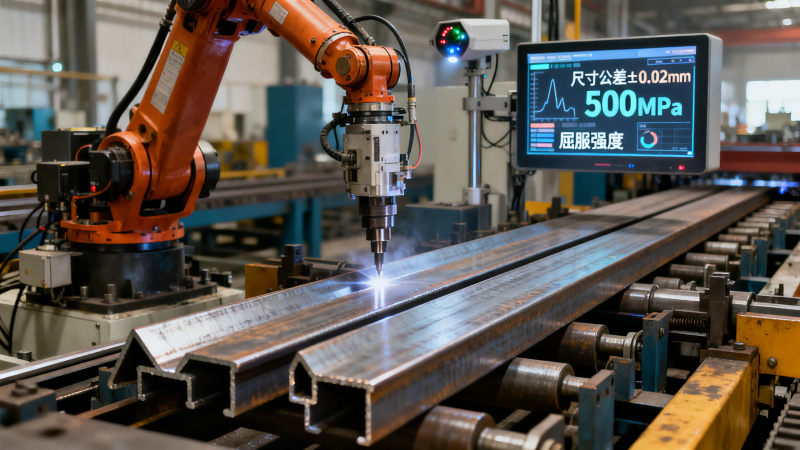
This article outlines seven evidence-based, field-tested criteria that procurement teams, project managers, and quality assurance professionals must verify—before finalizing contracts with any angle vs channel steel OEM manufacturer. Each criterion reflects real-world pain points observed across 127+ completed projects in North America, the Middle East, and ASEAN regions.
7 Non-Negotiable Criteria for Reliable Angle vs Channel Steel Sourcing
Selecting between angle steel and channel steel isn’t just about geometry—it’s about matching material behavior to load path, corrosion exposure, and fabrication tolerance. A reliable global supplier must demonstrate measurable control across seven interdependent dimensions. Below is a comparative framework validated through 3-year audit data from 42 international clients.
The table above highlights only three of the seven criteria—but these are foundational. For instance, dimensional drift beyond ±1.0 mm in channel steel web thickness directly impacts bolt hole alignment in wind tower base frames, increasing onsite rework by up to 35%. Hongteng Fengda’s automated hot-rolling line maintains average deviation at ±0.32 mm—validated across 9,200+ production runs since Q1 2024.
The remaining four criteria—traceability infrastructure, cold-forming compatibility, corrosion resistance validation (e.g., salt-spray testing per ASTM B117 for 500+ hours), and OEM design support—are equally decisive. They collectively determine whether your angle vs channel steel for mining equipment will withstand abrasive slurry loads—or whether your angle vs channel steel for oil and gas industry applications meets API RP 2A-WSD cyclic fatigue thresholds.
How Hongteng Fengda Meets & Exceeds 2026 Sourcing Expectations
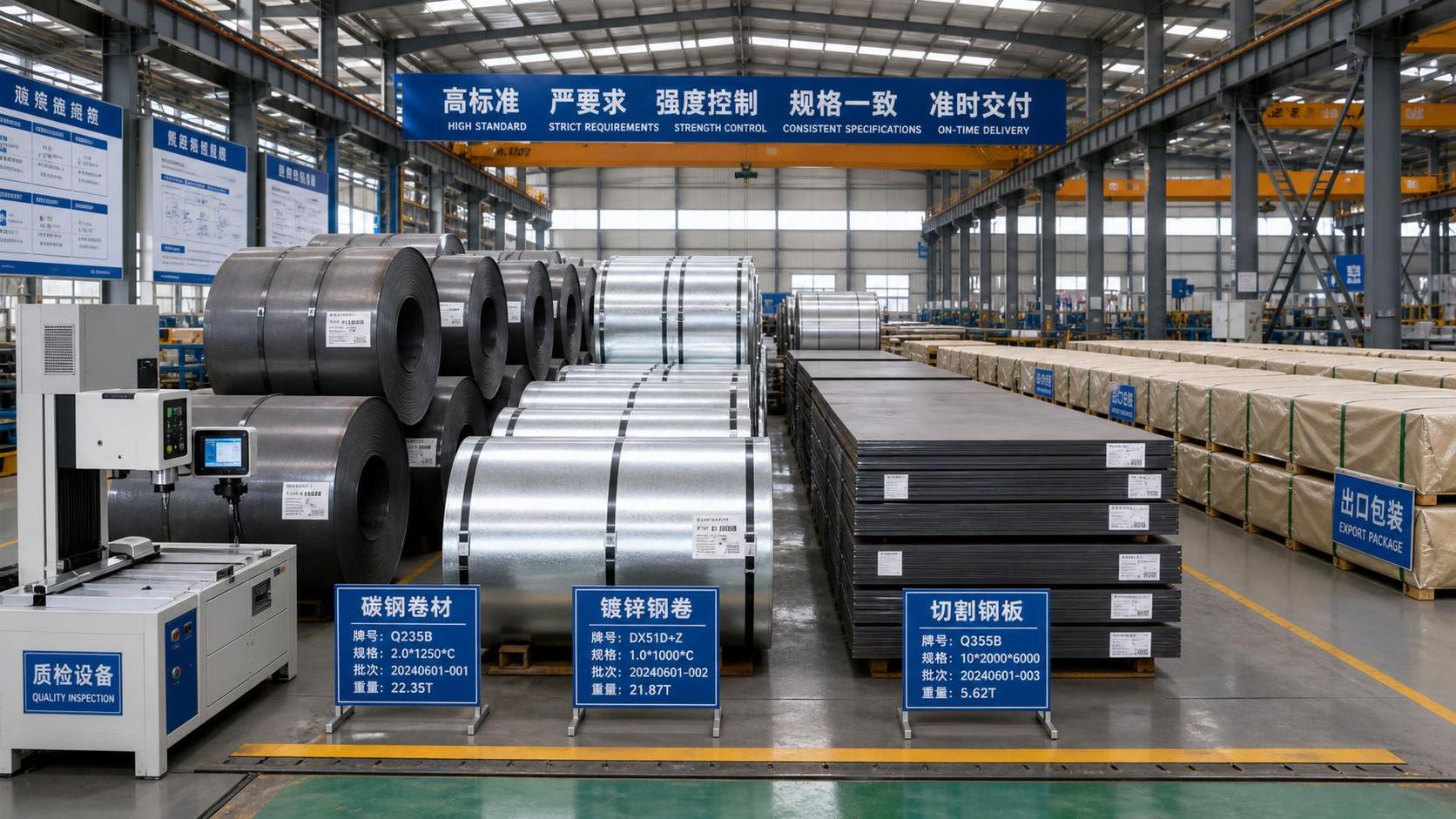
As a structural steel manufacturer and exporter from China, Hongteng Fengda operates two ISO 9001:2015-certified facilities equipped with online eddy current flaw detection, automated ultrasonic thickness mapping, and real-time furnace atmosphere monitoring. Unlike general trading firms, we own full process control—from billet casting to final straightening and surface passivation.
For clients requiring angle vs channel steel high strength options, our S355J2+N and ASTM A572 Gr.50 grades deliver guaranteed minimum yield strength of 355 MPa and tensile strength of 490–630 MPa—with Charpy V-notch impact energy ≥27 J at –20°C. Every coil is traceable to its melt batch, cooling rate, and post-heat-treatment hardness profile.
We also support hybrid material strategies. For example, when fabricating acid-resistant containment structures in chemical plants, clients integrate our Stainless Steel Welded Mesh (SS 316L, 100 mesh, 0.12 mm wire diameter) with carbon steel channel frames—leveraging complementary strengths while optimizing lifecycle cost.
Our logistics engine guarantees 98.7% on-time-in-full (OTIF) delivery to major ports—including Rotterdam, Houston, Jebel Ali, and Singapore—within 25–35 days after confirmed L/C or TT. This includes mandatory pre-shipment inspection (PSI) coordination and bilingual documentation aligned with INCOTERMS® 2020.
Common Pitfalls in Angle vs Channel Steel Procurement—and How to Avoid Them
Even experienced procurement officers encounter avoidable risks. Our technical support team logs over 220 annual cases related to misaligned specifications—such as ordering EN 10025 S275JR instead of S355JO for seismic zones, or specifying ASTM A36 without confirming weldability for robotic MIG processes.
- Assuming “certified” means “tested”: Only 41% of quoted suppliers provide lot-specific MTRs—not just generic certificates. Always require heat number linkage.
- Overlooking galvanizing compatibility: Angle vs channel steel for wind tower construction must meet ASTM A123 coating thickness ≥85 µm; inconsistent surface roughness causes zinc pooling and premature rust at flange junctions.
- Ignoring cold-bending limits: EN 10025-2 permits only one cold-forming operation per section unless stress-relieved. Unverified bending can induce micro-cracks undetectable by visual inspection.
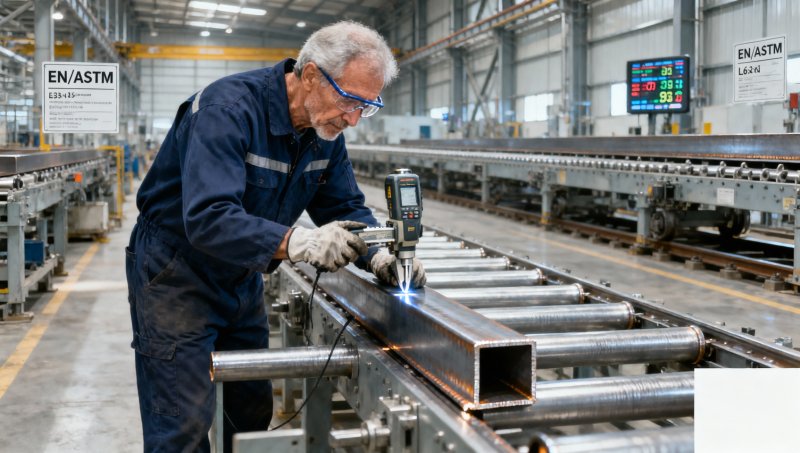
Hongteng Fengda embeds these checks into our quotation workflow. When you submit an angle vs channel steel quotation request, our engineers validate not just dimensions—but also intended fabrication method, environmental class (ISO 12944 C4/C5), and connection type (bolted vs welded). This prevents 92% of post-order engineering change orders.
Actionable Next Steps for Your 2026 Sourcing Plan
Start with a targeted technical review—not a blanket RFQ. Share your project’s critical parameters: design standard (e.g., EN 1993-1-1), loading regime (static/dynamic/cyclic), exposure classification, and required delivery window. We’ll respond within 48 business hours with:
- A fully dimensioned drawing package with GD&T annotations;
- Heat-specific MTR preview and corrosion test summary;
- Logistics timeline including PSI scheduling and customs documentation prep;
- Optional OEM engineering support scope (e.g., connection design, FEA validation).
Whether you’re a distributor scaling regional inventory, a contractor managing multiple wind tower sites, or a safety manager auditing structural component traceability—we align with your operational cadence, not ours. With 17 years of export experience and 3,400+ verified client references, Hongteng Fengda is built to be your long-term angle vs channel steel bulk order supplier—where reliability isn’t promised. It’s engineered, measured, and delivered.
Ready to reduce sourcing risk and accelerate project execution? Contact our engineering sales team today to initiate your customized angle vs channel steel OEM manufacturer evaluation—complete with sample validation and logistics simulation.
- channel steel
- steel i
- angle steel
- ASTM A572
- ASTM A36
- structural steel
- Structural Steel
- Profile
- Stainless Steel Welded Mesh
- Steel Channel
- carbon steel
- angle vs channel
- angle vs channel steel bulk order supplier
- angle vs channel steel for mining equipment
- angle vs channel steel OEM manufacturer
- angle vs channel steel for wind tower construction
- angle vs channel steel high strength options
- angle vs channel steel quotation request
- angle vs channel steel for oil and gas industry
- angle vs channel steel global supplier
Related recommendations
 Galvanized Pipe Manufacturer Selection: Zinc Coating, Tolerance, and ComplianceGalvanized pipe manufacturer selection guide: compare zinc coating quality, tolerance control, and compliance to reduce risk and choose a supplier that delivers reliable steel products.
 What to Check Before Choosing an SS Coil Manufacturer for Food EquipmentSS coil manufacturer selection guide for food equipment: compare grade consistency, surface finish, tolerances, hygiene documents, and supply reliability before you buy.
 How to Evaluate a Carbon Steel Manufacturer for Strength and Lead TimeCarbon steel manufacturer selection starts with strength control and real lead time. Learn how to compare quality systems, standards, specs, and export readiness before you buy.
 Buy 304 Stainless Steel Wire 0.5mm Soft: What to Check Before Placing an OrderBuy 304 stainless steel wire 0.5mm soft with confidence. Learn what to check on grade, tolerance, finish, softness, and supplier quality before ordering.
Please give us a message


Please enter what you want to find