As global demand and supply dynamics shift through 2026, understanding carbon steel price trends becomes essential for managing project budgets across construction and manufacturing sectors. From steel pile foundations to steel rebar reinforcements, fluctuations in carbon steel costs directly influence material planning, procurement strategies, and overall project efficiency. For structural steel users and decision-makers, staying informed on these market movements helps ensure cost control and reliable project execution. In the current global scenario, steel materials remain the backbone of infrastructure, industrial frameworks, and energy facilities, making price forecasting not only a financial concern but also a determinant of project feasibility and competitiveness in both domestic and export markets.
Global Carbon Steel Market Overview in 2026
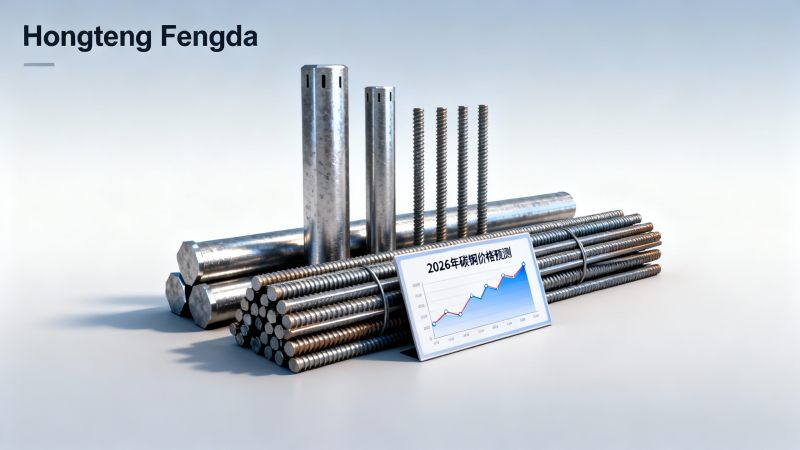
The carbon steel industry in 2026 continues to face shifting economic variables—raw material shortages, fluctuating energy prices, and global trade readjustments. With high-grade iron ore and coking coal costs remaining volatile, carbon steel manufacturers must navigate production planning with increased precision. In addition, environmental policies and green steel initiatives in major markets such as the EU and North America intensify cost structures due to carbon emission regulations. The demand for structural steel, especially in public utility infrastructure, logistics warehouses, and manufacturing plants, continues to expand. However, logistical challenges and freight rate adjustments influence the final pricing in both domestic and international markets. For manufacturers who specialize in steel pile and steel rebar production, this environment underscores the need to maintain flexible sourcing networks and efficient energy management systems. Buyers are placing higher emphasis on supply stability and compliance with ASTM, EN, and GB standards when evaluating partners. These standards ensure predictable performance and consistency, which is vital for projects where structural integrity and safety margins are critical. Global purchasing managers thus value long-term relationships with suppliers that combine pricing transparency and technical reliability.
Factors Shaping Carbon Steel Pricing and Procurement Strategies
Several fundamental factors influence carbon steel pricing in 2026. The most noticeable ones include raw material trends, energy supply costs, and exchange rate fluctuations. For example, a sustained increase in iron ore prices has led to a chain reaction impacting steel mills’ profitability, resulting in higher carbon steel offers globally. Likewise, when electricity and natural gas costs spike, rolling and heat-treatment stages become more expensive, directly affecting products such as steel rebar and carbon steel beams. Exchange rates also play a role: a stronger Chinese Yuan or Euro could make exports less competitive, pushing local suppliers to optimize production efficiency. In project management, procurement teams must increasingly adopt dynamic budgeting systems to account for these variables. Advanced analytics and contractual flexibility—such as adopting cost-indexed purchase agreements—can buffer the impact of sudden price movements.
Another key development is the technological shift in steel production, emphasizing low-carbon manufacturing processes and recyclability. This trend supports both government sustainability frameworks and corporate ESG targets, but may increase short-term costs due to new equipment and technology investments. For structural steel buyers planning large-scale infrastructure projects—bridges, rail terminals, or industrial plants—these adjustments require early engagement with suppliers. Working with established exporters like Hongteng Fengda ensures predictable supply chains across markets in North America, Europe, and the Middle East, enabling smooth project execution even during volatile periods. By integrating intelligent inventory management, just-in-time delivery, and diversified mill partnerships, companies can maintain margin stability and avoid production interruptions.
Impact of Carbon Steel Price Fluctuations on Project Budgets
Project budgets are extremely sensitive to carbon steel price fluctuations. An average 10% increase in steel costs may translate into substantial overruns for large-scale construction or energy facility projects. Components such as steel piles and steel rebar account for a significant portion of material expenditure, particularly in foundation engineering and reinforced concrete applications. When prices rise unpredictably, procurement specialists must either renegotiate contracts or adjust specifications, sometimes compromising material grades or project schedules. A data-driven approach that integrates forward booking, supplier diversification, and milestone-based material release can mitigate these risks. Modern procurement teams rely on real-time market intelligence to predict cost variations and maintain financial discipline.
Moreover, accurate carbon steel cost forecasting allows better synchronization between engineering, financial, and logistics departments. Project managers can plan delivery schedules more precisely, ensuring that steel piles, rebar cages, and fabricated assemblies arrive according to site progress. This approach avoids idle machinery costs and minimizes storage overhead. Mastering cost control not only protects budget margins but also increases competitiveness when bidding for public or private contracts. Leading structural steel suppliers provide data-backed quotations and mill test certifications, helping clients make transparent, auditable material decisions aligned with international quality expectations.
Integrating Advanced Steel Products for Cost Efficiency
Beyond pricing shifts, material innovation serves as another strategic lever for maintaining cost efficiency. Modern coated steels—such as aluminium-zinc alloys—demonstrate enhanced durability and corrosion protection, reducing life-cycle maintenance expenses. A representative example is the DX53D Galvalume Steel Coil , combining low-carbon steel with aluminium-zinc coating for optimized performance. With yield strength around 270–300 MPa and tensile strength between 350–450 MPa, it is widely used in construction, automobiles, and household appliances. The product’s superior formability and corrosion resistance contribute to extended service life in outdoor structures like roofing systems, sound barriers, and greenhouse frameworks. For procurement teams, adopting such high-value materials offers dual benefits—reduced maintenance cost and improved client satisfaction—especially in long-term infrastructure projects subject to harsh environmental conditions.
Suppliers like Hongteng Fengda have streamlined production with automated rolling lines and strict quality inspection protocols based on ASTM, JIS, and EN standards. Their export experience ensures consistent delivery even in periods of logistic congestion. By selecting advanced products like the DX53D Galvalume Steel Coil , project owners can harmonize sustainability goals with cost management. In practice, engineers can benefit from better weldability and greater deformation resistance, simplifying on-site forming operations. These advantages underline the importance of aligning technical specifications with long-term budget optimization, transforming material selection into a key element of financial strategy rather than a simple cost comparison exercise.
Regional Market Differentiation and Strategic Sourcing
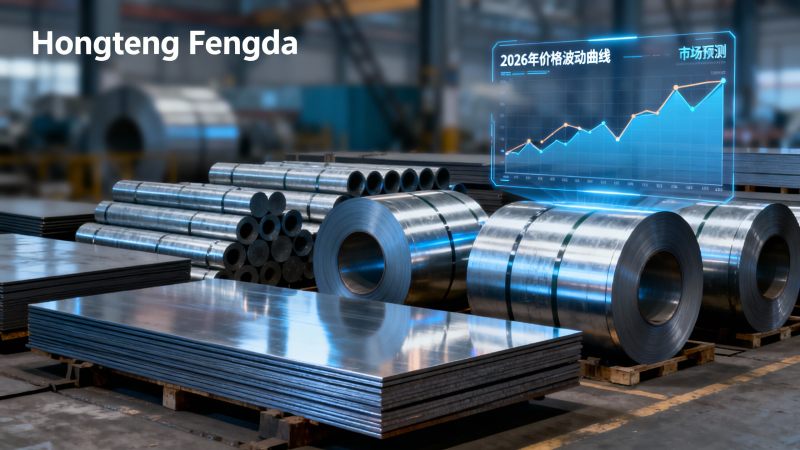
The diversification of regional markets significantly affects carbon steel pricing. Asia-Pacific remains the production hub, with China leading in both capacity and export volume, while markets in Europe and North America focus on value-added steel products and environmental compliance. For example, European buyers tend to prefer steel certified under energy-efficient production schemes, which often results in a slightly higher price point but longer material life cycles. Meanwhile, Middle Eastern infrastructure expansion, driven by economic diversification initiatives, sustains large-scale demand for steel piles and rebar for marine works, pipelines, and power plants. Sourcing strategies must therefore consider not only price but also logistics, import duties, and currency exposure.
Procurement managers can deploy a multi-source model to secure steady supplies under uncertain conditions. Collaborating with reputable Chinese structural steel exporters such as Hongteng Fengda allows access to diversified specifications—angle steel, channel steel, and cold-formed profiles—ensuring flexibility in adapting to different design codes and construction parameters. Accurate market intelligence coupled with continuous communication with mills forms the foundation for cost-effective sourcing. Leveraging forward contracts and warehouse positioning close to project sites enables faster response time, vital for managing fluctuating carbon steel prices while keeping project milestones intact. Such integrated sourcing not only cuts procurement time but also elevates the overall resilience of the supply chain, crucial for international contractors managing multiple concurrent projects.
Outlook and Recommendations for Stakeholders
Looking ahead, the carbon steel market in 2025-2026 is expected to maintain moderate growth with potential price adjustments tied to macroeconomic and geopolitical conditions. Increasing urbanization in emerging regions and continued investment in renewable energy infrastructure will sustain global demand. Decision-makers should prepare for moderately higher base prices but stronger supply consistency. Integrating material innovation, supplier partnerships, and digital tools will be the focus of modern project management. Engineers and project leaders should also align with procurement teams early to control risk exposure and benefit from economies of scale when locking metal prices.
For companies engaged in steel-intensive industries, partnering with experienced manufacturers such as Hongteng Fengda can significantly enhance project stability. Their consistent quality control, adherence to global standards, and flexible OEM services provide a reliable basis for long-term cooperation. In addition, technical consultation regarding specification optimization, yield management, and material substitution can lead to substantial cost savings. As carbon steel remains the foundation for critical infrastructure and manufacturing, maintaining visibility into market trends is essential to sustain profitability and performance.
Conclusion and Call to Action
In summary, carbon steel price trends in 2026 reflect a complex interplay of raw material costs, energy dynamics, sustainability initiatives, and regional variations. For industries that depend heavily on steel piles, steel rebar, and other structural products, proactive cost monitoring and supply chain collaboration are imperative. Incorporating innovative materials like aluminium-zinc coated steel coils further enhances durability and long-term savings. By working closely with a professional structural steel manufacturer & exporter, stakeholders can ensure consistent quality, predictable costs, and timely project delivery.
Hongteng Fengda remains dedicated to supporting customers worldwide with reliable structural steel solutions and impeccable service. Contact our technical and sales teams today to explore how we can help you stabilize your steel procurement, improve budget control, and achieve sustainable growth in 2026 and beyond. Visit our product line or request a customized quotation to experience the value of partnering with a trusted steel partner that prioritizes your success.
Related recommendations
 How long does acero prepintado retain gloss and color stability in direct desert sunlight?Acero prepintado gloss & color stability in desert sun? Discover real-world performance data, PVDF vs. polyester longevity, and spec-critical insights for GCC projects.
 Does acero pregalvanizado maintain coating integrity after cold bending to 90 degrees?Acero pregalvanizado maintains coating integrity after 90° cold bending — when engineered right. Discover how Hongteng Fengda guarantees real-world performance, adhesion & corrosion resistance.
 Do the advantages of galvanized steel include reduced fire risk compared to untreated carbon steel?Advantages of galvanized steel include measurable fire-risk reduction vs. untreated carbon steel—learn how zinc delays ignition, buys critical escape time, and enhances safety without false 'fireproof' claims.
 How much does 2 inch ss pipe price increase when upgrading from Schedule 40 to Schedule 80 for high-pressure systems?2 inch ss pipe price increases 18–35% when upgrading from Sch 40 to Sch 80—discover why, when it’s truly needed, and how to avoid overpaying.
Please give us a message


Please enter what you want to find