Introduction: Why document verification matters before procuring 304 pipe
Before procuring 304 pipe, verifying material certificates and mill test reports is essential to ensure compliance, performance and traceability. This guide helps procurement teams, project managers and distributors evaluate documentation for ss 304 pipe and stainless seamless pipe — from chemical analysis to mechanical test results — and highlights red flags when suppliers also offer related items such as pipe stainless, angle stainless steel, Wire Products, Profile, Steel Rod, electrogalvanized wire and galvanized steel channel. Follow these practical checks to reduce risk, secure quality and streamline supplier qualification. In complex supply chains for stainless and carbon steel products, the documentation accompanying a shipment is the first line of defense against nonconforming material. Procurement personnel, project managers, and distributors often receive mill test reports (MTRs) or material certificates purporting to document composition, mechanical properties, heat numbers, and compliance with standards. A thorough verification process prevents delays, warranty disputes, and field failures — particularly for items that will be welded, formed or exposed to corrosive environments. For ss 304 pipe and stainless seamless pipe, chemical composition (chromium, nickel and carbon percentages) and mechanical properties (yield, tensile strength, elongation) directly impact corrosion resistance and formability. Beyond individual pipe specifications, suppliers that bundle complementary items such as electrogalvanized wire and galvanized steel channel or provide Wire Products, Profile, and Steel Rods must present consistent quality documentation across product lines. When qualifying a new supplier, requesting and validating certificates before issuing purchase orders avoids downstream rework, potential rejections at site, and costly replacements. This introduction sets the stage for the detailed verification steps that follow. Each section below outlines verifiable items on an MTR, practical checks for authenticity, integration points for nondestructive testing like PMI, and recommended supplier qualification workflows tailored for procurement teams handling 304 pipe and related stainless or carbon products. The goal is to translate technical verification into actionable procurement routines that protect projects, maintain compliance with international specifications, and support reliable supplier relationships.
Understanding the documents: types of certificates and what to look for
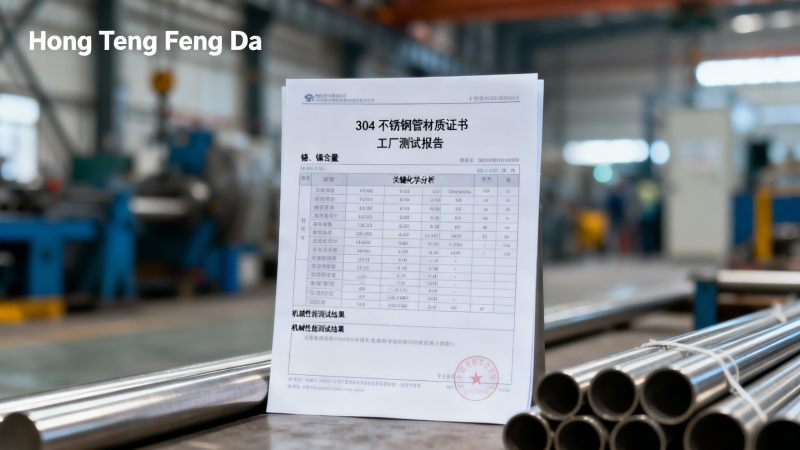
When a supplier provides documentation for 304 pipe or stainless seamless pipe, the most common documents include an MTR (mill test report), a certificate of conformity (CoC), and, in some cases, third-party inspection certificates or non-destructive test reports. Procurement specialists should first confirm document types and formats. An MTR to EN 10204 will typically be issued as 2.1, 2.2, 3.1, or 3.2; for many industrial projects a 3.1 inspection certificate or higher provides the required assurance because it includes independent laboratory verification and signature. Key fields to verify on any MTR include: supplier name and address; mill identification; heat number and batch traceability; material grade (for example, UNS S30400 or ASTM A312 for stainless pipe); declared chemical composition with element percentages; mechanical test results such as yield strength, tensile strength and elongation; applicable standards and the inspector’s signature. Make a checklist that your procurement team uses to cross-check each delivery against the PO and the bill of lading. Items on that checklist should include: matching heat numbers between the physical pipe stamps and the mill test report; presence of mill or foundry stamps on each length or bundle; a clear definition of the product — distinguishing between pipe stainless, ss 304 pipe and stainless seamless pipe — and whether the supplied item is seamless or welded. When suppliers also supply components like angle stainless steel, Profile items, or Steel Rod and Wire Products, ensure the certificate scope explicitly lists each product family or provides separate MTRs per product. For galvanised items such as electrogalvanized wire or galvanized steel channel, confirm that the coating specifications and mass per unit area are documented in addition to base material properties. Look for consistency in units (MPa vs. psi), the presence of signatory stamps, and corroborative test numbers. If a mill claims compliance with multiple standards (for example, ASTM A312 and EN 10217), ensure the report includes the applicable clauses and test result references. A company purchasing a carbon alternative or related product may also request documentation for items such as A36 Steel Pipe when project designs combine stainless and carbon components; in such cases check the A36 mill certificate for heat treatment and dimensional tolerances. A robust document review process at the outset prevents ambiguity about product identity, and lays the groundwork for onsite verification and third-party sampling if needed.
Technical checks: verifying chemical analysis and mechanical test results
Deep technical verification focuses on whether the declared chemistry and mechanics on the MTR meet the specification requirements for 304 pipe, ss 304 pipe or stainless seamless pipe. For 304 grade stainless, expect chromium in the neighborhood of 17.5–19.5% and nickel around 8–10.5%, with carbon typically below 0.08%. Confirm that the MTR lists these major elements plus important residuals or trace elements (e.g., manganese, silicon, sulfur, phosphorus, and nitrogen) because small variations can change corrosion resistance and weldability. Mechanical properties should reflect the applicable standard: yield strength, tensile strength and elongation values should meet or exceed the specified minimums. If the pipe will be used in pressure systems or heat exchangers, additional parameters like hardness or impact energy may be relevant. Record any deviation and require supplier justification, including heat treatment records or corrective actions. Procurement teams should also require dimensional verification and tolerances. Pipe wall thickness, outside diameter ranges, and schedule classifications must be clearly stated; any mismatch between physical dimensions and the certificate should trigger a hold-and-inspect procedure. For seamless pipes, ensure the MTR reflects cold-drawn or hot-finished conditions appropriately. When multiple product lines are supplied together — for example, a shipment that includes pipe stainless, angle stainless steel, and Steel Rods — confirm that the test methods used (spectrometry for chemistry, tensile testing per ASTM E8 or equivalent) are consistent across the MTRs. If a supplier provides electrogalvanized wire or galvanized steel channel, verify coating mass and adhesion test results where applicable. When the paperwork is unclear or missing key numbers, use on-site or third-party testing. Portable positive material identification (PMI) instruments can confirm key elements such as nickel and chromium percentages quickly and non-destructively. For mission-critical projects, request certified laboratory testing on retained samples to verify hardness, tensile parameters, and detailed chemistry. Establish acceptance criteria in your procurement contract: allowable chemical and mechanical tolerances, requirements for third-party inspection, and penalties for nonconforming deliveries. Implement an internal sign-off matrix so that technical leads and QA personnel review MTRs prior to goods acceptance, ensuring that records for ss 304 pipe and stainless seamless pipe meet the project’s metallurgical and performance thresholds.
Traceability, heat numbers and on-site verification best practices
Traceability is the backbone of responsible procurement for stainless and carbon products. A valid mill test report should include a heat number that can be traced back to the furnace or melt. Procurement teams should insist that heat numbers on the MTR match the stamps on the pipe and any cut lengths. A comprehensive traceability check verifies chain-of-custody from mill to mill yard to carrier and finally to your site. Keep photographic records and cross-reference them with the MTR. For stainless seamless pipe and ss 304 pipe, stamping practices vary: some mills mark every length, others mark every bundle. Clarify stamping conventions with the supplier and require visible identification at receipt. On-site verification should be proceduralized. For incoming inspections, use a checklist that includes visual checks for corrosion, correct end finishing, dimensional sampling, verification of welding seam integrity (for welded pipe), and random PMI sampling across several items in a lot. For larger projects or critical applications, engage a third-party inspector to witness sampling and to certify that both electrogalvanized wire or galvanized steel channel items and stainless products conform to the contract specification. For assemblies combining pipe stainless components with Profile and Wire Products, test assemblies after fabrication where feasible to discover fitment or compatibility issues early. Maintain a retained sample protocol: keep representative pieces of each lot until final acceptance, and document the decision path for any rejection or rework. Digital traceability is increasingly valuable. Encourage electronic MTRs in standardized PDF formats with embedded digital signatures, or use supplier portals that store certificates and link them to purchase orders and shipment documents. This simplifies audits and supplier performance reviews. Finally, train receiving and QA staff to recognize forged or altered reports: look for inconsistent font sizes, missing letterheads, or mismatch between declared standards and test methods. Maintaining disciplined traceability and on-site verification reduces project risk and expedites resolution when cases of nonconformance arise for products ranging from stainless seamless pipe to angle stainless steel and Steel Rods.
Red flags, third-party testing and supplier qualification workflow
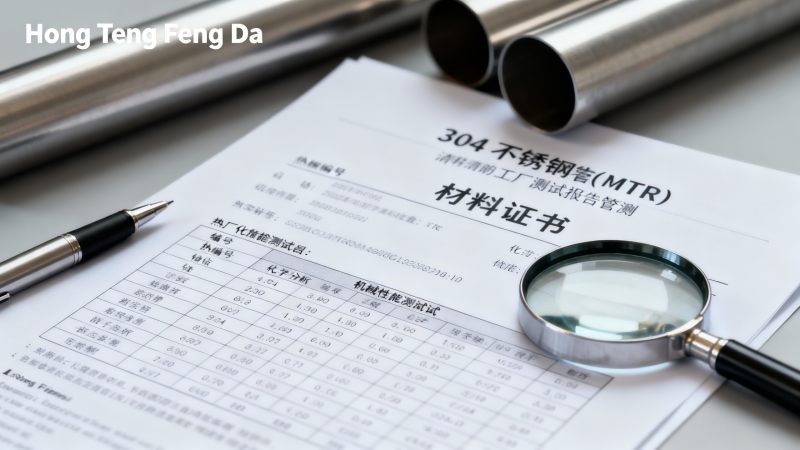
There are predictable red flags procurement teams should watch for when evaluating documentation for 304 pipe and related items. Common warning signs include: missing signatures or stamps on MTRs, discrepancies between heat numbers on certificates and physical stamps, chemical compositions that sit right at the acceptance limit without supporting process records, and certificates issued without clear reference to a recognized standard. If a supplier consistently provides ambiguous or incomplete documentation for ss 304 pipe, stainless seamless pipe, pipe stainless, or associated materials such as electrogalvanized wire and galvanized steel channel, escalate to supplier quality audits. Third-party testing offers an objective verification route and is especially important for critical applications. Independent laboratories can perform destructive tests on retained samples to confirm tensile strength, hardness, and precise chemistry via ICP or OES. When projects require third-party oversight, specify the scope in contracts: sample sizes, test standards (ASTM, EN, GB/T), and acceptance criteria. Document all third-party findings and integrate them into supplier scorecards. A practical supplier qualification workflow should include: pre-qualification questionnaire focusing on production capacity and quality systems; request for sample MTRs and typical production reports; trial orders with documented inspection checkpoints; on-site mill audits for high-volume or high-risk suppliers; and periodic requalification. For suppliers that also provide Wire Products, Profile, Steel Rod, or angle stainless steel, evaluate their cross-product traceability and whether their metallurgical lab capabilities are centralized or subcontracted. Keep a preferred supplier list with tiered approval levels based on performance, document completeness, and responsiveness to corrective actions. This reduces exposure to counterfeit certificates and aligns the supply base with project quality expectations.
Summary, trust signals and next steps for procurement teams
In summary, effective verification of 304 pipe material certificates and mill test reports requires a combination of document literacy, on-site inspection practices, and contractual controls. Confirm the presence and consistency of heat numbers, validate chemical and mechanical properties against relevant standards, and use PMI or third-party lab tests when uncertainty exists. For integrated procurements that include pipe stainless, ss 304 pipe, stainless seamless pipe alongside electrogalvanized wire, galvanized steel channel, Wire Products, Profile, and Steel Rod, require explicit scope and testing for each product group. Trust signals from suppliers include traceable MTRs (preferably 3.1/3.2), clear mill identification, demonstrable QA processes, and willingness to accept third-party sampling. Shandong Hongteng Fengda Metal Materials Co.. Ltd. positions itself to meet these procurement needs by offering documented production and export capabilities, a complete production technology chain, and a track record of supplying diverse markets. When engaging suppliers, request sample MTRs in advance, define acceptance criteria in purchase orders, and maintain a documented receiving inspection routine. If you need technical support evaluating certificates for a pending purchase or would like assistance qualifying suppliers who provide stainless seamless pipe or complementary products such as angle stainless steel or galvanized steel channel, contact our team to review sample reports and set up tailored inspection plans. Take the next step: request a certificate review on your next procurement, require retained sample testing in contracts for critical projects, or schedule a supplier audit. Immediate actions reduce risk and protect project timelines—reach out to discuss how to implement practical verification workflows, accelerate supplier qualification, and ensure the materials delivered meet your technical and commercial requirements. Contact us to learn more and start validating your MTRs today.
Related recommendations
 How long does acero prepintado retain gloss and color stability in direct desert sunlight?Acero prepintado gloss & color stability in desert sun? Discover real-world performance data, PVDF vs. polyester longevity, and spec-critical insights for GCC projects.
 Does acero pregalvanizado maintain coating integrity after cold bending to 90 degrees?Acero pregalvanizado maintains coating integrity after 90° cold bending — when engineered right. Discover how Hongteng Fengda guarantees real-world performance, adhesion & corrosion resistance.
 Do the advantages of galvanized steel include reduced fire risk compared to untreated carbon steel?Advantages of galvanized steel include measurable fire-risk reduction vs. untreated carbon steel—learn how zinc delays ignition, buys critical escape time, and enhances safety without false 'fireproof' claims.
 How much does 2 inch ss pipe price increase when upgrading from Schedule 40 to Schedule 80 for high-pressure systems?2 inch ss pipe price increases 18–35% when upgrading from Sch 40 to Sch 80—discover why, when it’s truly needed, and how to avoid overpaying.
Please give us a message


Please enter what you want to find